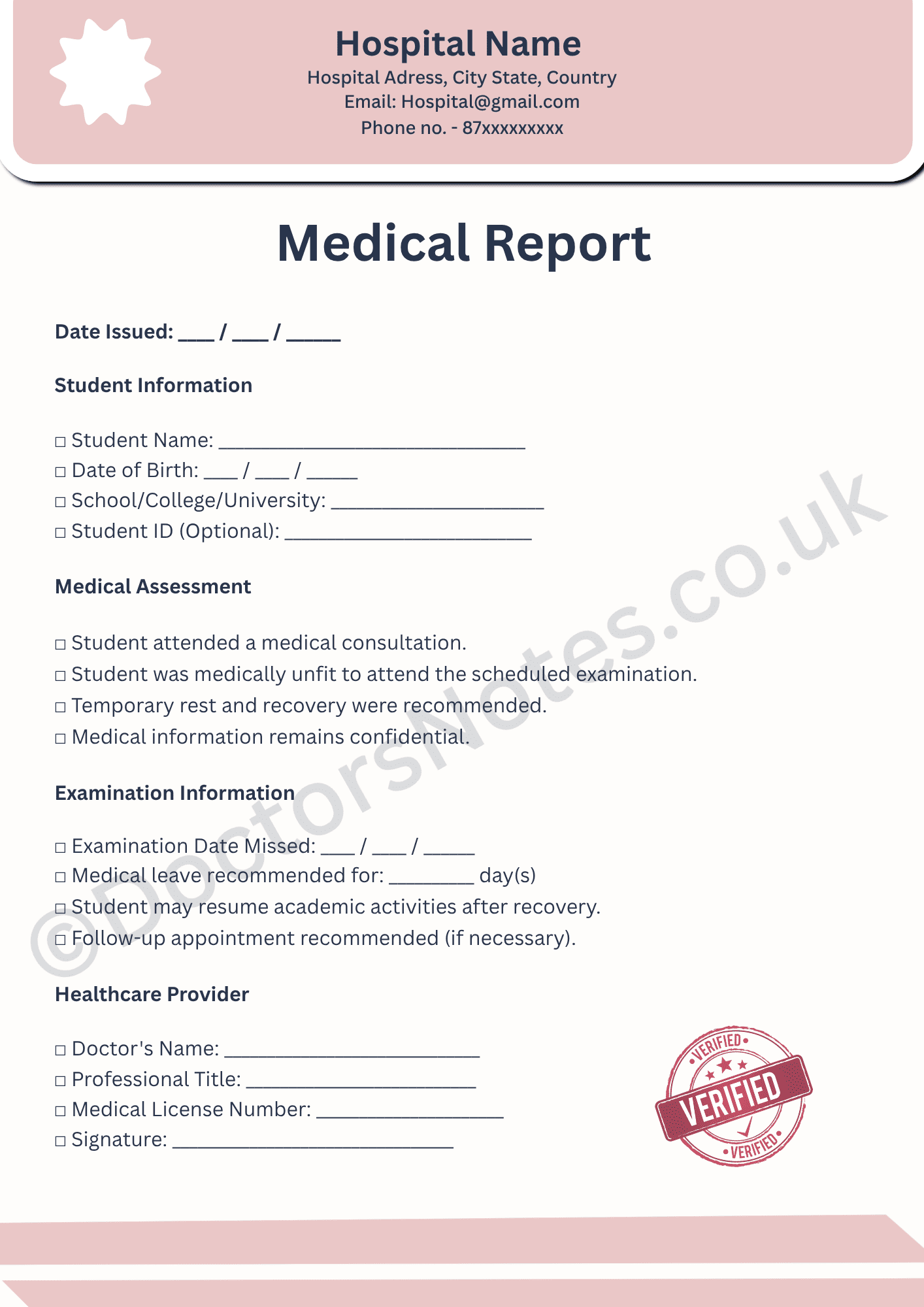
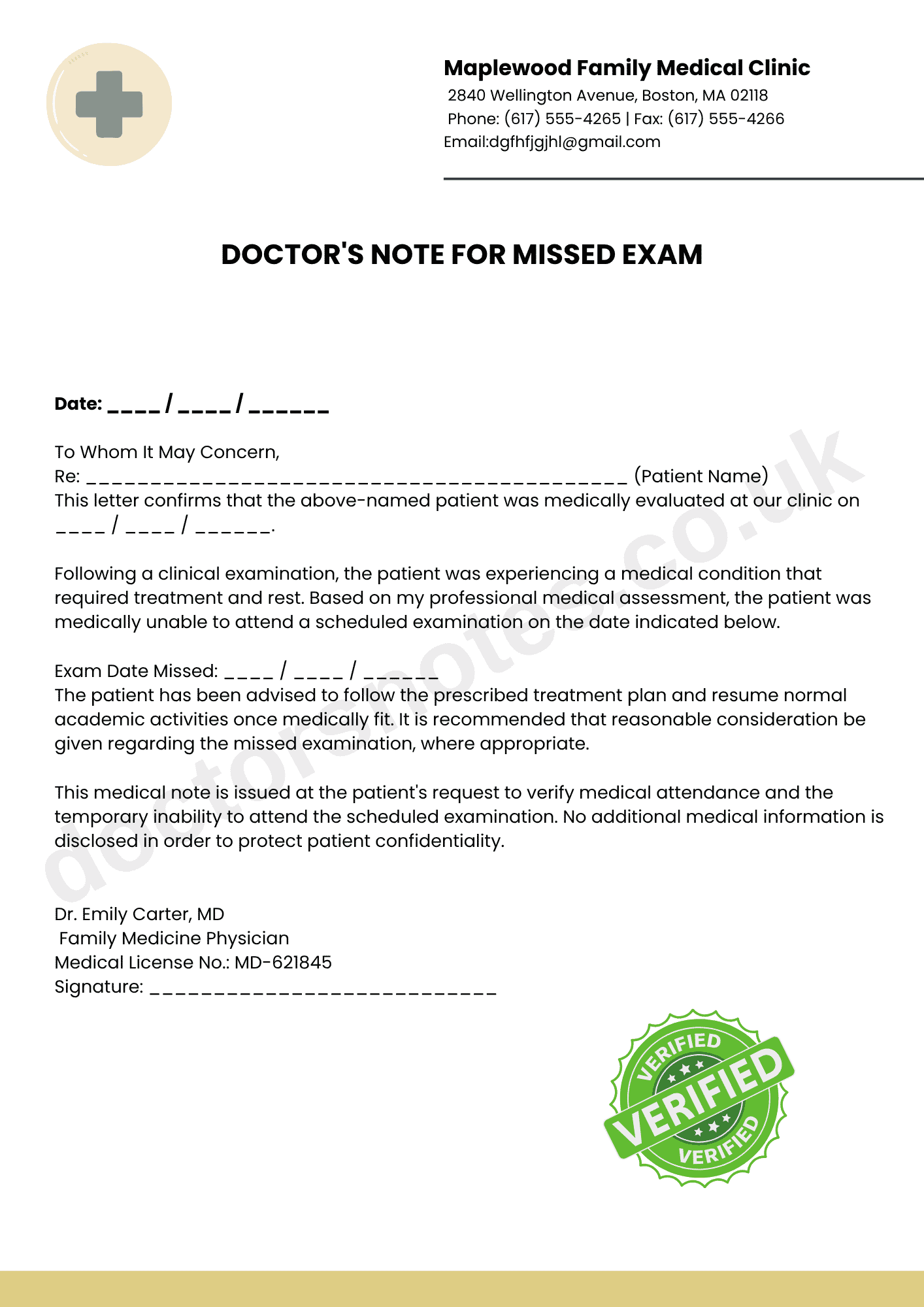


Missing an important examination because of a medical condition can be stressful for students of all ages. A Doctor’s Note for Missed Exam provides the medical documentation many schools, colleges, universities, and testing organizations require when illness prevents a student from attending or completing an examination.
A Doctor’s Note for Missed Exam is a medical document issued after a licensed healthcare professional evaluates your health condition and determines whether your illness or medical circumstances reasonably affected your ability to sit an examination.
Unlike a doctor’s note issued for workplace absence, this documentation focuses on your fitness to participate in an academic assessment at the scheduled time. It may help support requests for deferred examinations, rescheduling, academic consideration, or other procedures established by your educational institution.
This guide explains what a Doctor’s Note for Missed Exam is, when it may be appropriate, how the assessment process works, what information may be included, and other important details students should know.
Related Post:
What Is a Doctor’s Note for a Missed Exam?
A Doctor’s Note for Missed Exam is an official medical certificate confirming that a healthcare professional has assessed your condition after you became unwell or experienced another medically significant issue affecting your ability to attend an examination.
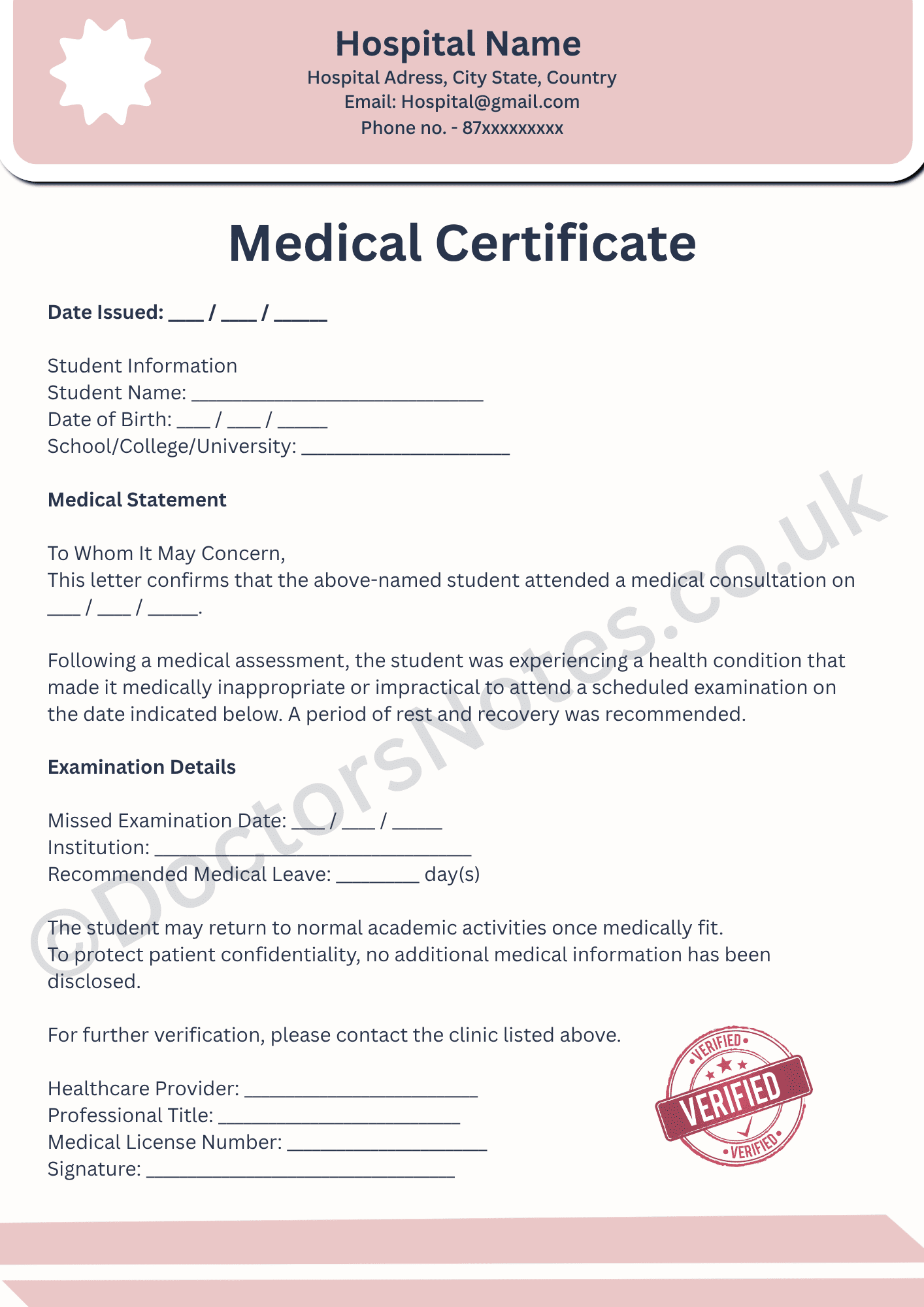
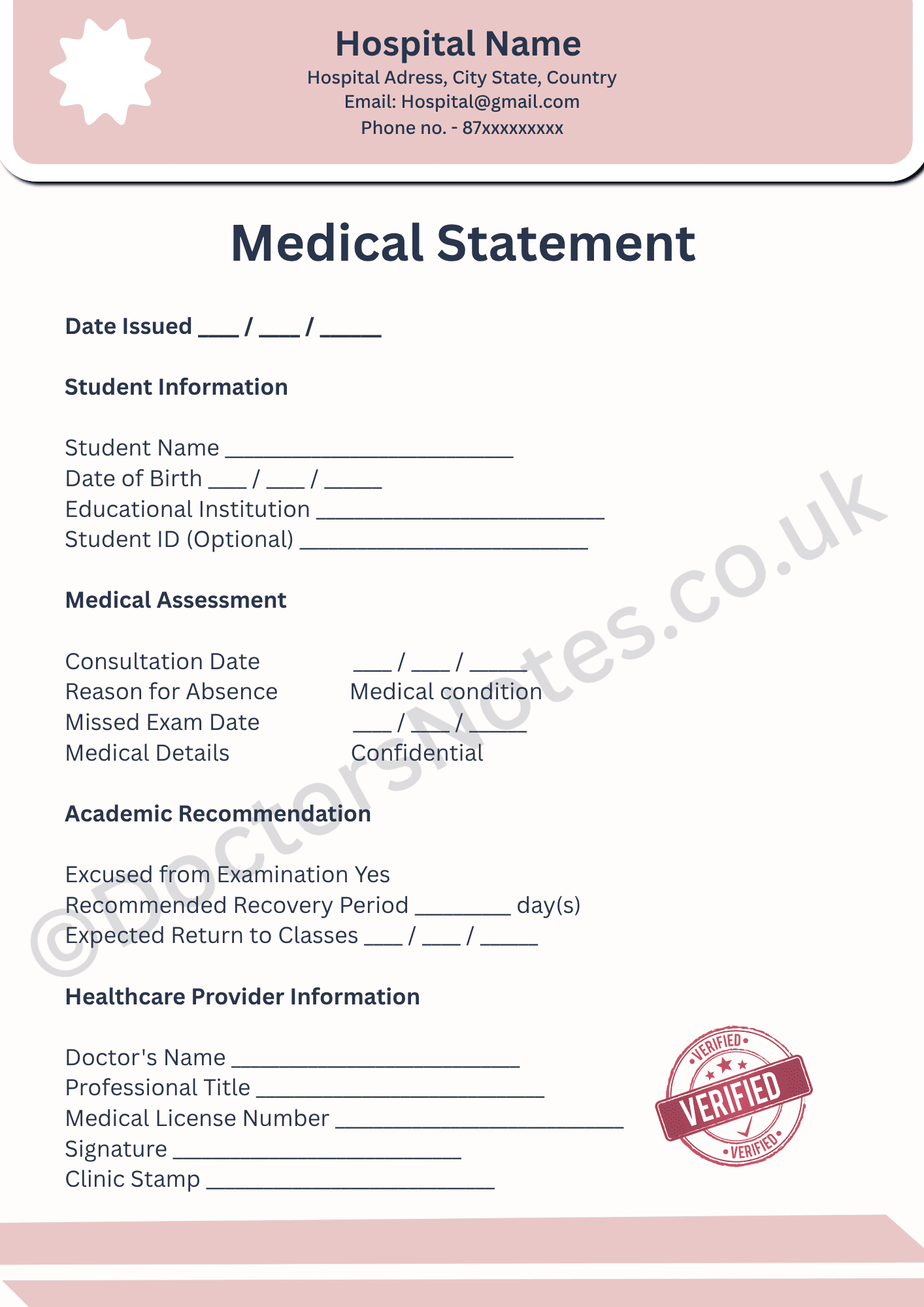
Depending on your assessment, the documentation may include:
- Confirmation that you attended a medical consultation.
- The date you were assessed.
- A statement that your medical condition affected your ability to sit the examination.
- Recommendations regarding temporary academic absence where appropriate.
- Advice on recovery or follow-up care.
- The period during which your symptoms were likely to affect normal academic activities, where clinically appropriate.
Medical certificates generally focus on your functional ability rather than providing detailed confidential medical information.
When Might You Need a Doctor’s Note for a Missed Exam?
Educational institutions may request medical documentation when illness or another health condition prevents a student from attending or completing an examination.
Examples include:
Sudden Illness on the Day of the Exam
Acute conditions such as fever, severe migraine, food poisoning, influenza, or gastrointestinal illness may make attending an exam impossible.
Ongoing Medical Conditions
A flare-up of an existing medical condition may temporarily affect your ability to concentrate, travel, or participate in an examination.
Mental Health Conditions
Severe anxiety, panic attacks, depression, or other clinically assessed mental health conditions may sometimes interfere with examination attendance where medically appropriate.
Injury or Accident
An unexpected injury, fracture, or other physical condition may prevent you from reaching the examination venue or completing the assessment safely.
Emergency Medical Treatment
Hospital admission, emergency medical care, or urgent treatment occurring close to the examination date may also require supporting documentation.
Who Can Use a Doctor’s Note for a Missed Exam?
Medical documentation may be useful for:
School Students
Students who miss classroom examinations due to illness.
College and University Students
Individuals requesting deferred examinations, special consideration, or alternative assessment arrangements.
Professional Certification Candidates
Candidates sitting licensing, registration, or professional qualification examinations.
Distance Learning Students
Learners completing supervised online examinations who experience an unexpected medical condition during the assessment period.
What Types of Medical Conditions May Affect Exam Attendance?
Every situation is assessed individually. Examples of conditions that may justify medical documentation include:
- Influenza or viral infections.
- Gastroenteritis or food poisoning.
- Migraine attacks.
- High fever.
- Severe asthma symptoms.
- COVID-19 or other contagious illnesses.
- Ear infections causing significant pain.
- Pneumonia.
- Allergic reactions requiring treatment.
- Mental health conditions affecting concentration or attendance.
- Acute injuries requiring urgent medical care.
The healthcare professional will assess whether your condition reasonably affected your ability to complete the examination.
What Happens During the Medical Consultation?
During your consultation, the healthcare professional will discuss both your medical condition and how it affected your examination attendance.
You may be asked about:
- The date and time of your examination.
- When your symptoms began.
- The nature and severity of your illness.
- Whether you sought medical treatment before or after the exam.
- Current medications.
- Previous medical history where relevant.
- Whether your condition prevented travel, concentration, or participation.
- Any supporting medical records available.
- Whether your educational institution has specific documentation requirements.
The purpose of the consultation is to determine whether your medical condition supports the issue of appropriate medical documentation based on clinical findings.
Important: A doctor’s note confirms that you were medically assessed. It does not automatically guarantee that your school, university, examination board, or professional organisation will approve a deferred exam, special consideration, or academic appeal. Final decisions remain subject to the policies of the relevant institution.
.
What If You Become Ill During an Examination?
Not every student becomes unwell before arriving at the examination venue. In some cases, symptoms develop while the exam is already in progress.
Examples include:
- Sudden migraine attacks.
- Vomiting or severe nausea.
- High fever.
- Asthma flare-ups.
- Panic attacks or severe anxiety.
- Allergic reactions.
- Fainting or dizziness.
- Acute abdominal pain.
If this happens:
- Inform the examination invigilator or supervisor immediately.
- Follow your institution’s procedures for reporting illness.
- Seek medical attention as soon as possible.
- Keep any documentation provided by healthcare professionals.
- Contact your school, university, or examination board within the required deadline.
Prompt medical assessment often helps support institutional review of your circumstances.
Can Treatment or Medication Be Provided?
Yes, where clinically appropriate.
During your consultation, the healthcare professional may recommend treatment based on the medical condition that caused you to miss your examination.
Depending on your diagnosis, this may include:
- Medication to relieve pain or fever.
- Treatment for viral or bacterial infections where appropriate.
- Advice for managing migraines or headaches.
- Supportive treatment for gastrointestinal illness.
- Asthma management advice.
- Recommendations for rest and hydration.
- Referral for further investigation if symptoms require additional assessment.
Treatment decisions depend entirely on your individual medical condition rather than the missed examination itself.
Always tell the healthcare professional about:
- Current medications.
- Allergies.
- Existing medical conditions.
- Pregnancy or breastfeeding where applicable.
- Recent hospital visits or emergency treatment.
How Long Is a Doctor’s Note for a Missed Exam Valid?
Unlike certificates issued for ongoing medical leave, a Doctor’s Note for a Missed Exam is usually intended to document your medical condition at the time of the examination or during the period immediately surrounding your absence.
Its usefulness depends largely on the submission deadlines set by your educational institution.
Typical Situations
| Reason for Documentation | Typical Purpose |
|---|---|
| Missed school examination | Support for absence records |
| University deferred examination request | Medical evidence for academic consideration |
| Professional licensing examination | Documentation supporting rescheduling requests |
| Online or remote examination illness | Evidence for review by the examination provider |
| Medical condition affecting exam performance | Supporting documentation where institutional policies permit |
The acceptance period for a medical certificate is determined by your school, university, examination board, or professional organisation rather than the healthcare provider. Students should submit documentation as soon as possible after receiving it.
Tips for Students Requesting Medical Documentation
If you miss an examination because of illness, taking the right steps early can make the process smoother.
Helpful recommendations include:
- Arrange a medical consultation as soon as reasonably possible.
- Keep copies of any hospital or clinic documents.
- Follow your institution’s published procedures for requesting special consideration.
- Submit your medical certificate before any stated deadlines.
- Attend follow-up appointments if your illness continues.
- Retain copies of all correspondence with your educational institution for your records.
Being organised and providing timely documentation can help ensure your request is considered according to your institution’s policies.
What Documents May Be Issued?
After your consultation, the healthcare professional will determine whether medical documentation is appropriate based on your symptoms, medical history, and the timing of your illness in relation to your examination.
Depending on your individual circumstances, you may receive:
- Doctor’s Note for a Missed Exam or a Medical Certificate.
- Documentation confirming that you attended a medical consultation.
- A certificate supporting temporary academic absence where clinically appropriate.
- Medical evidence for deferred examination or special consideration applications.
- Recommendations regarding recovery before returning to classes or future assessments.
- Referral letters if specialist assessment or additional investigations are required.
- Follow-up consultation recommendations for ongoing medical conditions.
- Treatment advice or prescription recommendations where clinically appropriate.
The type of documentation issued depends entirely on the healthcare professional’s independent clinical assessment and your individual medical circumstances.
Important Legal Information
A Doctor’s Note for a Missed Exam is an official medical document prepared following an assessment by a licensed healthcare professional. It provides medical evidence regarding your health condition and whether your illness or injury affected your ability to attend or complete an examination.
Before requesting medical documentation, you should understand the following:
- A doctor’s note is only issued after an appropriate clinical assessment.
- Booking an online consultation does not guarantee that medical documentation will be provided.
- Healthcare professionals may only certify medical conditions that are supported by your symptoms, medical history, and clinical findings.
- A doctor’s note confirms your medical assessment but does not guarantee approval of deferred examinations, academic appeals, or special consideration requests.
- Every school, college, university, examination board, and professional certification body has its own policies regarding the acceptance of medical certificates.
- Some institutions may request additional supporting evidence, particularly if your illness continued for an extended period or affected multiple assessments.
- Medical certificates normally contain only information necessary for academic purposes and do not disclose detailed confidential medical information unless you consent or disclosure is required by law.
- Your consultation, health records, uploaded documents, and personal information remain confidential and are managed in accordance with applicable healthcare privacy and data protection legislation.
Important: If you know in advance that illness may prevent you from attending an examination, notify your educational institution as early as possible and follow its published procedures for reporting medical absences.
FAQ
Can I get a Doctor’s Note for a Missed Exam online?
Yes. You can book an online consultation with a licensed healthcare professional. If your illness is clinically assessed and appropriate medical evidence is required, a doctor’s note may be issued.
Will the doctor’s note guarantee that my exam will be rescheduled?
No. The doctor’s note provides medical evidence only. Whether you receive a deferred examination, special consideration, or another academic accommodation is decided by your educational institution according to its own policies.
Can I request a doctor’s note after the exam date has passed?
In many cases, yes. The healthcare professional will assess your medical condition and the available information before deciding whether medical documentation can be provided.
What if I became ill during the examination?
If your symptoms developed while the examination was in progress, seek medical attention as soon as possible and report the incident to your examination supervisor. Medical documentation may support your institution’s review of the circumstances.
Can a doctor’s note be used for university, school, and professional examinations?
Yes. Depending on your circumstances, medical documentation may be used to support requests made to schools, colleges, universities, or professional examination providers, subject to their individual requirements.
Will my diagnosis appear on the certificate?
Not necessarily. In many situations, the certificate contains only the information required for its intended purpose and may not include detailed medical diagnoses unless necessary or authorised.
What if my illness continues after the missed exam?
If your symptoms persist, you may require a follow-up consultation. Updated medical documentation may be issued where clinically appropriate after reassessment.
Is my consultation confidential?
Yes. Your consultation, medical records, and personal information are handled confidentially in accordance with applicable healthcare privacy and data protection laws.
Can I receive treatment during the consultation?
Yes. If treatment is clinically appropriate, the healthcare professional may recommend medication, self-care advice, further investigations, or referral to another healthcare provider depending on your condition.
When should I seek urgent medical care instead of an online consultation?
Seek immediate medical attention if you experience severe chest pain, difficulty breathing, loss of consciousness, uncontrolled bleeding, seizures, or any other medical emergency.
Why Choose Our Online Consultation Service?
- Book appointments quickly from home or wherever you are.
- Consult with licensed healthcare professionals.
- Secure and confidential online medical assessments.
- Personalised advice based on your symptoms and medical history.
- Medical certificates issued only where clinically appropriate.
- Guidance on recovery, follow-up care, and returning to your studies.
- Convenient follow-up consultations if additional medical review is required.
Conclusion
Missing an examination because of illness can be worrying, especially when important academic deadlines or professional qualifications are involved. Obtaining timely medical advice not only supports your recovery but also provides appropriate documentation if your educational institution requires evidence of your medical condition.
A Doctor’s Note for a Missed Exam is issued following an individual clinical assessment and may support applications for deferred examinations, academic consideration, or other educational accommodations where medically appropriate. The final decision regarding examination arrangements remains with your school, university, examination board, or professional organisation.
By arranging an online consultation, you can discuss your symptoms with a licensed healthcare professional, receive appropriate treatment advice, and obtain medical documentation where clinically justified, helping you focus on your recovery while meeting your institution’s documentation requirements.



Reviews
There are no reviews yet.