


Diarrhea is a common digestive condition that can range from a short-lived stomach upset to a more serious illness requiring medical attention. Frequent loose stools, dehydration, abdominal cramps, nausea, and weakness can make it difficult to attend work, school, university, or other daily commitments. In some occupations—particularly those involving food handling, healthcare, childcare, or public service—a healthcare professional may advise staying away from work until it is safe to return.
This guide explains what a Doctor’s Note for Diarrhea is, the common causes and symptoms of diarrhea, when medical documentation may be appropriate, how the assessment process works, treatment options, and other important information.
Related Post:
- Doctors Note for Gastroenteritis
- Doctors Note for Food Poisoning
- Doctors Note for Dehydration
- Work Absence Doctors Note
What Is a Doctor’s Note for Diarrhea?
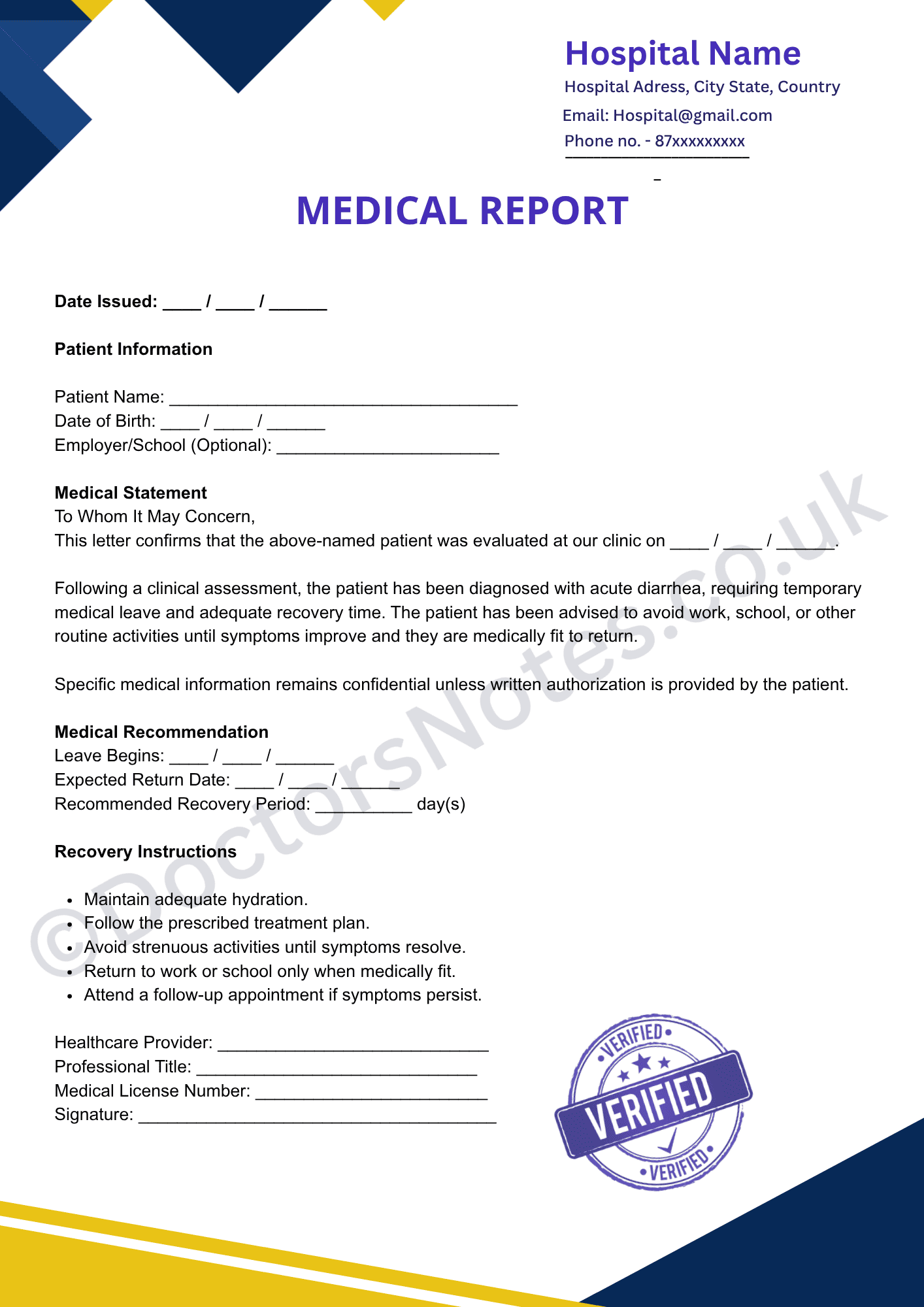
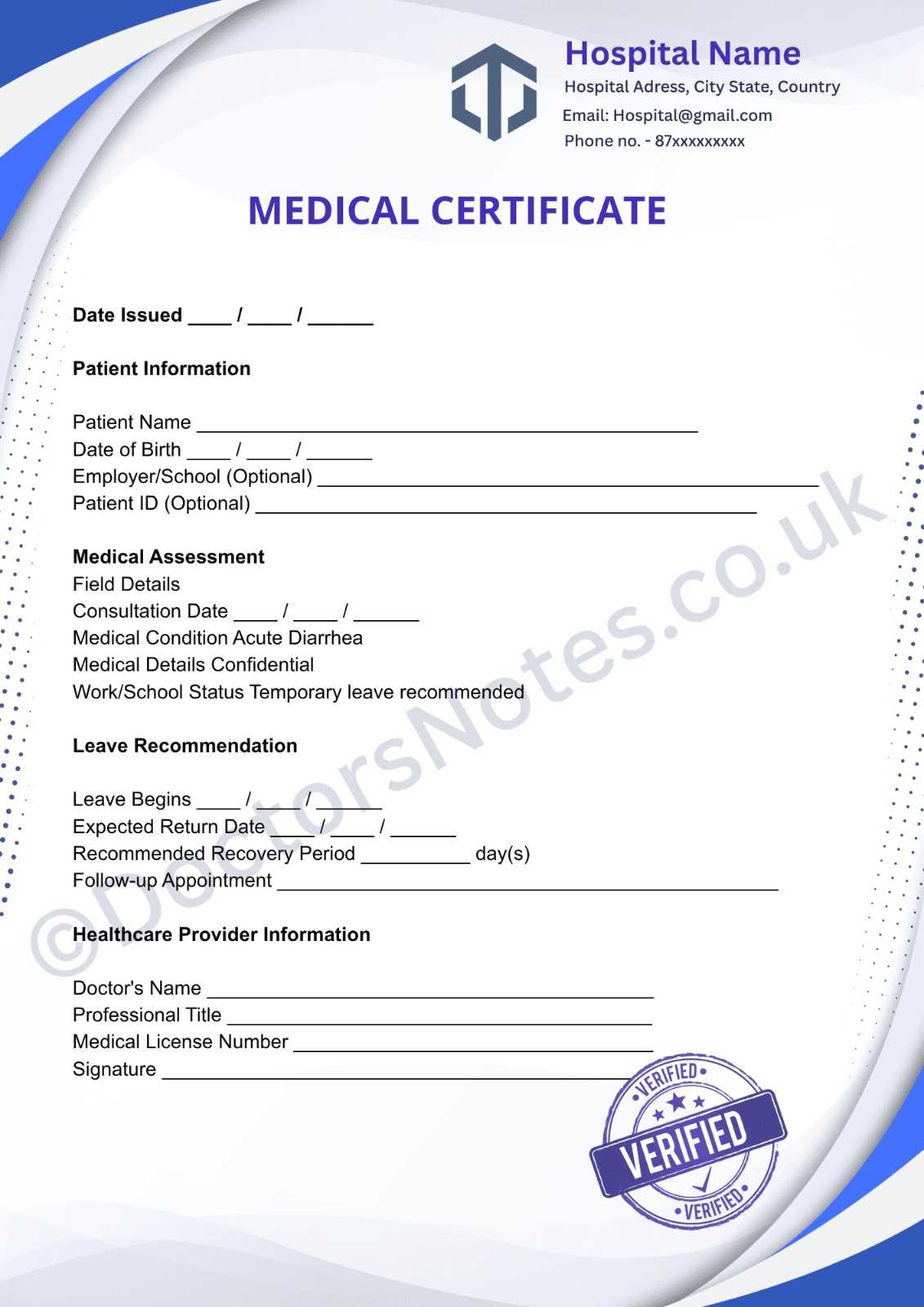
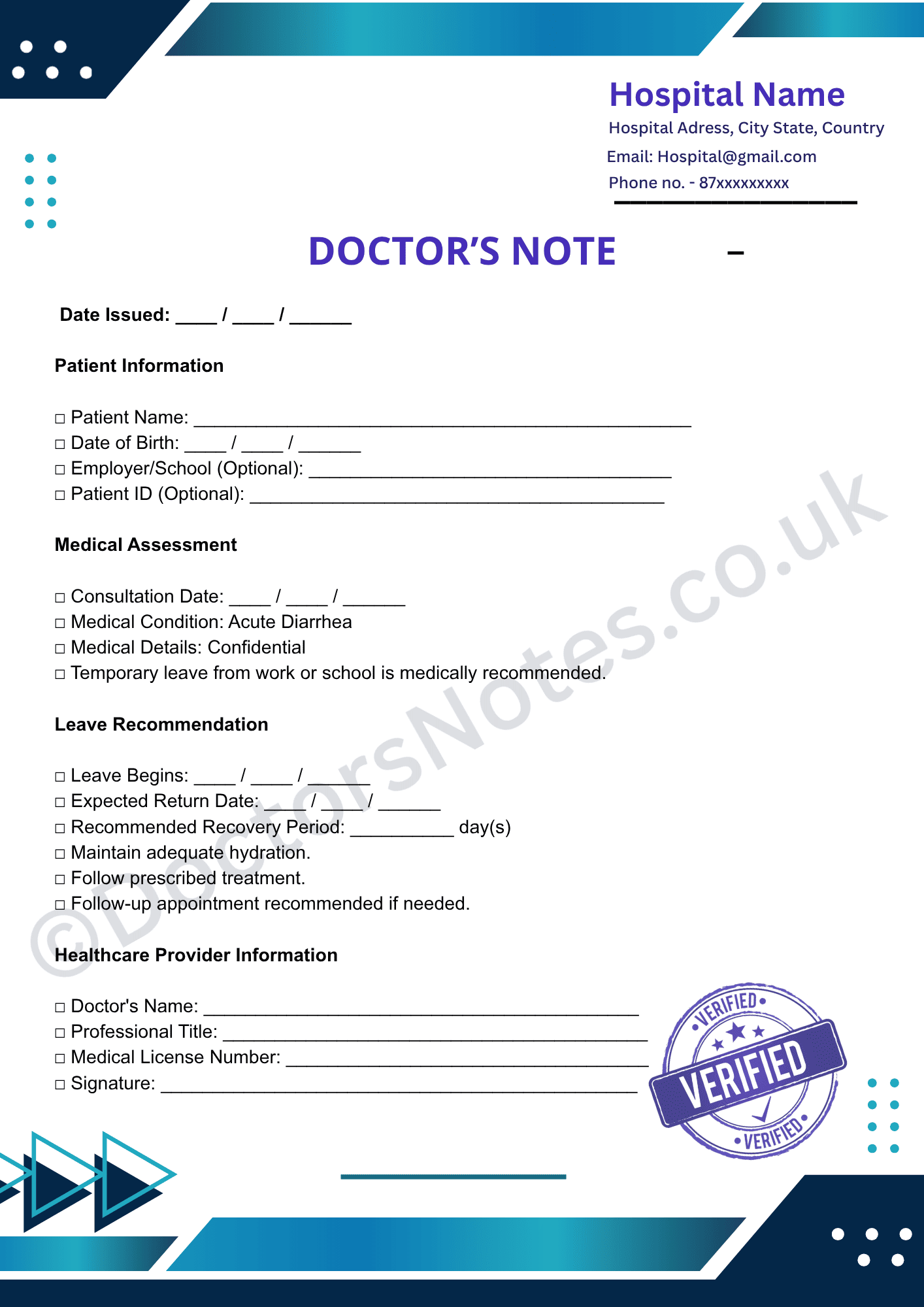
A Doctor’s Note for Diarrhea is an official medical certificate confirming that you have been evaluated by a licensed healthcare professional for a gastrointestinal condition affecting your normal daily functioning.
Depending on your assessment, the documentation may include:
- Confirmation that a medical consultation took place.
- A recommendation for temporary leave from work, school, or university.
- Advice regarding rest and hydration.
- Guidance on preventing the spread of infectious illness where relevant.
- Recommendations for returning to normal activities once symptoms have resolved.
- Follow-up advice if additional medical review is required.
The certificate reflects your clinical condition at the time of assessment and the healthcare professional’s medical judgement.
What Can Cause Diarrhea?
Diarrhea is a symptom rather than a disease itself. It can occur for many different reasons, ranging from mild digestive upset to infections or chronic medical conditions.
Common causes include:
Viral Gastroenteritis
Viruses such as norovirus or rotavirus are among the most frequent causes of short-term diarrhea.
Bacterial Infections
Foodborne bacteria, contaminated water, or improperly prepared food can lead to gastrointestinal infections.
Food Poisoning
Consuming contaminated food may cause sudden diarrhea accompanied by vomiting, stomach cramps, or fever.
Medication Side Effects
Certain medicines, including some antibiotics and other prescription drugs, may temporarily cause loose stools.
Food Intolerances
Some individuals experience diarrhea after consuming foods that their digestive system struggles to process, such as lactose or gluten in susceptible individuals.
Digestive Disorders
Long-term conditions affecting the digestive tract may also cause recurring episodes of diarrhea that require ongoing medical management.
Can a Doctor Recommend Staying Home From Work With Diarrhea?
Yes. A doctor may recommend staying home from work when diarrhea is severe enough to interfere with normal activities, cause weakness or dehydration, or make it difficult to work safely.
Diarrhea can sometimes result from an infection, food poisoning, medication, or another medical condition. If an infectious illness is suspected, staying home may also help reduce the risk of spreading illness to coworkers, particularly for people who work around food, healthcare settings, children, or vulnerable individuals.
During an assessment, a doctor may consider the severity and duration of the diarrhea, other symptoms, hydration status, and the type of work you perform. If medically appropriate, they may recommend:
- Temporary time away from work
- Rest and adequate fluid intake
- Temporary changes to work duties
- A gradual return to normal activities
- Follow-up if symptoms continue
A doctor may also provide appropriate medical documentation for the recommended absence when required by an employer.
Common Symptoms Associated With Diarrhea
Symptoms vary depending on the underlying cause and severity of the illness.
Common symptoms include:
- Frequent loose or watery stools.
- Abdominal cramps.
- Urgent need to use the toilet.
- Nausea.
- Vomiting.
- Bloating.
- Fever.
- Loss of appetite.
- Fatigue.
- Signs of dehydration such as increased thirst or dizziness.
Persistent or severe symptoms should always be assessed by a healthcare professional.
When Might You Need a Doctor’s Note for Diarrhea?
Medical documentation may be appropriate when diarrhea significantly affects your ability to safely attend work, education, or other responsibilities.
Examples include:
Temporary Work Absence
Symptoms may make it unsafe or impractical to carry out normal job duties, particularly where frequent restroom access is limited.
Food Industry Employment
Individuals who prepare, serve, or handle food may require medical advice before returning to work to reduce the risk of transmitting infectious illness.
Healthcare and Caregiving Roles
People working with vulnerable patients or residents may need medical clearance before resuming duties after a contagious gastrointestinal illness.
School or University Absence
Students who miss classes or examinations because of severe gastrointestinal symptoms may require supporting medical documentation.
Travel-Related Illness
Diarrhea that develops during or after travel may temporarily interfere with planned activities and require medical assessment.
What Happens During the Medical Consultation?
During your consultation, the healthcare professional will assess both your symptoms and your risk of dehydration or other complications.
You may be asked about:
- When the diarrhea began.
- How many bowel movements you have each day.
- Whether blood or mucus is present in the stool.
- Associated symptoms such as fever, vomiting, or abdominal pain.
- Recent travel history.
- Recent meals or possible food poisoning.
- Current medications.
- Existing digestive conditions.
- Whether anyone around you has similar symptoms.
- Your occupation or educational commitments.
- Whether you are able to drink fluids and stay hydrated.
Based on your assessment, the healthcare professional will determine whether a doctor’s note, further investigations, treatment, or referral is clinically appropriate.
Important: Seek immediate medical attention if you develop severe dehydration, persistent vomiting that prevents you from keeping fluids down, bloody diarrhea, severe abdominal pain, confusion, fainting, or symptoms lasting longer than expected. These situations require prompt medical evaluation and may not be suitable for online management alone.
Managing Diarrhea During Recovery
Most cases of acute diarrhea improve with appropriate self-care and adequate hydration. Following medical advice can help reduce symptoms, prevent dehydration, and support a safe recovery.
Your healthcare professional may recommend:
- Drinking plenty of water and oral rehydration solutions.
- Eating small, easy-to-digest meals as tolerated.
- Avoiding alcohol until symptoms resolve.
- Limiting spicy, greasy, or high-fat foods during recovery.
- Washing your hands thoroughly to reduce the spread of infection.
- Resting until your energy levels improve.
- Remaining at home if your illness is contagious.
- Returning to normal activities gradually once symptoms have completely settled.
Recovery advice will be tailored to your individual diagnosis and overall health.
Can Medication Be Prescribed?
Yes, where clinically appropriate.
Depending on the cause of your diarrhea, the healthcare professional may recommend or prescribe:
- Oral rehydration therapy.
- Medication to relieve nausea where appropriate.
- Anti-diarrheal medication in suitable cases.
- Antibiotics if a confirmed bacterial infection requires treatment.
- Medication for underlying digestive conditions where relevant.
- Referral for further testing if symptoms are persistent or recurrent.
Not every case of diarrhea requires medication. Many viral illnesses improve with supportive care and hydration alone.
Always tell the healthcare professional about:
- Current medications.
- Drug allergies.
- Existing digestive disorders.
- Pregnancy or breastfeeding where applicable.
- Recent overseas travel.
- Any significant medical conditions affecting your immune system.
How Long Is a Doctor’s Note for Diarrhea Valid?
The duration of a Doctor’s Note for Diarrhea depends on the severity of your symptoms, the underlying cause, and the type of work or education you are returning to.
People working in food preparation, healthcare, childcare, or similar settings may require additional recovery time or symptom-free periods before returning to work.
Typical Review Periods
| Clinical Situation | Typical Review Period* |
|---|---|
| Mild viral gastroenteritis | 1–3 days |
| Moderate gastrointestinal illness | Several days to 1 week |
| Food poisoning | Based on symptom resolution |
| Bacterial gastrointestinal infection | As advised following treatment |
| Persistent or recurrent diarrhea | Further review may be required |
*These examples are intended for general guidance only. The healthcare professional will determine the appropriate duration of your medical certificate based on your symptoms, occupation, recovery progress, and clinical assessment.
When Can You Return to Work or School?
Returning too early may slow your recovery or increase the risk of spreading infection if your illness is contagious.
Before returning, your healthcare professional may advise that:
- Your diarrhea has completely stopped.
- You can maintain normal hydration.
- You no longer have significant vomiting or fever.
- You feel physically well enough to complete your normal duties.
- Any occupation-specific public health guidance has been followed, particularly if you work with food, patients, or young children.
If your symptoms return after going back to work or school, arrange a follow-up medical assessment for further advice.
What Documents May Be Issued?
Following your consultation, the healthcare professional will determine whether medical documentation is appropriate based on your symptoms, diagnosis, occupation, and overall clinical assessment.
Depending on your individual circumstances, you may receive:
- Doctor’s Note for Diarrhea or a Medical Certificate.
- A Fit Note recommending temporary leave from work where clinically appropriate.
- Medical documentation supporting absence from school, college, or university.
- Recommendations regarding when it is safe to return to work, particularly if your role involves food preparation, healthcare, childcare, or close contact with others.
- Advice on hydration, dietary management, and ongoing recovery.
- Referral letters for further investigations if symptoms are persistent, recurrent, or suggest an underlying gastrointestinal condition.
- Follow-up consultation recommendations.
- Prescription advice or treatment recommendations where clinically appropriate.
The documentation provided will always reflect your individual medical assessment and the healthcare professional’s independent clinical judgement.
Important Legal Information
A Doctor’s Note for Diarrhea is an official medical document issued following an assessment by a licensed healthcare professional. It confirms that your symptoms have been evaluated and provides medical recommendations based on your clinical condition at the time of the consultation.
Before requesting medical documentation, it is important to understand the following:
- A doctor’s note is only issued after an appropriate clinical assessment.
- Booking an online consultation does not guarantee that a medical certificate will be provided.
- Healthcare professionals may only certify medical conditions and recommend time away from work or education when supported by your symptoms, medical history, and clinical findings.
- Employers, schools, universities, and other organisations may have their own policies regarding sickness absence and the acceptance of medical certificates.
- Individuals working in food handling, healthcare, childcare, aged care, or similar occupations may also need to comply with additional workplace or public health requirements before returning to work.
- Medical certificates generally contain only the information necessary for their intended purpose and do not disclose unnecessary confidential medical details unless you consent or disclosure is required by law.
- Your consultation, medical records, laboratory reports, and personal information remain confidential and are handled in accordance with applicable healthcare privacy and data protection legislation.
Important: If you experience severe dehydration, blood in your stool, persistent high fever, severe abdominal pain, or symptoms lasting longer than expected, seek urgent in-person medical care. Online consultations are not suitable for medical emergencies or conditions requiring immediate diagnostic testing.
FAQ
Can I get a Doctor’s Note for Diarrhea online?
Yes. You can book an online consultation with a licensed healthcare professional. If your condition is clinically assessed and medical documentation is appropriate, a doctor’s note may be issued.
How long does diarrhea usually last?
Many cases of acute viral diarrhea improve within a few days. However, bacterial infections, parasitic illnesses, or underlying digestive disorders may last longer and require additional investigation or treatment.
Should I stay home if I have diarrhea?
In many cases, yes. If your symptoms are severe or you have an infectious gastrointestinal illness, staying home can help protect your own recovery and reduce the risk of spreading illness to others. Your healthcare professional can advise you based on your situation.
Can I return to work if I handle food?
Food handlers are often required to remain away from work until they meet workplace or public health guidance. Your employer’s policies and local health regulations may specify when it is safe to return.
Will I need antibiotics?
Not always. Many cases of diarrhea are caused by viruses, which do not respond to antibiotics. Antibiotics are only prescribed when they are clinically appropriate, such as for certain confirmed bacterial infections.
Can dehydration become serious?
Yes. Ongoing diarrhea can lead to dehydration, particularly in young children, older adults, and people with underlying health conditions. Seek medical attention if you cannot keep fluids down or notice signs of severe dehydration.
Can my doctor’s note be extended?
Yes. If your symptoms continue beyond the expected recovery period, you can arrange a follow-up consultation. Updated medical documentation may be provided where clinically appropriate.
Is my consultation confidential?
Yes. Your consultation, medical records, and personal information are handled confidentially in accordance with applicable healthcare privacy and data protection laws.
Can I receive treatment during the consultation?
Yes. Depending on your diagnosis, the healthcare professional may recommend medication, hydration strategies, dietary advice, further investigations, or referral to a specialist if needed.
When should I seek emergency medical care?
Seek immediate medical attention if you experience severe dehydration, confusion, fainting, persistent vomiting, bloody diarrhea, severe abdominal pain, or any rapidly worsening symptoms.
Why Choose Our Online Consultation Service?
- Book appointments quickly from the comfort of your home.
- Consult with licensed healthcare professionals.
- Secure and confidential online medical assessments.
- Personalised advice based on your symptoms, medical history, and occupation.
- Medical certificates issued only where clinically appropriate.
- Guidance on recovery, hydration, infection control, and returning safely to work or education.
- Follow-up consultations available if your symptoms persist or require further review.
Conclusion
Diarrhea can significantly affect your ability to work, study, travel, and carry out everyday activities, particularly when accompanied by dehydration, abdominal discomfort, or an infectious illness. Receiving a prompt medical assessment helps ensure you receive the right advice, appropriate treatment, and medical documentation when needed.
A Doctor’s Note for Diarrhea provides professional medical documentation following an individual clinical assessment and may support requests for workplace leave, educational absence, or other legitimate purposes where medically appropriate. The acceptance of the certificate remains subject to the policies of your employer, educational institution, or other requesting organisation.
By arranging an online consultation, you can discuss your symptoms with a licensed healthcare professional, receive evidence-based treatment recommendations, and obtain appropriate medical documentation where clinically justified, allowing you to recover safely before returning to your normal routine.



Reviews
There are no reviews yet.