
A serious illness, injury, surgery, or pregnancy-related condition can sometimes prevent you from working for a limited period. When this happens, your employer or short-term disability insurance provider may ask for medical documentation confirming that your condition temporarily affects your ability to perform your job.
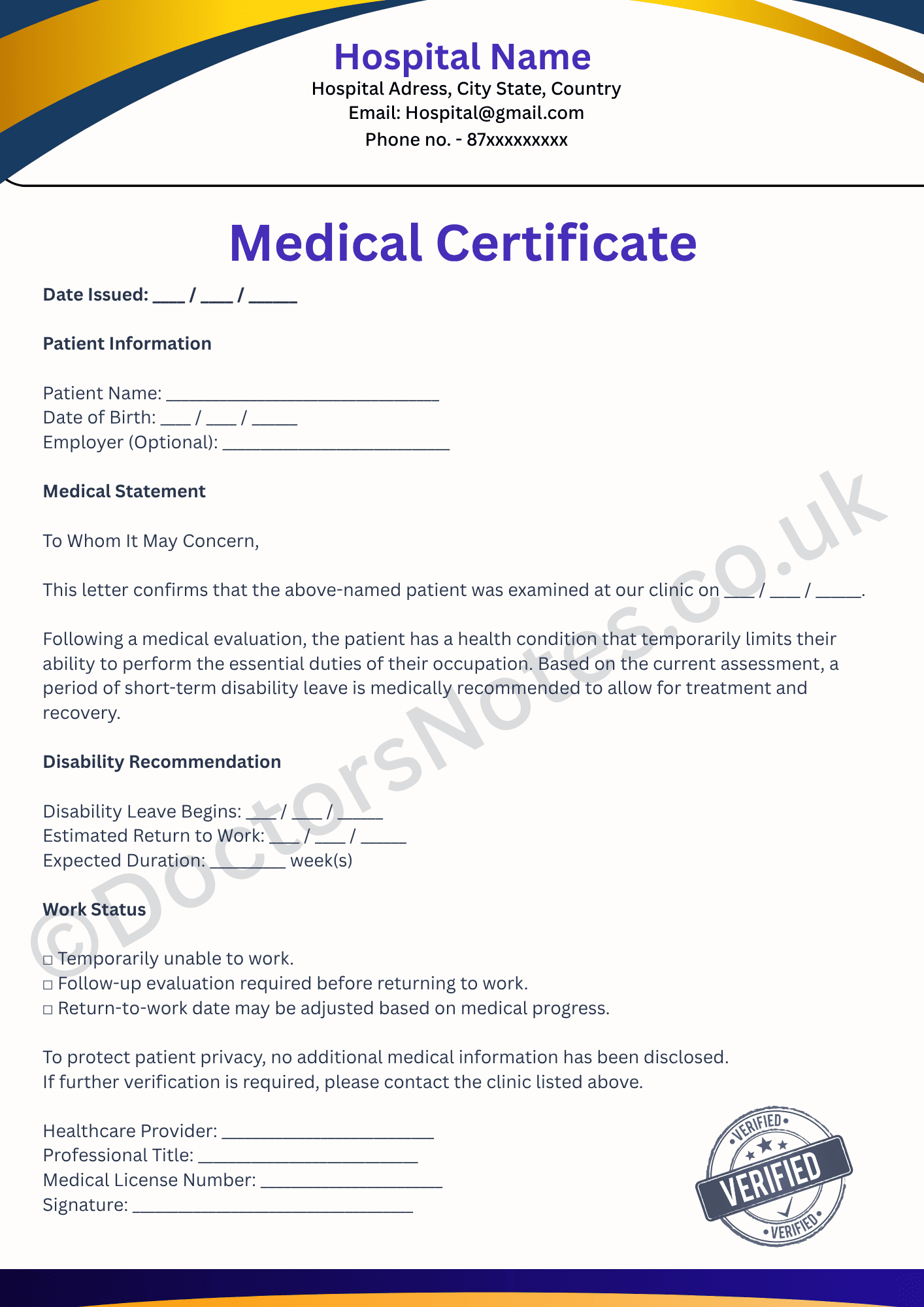
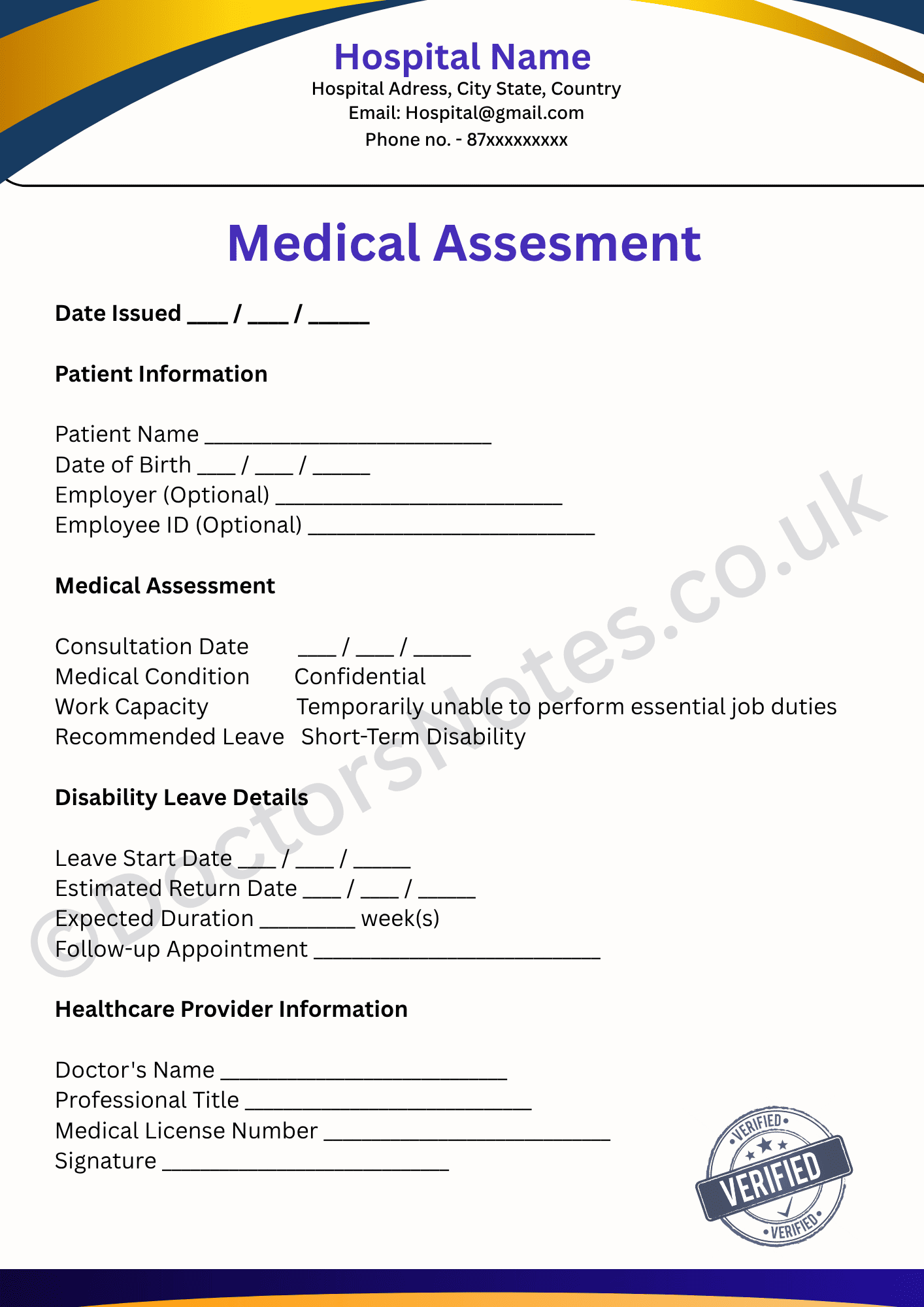
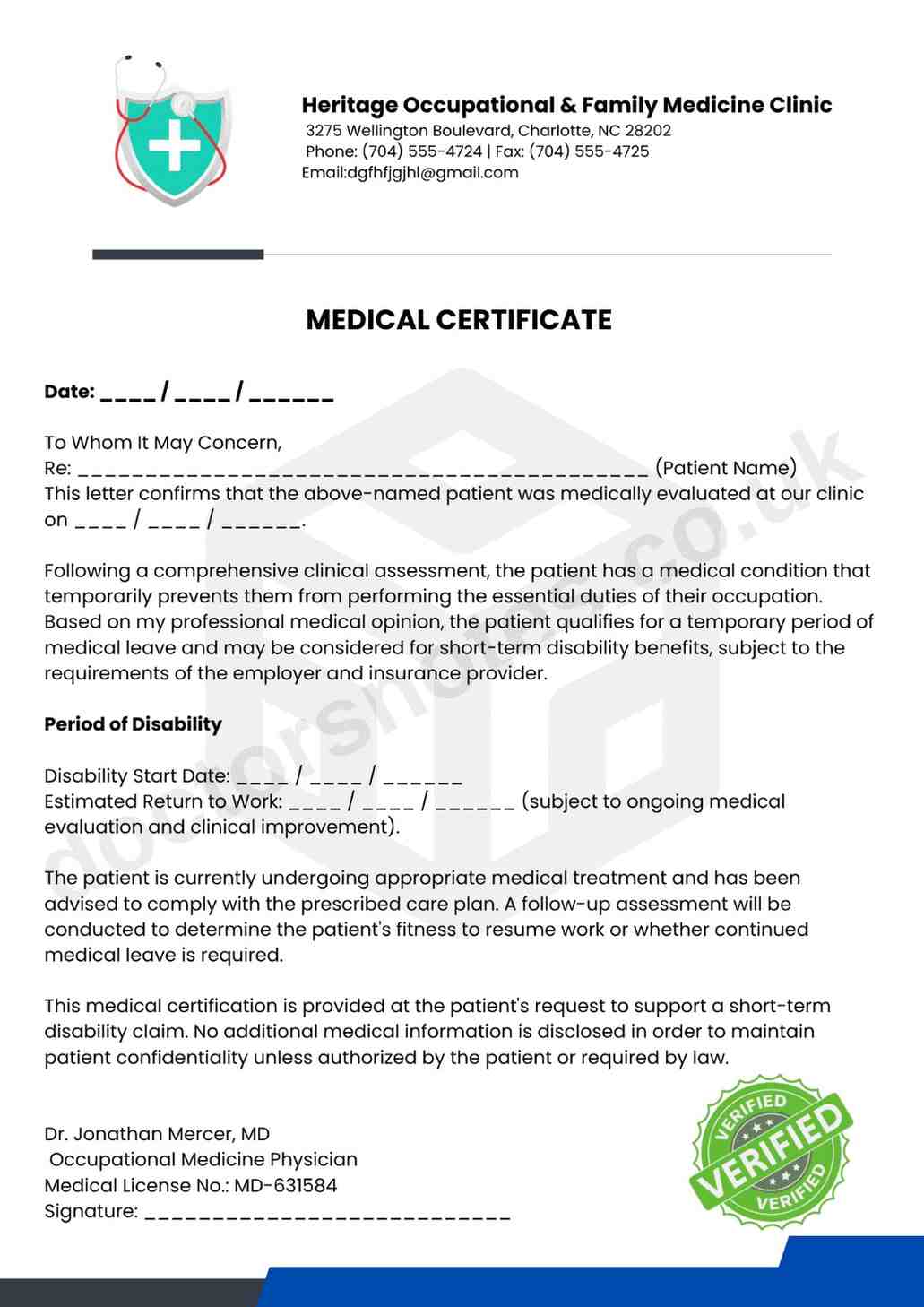
A Doctor’s Note for Short-Term Disability is a medical document issued after a licensed healthcare professional evaluates your health and determines whether your condition temporarily limits your ability to work. Depending on your diagnosis and recovery plan, the documentation may support applications for short-term disability benefits, workplace leave, or temporary work restrictions.
Unlike a routine sick note for a few days of illness, a short-term disability certificate generally relates to medical conditions that require a longer recovery period and may involve ongoing treatment or follow-up care.
This guide explains what a Doctor’s Note for Short-Term Disability is, who may need one, how the assessment process works, common qualifying medical situations, documentation validity, legal considerations, and frequently asked questions.
Related Post:
What Is a Doctor’s Note for Short-Term Disability?
A Doctor’s Note for Short-Term Disability is an official medical certificate confirming that a healthcare professional has assessed your medical condition and believes it temporarily affects your ability to carry out your normal work duties.
Depending on your clinical assessment, the documentation may include recommendations such as:
- Temporary leave from work.
- Modified or restricted duties.
- Reduced working hours.
- A phased return-to-work plan.
- Follow-up medical reviews before resuming full duties.
- Temporary workplace accommodations where appropriate.
The purpose of the certificate is to describe your functional limitations and expected recovery rather than simply confirm a diagnosis.
What Is Short-Term Disability?
Short-term disability generally refers to a temporary medical condition that prevents an individual from working for a limited period while they recover.
Coverage, eligibility requirements, benefit duration, and claim procedures vary depending on:
- Your employer’s disability policy.
- Your short-term disability insurance plan.
- Employment contract.
- Local employment and insurance regulations.
A doctor’s note is often one of the documents required when applying for disability benefits or requesting disability leave.
Medical Conditions That May Qualify for Short-Term Disability
Many different health conditions can temporarily affect a person’s ability to work.
Examples include:
Recovery After Surgery
Major surgical procedures often require time away from work for healing and rehabilitation.
Serious Injuries
Broken bones, ligament injuries, burns, or other trauma may temporarily prevent normal work activities.
Pregnancy-Related Medical Conditions
Some pregnancy complications or recovery after childbirth may require medically supported leave.
Severe Illness
Conditions such as pneumonia, serious infections, or prolonged recovery from viral illnesses may temporarily limit work capacity.
Mental Health Conditions
Conditions such as severe anxiety, depression, post-traumatic stress disorder (PTSD), or other clinically significant mental health conditions may require a period away from work when they substantially affect daily functioning.
Neurological Conditions
Concussions, migraines, certain neurological disorders, or temporary loss of function may require recovery time.
Musculoskeletal Conditions
Back injuries, arthritis flare-ups, severe neck pain, or joint disorders can temporarily affect mobility and work performance.
Every case is assessed individually, and having one of these conditions does not automatically qualify someone for short-term disability benefits.
Who May Need a Doctor’s Note for Short-Term Disability?
Medical documentation may be requested by:
Employees
Workers applying for employer-sponsored short-term disability leave.
Disability Insurance Claimants
Individuals submitting claims to a private or workplace disability insurance provider.
Self-Employed Individuals
People seeking documentation required by income protection or disability insurance policies.
Government Benefit Applicants
In some jurisdictions, temporary disability programmes may require supporting medical evidence.
Human Resources Departments
Employers may request updated medical information when reviewing workplace accommodations or return-to-work plans.
What Happens During the Medical Assessment?
The healthcare professional will evaluate how your condition affects your ability to safely perform your usual work duties.
During the consultation, you may be asked about:
- Your diagnosis or current symptoms.
- When your condition began.
- How your symptoms affect daily activities.
- Physical or mental limitations.
- Current treatment plan.
- Medications you are taking.
- Recent hospital admissions or surgery.
- Your job responsibilities.
- Expected recovery timeline.
- Previous medical history relevant to your condition.
The assessment focuses on your functional capacity rather than simply confirming that you are unwell.
When Can a Doctor Recommend Short-Term Disability Leave?
A healthcare professional may recommend temporary disability leave when your condition significantly limits your ability to perform your essential job duties safely or effectively.
Examples may include:
- Recovery following major surgery.
- Serious illness requiring extended treatment.
- Injury preventing safe physical work.
- Severe mental health symptoms affecting concentration or functioning.
- Temporary mobility limitations.
- Medical treatment requiring frequent appointments.
- Conditions where returning to work too early could delay recovery or increase health risks.
The duration of any recommended leave depends on your diagnosis, response to treatment, recovery progress, and the nature of your occupation.
Treatment and Recovery During Short-Term Disability
The purpose of short-term disability leave is to allow you sufficient time to recover while following an appropriate treatment plan.
Depending on your condition, the healthcare professional may recommend:
- Adequate rest and gradual recovery.
- Medication management.
- Physiotherapy or occupational therapy.
- Mental health counselling or psychological support.
- Rehabilitation programmes.
- Follow-up appointments.
- Lifestyle modifications that support recovery.
- Referral to a specialist when necessary.
Your recovery plan will always be tailored to your diagnosis, overall health, and individual needs.
Can Medication Be Prescribed?
Yes, where clinically appropriate.
Treatment depends on your underlying medical condition rather than your disability claim.
The healthcare professional may recommend or prescribe:
- Pain relief medication.
- Anti-inflammatory medicines.
- Antibiotics where indicated.
- Medication for chronic medical conditions.
- Mental health treatment where appropriate.
- Ongoing review of existing prescriptions.
Some conditions may require referral to a specialist before long-term treatment decisions are made.
Always inform the healthcare professional about:
- Allergies.
- Current medications.
- Pregnancy or breastfeeding.
- Existing medical conditions.
- Previous adverse reactions to medicines.
How Long Is a Doctor’s Note for Short-Term Disability Valid?
The validity of a Doctor’s Note for Short-Term Disability depends on your diagnosis, expected recovery time, treatment plan, and functional ability.
Unlike a standard sick note, short-term disability certificates often require periodic medical review to assess your recovery before returning to work.
Typical Review Periods
| Medical Situation | Typical Review Period* |
|---|---|
| Minor surgery recovery | 1–4 weeks |
| Major surgery recovery | 4–12 weeks |
| Musculoskeletal injuries | 2–8 weeks |
| Severe illness requiring recovery | 2–6 weeks |
| Mental health conditions | Individual review based on clinical progress |
| Pregnancy-related medical leave | According to obstetric assessment |
*These examples are intended as general guidance only. The actual duration of your medical certificate depends entirely on the healthcare professional’s assessment and your recovery progress.
Factors That May Affect the Duration of Your Disability Certificate
Several clinical and occupational factors may influence how long your medical documentation remains valid, including:
- The severity of your illness or injury.
- Expected healing or recovery time.
- Your response to treatment.
- Whether surgery or rehabilitation is involved.
- The physical or mental demands of your occupation.
- Whether modified duties are available.
- Specialist recommendations.
- Progress observed during follow-up appointments.
If your recovery takes longer than expected, you may need a follow-up consultation. Where medically appropriate, updated documentation may be issued following reassessment.
Returning to Work After Short-Term Disability
Returning to work is often a gradual process rather than an immediate return to full duties.
Depending on your condition, the healthcare professional may recommend:
- A phased return-to-work schedule.
- Reduced working hours initially.
- Temporary lifting or activity restrictions.
- Flexible duties.
- Ergonomic workplace adjustments.
- Regular medical reviews during your recovery.
These recommendations are designed to support a safe recovery while helping reduce the risk of relapse or further injury as you transition back to your normal work routine.
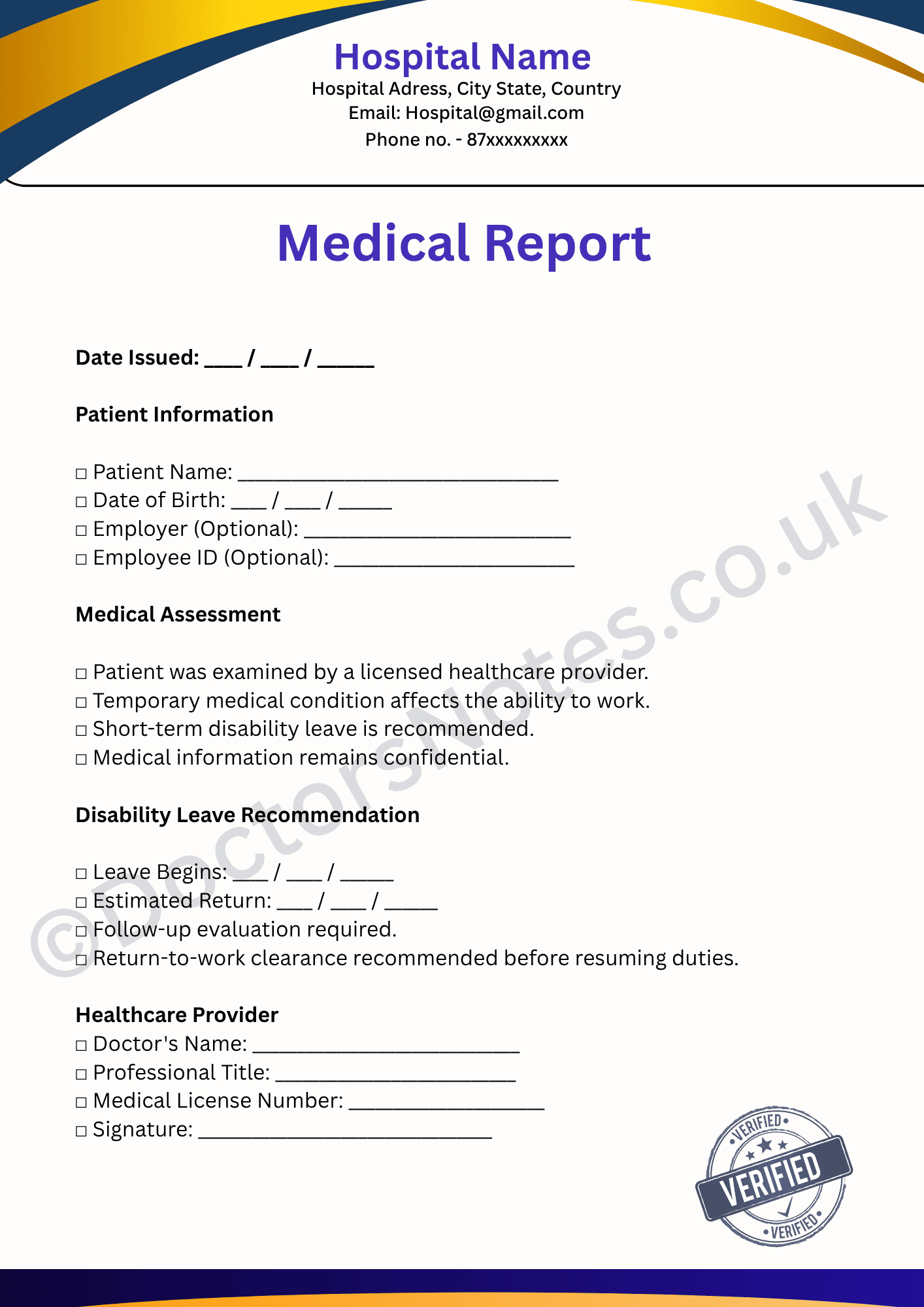
What Documents May Be Issued?
Following your consultation, the healthcare professional will determine which medical documents are appropriate based on your diagnosis, functional limitations, treatment plan, and the reason you require supporting medical evidence.
Depending on your individual assessment, you may receive:
- Doctor’s Note for Short-Term Disability or Medical Certificate.
- A Fit Note (where applicable) outlining whether you are temporarily unfit for work or fit with recommended workplace adjustments.
- Documentation confirming that your medical condition has been clinically assessed.
- Recommendations for temporary work restrictions or modified duties.
- Advice supporting a phased return-to-work programme where medically appropriate.
- Referral letters for specialist care, physiotherapy, rehabilitation, occupational health, or mental health services if required.
- Prescription recommendations or treatment advice where clinically appropriate.
- Supporting medical documentation that may assist with employer, insurance, or disability benefit requirements.
The documentation issued depends entirely on the healthcare professional’s independent clinical assessment and the medical evidence available during your consultation.
Important Legal Information
A Doctor’s Note for Short-Term Disability is an official medical document that should only be issued after a licensed healthcare professional has assessed your medical condition and determined that temporary work limitations are clinically justified.
Before requesting disability-related medical documentation, it is important to understand the following:
- A doctor’s note confirms that your health condition has been professionally assessed at the time of your consultation.
- Booking an online consultation does not guarantee that a short-term disability certificate or medical leave recommendation will be issued.
- Healthcare professionals must use independent clinical judgement when determining whether your condition temporarily prevents you from performing your normal job duties.
- The medical certificate supports your disability claim or workplace leave request but does not automatically guarantee approval of short-term disability benefits, paid leave, or insurance payments.
- Employers, insurance providers, and government benefit programmes may have additional eligibility criteria, claim procedures, or documentation requirements beyond the doctor’s note.
- Some insurers may request further medical evidence, specialist reports, diagnostic test results, or periodic medical reviews before continuing disability benefits.
- Medical documentation generally focuses on your functional limitations and expected recovery period rather than providing unnecessary details about your diagnosis unless disclosure is required or you consent.
- Your consultation, medical records, and personal information remain confidential and are handled in accordance with applicable healthcare privacy and data protection laws.
- Providing accurate information regarding your symptoms, work duties, and treatment helps ensure that any documentation reflects your current medical condition.
Important: If your condition suddenly worsens, you experience severe chest pain, difficulty breathing, loss of consciousness, symptoms of a stroke, uncontrolled bleeding, or any other medical emergency, seek immediate emergency medical care rather than relying on an online consultation.
FAQ
Can I get a Doctor’s Note for Short-Term Disability online?
Yes. You can arrange an online consultation with a licensed healthcare professional. If your medical condition is assessed and temporary work limitations are clinically appropriate, a doctor’s note may be issued.
Does a doctor’s note automatically qualify me for short-term disability benefits?
No. A doctor’s note provides medical evidence of your condition, but approval of disability benefits depends on your employer’s policy, insurance provider, or applicable government programme.
What medical conditions may qualify for short-term disability?
Many conditions may qualify if they temporarily prevent you from working, including recovery after surgery, serious injuries, severe infections, pregnancy-related complications, mental health conditions, musculoskeletal disorders, and other illnesses that significantly affect your functional ability.
How long can a short-term disability doctor’s note last?
There is no fixed duration. The length of the certificate depends on your diagnosis, expected recovery, treatment plan, clinical progress, and the physical or mental demands of your job.
Can I return to work before my certificate expires?
Yes. If your condition improves sooner than expected and the healthcare professional determines that it is medically safe, you may be able to return to work earlier, sometimes with temporary workplace adjustments.
Can my medical certificate be extended?
Yes. If your recovery takes longer than initially expected, you can arrange a follow-up consultation. Updated medical documentation may be issued where clinically appropriate after reassessment.
Will my employer know my exact diagnosis?
Not necessarily. Medical certificates usually focus on your fitness for work, work restrictions, or recovery period. Detailed medical information is generally only disclosed with your consent or where legally required.
Can I receive medication during the consultation?
If treatment is clinically appropriate, the healthcare professional may recommend or prescribe medication for your underlying medical condition in accordance with applicable prescribing regulations.
Is my consultation confidential?
Yes. Your consultation, medical records, uploaded documents, and personal information are treated confidentially and protected under applicable healthcare privacy and data protection laws.
When should I seek urgent medical attention?
Seek immediate emergency care if you develop severe chest pain, sudden weakness, difficulty breathing, loss of consciousness, signs of a stroke, severe bleeding, or any rapidly worsening medical condition.
Why Choose Our Online Consultation Service?
- Convenient online appointments without unnecessary travel.
- Consultations with licensed healthcare professionals.
- Secure and confidential medical assessments.
- Individual evaluation of how your condition affects your ability to work.
- Medical certificates issued only where clinically appropriate.
- Guidance on recovery, rehabilitation, and returning to work safely.
- Ongoing follow-up consultations when additional medical review is required.
Conclusion
A temporary illness, injury, surgery, or other medical condition can make it difficult to continue working while you recover. Obtaining timely medical advice allows your condition to be properly assessed and helps ensure that any necessary workplace leave or disability documentation accurately reflects your current health.
A Doctor’s Note for Short-Term Disability provides professional medical evidence following a clinical assessment and may support employer leave requests, insurance claims, or temporary workplace accommodations where medically appropriate. Final decisions regarding disability benefits or leave approval remain with your employer, insurance provider, or the relevant authority.
Through an online consultation, you can discuss your symptoms with a licensed healthcare professional, receive personalised treatment advice, and obtain appropriate medical documentation where clinically justified, helping you focus on recovery and a safe return to work.


Reviews
There are no reviews yet.