
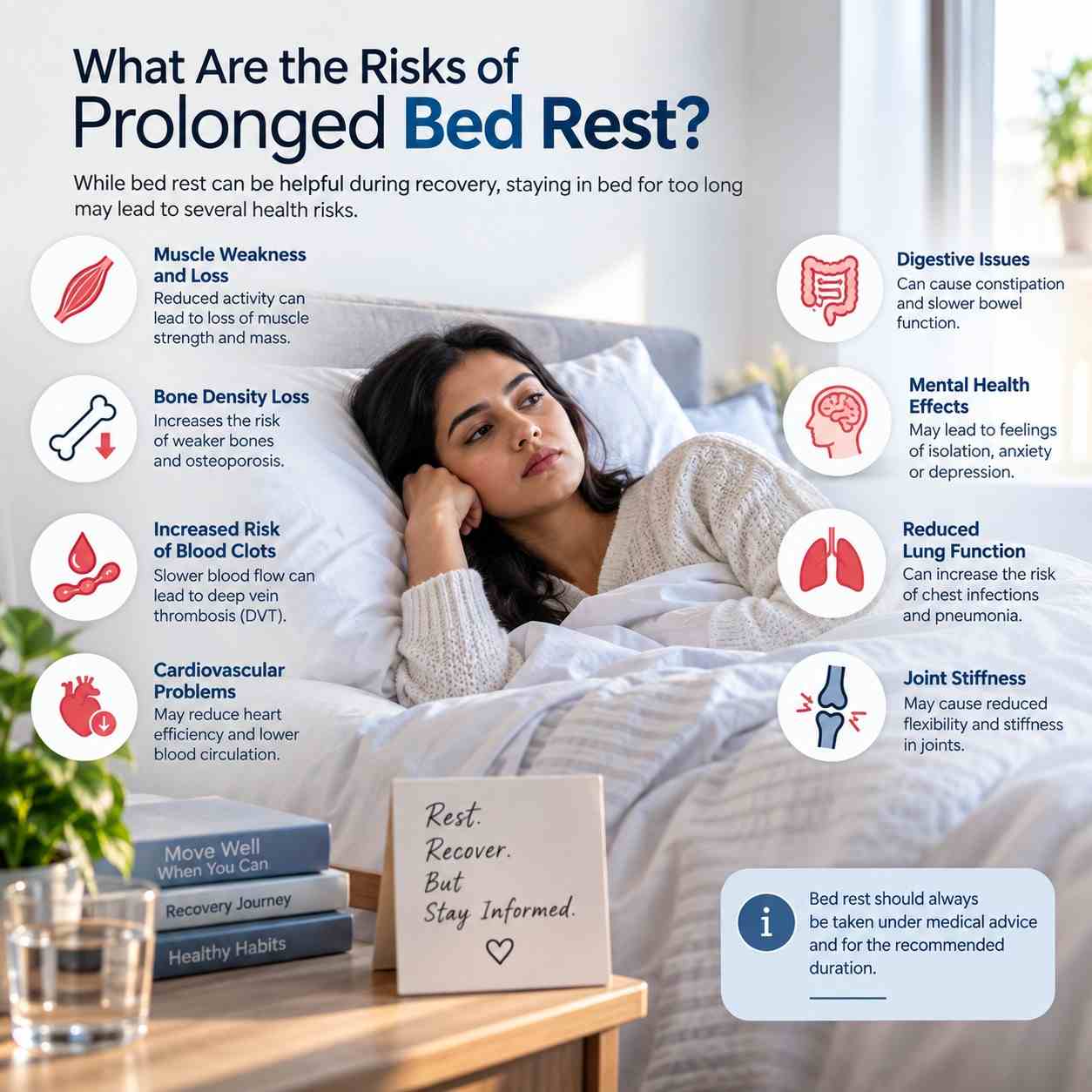
Bed rest can be an important part of recovery when a healthcare professional recommends reducing physical activity for a specific medical reason. However, staying in bed for an extended period can also affect the body in several ways.
Long periods of inactivity can reduce muscle strength, affect circulation, make movement more difficult and contribute to other physical problems. The risks vary depending on how long you remain inactive, your underlying health, age, mobility and the reason bed rest was recommended.
That is why bed rest should generally be followed according to individual medical advice rather than extended simply because additional rest seems beneficial.
Why Can Prolonged Bed Rest Be a Problem?
The human body is designed for regular movement. When normal activity is substantially reduced for days or weeks, muscles, bones, circulation and other body systems receive less stimulation than usual.
The effects may be subtle at first. Over time, however, prolonged inactivity can make it harder to return to normal daily activities.
The potential risks include:
- Muscle weakness
- Reduced physical conditioning
- Joint stiffness
- Reduced mobility
- Circulation problems
- Increased risk of pressure sores
- Changes in bone strength
- Constipation
- Reduced independence
- Difficulty returning to work or normal activities
Not everyone who spends extra time in bed will develop these problems. The risk depends on the individual circumstances and the degree and duration of inactivity.
1. Muscle Weakness and Loss of Strength
One of the most noticeable effects of prolonged inactivity can be loss of muscle strength.
When muscles are used less frequently, they can become weaker. Even everyday movements such as standing up, walking to the bathroom or climbing stairs may feel more difficult after a prolonged period of inactivity.
This can create a frustrating cycle:
Less movement → reduced strength → more difficulty moving → even less activity.
For someone who was physically active before becoming ill or injured, the difference can be particularly noticeable.
Recovery may therefore involve gradually rebuilding strength once increased activity is medically appropriate.
2. Reduced Physical Fitness
Even if you do not lose a large amount of muscle, prolonged bed rest can reduce your overall physical conditioning.
Activities that previously felt easy may become tiring.
You might notice that:
- Walking for several minutes feels harder
- Stairs require more effort
- Standing for long periods becomes uncomfortable
- Everyday tasks leave you tired
- Returning to exercise takes longer than expected
This does not necessarily mean your original illness has become worse. Some of the difficulty may be related to deconditioning after a period of inactivity.
3. Joint Stiffness
Limited movement can cause joints to feel stiff.
This may be particularly noticeable after spending long periods in the same position.
Stiffness can affect:
- Knees
- Hips
- Ankles
- Shoulders
- Back
- Other joints
The problem may become more noticeable when you first start moving again.
Whether specific movement or exercises are appropriate depends on the reason for bed rest. If you have been given movement restrictions, do not start exercises simply because your joints feel stiff without checking what is safe.
4. Circulation Problems
Movement plays an important role in normal circulation.
When someone remains largely inactive for an extended period, blood flow in the legs can become slower. In some circumstances, this can contribute to the formation of a deep vein thrombosis (DVT), a blood clot in a deep vein.
The risk is not identical for everyone. It can be influenced by factors such as:
- The duration of immobility
- Previous blood clots
- Recent surgery
- Certain medical conditions
- Pregnancy
- Some medications
- Other individual risk factors
If a healthcare professional has advised significant immobility, ask whether you have any specific measures to follow to reduce your risk.
Warning Signs of a Possible DVTPossible symptoms can include:
- Swelling in one leg
- Pain or tenderness in the leg
- Warmth around the affected area
- Skin that becomes red or discoloured
A suspected DVT requires prompt medical assessment.
5. Risk of Pulmonary Embolism
A DVT can sometimes become more serious if part of the clot travels to the lungs, causing a pulmonary embolism (PE).
Possible warning signs include:
- Sudden difficulty breathing
- Chest pain, particularly when breathing in
- Coughing up blood
- A rapid heartbeat
- Feeling faint or collapsing
These symptoms can represent a medical emergency.
If you experience severe breathing difficulty, sudden chest pain or collapse, seek emergency medical help immediately.
6. Pressure Sores and Skin Problems
Spending prolonged periods in the same position can place continuous pressure on particular areas of the body.
This can damage the skin and underlying tissue, particularly in people who have limited mobility and cannot reposition themselves easily.
Pressure sores can develop on areas such as:
- The heels
- Hips
- Ankles
- Elbows
- Lower back
- Other areas exposed to prolonged pressure
People who are unable to reposition themselves independently may require additional care and support to reduce this risk.
7. Changes in Bone Strength
Long periods without normal weight-bearing activity can affect the musculoskeletal system.
Bones respond to the physical demands placed on them. When weight-bearing activity is substantially reduced for an extended period, bone strength can be affected.
This is particularly relevant when inactivity is prolonged or occurs alongside other risk factors for reduced bone density.
Your healthcare professional can advise when and how weight-bearing activity should be reintroduced.
8. Constipation and Digestive Changes
Reduced movement can also affect bowel habits.
People who are less active may experience constipation, particularly when reduced mobility occurs alongside changes in diet, fluid intake or medication.
Some medicines used during illness or recovery can also contribute to constipation.
Maintaining appropriate hydration, nutrition and activity where medically permitted may help support normal bowel function.
If you develop persistent constipation or significant abdominal symptoms, seek medical advice.
9. Reduced Independence
After a prolonged period of inactivity, everyday tasks can become more difficult.
Someone who previously managed independently may temporarily need assistance with:
- Getting out of bed
- Walking
- Bathing
- Dressing
- Preparing meals
- Shopping
- Cleaning
- Using stairs
This can affect confidence as well as physical ability.
The good news is that reduced independence following bed rest does not necessarily mean permanent disability. With appropriate rehabilitation and gradual activity, many people can rebuild their strength and function.
10. Returning to Work May Take Longer
Prolonged inactivity can affect your ability to resume your usual job.
This may be particularly noticeable if your occupation involves:
- Manual handling
- Standing
- Walking
- Lifting
- Driving
- Repetitive physical activity
- Long shifts
A person may feel that their original illness has improved but still find that they lack the strength or stamina required for a full working day.
A gradual return or temporary workplace adjustments may sometimes be appropriate, depending on the individual’s health and role.
11. Everyday Activities Can Feel Surprisingly Difficult
After spending a long time in bed, basic activities can require more effort than expected.
Something as ordinary as taking a shower, preparing breakfast or walking around the house may initially leave you tired.
This can happen because your body has become accustomed to a much lower level of activity.
It is one reason why recovery from prolonged bed rest may involve gradually increasing activity rather than immediately returning to your previous routine.
12. Mental and Emotional Effects
Long periods of inactivity can also affect how you feel emotionally.
Being confined to bed or unable to maintain your normal routine may contribute to:
- Frustration
- Boredom
- Isolation
- Loss of independence
- Changes in mood
- Anxiety about recovery
These reactions can be understandable during a prolonged illness or recovery period.
However, persistent or severe changes in mood should not simply be attributed to bed rest. Speak to a healthcare professional if you are struggling emotionally or finding it difficult to cope.
Who May Have a Higher Risk From Prolonged Bed Rest?
The effects of inactivity vary between individuals.
Some people may be more vulnerable to complications because of factors such as:
- Older age
- Limited mobility before becoming unwell
- Significant illness
- Recent surgery
- Previous blood clots
- Certain chronic medical conditions
- Frailty
- Existing muscle weakness
The length of inactivity also matters.
Someone who spends an extra day or two resting because of a minor illness is in a very different situation from someone who has been largely immobile for several weeks.
Does This Mean Bed Rest Should Be Avoided?
No.
That would be an oversimplification.
There are circumstances where a healthcare professional may specifically recommend bed rest or significant activity restriction because reducing activity is considered appropriate for the person’s medical situation.
The important issue is using the right level of restriction for the right reason and for the appropriate period.
If your healthcare professional has instructed you to limit activity, do not disregard that advice simply because prolonged inactivity can have disadvantages.
Instead, ask what movement is safe and when activity can gradually increase.
How Can the Risks of Prolonged Bed Rest Be Managed?
The approach depends on why you are on bed rest and what your healthcare professional has advised.
Where movement is medically permitted, your recovery plan may include gradually increasing activity rather than remaining completely inactive indefinitely.
Depending on your circumstances, your healthcare team may also consider:
- Appropriate repositioning
- Mobility support
- Rehabilitation
- Physiotherapy
- Gradual return to walking
- Measures to reduce clot risk
- Nutrition and hydration
- Support with daily activities
Do not introduce exercises, stretching or weight-bearing activity if you have been given restrictions that make them unsafe.
When Should You Speak to a Healthcare Professional?
Contact your healthcare professional if you are concerned about your recovery, your mobility is getting worse or you are unsure when you should begin increasing activity.
You should also seek medical advice if you develop new symptoms during a period of significant inactivity.
Seek urgent medical help for symptoms such as:
- Sudden difficulty breathing
- Sudden chest pain
- Coughing up blood
- Fainting or collapse
- Severe or rapidly worsening symptoms
These symptoms can have causes unrelated to bed rest, but they can indicate serious conditions that require urgent assessment.
What If You Have Been Told to Stay in Bed but Feel Ready to Move?Feeling stronger is encouraging, but do not automatically abandon medical restrictions.
Instead, ask your healthcare professional whether you can begin increasing activity.
They may recommend a gradual progression rather than an immediate return to normal.
For example, the next stage might involve increasing basic movement before returning to exercise, manual work or other demanding activities.
The appropriate progression depends on the condition that led to bed rest.
What About Work and Medical Documentation?
If prolonged bed rest means you cannot work, you may need to follow your employer’s sickness-absence procedure.
In the UK, employees can generally self-certify sickness for the first 7 calendar days. When an illness lasts longer than 7 calendar days, an employer may ask for a fit note.
A fit note can indicate that someone is not fit for work or may be able to work with appropriate support, depending on the clinical assessment.
A general doctor’s letter is not automatically the same thing as a fit note, so check what your employer specifically requires.
If you need legitimate medical documentation relating to your illness or recovery, an online medical assessment may be suitable in some circumstances. DoctorsNotes.co.uk provides online medical assessment and documentation where appropriate.
Medical documentation should always accurately reflect genuine medical circumstances and the clinician’s assessment.
Prolonged Bed Rest vs Appropriate Rest
It is useful to distinguish between rest that is medically appropriate and unnecessary prolonged inactivity.
| Appropriate rest | Prolonged inactivity |
|---|---|
| Based on the individual’s medical needs | May continue beyond what is medically necessary |
| Can reduce physical demands during recovery | Can contribute to deconditioning |
| Usually forms part of a wider recovery plan | May make returning to normal activity harder |
| Activity can be increased when medically appropriate | Movement remains unnecessarily restricted |
| Guided by healthcare advice | Continued without reassessment |
The goal is not to avoid rest. It is to avoid assuming that more rest is always better.
Related Doctor’s Note :
Doctor’s Note for Bed Rest
Doctor’s Note for Torn Muscles
Doctor’s Note for Disability
Doctor’s note for Sick Leave
Frequently Asked Questions
What is the biggest risk of prolonged bed rest?
There is no single risk that applies to everyone. Muscle weakness, deconditioning, reduced mobility and circulation-related complications are among the potential concerns associated with prolonged inactivity.
Can staying in bed too long make you weaker?
Yes. Reduced use of the muscles over an extended period can lead to loss of strength and physical conditioning.
Can bed rest cause blood clots?
Prolonged immobility can increase the risk of blood clots such as DVT in some people. Individual risk varies depending on factors such as health, mobility, recent surgery and previous clotting history.
Can prolonged bed rest affect walking?
Yes. Reduced muscle strength and physical conditioning can make walking more difficult after an extended period of inactivity.
Can prolonged bed rest cause constipation?
Reduced activity can contribute to constipation, particularly when combined with changes in diet, fluid intake or medication.
Should I exercise after prolonged bed rest?
Exercise may eventually form part of recovery, but the timing and type should depend on your medical condition. If you have been on significant bed rest, ask your healthcare professional how to increase activity safely.
How do I know when bed rest is no longer necessary?
The answer depends on the condition that led to the recommendation. Rather than deciding based only on how you feel, ask your healthcare professional when and how you should begin returning to normal activity.
Can prolonged bed rest affect my ability to work?
It can. Reduced strength, stamina and mobility may make it difficult to return immediately to physically demanding work. Depending on your circumstances, workplace adjustments or a gradual return may be considered.
Conclusion
Bed rest can be medically appropriate, but prolonged inactivity can also create physical and practical challenges.
Extended periods of reduced movement may contribute to muscle weakness, loss of fitness, joint stiffness, circulation problems, pressure sores, constipation and difficulty returning to everyday activities. Some people may also experience emotional effects or temporarily lose independence.
That does not mean you should stop medically recommended bed rest. Instead, the safest approach is to understand why rest has been advised, what restrictions actually apply, and when activity can safely increase.
If you have been on bed rest for an extended period, speak with your healthcare professional before changing your activity level. A planned and gradual return to movement may be appropriate once your medical circumstances allow it.

Dr. Anuj provides convenient online medical consultations for patients across the UK, making it easier to speak with a doctor without the need for an in-person visit.
Through secure online consultations, Dr. Anuj can assess your symptoms, discuss your concerns, and provide appropriate medical guidance. Where medically appropriate and legally permitted, a doctor’s note or medical documentation may also be provided following the consultation.