
If you need to make a medical travel insurance claim, you will usually need a combination of medical evidence, proof of the costs you incurred, your travel insurance details and information showing what happened.
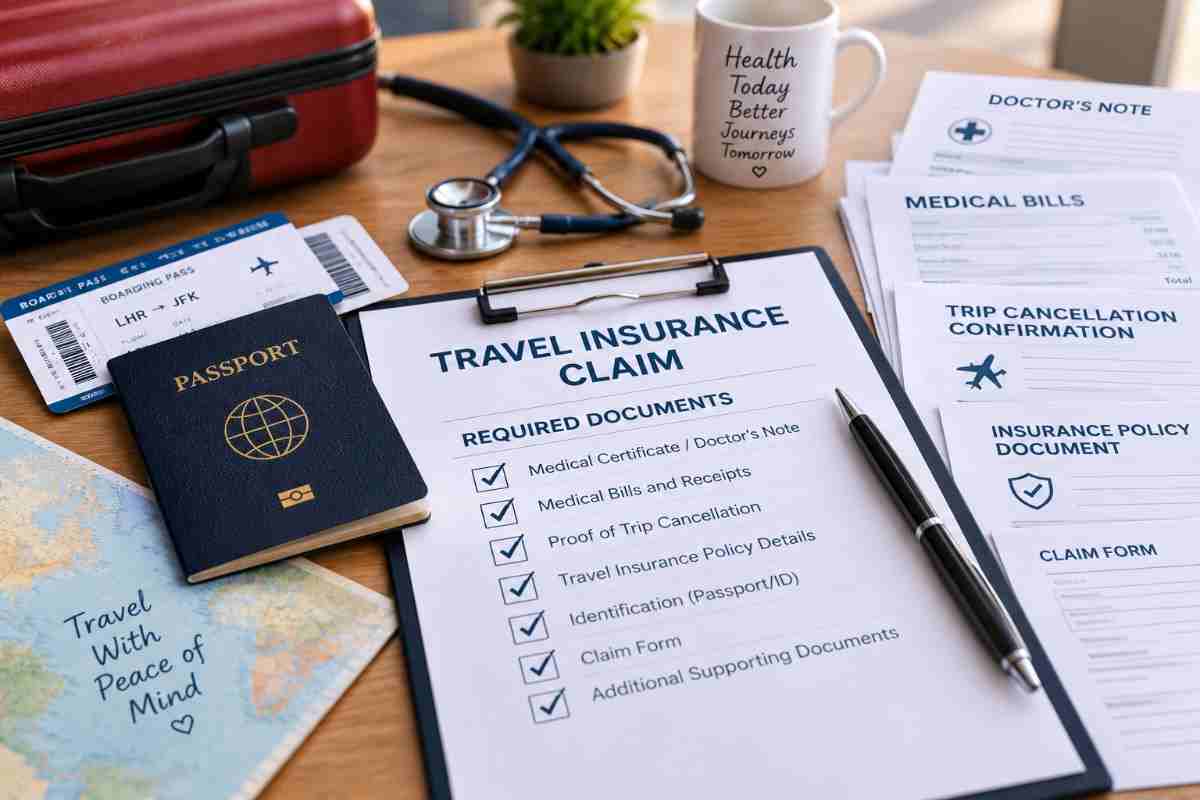
If you need to make a medical travel insurance claim, you will usually need a combination of medical evidence, proof of your expenses, travel information and insurance documents.
The exact requirements vary according to the type of claim and your insurer. For example, a claim for emergency treatment abroad may require different evidence from a cancellation claim caused by illness.
Common documents may include:
- your travel insurance policy and policy number
- medical reports or certificates
- hospital records or discharge documents
- doctor’s or consultant’s letters
- prescriptions and medication records
- medical invoices and receipts
- proof of payment
- details of treatment received
- travel documents
- correspondence with your insurer
- evidence relating to a pre-existing medical condition
- a completed insurance claim form
You will not necessarily need every document listed above. Instead, your insurer should tell you which evidence is relevant to your particular claim.
What documents are normally needed for a medical travel insurance claim?
A simple way to organise your paperwork is to place it into four categories:
Medical evidence explains what happened to your health.
Financial evidence shows what you paid or lost.
Travel evidence confirms the journey, dates and arrangements involved.
Insurance evidence establishes the policy and cover under which you are making the claim.
Keeping these categories separate can make the process much easier. More importantly, it can help you identify missing evidence before submitting your claim.
1. Your travel insurance policy documents
First, locate your insurance documents.
You may need:
- policy certificate
- policy schedule
- policy number
- insurer’s contact details
- relevant policy wording
- Insurance Product Information Document (IPID), where applicable
- details of any additional medical cover purchased
The policy wording is particularly important because it explains the cover, exclusions and conditions that apply to your claim.
For instance, two travel insurance policies may both advertise medical cover while having different requirements for pre-existing conditions, medical assistance, excesses or treatment abroad.
Therefore, do not rely solely on the summary of benefits. Check the actual policy terms that apply to your circumstances.
The Financial Ombudsman Service may also consider documents such as the policy schedule, certificate, IPID and full policy terms when reviewing travel insurance complaints.
2. Your medical report or medical certificate
Medical evidence is often one of the most important parts of a medical travel insurance claim.
Depending on what happened, relevant evidence could include:
- a doctor’s letter
- medical certificate
- hospital medical report
- consultant’s report
- treatment notes
- discharge summary
- emergency department records
- fit-to-fly certificate
- other documentation from the treating healthcare provider
The document should accurately explain the relevant medical circumstances.
For example, if you became seriously ill while abroad, medical evidence may help establish:
- what condition you were treated for
- when the treatment took place
- what treatment was provided
- whether the treatment was medically necessary
- whether you were admitted to hospital
- whether you were fit to travel
- whether further treatment was required
As a result, medical evidence can help connect the health event to the expenses or losses included in your claim.
3. Hospital records and discharge documents
If you received hospital treatment while travelling, keep the documentation provided by the hospital.
This may include:
- admission records
- discharge summary
- diagnosis information
- treatment records
- procedure reports
- test results
- prescriptions
- referral information
- hospital invoices
- details of follow-up treatment
These records can be especially useful when an insurer needs a clearer picture of what happened during a medical emergency.
A short invoice may show how much treatment cost, for example. However, it may not explain why the treatment was medically necessary.
For that reason, keep both the financial documents and the medical records whenever possible.
4. Medical invoices and receipts
If you paid for treatment yourself, keep the relevant invoices and receipts.
These could relate to:
- consultations
- hospital treatment
- diagnostic tests
- medication
- emergency treatment
- ambulance services
- specialist treatment
- medical equipment
- other covered medical expenses
Ideally, each receipt should show what you paid for, when the payment was made and the amount involved.
In addition, keep evidence showing that the payment was actually made. A card statement, bank record or electronic payment confirmation may help support the amount shown on the invoice.
Citizens Advice recommends keeping receipts for medical treatment and medication when making a travel insurance claim.
5. Prescriptions and medication records
Medication can form an important part of a medical claim, particularly when it was prescribed as part of treatment received abroad.
Keep documents such as:
- prescriptions
- pharmacy receipts
- medication invoices
- treatment instructions
- medical documentation explaining why the medicine was prescribed
This evidence can help connect the medication expense with the medical event.
For example, a pharmacy receipt is more useful when the surrounding medical records also show why the medication was required.
6. Your doctor’s letter or medical statement
A doctor’s letter may be requested when an insurer needs additional information about your medical circumstances.
Depending on the claim, it could help clarify:
- your diagnosis
- your symptoms
- the treatment provided
- relevant medical history
- whether a condition was pre-existing
- whether you were medically fit to travel
- whether illness caused you to cancel or interrupt your trip
However, a doctor’s letter is not automatically required for every medical travel insurance claim.
If your insurer specifically asks for one, find out what information it needs before requesting the document. Otherwise, you could obtain a general medical note that does not answer the insurer’s actual question.
For example, confirmation that you attended a medical appointment may not establish that you were medically unable to travel.
That distinction matters because the insurer may need evidence of a specific medical circumstance rather than simple confirmation that you saw a doctor.
For a more detailed explanation, see our guide to Doctor’s Letter for Travel Insurance Claim: What Medical Evidence Do You Need?
7. Medical evidence relating to a pre-existing condition
If your claim involves a medical condition that existed before your trip, the insurer may ask for information about your previous health.
Depending on the policy and circumstances, this could include:
- previous medical records
- GP information
- consultant reports
- treatment history
- medication records
- previous hospital records
- evidence showing when symptoms or treatment occurred
Travel insurers commonly ask customers to declare relevant existing medical conditions when purchasing cover.
Furthermore, an insurer may check medical information when assessing a claim. Therefore, inaccurate or incomplete information can create difficulties later.
The Financial Ombudsman Service may also consider medical records, hospital records or consultant reports when assessing whether a claim is connected to a pre-existing condition.
8. Proof of communication with the insurer
Keep a record of your communication with the insurer throughout the claim.
This may include:
- emails
- letters
- claim reference numbers
- relevant screenshots
- notes of telephone conversations
- assistance-service correspondence
- treatment authorisation
- instructions provided by the insurer
These records can become particularly important if you contacted the insurer before receiving treatment.
Some travel insurance policies require you to contact the insurer or its medical assistance service before certain expenses are incurred. However, exceptions can apply where immediate treatment is necessary or contacting the insurer beforehand was not reasonably possible.
If you experienced an emergency and could not make contact first, obtain appropriate medical care and then contact the insurer as soon as reasonably possible.
9. Proof that the insurer authorised treatment
If your insurer authorised treatment, keep evidence of that approval.
For example, this might be:
- an email
- an authorisation reference
- an assistance-company message
- written confirmation from the insurer
- hospital correspondence referring to insurer approval
Such evidence can be useful when medical expenses are substantial or when the insurer arranged treatment directly with the healthcare provider.
Even so, authorisation does not necessarily mean that every later expense is automatically covered. The final claim remains subject to the policy terms and the circumstances in which the costs were incurred.
10. Your travel documents
Your insurer may also require documents confirming the journey itself.
These can include:
- booking confirmation
- flight tickets
- boarding passes
- hotel booking
- holiday itinerary
- tour operator documents
- travel dates
- destination information
These documents help establish when and where the insured event occurred.
They can also become important when illness affects your ability to travel, continue your holiday or return to the UK.
11. Evidence of additional travel or accommodation costs
A medical emergency can sometimes create expenses beyond the original treatment.
For example, you may have needed:
- additional accommodation
- a replacement flight
- transport to hospital
- transport to an airport
- changes to your return journey
- emergency accommodation for a travelling companion
If you are claiming these costs, keep the relevant receipts and booking documents.
At the same time, be prepared to explain why the expense was necessary. The insurer may also need to establish whether the particular cost is covered under your policy.
12. Repatriation documents
If your illness or injury meant you needed to return to the UK earlier than planned, additional medical and travel documents may be relevant.
These could include:
- fit-to-fly certificates
- medical clearance
- hospital reports
- repatriation arrangements
- flight documentation
- ambulance or transport invoices
- correspondence with the insurer’s assistance team
The Financial Ombudsman Service identifies documents such as fit-to-fly certificates, hospital medical reports, assistance-company records and relevant treatment or air-ambulance information as potentially relevant in medical expenses and repatriation disputes.
Consequently, keep records of both the medical decision and the arrangements made to return home.
13. Evidence of payment
An invoice shows that a charge was issued.
Proof of payment, however, can help demonstrate that you actually paid the amount.
Depending on the circumstances, this could include:
- card receipt
- bank statement
- payment confirmation
- cash receipt
- electronic payment record
Where possible, retain the original documentation and submit copies unless your insurer specifically asks for originals.
Citizens Advice also recommends keeping copies of documents submitted with an insurance claim.
14. The completed claim form
Your insurer will normally provide a claim form or an online claims process.
Complete it carefully and make sure the information matches your supporting evidence.
You may be asked for:
- policy information
- travel dates
- date of illness or injury
- description of what happened
- medical treatment received
- healthcare provider details
- amount being claimed
- details of other insurance
- supporting documents
Most importantly, do not guess when completing the form.
If you cannot remember a date or medical detail, check your records instead of estimating it. Consistent information across your claim form and supporting documents can help avoid unnecessary questions.
Do you need a doctor’s letter for every medical travel insurance claim?
No. A doctor’s letter is not automatically required for every medical travel insurance claim.
The evidence required depends on the type of claim and the information the insurer needs.
For instance, a straightforward medical expense claim may mainly require treatment records, invoices and receipts.
By contrast, a cancellation claim caused by illness may require medical evidence explaining the condition and its effect on your ability to travel.
Similarly, a claim involving a pre-existing condition may require information about your previous medical history.
Therefore, it is usually better to ask your insurer what evidence it needs rather than collecting every possible medical document.
What if you do not have all the documents?
Do not automatically assume that you cannot make a claim.
Instead, contact the insurer and explain which documents you have and which are unavailable.
For example, you might have:
- the hospital invoice but not the complete medical report
- a prescription but not the original pharmacy receipt
- a doctor’s letter but not your full medical records
- electronic receipts instead of paper copies
In these situations, ask whether alternative evidence is acceptable.
The insurer may be able to explain what information it actually needs and whether another document can provide it.
What if the insurer asks for more medical evidence?
When this happens, ask the insurer exactly what it is trying to establish.
For example, you could ask:
“Do you need evidence of my diagnosis, treatment, medical history or inability to travel?”
The answer can help you identify the most relevant document.
If the insurer needs confirmation of your diagnosis, a medical report may be appropriate.
On the other hand, if it needs evidence about your ability to travel, a medical assessment or specific information from the treating doctor may be more relevant.
Likewise, a claim involving a previous condition may require historical medical records.
The objective is therefore to provide relevant evidence, rather than simply supplying more paperwork.
What if your medical evidence is old?
An older medical document is not automatically irrelevant.
Its usefulness depends on what it establishes.
For example, an older record may help demonstrate your medical history. However, recent evidence may be more appropriate when the insurer needs to understand a new illness, deterioration or current inability to travel.
If the insurer says your evidence is too old, ask what information it believes is missing.
You may only need an updated document addressing the specific gap rather than a completely new medical assessment.
For more information, see our article How Recent Does a Doctor’s Letter Need to Be for a Travel Insurance Claim?
How should you organise your documents?
A simple folder can make the claims process much easier.
Consider separating your paperwork into four sections.
Medical
- medical reports
- doctor’s letters
- certificates
- prescriptions
- hospital records
- discharge documents
Financial
- invoices
- receipts
- payment confirmations
- additional accommodation costs
- transport costs
Travel
- booking confirmations
- flight details
- boarding passes
- itinerary
Insurance
- policy documents
- policy number
- claim form
- claim reference
- emails
- insurer correspondence
Keep copies of everything you submit.
As a result, if the claim is queried or disputed later, you will have a clear record of the information provided.
What documents are needed for different types of medical travel insurance claims?
The evidence varies according to the type of claim.
| Type of claim | Documents that may be relevant |
|---|---|
| Emergency medical treatment abroad | Medical report, invoices, receipts, prescriptions and proof of payment |
| Hospitalisation | Admission records, hospital report, discharge summary and invoices |
| Medical evacuation | Medical reports, fit-to-fly evidence, repatriation documents and transport invoices |
| Returning home early | Medical evidence, insurer correspondence and revised travel documents |
| Cancellation due to illness | Medical evidence, booking documents and cancellation costs |
| Curtailment due to illness | Medical evidence, travel documents and additional travel costs |
| Claim involving a pre-existing condition | Medical history, GP/consultant evidence, treatment records and policy information |
| Disputed medical claim | Policy wording, medical evidence, claim correspondence, receipts and timeline |
This table is a guide rather than a universal checklist. Your insurer may request additional evidence depending on the circumstances.
What if your medical travel insurance claim is rejected because of missing documents?
A missing document does not necessarily mean that the underlying claim is invalid.
First, find out exactly what the insurer says is missing.
For example, there is an important difference between:
“We need evidence showing what treatment you received.”
and:
“The treatment is excluded under your policy.”
The first issue may potentially be resolved by providing appropriate evidence.
The second is a question of whether the policy actually provides cover.
If you believe the insurer has rejected your claim unfairly, review the rejection letter, the relevant policy wording and the evidence you submitted.
You can then use the insurer’s formal complaints process if you believe the decision is incorrect.
If the complaint remains unresolved, eligible complaints may be taken to the Financial Ombudsman Service after following the insurer’s complaints procedure.
Do medical documents guarantee that a travel insurance claim will be accepted?
No.
Medical documentation provides evidence about your health and treatment. It does not guarantee that the insurer will pay the claim.
The insurer may still consider:
- whether the event is covered
- whether an exclusion applies
- whether the condition was pre-existing
- whether health information was disclosed correctly
- whether the expenses are covered
- whether the claim meets the policy conditions
- whether required procedures were followed
Therefore, a medical certificate or doctor’s letter should be viewed as supporting evidence, not as a guarantee of insurance approval.
Any document supplied should accurately reflect your genuine medical circumstances.
Need a doctor’s letter or medical documentation for a travel insurance claim?
If your insurer has specifically requested medical documentation, first establish what information it needs and why.
A doctor’s letter, medical certificate or medical report can be useful when an insurer needs evidence about your illness, treatment, medical history or ability to travel.
However, the document should accurately reflect your genuine medical circumstances. It should never be altered, exaggerated or created to support a claim that is not medically justified.
If you need legitimate medical documentation relating to a genuine medical circumstance, DoctorsNotes.co.uk can help you explore the appropriate doctor’s note or medical documentation service.
Remember that medical evidence can support an insurance claim, but it cannot guarantee that the insurer will accept the claim or reimburse the amount requested.
Frequently Asked Questions
What is the most important document for a medical travel insurance claim?
There is no single document that is most important for every claim. Usually, the most useful evidence is the documentation that clearly connects the medical event with the treatment and financial loss.
Do I need a medical certificate to claim travel insurance?
Not necessarily. Some claims require a medical certificate or doctor’s evidence, whereas others may rely mainly on hospital records, treatment documents, invoices and receipts.
Do I need a doctor’s letter for travel insurance?
You may need one if your insurer specifically requests medical evidence that can best be provided by a doctor. However, it is not automatically required for every claim.
What medical evidence can an insurer ask for?
Depending on the circumstances, an insurer may request medical reports, hospital records, doctor’s letters, medical certificates, consultant reports, treatment records, prescriptions or other relevant documentation.
Do I need receipts for medical treatment abroad?
You should keep receipts and invoices for medical treatment, medication and other expenses you intend to claim. They can help establish the amount you paid and what the expense related to.
What happens if I lose my medical receipts?
Contact the insurer and explain what happened. You can also ask the medical provider or pharmacy whether it can issue a duplicate receipt or other evidence of payment.
Can I claim medical expenses without contacting my insurer first?
It depends on the policy and circumstances. Many travel insurance policies ask you to contact the insurer before certain expenses are incurred where reasonably possible. However, an emergency may make prior contact impossible.
Can I use my hospital discharge summary as medical evidence?
Potentially, yes. A discharge summary can provide useful information about your diagnosis, treatment and hospitalisation. Whether it is sufficient depends on what your insurer needs to establish.
How do I prove that a medical condition was pre-existing?
Medical records, GP information, consultant reports, previous treatment records and other relevant documentation may help establish your medical history.
What should I do if my insurer asks for a medical report?
Ask the insurer what specific information it needs the report to establish. That way, you can request documentation that directly addresses the issue rather than obtaining unnecessary paperwork.
Conclusion
Before submitting your claim, check whether you have the relevant documents below:
- Travel insurance policy and policy number
- Policy certificate and schedule
- Completed claim form
- Medical report or relevant medical certificate
- Doctor’s letter, if requested
- Hospital records or discharge documents
- Prescriptions and medication records
- Medical invoices
- Receipts
- Proof of payment
- Travel booking documents
- Flight or transport documents
- Evidence of additional expenses
- Repatriation or fit-to-fly documents, where applicable
- Evidence relating to pre-existing medical conditions, where relevant
- Emails and correspondence with the insurer
- Claim reference number
- Copies of everything submitted
You may not need every item on this list. Instead, focus on the documents that relate directly to your particular claim and the information your insurer has requested.
The key takeaway
The strongest travel insurance claim is not necessarily the one with the largest number of documents.
Instead, the evidence should clearly connect the medical event, the treatment, the financial loss and the cover provided by the policy.
Start with your insurer’s requirements. Then gather the relevant medical, financial, travel and insurance evidence.
Finally, keep copies of everything you submit and ask questions whenever you are unsure what a particular document needs to establish.
If you are asked for a doctor’s letter or medical certificate, make sure it accurately reflects your genuine medical circumstances.
Medical documentation can support a claim, but it cannot guarantee that the insurer will approve it.

Dr. Anuj provides convenient online medical consultations for patients across the UK, making it easier to speak with a doctor without the need for an in-person visit.
Through secure online consultations, Dr. Anuj can assess your symptoms, discuss your concerns, and provide appropriate medical guidance. Where medically appropriate and legally permitted, a doctor’s note or medical documentation may also be provided following the consultation.