



Back pain is one of the most common reasons people seek medical care and may affect individuals of all ages. It can develop suddenly after lifting a heavy object, following an injury, or gradually over time because of poor posture, repetitive movements, muscle strain, or underlying spinal conditions. Depending on the severity of your symptoms, back pain may temporarily interfere with your ability to work, attend school, or perform normal daily activities.
This guide explains what a Doctor’s Note for Back Pain is, when it may be required, what information it may include, and how healthcare professionals assess back pain before issuing medical documentation.
What Is a Doctor’s Note for Back Pain?
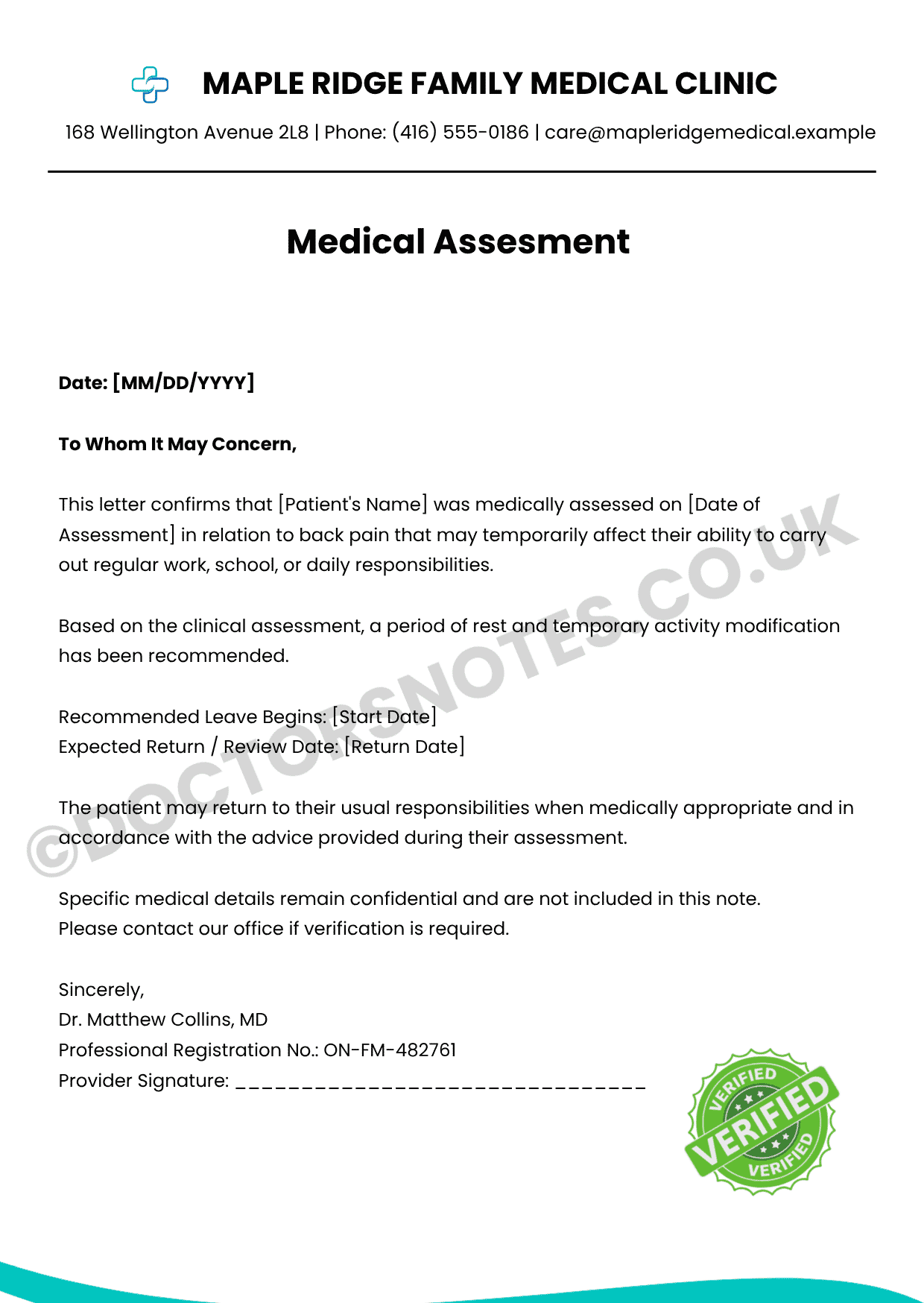
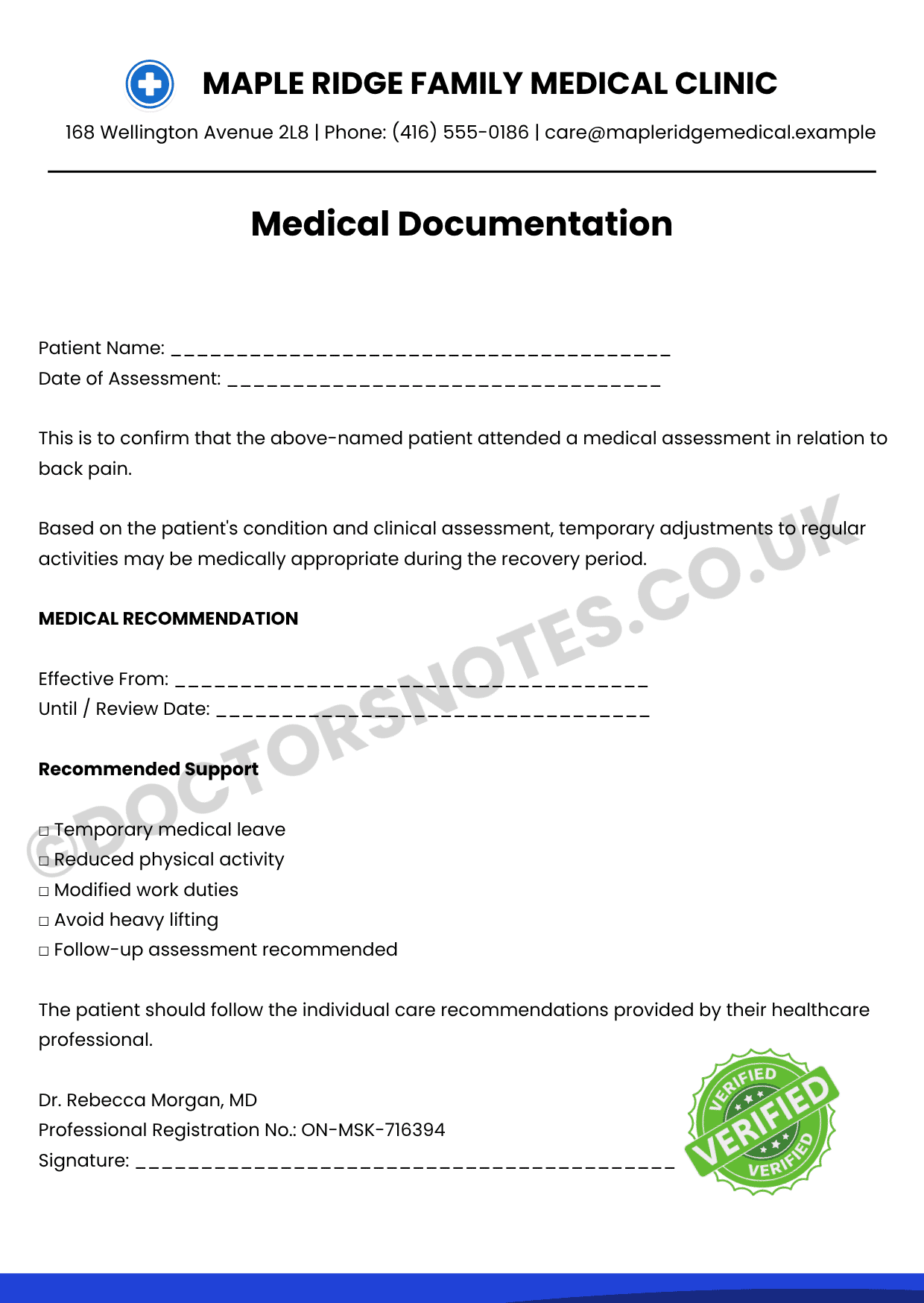
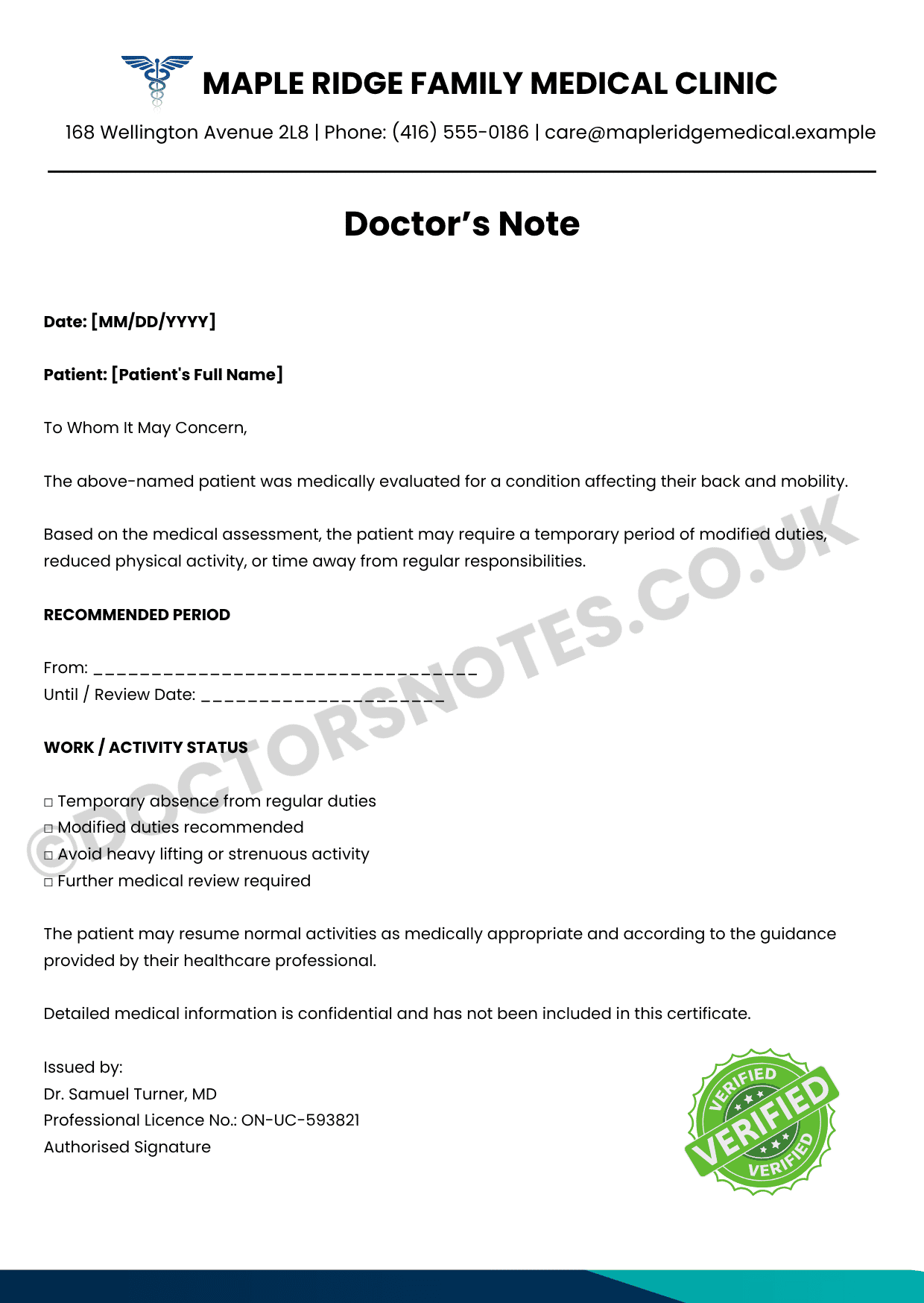
A Doctor’s Note for Back Pain is medical documentation prepared after a clinical assessment of your back pain and its impact on your normal activities.
Depending on your individual assessment, the documentation may include:
- Confirmation that you have undergone a medical evaluation.
- Recommendations regarding temporary absence from work or school where appropriate.
- Advice on modified duties or reduced physical activity.
- Temporary lifting, bending, or standing restrictions.
- Recommendations for ergonomic adjustments in the workplace.
- Follow-up review if additional recovery or treatment is required.
The note reflects your current functional ability and medical assessment rather than simply confirming that back pain is present.
When Might You Need a Doctor’s Note for Back Pain?
Medical documentation may be requested when back pain affects your ability to carry out your normal responsibilities safely.
Difficulty Performing Work Duties
Some occupations place significant physical demands on the back and spine.
Examples include:
- Construction work.
- Warehouse and logistics roles.
- Nursing and healthcare.
- Hospitality.
- Manufacturing.
- Delivery services.
- Cleaning and maintenance work.
If back pain limits your ability to safely perform these duties, temporary work modifications may be recommended.
Office and Desk-Based Employment
Even sedentary jobs can become difficult when sitting for prolonged periods worsens back pain.
A healthcare professional may assess whether temporary adjustments such as ergonomic seating, standing breaks, or modified workstations would support your recovery.
School or University Attendance
Students experiencing significant back pain may have difficulty:
- Sitting through long classes.
- Carrying heavy backpacks.
- Walking across large campuses.
- Participating in laboratory sessions.
- Completing physical education activities.
Medical documentation may support temporary academic accommodations where appropriate.
Recovery After Injury or Treatment
Back pain sometimes develops following:
- Muscle strains.
- Sports injuries.
- Falls.
- Vehicle accidents.
- Surgical procedures.
- Repetitive overuse injuries.
A medical assessment helps determine whether additional recovery time or temporary restrictions are appropriate before returning to normal activities.
What Information May Be Included in the Doctor’s Note?
The contents of the documentation depend on your symptoms, examination findings, and functional limitations.
A doctor’s note may include:
- Confirmation of medical consultation.
- Date of assessment.
- Recommendations regarding work or school attendance.
- Temporary activity restrictions.
- Guidance regarding lifting or repetitive movements.
- Recommendations for workplace modifications where appropriate.
- Follow-up review if symptoms continue.
Only information necessary for the intended purpose is generally included, helping maintain your medical privacy.
Common Symptoms Associated With Back Pain
Back pain varies considerably depending on the underlying cause and the area of the spine involved.
Common symptoms may include:
- Pain in the lower, middle, or upper back.
- Muscle stiffness.
- Reduced range of movement.
- Pain when bending or twisting.
- Difficulty standing or sitting for long periods.
- Muscle spasms.
- Pain radiating into the hips or legs.
- Discomfort during lifting or walking.
The severity and duration of symptoms differ from one individual to another and require an individual clinical assessment.
What Happens During the Medical Assessment?
During your consultation, the healthcare professional will evaluate your symptoms, mobility, and how back pain affects your daily life.
You may be asked about:
- When the pain started.
- Whether the pain developed suddenly or gradually.
- Any recent injuries or accidents.
- The location and severity of the pain.
- Activities that make the pain better or worse.
- Previous episodes of back pain.
- Current medications or treatments.
- Your occupation or educational activities.
- Whether your employer or school requires medical documentation.
Following the assessment, the healthcare professional will determine whether a Doctor’s Note for Back Pain is clinically appropriate and whether temporary activity restrictions, workplace modifications, or additional investigations should be recommended.
Important: A Doctor’s Note for Back Pain provides medical documentation based on your individual clinical assessment. It does not automatically guarantee leave approval, workplace accommodations, or academic adjustments, as these decisions are made by your employer or educational institution according to their own policies and applicable laws.
How to Get a Doctor’s Note for Back Pain
If back pain is affecting your ability to work, attend school, or carry out your normal daily activities, you can arrange a consultation with a licensed healthcare professional. During the appointment, your symptoms, physical function, and medical history will be assessed to determine whether a Doctor’s Note for Back Pain is clinically appropriate.
Step 1: Book a Medical Consultation
Schedule an appointment as soon as your back pain begins to interfere with your routine activities or job responsibilities.
Prompt assessment can help identify whether your symptoms are related to:
- Muscle strain.
- Ligament injury.
- Poor posture.
- Repetitive movement.
- Nerve irritation.
- Degenerative spinal conditions.
- Another musculoskeletal problem requiring further evaluation.
Step 2: Register or Log In
New patients should complete the online registration process before booking an appointment. Existing patients can sign in using their account details to access available consultation times.
Step 3: Complete Your Health Questionnaire
Before your consultation, you will be asked questions about your symptoms and medical history.
The healthcare professional may ask about:
- When the pain started.
- The location of the pain.
- Whether the pain is constant or intermittent.
- Pain severity.
- Recent injuries or heavy lifting.
- Numbness or tingling.
- Difficulty walking or standing.
- Previous spinal problems.
- Current medications.
- Your work duties or educational activities.
- Whether medical documentation has been requested.
Providing detailed information helps the healthcare professional assess your condition more accurately.
Step 4: Upload Relevant Medical Information (If Available)
If you have received previous treatment for your back pain, you may upload supporting records before your consultation.
Examples include:
- Previous medical reports.
- Physiotherapy assessments.
- Hospital discharge summaries.
- X-ray reports.
- MRI or CT scan results.
- Occupational health assessments.
- Specialist clinic letters.
- Employer accommodation forms where applicable.
These documents may assist the healthcare professional but are not always necessary.
Step 5: Attend Your Consultation
During the consultation, the healthcare professional will discuss your symptoms and evaluate how your back pain affects your daily activities.
Topics may include:
- Your current symptoms.
- Mobility limitations.
- Ability to sit, stand, walk, or lift objects.
- Work-related physical demands.
- Previous treatments.
- Home management strategies.
- Whether additional investigations are required.
- Whether temporary work restrictions may support recovery.
If your symptoms suggest a more serious spinal condition, urgent in-person assessment or referral to a specialist may be recommended.
Step 6: Receive Your Doctor’s Note
If medical documentation is clinically appropriate, your Doctor’s Note for Back Pain will be prepared following your consultation.
Depending on your assessment, the documentation may include:
- Confirmation of medical assessment.
- Recommendations regarding temporary work or school absence.
- Advice on lifting or movement restrictions.
- Recommendations for modified duties.
- Guidance on workplace ergonomics.
- Follow-up review if ongoing recovery is required.
Important: Booking a consultation does not automatically result in a doctor’s note. Documentation is issued only when supported by the healthcare professional’s independent clinical judgement.
Managing Back Pain During Recovery
Recovery from back pain often involves a combination of medical advice, appropriate activity, and avoiding movements that worsen symptoms.
Your healthcare professional may recommend:
- Remaining as active as your symptoms allow.
- Avoiding heavy lifting during recovery.
- Taking regular movement breaks if sitting for long periods.
- Using correct lifting techniques.
- Performing gentle stretching exercises where appropriate.
- Applying heat or cold therapy if recommended.
- Taking prescribed or over-the-counter medication as advised.
- Attending physiotherapy if additional rehabilitation is needed.
Treatment plans vary depending on the cause of the pain and your individual health.
Can Workplace Adjustments Be Recommended?
Yes. If you are able to continue working safely with temporary modifications, the healthcare professional may recommend workplace adjustments instead of complete leave.
Examples include:
- Temporary lifting restrictions.
- Reduced bending or twisting.
- Seated duties.
- Sit-stand workstation arrangements.
- More frequent rest breaks.
- Reduced working hours.
- Temporary reassignment to lighter duties.
- Flexible working arrangements where appropriate.
The availability of these accommodations depends on your employer’s policies and operational requirements.
How Long Is a Doctor’s Note for Back Pain Valid?
The duration covered by a Doctor’s Note for Back Pain depends on your diagnosis, symptom severity, expected recovery, and the healthcare professional’s assessment.
Some individuals recover within a few days, while others require a longer period of modified activity or follow-up treatment.
Examples of Medical Recommendations
| Clinical Situation | Possible Recommendation* |
|---|---|
| Mild muscle strain | Continue normal activities with temporary precautions |
| Acute lower back pain | Short period of modified duties |
| Physically demanding occupation | Temporary lifting restrictions |
| Persistent back pain | Follow-up assessment and rehabilitation |
| Suspected spinal condition | Specialist referral and further investigation |
*These examples are provided for general guidance only. Recommendations are based on your individual medical assessment.
When Should You Arrange Another Medical Review?
Arrange another medical assessment if:
- Your pain becomes significantly worse.
- You develop numbness or weakness in your legs.
- Walking becomes increasingly difficult.
- Pain continues despite treatment.
- New symptoms develop.
- Your employer requests updated medical documentation.
- Your healthcare professional recommends follow-up monitoring.
- Your work duties change before recovery is complete.
Ongoing assessment helps ensure that your treatment and workplace recommendations continue to reflect your recovery and current level of function.
What Documents May Be Issued?
Following your medical assessment, the healthcare professional will determine which documentation is appropriate based on your symptoms, functional limitations, and clinical findings.
Depending on your individual circumstances, you may receive:
- Doctor’s Note for Back Pain confirming that you have undergone a medical evaluation.
- A medical certificate supporting a temporary absence from work or school where clinically appropriate.
- Documentation recommending modified duties instead of complete leave.
- Temporary lifting, bending, twisting, or standing restrictions.
- A fitness-for-work assessment outlining your current functional capacity.
- Recommendations for ergonomic workplace adjustments.
- Referral letters for physiotherapy, orthopaedic consultation, pain management, or spinal specialist assessment if required.
- Requests for diagnostic imaging, such as X-rays or MRI scans, when clinically indicated.
- Follow-up medical documentation if your recovery requires further review.
The documentation provided reflects your current medical condition and is based on the healthcare professional’s independent clinical judgement.
Important Legal Information About a Doctor’s Note for Back Pain
A Doctor’s Note for Back Pain is an official medical document issued by a licensed healthcare professional after assessing your symptoms, mobility, and ability to safely perform your usual activities.
Before requesting this documentation, it is important to understand:
- A doctor’s note is issued only after an appropriate medical consultation and clinical assessment.
- Booking an appointment does not automatically result in medical leave or work restrictions.
- Healthcare professionals provide recommendations based on your symptoms, examination findings, medical history, and functional limitations.
- The documentation may recommend temporary leave, modified duties, lifting restrictions, or workplace accommodations when clinically appropriate.
- Employers, educational institutions, and other organisations decide whether leave requests or recommended accommodations can be approved according to their own policies and applicable laws.
- A doctor’s note does not replace workers’ compensation forms, occupational health reports, disability assessments, insurance paperwork, or employer-specific documentation that may be separately required.
- Medical documentation generally focuses on your functional ability rather than providing detailed information about your diagnosis unless additional disclosure is clinically necessary or authorised by you.
- Your consultation, medical records, and personal health information remain confidential and are managed in accordance with applicable healthcare privacy and data protection laws.
- If your condition changes, improves, or worsens, a further medical assessment may be required before updated recommendations or additional documentation can be issued.
Important: Seek urgent medical attention immediately if your back pain is accompanied by loss of bladder or bowel control, numbness around the groin or saddle area, severe leg weakness, fever with severe back pain, significant trauma, or sudden inability to walk. These symptoms may indicate a medical emergency that requires immediate assessment rather than routine documentation.
FAQ
Can I get a Doctor’s Note for Back Pain through an online consultation?
Yes. Many cases of back pain can be assessed through an online consultation. If the healthcare professional determines that medical documentation is clinically appropriate, a doctor’s note may be issued. However, some patients may require an in-person examination or further investigations depending on their symptoms.
Does every case of back pain require time off work?
No. Many people are able to continue working with temporary modifications such as lighter duties, ergonomic adjustments, or reduced lifting. Recommendations depend on your individual assessment.
Can the doctor’s note include lifting restrictions?
Yes. If heavy lifting, repetitive bending, or prolonged standing could delay recovery or worsen your symptoms, temporary restrictions may be included where clinically appropriate.
Will my employer automatically approve modified duties?
Not necessarily. The doctor’s note provides medical recommendations, but the decision to implement workplace adjustments depends on your employer’s policies and operational requirements.
Can back pain qualify for school accommodations?
Yes. Students experiencing significant back pain may receive documentation supporting temporary adjustments, such as modified physical education participation, flexibility with prolonged sitting, or other accommodations depending on institutional policies.
Will the doctor’s note state my exact diagnosis?
Usually not. Most medical documentation focuses on your ability to perform activities safely and any recommended restrictions rather than providing detailed diagnostic information unless it is clinically necessary or authorised by you.
Is physiotherapy always required for back pain?
No. Some cases improve with self-care and activity modification, while others benefit from physiotherapy or specialist treatment. Your healthcare professional will recommend the most appropriate management based on your condition.
Is my consultation confidential?
Yes. Your consultation, examination findings, and medical records are confidential and managed in accordance with applicable healthcare privacy and data protection laws.
What if my pain continues after my doctor’s note expires?
If your symptoms persist or worsen, arrange another medical assessment. Your healthcare professional can review your progress, adjust your treatment plan, and provide updated documentation if medically appropriate.
Can this documentation be used for insurance or workplace claims?
Some insurers, employers, or compensation programmes may accept a doctor’s note, while others require separate medical reports or claim forms. Always check the requirements of the organisation requesting the documentation.
Why Choose Our Online Back Pain Consultation?
- Licensed healthcare professionals experienced in assessing musculoskeletal conditions.
- Convenient online consultations without unnecessary travel.
- Individual evaluations based on your symptoms, mobility, and work requirements.
- Medical documentation issued only when clinically appropriate.
- Guidance on activity modification, workplace ergonomics, and recovery strategies.
- Secure, confidential, and patient-focused care.
- Follow-up appointments available if your symptoms change or additional support is required.
Conclusion
Back pain can range from a short-term muscle strain to a condition that temporarily affects your ability to work, study, or carry out everyday activities. A professional medical assessment helps identify the likely cause of your symptoms and ensures that any recommendations are tailored to your individual needs.
A Doctor’s Note for Back Pain provides objective medical documentation following a clinical evaluation and may support workplace, educational, or administrative requirements when appropriate. By consulting a licensed healthcare professional, you can receive personalised advice, appropriate treatment recommendations, and documentation that reflects your current level of function while supporting a safe and effective recovery.




Reviews
There are no reviews yet.