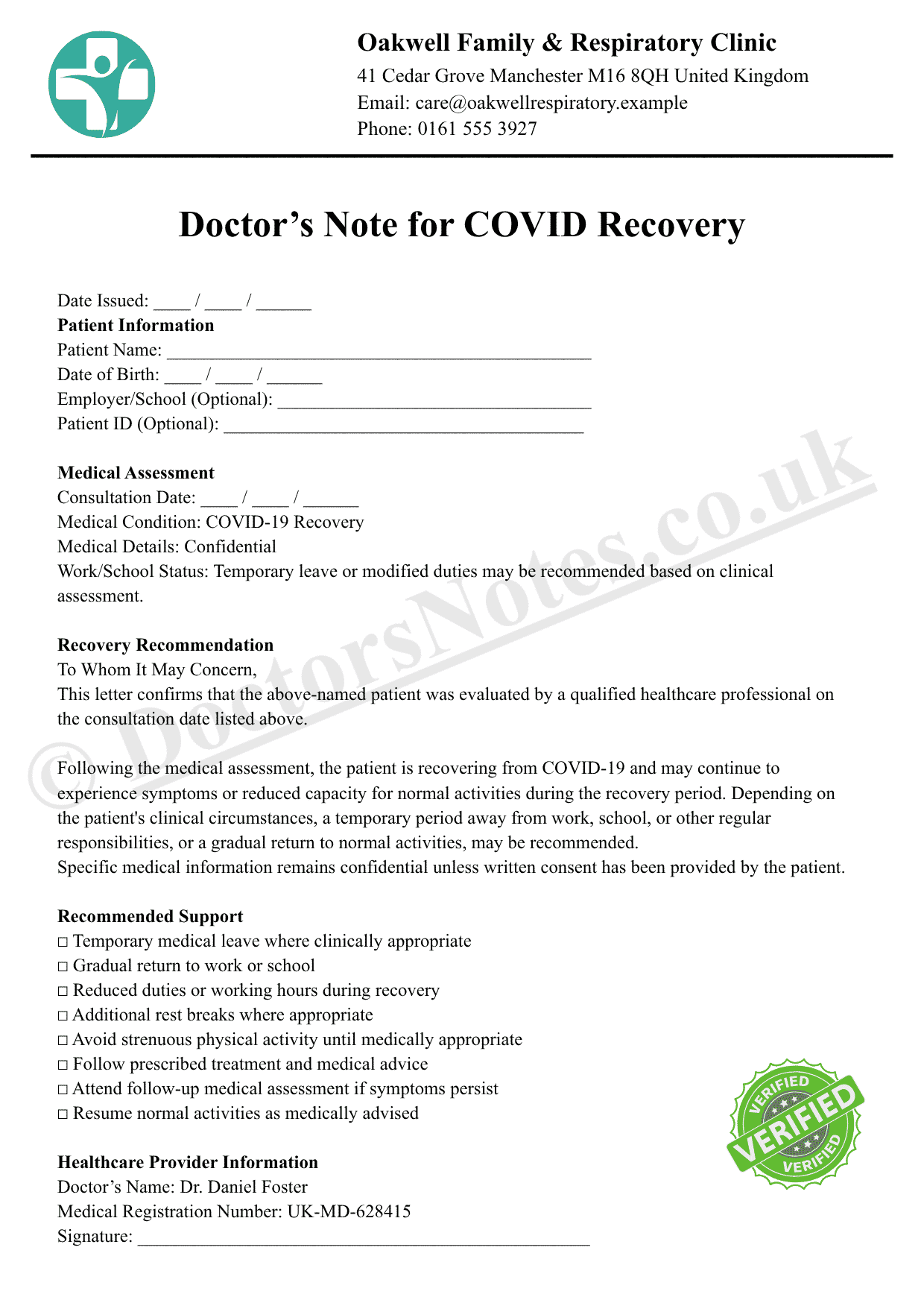

Recovering from COVID-19 can take time. Some people return to normal activities quickly, while others continue to experience fatigue, cough, breathlessness, headaches, or difficulty concentrating.
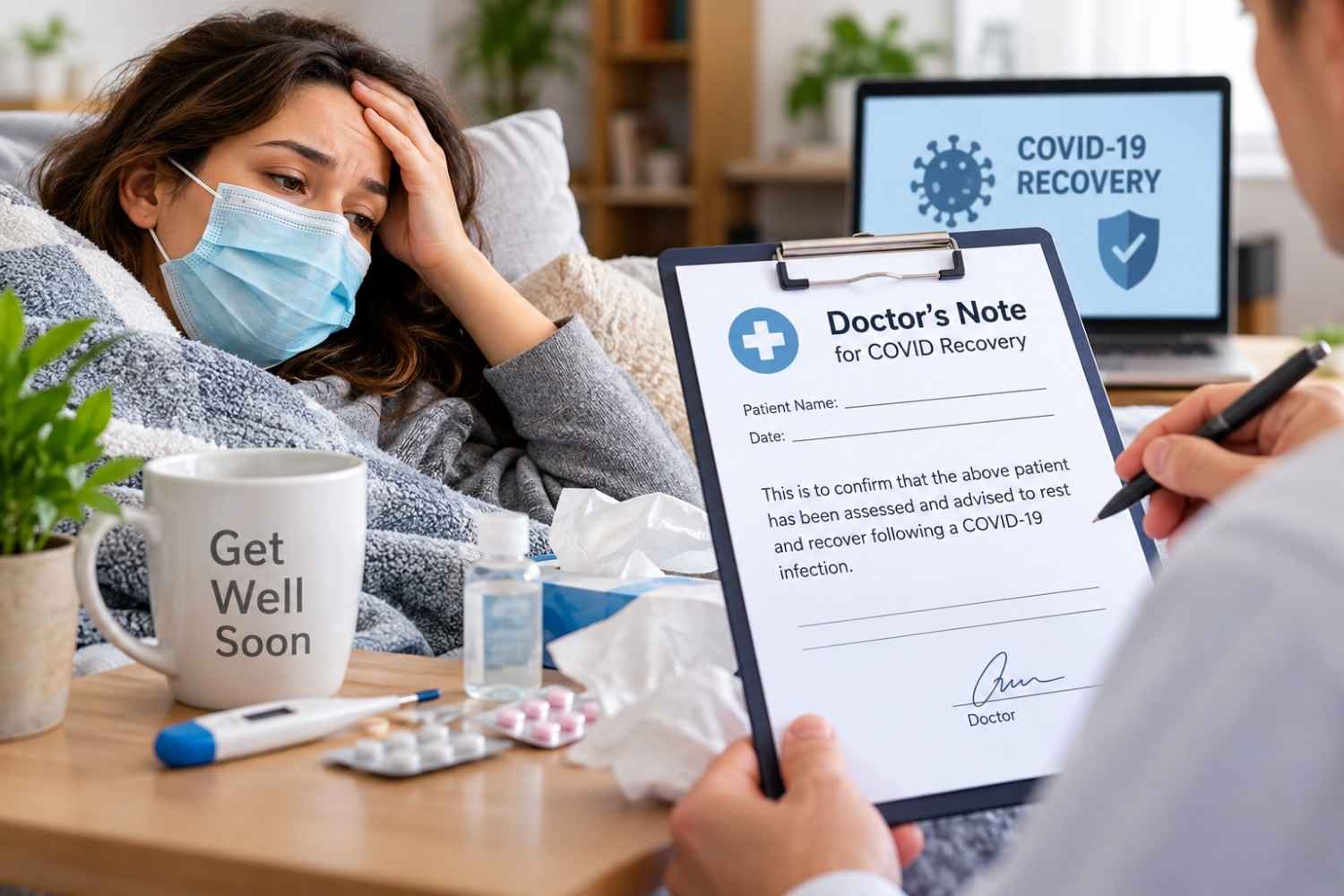
A doctor’s note for COVID recovery can help document how ongoing symptoms affect your ability to work or complete your usual duties. A healthcare professional can assess your recovery and decide whether medical documentation is appropriate.
If you are still unwell after COVID-19, an online medical assessment may provide a convenient way to discuss your symptoms, recovery, and work situation.
Important: A doctor’s note is based on a medical assessment. It is not automatically issued because you request one.
COVID Recovery and Work
| Question | Answer |
|---|---|
| Can COVID recovery affect your ability to work? | Yes. Ongoing fatigue, cough, breathlessness, and other symptoms can affect work. |
| Can you get a doctor’s note for COVID recovery? | A healthcare professional may provide documentation after assessing your condition. |
| Do you need a fit note after 7 days? | In the UK, employees can normally self-certify sickness for the first 7 calendar days. |
| Can COVID cause tiredness after the infection? | Yes. Some people continue to experience fatigue during recovery. |
| Can you work while recovering from COVID? | It depends on your symptoms and the demands of your job. |
| Can a fit note suggest reduced hours? | Yes. Workplace adjustments can include altered hours where clinically appropriate. |
| Can you discuss COVID recovery online? | An online consultation may be suitable for some recovery-related concerns. |
| Can COVID symptoms last longer? | Yes. Some people develop symptoms that continue for weeks or longer. |
What Does COVID Recovery Mean?
COVID recovery is the period after the initial infection when your symptoms gradually improve.
You may feel better but still have symptoms that affect your normal routine.
Common COVID symptoms include:
- Tiredness
- Cough
- Shortness of breath
- Headache
- Sore throat
- Muscle or body aches
- Blocked or runny nose
- Changes in taste or smell
- Difficulty concentrating
NHS guidance notes that most people improve within a few weeks, although recovery can take longer for some people.
Can a Doctor Recommend Time Off Work During COVID Recovery?
Yes, a doctor can recommend time off work during COVID-19 recovery if symptoms make it difficult to perform regular job duties or if additional rest is medically necessary. COVID-19 can cause fever, cough, sore throat, fatigue, headaches, and body aches. Some people also experience shortness of breath or difficulty concentrating, which can affect their ability to work.
The amount of time off depends on the severity of symptoms, the person’s overall health, the type of work they do, and how quickly they recover. A doctor may recommend sick leave if symptoms are significant or suggest temporary adjustments, such as working from home, reduced hours, or lighter duties when appropriate.
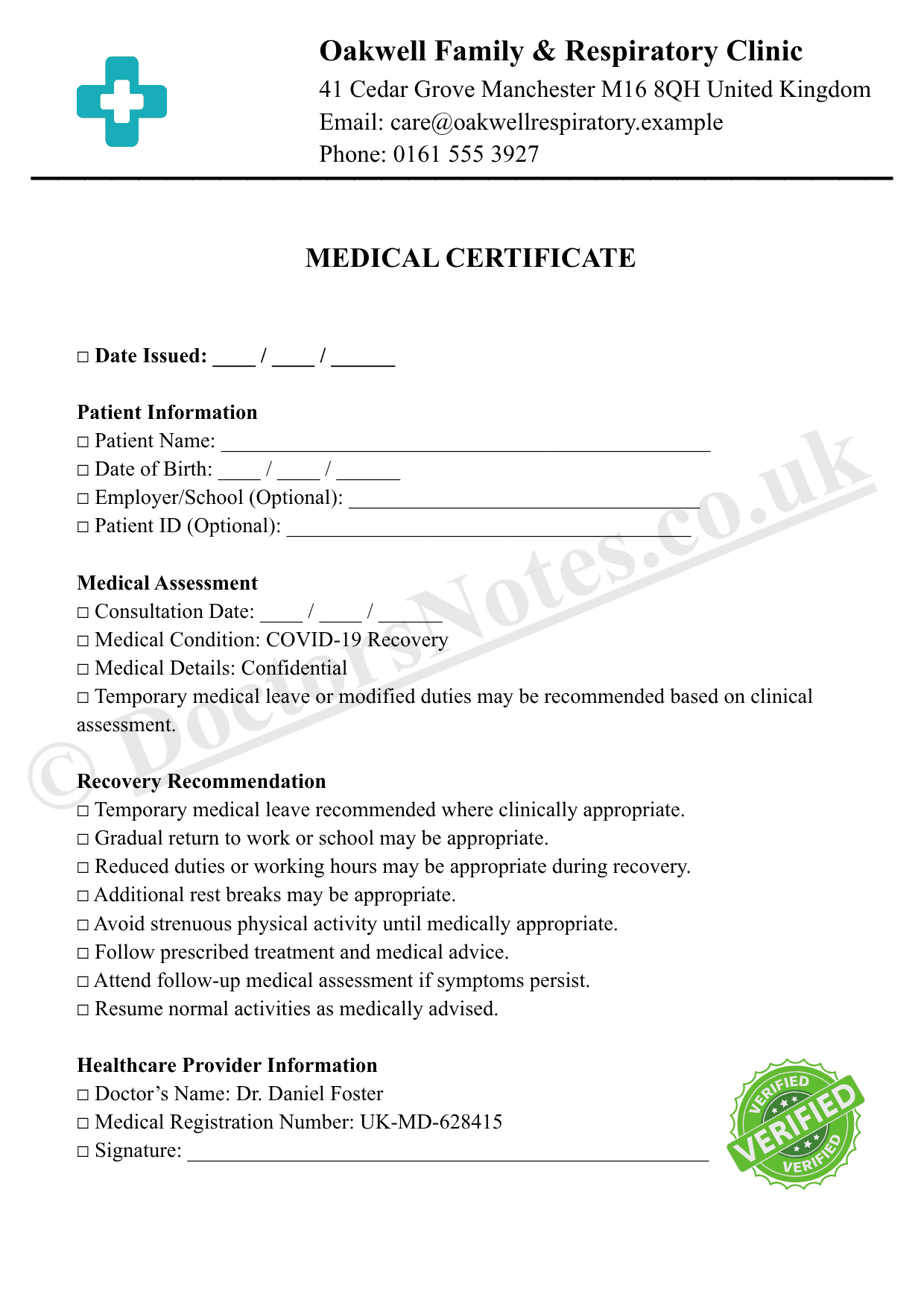
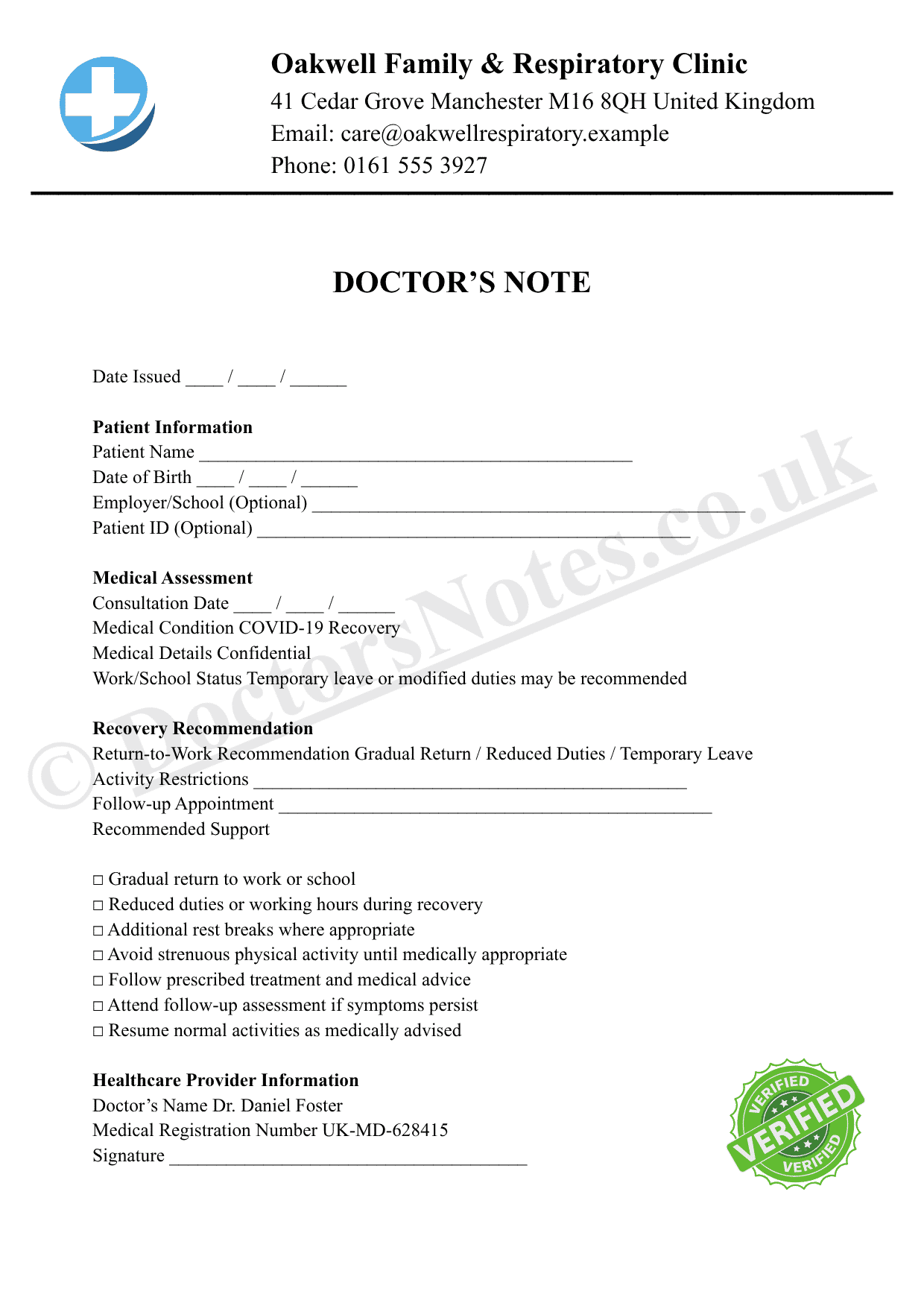
A doctor’s note for COVID recovery may include:
-
The recommended dates of work absence.
-
Confirmation of the medical assessment.
-
Temporary work restrictions, if necessary.
-
Recommendations for a gradual return to work, where appropriate.
-
The healthcare professional’s details and signature.
Employees should follow their employer’s sick-leave policy and any applicable workplace infection-control guidance. Returning to work should depend on both the employee’s ability to perform their duties and the steps needed to reduce the risk of spreading infection.
Most people recover within a few weeks, but fatigue, cough, and other symptoms can sometimes persist longer. If symptoms continue to interfere with work, a healthcare professional can reassess the condition and determine whether additional leave or workplace adjustments are appropriate.
Why Can You Still Feel Unwell After COVID?
Recovery is not always immediate.
You may notice that your main infection has improved, but your energy has not fully returned.
For example, you might:
- Need more rest during the day
- Become tired after normal activities
- Find long meetings difficult
- Struggle with prolonged screen work
- Get breathless during physical activity
- Have a lingering cough
- Find it harder to concentrate
These symptoms can affect your ability to complete your normal working day.
COVID Recovery Symptoms That Can Affect Work
Different symptoms create different work problems.
| Recovery symptom | Possible effect at work |
|---|---|
| Fatigue | Reduced stamina during a full shift |
| Persistent cough | Difficulty during meetings or calls |
| Breathlessness | Problems with physical tasks |
| Headaches | Reduced comfort during prolonged screen use |
| Poor concentration | Difficulty handling detailed tasks |
| Muscle aches | Problems with standing or manual work |
| Sleep disruption | Daytime tiredness and reduced energy |
| Reduced exercise tolerance | Difficulty with physically demanding duties |
The impact also depends on your occupation.
A mild symptom for one person may create a significant work problem for another.
Can You Get a Doctor’s Note During COVID Recovery?
Yes, medical documentation may be appropriate when ongoing symptoms affect your fitness for work.
The healthcare professional considers your current condition rather than relying only on the fact that you previously had COVID-19.
They may look at:
- Your remaining symptoms
- How long they have lasted
- Whether symptoms are improving
- Your daily activities
- Your job duties
- Your ability to work safely
- Whether temporary adjustments could help
The outcome depends on the assessment.
COVID Recovery and a UK Fit Note
In the UK, the formal document used to provide evidence about fitness for work is generally called a fit note.
A fit note can state that you are:
- Not fit for work, or
- May be fit for work with suitable support
The purpose is to explain how your health affects work and support discussions about staying at work or returning.
A fit note is therefore different from simply confirming that you previously tested positive for COVID-19.
Do You Need a Fit Note for the First 7 Days?
Usually, no.
Employees can normally self-certify sickness absence for the first 7 calendar days.
This includes weekends and bank holidays.
A fit note is generally needed when sickness continues beyond that period, subject to your employer’s procedures.
Your employer may have additional sickness-reporting requirements, so check its policy.
Can COVID Recovery Make You Unfit for Work?
It can.
For example, severe fatigue may make an eight-hour shift difficult. Breathlessness may affect physical work. Poor concentration may make detailed tasks harder.
The key issue is how your health affects your ability to perform work safely and effectively.
A healthcare professional can assess this and decide whether a fit note is appropriate.
COVID Recovery in Office-Based Jobs
Desk work can still be difficult during recovery.
You may experience:
- Brain fog or poor concentration
- Headaches
- Screen-related discomfort
- Fatigue after long periods of work
- Difficulty staying focused
- Reduced stamina during meetings
If you can work but cannot manage your usual schedule, workplace adjustments may sometimes be considered.
COVID Recovery in Physical Jobs
Physical work can place greater demands on your recovering body.
You may struggle with:
- Lifting
- Carrying
- Climbing stairs
- Standing for long periods
- Walking between locations
- Working outdoors
- Repeated physical activity
Breathlessness and fatigue can be especially relevant when your role involves sustained exertion.
Can You Return to Work While Recovering From COVID?
Returning to work depends on your recovery and the type of work you do.
You may be able to return gradually if your symptoms have improved but your stamina remains limited.
Possible workplace adjustments can include:
- Reduced hours
- Altered duties
- Additional breaks
- Temporary changes to workload
- Working from home where suitable
UK fit-note guidance specifically recognises adjustments such as changed duties, altered hours, and working from home where appropriate.
Any adjustment should be discussed with your employer.
What If You Are Still Tired After COVID?
Fatigue can continue after the initial infection.
If tiredness is affecting your ability to work, describe the practical impact rather than only saying that you feel tired.
For example:
“I can complete basic tasks, but I become exhausted after several hours of work.”
Useful details include:
- How long you can stay active
- Whether you need daytime rest
- Whether activity makes symptoms worse
- Whether you can complete your usual shift
- Whether your symptoms affect concentration
This gives the healthcare professional clearer information about your functional limitations.
COVID Recovery and Long COVID
Some people develop symptoms that continue for longer after COVID-19.
NHS guidance describes Long COVID as a condition where symptoms can continue after the initial infection. Recovery times vary between people.
Possible symptoms can include:
- Extreme tiredness
- Shortness of breath
- Problems with memory or concentration
- Sleep problems
- Headaches
- Muscle or joint pain
If ongoing symptoms are making work difficult, speak with a GP or relevant healthcare professional and discuss the situation with your employer.
Can You Get a COVID Recovery Sick Note Online?
An online medical consultation may be suitable for some people recovering from COVID-19.
During the assessment, you may be asked about:
Your original illness
When COVID symptoms started and how severe they were.
Your current symptoms
Which symptoms remain and whether they are improving.
Your daily activities
What you can currently do without becoming excessively tired or unwell.
Your job
What your normal duties involve.
Your work limitations
Which tasks are currently difficult or unsafe.
Your recovery
Whether you are improving, staying the same, or experiencing new symptoms.
The healthcare professional then decides whether further assessment, treatment, workplace advice, or medical documentation is appropriate.
UK guidance allows fitness-for-work assessments to be conducted through face-to-face appointments, video calls, telephone consultations, or consideration of certain written reports.
What Should You Explain During a COVID Recovery Assessment?
Focus on what has changed since your infection.
Tell the healthcare professional:
- When your COVID symptoms began
- When your main symptoms improved
- Which symptoms remain
- How often symptoms occur
- What activities trigger fatigue
- Whether you experience breathlessness
- Whether your concentration has changed
- How your symptoms affect your job
- What duties you are struggling to complete
- Whether your employer has suggested adjustments
Clear information makes it easier to understand your current situation.
COVID Recovery Assessment Checklist
Before your consultation, prepare:
- Approximate date COVID symptoms started
- Main symptoms during the infection
- Current symptoms
- Recovery timeline
- Any ongoing fatigue
- Any breathing difficulties
- Concentration or memory problems
- Current medicines
- Existing medical conditions
- Your occupation
- Your usual working hours
- Tasks you currently struggle with
- Your employer’s documentation requirements
How Long Can a COVID Recovery Fit Note Last?
There is no fixed duration for every person recovering from COVID-19.
The healthcare professional decides the period based on your health and circumstances.
During the first six months of a health condition, a fit note can normally cover no more than three months at a time. A review may be recommended if your condition needs further assessment.
Your actual recovery may be shorter or longer.
Can a COVID Fit Note Be Backdated?
A fit note can sometimes cover an earlier period if the healthcare professional considers that your condition affected your fitness for work during that period.
Backdating is therefore not automatic.
Explain the dates clearly during your assessment. The healthcare professional decides what period the documentation can cover.
Who Can Issue a COVID Fit Note?
UK fit notes can be certified by:
- Doctors
- Registered nurses
- Occupational therapists
- Pharmacists
- Physiotherapists
The professional must assess your fitness for work before issuing a fit note.
What If You Are Better But Not Fully Recovered?
You do not necessarily need to wait until every symptom disappears before considering a return to work.
Your ability to work depends on your symptoms and duties.
For example, you may be able to handle office work but struggle with heavy physical activity.
A healthcare professional can consider whether temporary changes could help you return safely.
COVID Recovery and Working From Home
Working from home may help some people manage recovery symptoms.
It can reduce:
- Commuting demands
- Physical exertion
- Time spent travelling
- Exposure to busy environments
- The need for prolonged workplace interaction
However, working from home is not suitable for every role.
A fit note may include advice about working from home when clinically appropriate. Your employer then considers the recommendation and workplace circumstances.
COVID Recovery and Concentration Problems
Some people report difficulty concentrating during or after COVID-19.
This can affect work that requires:
- Detailed reading
- Long meetings
- Data entry
- Complex decisions
- Extended screen time
- Multitasking
If concentration problems are affecting your work, describe specific examples during your assessment.
When Should You Seek Medical Help?
Do not focus only on obtaining documentation if your symptoms are worsening.
Seek appropriate medical advice if:
- Symptoms are getting worse
- Breathlessness is increasing
- You develop significant chest pain
- You feel unusually weak
- You are concerned about your recovery
- New or severe symptoms develop
NHS guidance advises seeking urgent help when COVID symptoms are worsening or not improving.
For severe breathing difficulty, persistent chest pressure or pain, new confusion, or difficulty staying awake, seek emergency medical care.
Is a COVID Recovery Doctor’s Note Guaranteed?
No.
Medical documentation depends on the healthcare professional’s assessment.
A previous COVID diagnosis does not automatically mean you need a fit note. The professional must consider whether your current health affects your fitness for work.
FAQs
Can you get a doctor’s note for COVID recovery?
A healthcare professional may provide medical documentation when ongoing COVID-related symptoms affect your fitness for work.
Can you get a sick note after COVID?
Yes, if your current health affects your ability to work and the healthcare professional considers a fit note appropriate.
How long can COVID recovery take?
Many people improve within a few weeks, but some people take longer to recover.
Can COVID recovery cause fatigue?
Yes. Fatigue can continue during recovery and may affect work, exercise, and daily activities.
Can you work while recovering from COVID?
Some people can work with mild symptoms. Others may need time away or temporary changes to their duties.
Can COVID recovery affect concentration?
Yes. Some people experience problems with concentration or memory, particularly with longer-lasting symptoms.
Can a COVID fit note recommend reduced hours?
A healthcare professional may recommend altered hours where this could support a safe return to work.
Can a COVID recovery assessment be done online?
An online assessment may be suitable depending on your symptoms and clinical circumstances.
Do I need a fit note for the first 7 days?
Employees can normally self-certify sickness absence for the first 7 calendar days.
Can a COVID fit note be backdated?
A healthcare professional may cover an earlier period when they consider that your condition affected your fitness for work during that time.
Who can issue a COVID fit note in the UK?
Doctors, registered nurses, occupational therapists, pharmacists, and physiotherapists can certify fit notes.
Is a COVID recovery sick note guaranteed?
No. A fit note depends on an individual healthcare assessment.
Discuss Your COVID Recovery With a Healthcare Professional
Recovery does not always end when the initial infection passes.
If fatigue, coughing, breathlessness, concentration problems, or other ongoing symptoms are affecting your ability to work, an assessment can help you discuss your current health and work needs.
Arrange an online medical assessment to discuss your COVID recovery and fitness for work.



Reviews
There are no reviews yet.