
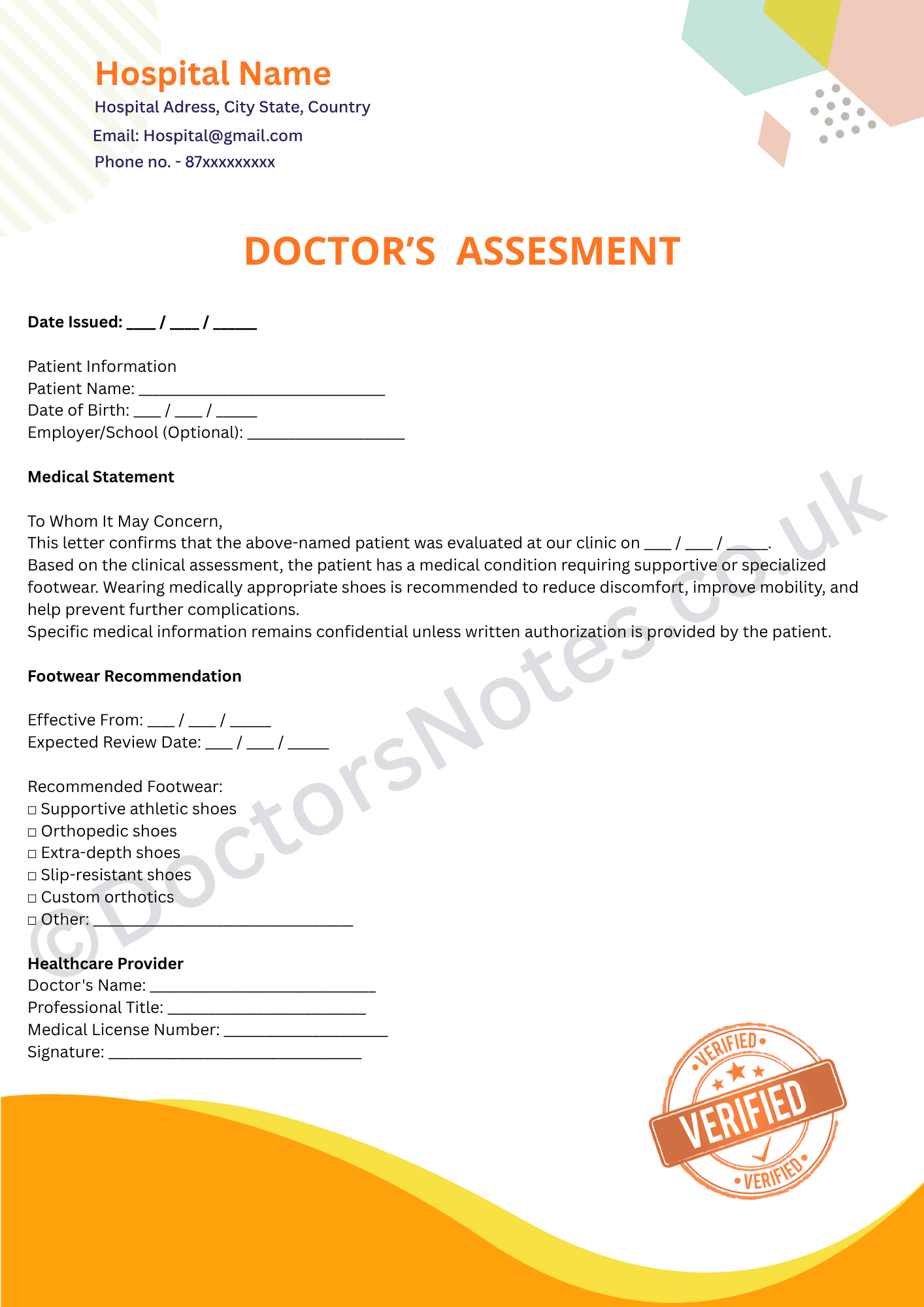
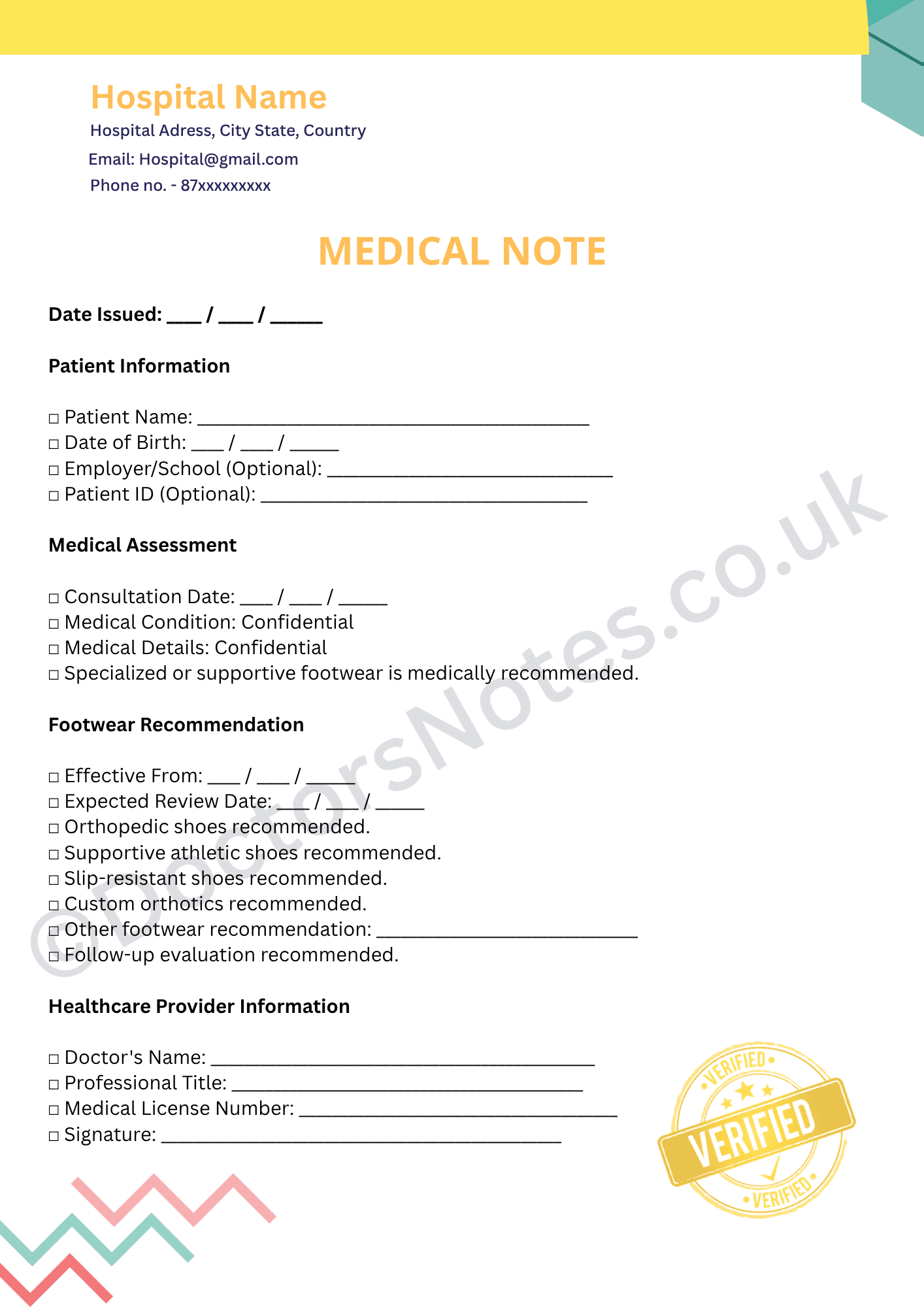
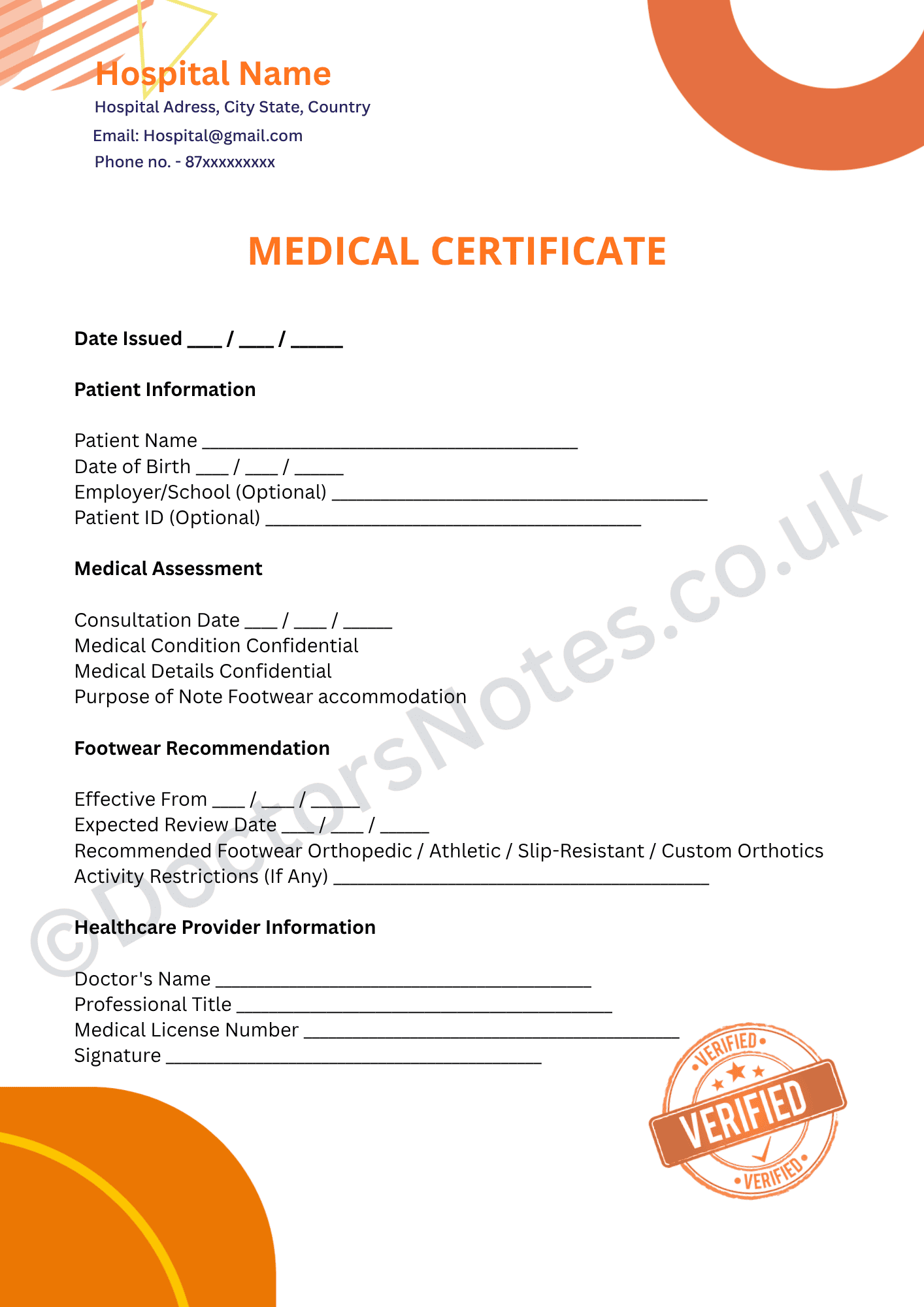
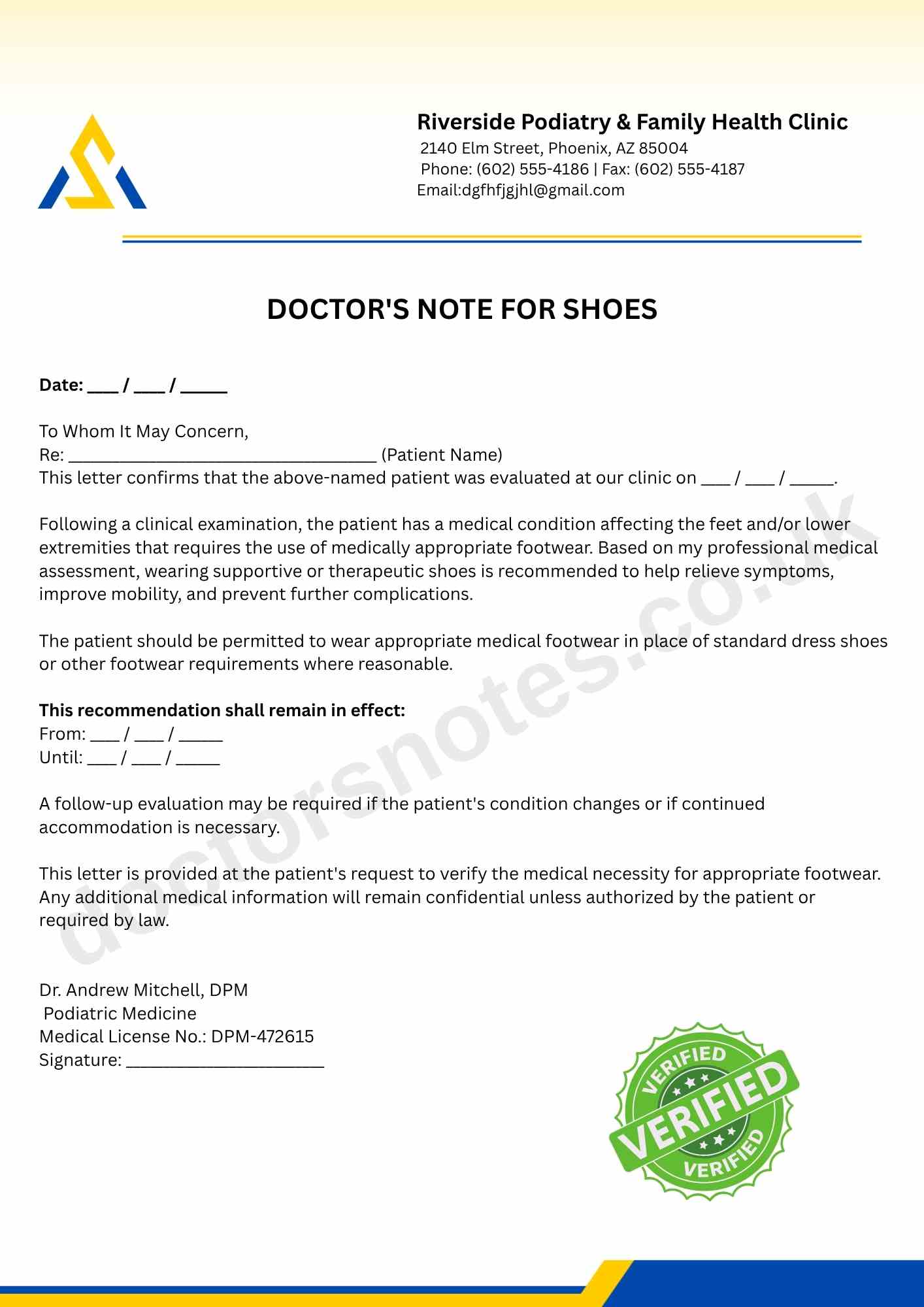


For many people, choosing footwear is simply a matter of comfort or style. However, individuals living with certain medical conditions may require specific types of shoes to reduce pain, improve mobility, prevent complications, or support long-term treatment. In these situations, a healthcare professional may recommend. A Doctor’s Note for Shoes is an official medical recommendation confirming that a healthcare professional has assessed your condition and believes that specific footwear may benefit your health, mobility, or recovery.
This guide explains what a Doctor’s Note for Shoes is, who may need one, common medical conditions that require specialised footwear, how the assessment process works, and other important information.
Related Post:
- Doctors Note for Sprained Ankle
- Doctors Note for Joint Pain
- Doctors Note for Torn Muscle
- Doctors Note for Back Pain
What Is a Doctor’s Note for Shoes?
A Doctor’s Note for Shoes is an official medical recommendation confirming that a healthcare professional has assessed your condition and believes that specific footwear may benefit your health, mobility, or recovery.
Depending on your assessment, the documentation may include:
- Confirmation of a medical evaluation.
- The reason supportive or therapeutic footwear has been recommended.
- The type of footwear that may be appropriate.
- Recommendations regarding custom orthotics or insoles where clinically indicated.
- Advice on reducing pressure, improving stability, or protecting the feet.
- Referral for further assessment if specialised fitting is required.
The exact contents depend on your diagnosis, symptoms, and individual clinical needs.
Why Might Someone Need a Doctor’s Note for Shoes?
Medical documentation may be required when ordinary footwear is no longer suitable because of an underlying health condition.
Common reasons include:
Medical Insurance Claims
Some insurance providers require evidence that specialised footwear is medically necessary before considering reimbursement.
Workplace Accommodations
Employees who cannot safely wear standard workplace footwear because of a medical condition may require supporting documentation.
Disability Support Programmes
Certain government or disability assistance programmes may request medical evidence before funding therapeutic footwear.
School or Educational Settings
Children with specific medical or mobility conditions may need approval to wear alternative footwear where dress codes normally apply.
Long-Term Foot Care
People receiving treatment for chronic foot conditions may require ongoing recommendations regarding appropriate footwear.
Medical Conditions That May Require Specialised Footwear
A healthcare professional will assess whether supportive footwear is clinically appropriate based on your individual condition.
Examples include:
Diabetes
People with diabetes may require protective footwear to reduce pressure points and lower the risk of foot ulcers.
Plantar Fasciitis
Supportive shoes may help reduce heel pain and improve walking comfort.
Arthritis
Joint pain affecting the feet and ankles may make cushioned or supportive footwear beneficial.
Flat Feet or High Arches
Abnormal foot mechanics may require additional support or custom orthotic devices.
Bunions
Special footwear with additional width may help reduce pressure and discomfort.
Recovery After Foot Surgery
Supportive footwear may form part of the recovery plan following certain surgical procedures.
Tendon or Ligament Injuries
Appropriate footwear may improve stability while tissues heal.
Neurological Conditions
Conditions affecting balance or walking may require footwear that provides additional support and reduces fall risk.
Who May Benefit From a Doctor’s Note for Shoes?
Medical documentation may be appropriate for:
- Adults with chronic foot pain.
- Children requiring medical footwear at school.
- Older adults with mobility difficulties.
- Individuals recovering from foot or ankle surgery.
- Athletes returning from lower limb injuries.
- People with diabetes requiring protective footwear.
- Workers whose medical condition prevents the safe use of standard occupational footwear.
- Individuals applying for insurance reimbursement or disability support.
Every recommendation is based on an individual clinical assessment rather than personal preference.
What Happens During the Medical Consultation?
During your consultation, the healthcare professional will assess how your feet, ankles, or lower limbs are affecting your daily activities.
You may be asked about:
- The location and severity of your pain.
- When your symptoms began.
- Previous foot injuries or surgery.
- Existing medical conditions such as diabetes or arthritis.
- Your occupation and daily activity level.
- Current footwear and whether it worsens your symptoms.
- Previous use of orthotics or specialised shoes.
- Walking or balance difficulties.
- Current medications.
- Any previous podiatry or orthopaedic treatment.
Following the assessment, the healthcare professional will determine whether medical documentation recommending therapeutic or supportive footwear is clinically appropriate or whether additional investigations or specialist referral would be beneficial.
Important: A Doctor’s Note for Shoes provides medical evidence that specialised footwear may be beneficial for your condition. It does not automatically guarantee insurance reimbursement, funding approval, workplace accommodation, or exemption from organisational dress codes. Final decisions remain subject to the policies of the relevant insurer, employer, educational institution, or government programme.
Can a Doctor Write a Note for Supportive Shoes at Work?
Yes. A doctor can write a note recommending supportive footwear at work when a medical condition makes appropriate shoes necessary for comfort, mobility, safety, or proper foot support.
A doctor may consider supportive shoes for conditions such as foot pain, plantar fasciitis, arthritis, injuries, swelling, or other problems that can be aggravated by prolonged standing or unsuitable footwear. The recommendation should be based on the patient’s individual medical needs and job requirements.
A doctor’s note may explain that supportive footwear is medically recommended and may describe relevant features, such as:
- Adequate arch or heel support
- Proper cushioning
- A wider or adjustable fit
- Appropriate stability
- Reduced pressure on painful areas
If an employee needs different footwear from the standard workplace requirement, the medical documentation can support a request for an appropriate workplace accommodation. The employer may have its own process for reviewing such requests, and a doctor’s recommendation does not necessarily guarantee approval.
Treatment and Footwear Recommendations
A doctor’s note is only one part of managing foot-related medical conditions. Depending on your diagnosis, your healthcare professional may recommend additional measures to improve comfort, mobility, and long-term foot health.
Your personalised treatment plan may include:
- Supportive walking shoes designed to improve stability.
- Medical-grade or therapeutic footwear.
- Custom-made orthotic insoles.
- Shock-absorbing footwear for pressure relief.
- Foot and ankle strengthening exercises.
- Stretching programmes to improve flexibility.
- Weight management advice where excess body weight contributes to foot pain.
- Physiotherapy for movement and balance issues.
- Regular podiatry appointments.
- Specialist referral for persistent or complex conditions.
The recommendations provided will depend on your diagnosis, lifestyle, and overall health rather than a standard footwear prescription.
Can Medication Be Prescribed?
Yes, where clinically appropriate.
If your symptoms involve pain or inflammation, the healthcare professional may recommend or prescribe treatment based on your condition.
Depending on your assessment, this may include:
- Pain-relieving medication.
- Anti-inflammatory medicines where appropriate.
- Topical treatments for certain foot conditions.
- Medication to manage chronic conditions affecting foot health.
- Advice on safely managing long-term pain.
Medication alone may not resolve the underlying problem, which is why supportive footwear, rehabilitation, and ongoing monitoring are often recommended together.
Always inform the healthcare professional about:
- Current medications.
- Drug allergies.
- Existing medical conditions.
- Previous foot or ankle surgery.
- Pregnancy or breastfeeding where relevant.
How Long Is a Doctor’s Note for Shoes Valid?
The validity of a Doctor’s Note for Shoes depends on the medical condition being treated and the purpose for which the documentation is required.
Some recommendations relate to temporary recovery after surgery or injury, while others support long-term management of chronic conditions.
Typical Review Periods
| Purpose of Documentation | Typical Review Period* |
|---|---|
| Recovery after foot or ankle surgery | Until follow-up assessment |
| Temporary injury requiring supportive footwear | Several weeks to a few months |
| Chronic medical conditions | Periodic review as advised |
| Insurance or reimbursement applications | According to organisation requirements |
| Workplace or school accommodations | May require renewal if requested |
*These examples are intended as general guidance only. The healthcare professional will determine whether follow-up assessments or updated documentation are appropriate based on your individual medical condition and treatment progress.
What Documents May Be Issued?
Following your consultation, the healthcare professional will determine whether medical documentation is appropriate based on your symptoms, diagnosis, mobility assessment, and the reason specialised footwear has been requested.
Depending on your individual circumstances, you may receive:
- Doctor’s Note for Shoes or a medical recommendation letter.
- Documentation confirming that supportive or therapeutic footwear has been recommended.
- A letter supporting the use of custom orthotics or prescription insoles where clinically appropriate.
- Medical evidence for insurance reimbursement or healthcare benefit applications, where applicable.
- Documentation supporting workplace footwear accommodations if your condition limits your ability to wear standard safety or uniform shoes.
- A recommendation for alternative footwear in school or educational settings where medical needs conflict with dress code requirements.
- Referral letters to a podiatrist, orthopaedic specialist, physiotherapist, or other healthcare professional if additional assessment is required.
- Follow-up review recommendations to monitor your progress and reassess your footwear needs.
- Treatment advice or prescription recommendations where clinically appropriate.
The documentation provided will always depend on your clinical assessment and the independent judgement of the healthcare professional.
Important Legal Information
A Doctor’s Note for Shoes is an official medical document issued after an assessment by a licensed healthcare professional. Its purpose is to explain why therapeutic or supportive footwear may be medically beneficial for a particular health condition.
Before requesting medical documentation, you should understand the following:
- Medical documentation is only issued after an appropriate clinical assessment.
- Booking a consultation does not automatically guarantee that a doctor’s note or footwear recommendation will be provided.
- Healthcare professionals can only recommend specialised footwear when there is a genuine medical reason supported by your symptoms, medical history, and clinical findings.
- A doctor’s note does not guarantee approval for insurance reimbursement, disability funding, employer accommodations, or school dress code exemptions. Acceptance remains subject to the policies of the relevant organisation.
- Some insurers, employers, or government programmes may request additional supporting evidence, such as podiatry reports, specialist assessments, or invoices for prescribed footwear.
- Medical documentation generally includes only information relevant to the purpose of the request and does not disclose unnecessary confidential medical details without your consent unless required by law.
- Your consultation, medical records, uploaded documents, and personal information remain confidential and are managed in accordance with applicable healthcare privacy and data protection legislation.
Important: If you have diabetes and develop an open foot wound, sudden swelling, severe redness, loss of sensation, or signs of infection, seek urgent in-person medical care immediately. These conditions require prompt assessment and should not be managed through footwear recommendations alone.
FAQ
Can I get a Doctor’s Note for Shoes online?
Yes. You can book an online consultation with a licensed healthcare professional. If supportive footwear is considered medically appropriate following your assessment, a doctor’s note or medical recommendation may be issued.
Can a doctor’s note help with insurance reimbursement?
In some cases, yes. Certain insurance providers or healthcare benefit plans may request medical documentation before considering reimbursement for therapeutic footwear. Coverage depends on the terms of your individual policy.
Can I use the note for workplace accommodations?
Yes. If your medical condition prevents you from safely wearing standard workplace footwear, a doctor’s note may help support a request for reasonable accommodations. Your employer will decide whether accommodations can be provided in accordance with workplace policies and safety requirements.
Will the doctor recommend a specific shoe brand?
Generally, no. Healthcare professionals usually recommend the type of footwear or support required rather than endorsing a particular commercial brand or retailer.
Can children receive a doctor’s note for specialised shoes?
Yes. If a child has a medical condition affecting foot development, walking, or mobility, a healthcare professional may issue documentation supporting medically appropriate footwear where clinically justified.
Will I need custom orthotics?
Not everyone does. Some individuals benefit from supportive footwear alone, while others may require custom orthotics based on their diagnosis and clinical assessment.
Can my doctor’s note be updated later?
Yes. If your condition changes or additional medical information becomes available, you can arrange a follow-up consultation. Updated documentation may be issued where clinically appropriate.
Is my consultation confidential?
Yes. Your consultation, medical history, and personal information are handled confidentially in accordance with applicable healthcare privacy and data protection laws.
Can I receive treatment during the consultation?
Yes. Depending on your condition, the healthcare professional may recommend treatment, prescribe medication where appropriate, suggest rehabilitation exercises, or refer you to a specialist.
When should I seek urgent medical attention?
Seek immediate medical care if you experience severe foot trauma, inability to bear weight after an injury, rapidly spreading infection, significant swelling with fever, loss of circulation, or sudden numbness affecting the foot or leg.
Why Choose Our Online Consultation Service?
- Convenient appointments that fit your schedule.
- Licensed healthcare professionals experienced in assessing mobility and foot-related conditions.
- Secure and confidential online consultations.
- Personalised recommendations based on your medical needs.
- Medical documentation issued only where clinically appropriate.
- Guidance on therapeutic footwear, orthotics, rehabilitation, and specialist referrals.
- Follow-up consultations available if your condition requires ongoing review.
Conclusion
The right footwear can play an important role in managing pain, improving mobility, and preventing complications associated with many foot, ankle, and lower limb conditions. A professional medical assessment helps determine whether supportive or therapeutic shoes are appropriate for your specific health needs.
A Doctor’s Note for Shoes provides medical documentation following an individual clinical assessment and may support insurance claims, workplace accommodations, educational requests, or other legitimate purposes where specialised footwear is medically recommended. The acceptance of this documentation remains subject to the policies of the relevant organisation.
Through an online consultation, you can discuss your symptoms with a licensed healthcare professional, receive personalised advice on foot health and mobility, and obtain appropriate medical documentation where clinically justified, helping you make informed decisions about your ongoing care.



Reviews
There are no reviews yet.