


A doctor’s note for fracture can provide medical documentation when a broken bone affects your ability to work. A fracture can cause pain, swelling, reduced movement, and difficulty using the injured area.
Your healthcare professional will assess the injury and consider how it affects your normal activities. If your health affects your fitness for work, they may issue a fit note or other suitable medical documentation.
Fracture and Work
| Question | Short answer |
|---|---|
| Can a fracture stop you working? | Yes. Pain, reduced movement, or treatment can make work difficult. |
| Can you get a doctor’s note for a fracture? | A healthcare professional can assess whether medical documentation is appropriate. |
| Do fractures always need time off? | No. It depends on the injury and your job. |
| Can you work with a fracture? | Some people can work with suitable adjustments. |
| Can you get a fracture fit note online? | An assessment may be possible remotely when clinically suitable. |
| How long does a fracture take to heal? | Healing varies by bone, fracture type, treatment, and individual factors. |
What Is a Fracture?
A fracture is a break or crack in a bone.
Fractures can affect almost any bone. They may happen after a fall, collision, sports injury, or other accident. Some fractures develop from repeated stress rather than one major injury.
Common symptoms include:
- Pain
- Swelling
- Bruising
- Tenderness
- Reduced movement
- Difficulty putting weight on the area
- Changes in shape or position
- Numbness or tingling in some cases
A suspected fracture needs medical assessment. An X-ray is often used to check for a break and understand its severity.
Can a Fracture Affect Your Ability to Work?
Yes. The effect depends on where the fracture occurred and what your job involves.
For example, a broken wrist may make typing difficult. A leg fracture can make standing, walking, or commuting harder.
Your healthcare professional can consider the functional effects of the injury when assessing your fitness for work.
How Different Fractures Can Affect Work
| Fracture | Possible work difficulties |
|---|---|
| Wrist fracture | Typing, writing, lifting, gripping |
| Hand fracture | Handling tools, packing, driving |
| Finger fracture | Keyboard use, fine movements, manual tasks |
| Arm fracture | Carrying, reaching, lifting |
| Shoulder fracture | Reaching, pushing, pulling |
| Rib fracture | Bending, lifting, deep breathing |
| Ankle fracture | Walking, standing, climbing stairs |
| Foot fracture | Weight-bearing and prolonged standing |
| Leg fracture | Walking, commuting, physical duties |
| Collarbone fracture | Lifting, reaching, carrying |
The impact can be greater in physically demanding or safety-sensitive jobs.
When Might You Need Time Away From Work?
Time away from work may be considered when your fracture makes your normal duties unsafe or difficult.
This can happen when you:
- Cannot use the injured limb properly
- Cannot walk safely
- Need strong pain relief
- Have significant swelling
- Have a cast, boot, sling, or splint
- Need surgery or follow-up treatment
- Cannot safely drive to work
- Cannot perform essential physical duties
A healthcare professional decides whether your condition affects your fitness for work.
Could You Work With a Fracture?
Sometimes.
A fracture does not automatically mean complete absence from work. Your ability to work depends on the injury, treatment, symptoms, and job demands.
For example, someone with a lower-limb fracture may struggle with a warehouse role but may be able to perform some desk-based duties.
Possible temporary adjustments can include:
- Reduced physical duties
- No heavy lifting
- Fewer walking requirements
- More frequent breaks
- Temporary changes to working hours
- Working from home where suitable
- Avoiding certain movements
A fit note can advise that someone is “may be fit for work” with suitable adjustments. It can also state “not fit for work” when the person cannot work because of their health condition.
What Is a Fit Note for a Fracture?
A fit note, formally called a Statement of Fitness for Work, gives advice about how a health condition affects your ability to work.
For a fracture, the assessment may consider factors such as:
- Pain
- Mobility
- Strength
- Use of the affected limb
- Treatment requirements
- Physical restrictions
- Expected recovery
- Ability to perform normal duties
The purpose is to support a conversation between you and your employer about work and possible adjustments.
Do You Need a Fit Note During the First Week?
Usually, no.
In the UK, employees can normally self-certify sickness absence for the first 7 calendar days. This includes weekends and bank holidays.
A fit note is generally needed when sickness lasts longer than 7 days. Your employer may also have its own reporting process, so check your workplace policy.
Who Can Issue a Fit Note for a Fracture?
Current UK rules allow certain healthcare professionals to certify fit notes.
These include:
- Doctors
- Registered nurses
- Occupational therapists
- Pharmacists
- Physiotherapists
The professional must be able to assess your fitness for work and have the appropriate knowledge and experience.
Can You Get a Doctor’s Note for a Fracture Online?
In some situations, an online medical assessment may be suitable.
A healthcare professional can assess your symptoms through an appropriate consultation. UK fit-note guidance allows assessments through face-to-face appointments, video consultations, telephone consultations, or consideration of a written report from another healthcare professional.
However, an online consultation is not suitable for every fracture.
You may need an in-person examination, imaging, hospital treatment, or fracture-clinic review. If the injury has not yet been assessed, seek appropriate medical care first.
What Information Should You Provide During an Online Assessment?
Clear information helps the healthcare professional understand your situation.
You may need to explain:
- When the injury happened
- Which bone was affected
- How the injury happened
- Your current symptoms
- Whether an X-ray confirmed the fracture
- Whether you have a cast, splint, boot, or sling
- Whether surgery was required
- Your current mobility
- Your usual work duties
- Which duties you cannot perform
- Your expected follow-up care
If you already have hospital or fracture-clinic documentation, keep it available.
What If Your Fracture Happened at Work?
A workplace accident may involve more than medical documentation.
You may need to follow your employer’s accident-reporting process. Keep copies of relevant medical records, discharge paperwork, and other documentation.
If your employer asks for evidence of your injury, ask what type of documentation they require.
Can a Fracture Affect Driving?
Yes.
A fracture can affect your ability to control a vehicle, especially when it involves your arm, hand, leg, foot, or ankle.
A cast, splint, boot, pain, or restricted movement may also affect driving.
Do not assume that having a medical note means you are automatically safe or legally permitted to drive. Follow your healthcare professional’s advice and relevant driving requirements.
How Long Does a Fracture Take to Heal?
There is no single recovery time for every fracture.
For example, NHS guidance says a broken arm or wrist often takes around 6 to 8 weeks, while a broken leg often takes around 6 to 12 weeks. More serious injuries can take longer.
Recovery can depend on:
- The bone involved
- Location of the fracture
- Type of fracture
- Severity of the injury
- Whether surgery was needed
- Age and general health
- Rehabilitation
- Follow-up treatment
Healing time should not be used as a fixed prediction for returning to work.
Can a Doctor Recommend Light-Duty Work After a Fracture?
Yes, a doctor can recommend light-duty work after a fracture if the injury limits an employee’s ability to perform regular job responsibilities. A fracture may affect mobility, strength, balance, or the use of an injured arm, hand, leg, or foot. Returning to normal duties too early may increase the risk of further injury or delay recovery.
After assessing the fracture, the doctor may recommend temporary work restrictions based on the location and severity of the injury, the healing process, and the physical demands of the job.
Examples of light-duty recommendations include:
-
Avoiding heavy lifting, pushing, or pulling.
-
Limiting prolonged standing or walking after a leg or foot fracture.
-
Avoiding repetitive movements with an injured arm or hand.
-
Performing administrative or desk-based tasks instead of physically demanding work.
-
Using mobility aids or making appropriate workstation adjustments.
-
Taking additional breaks or temporarily reducing working hours.
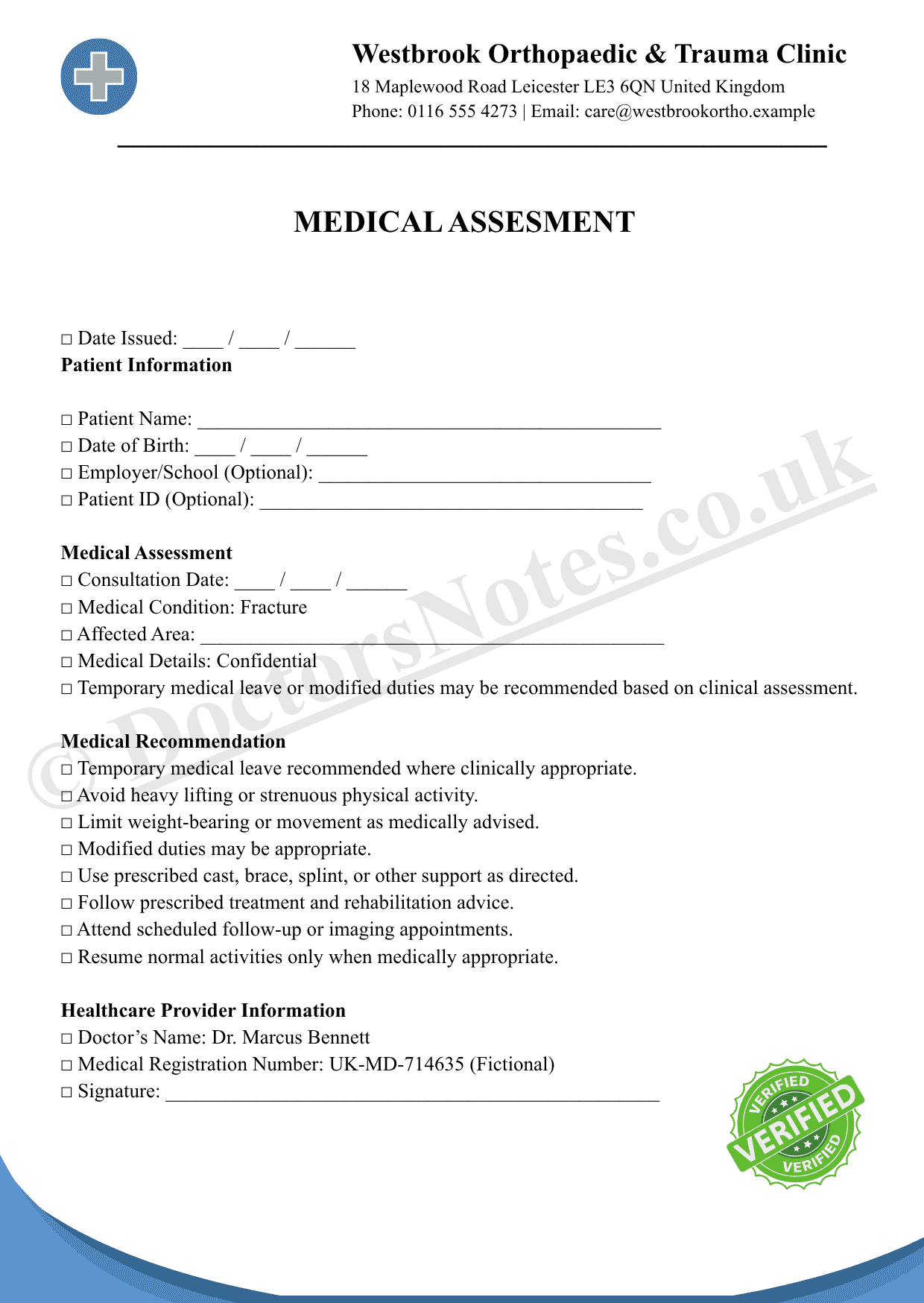
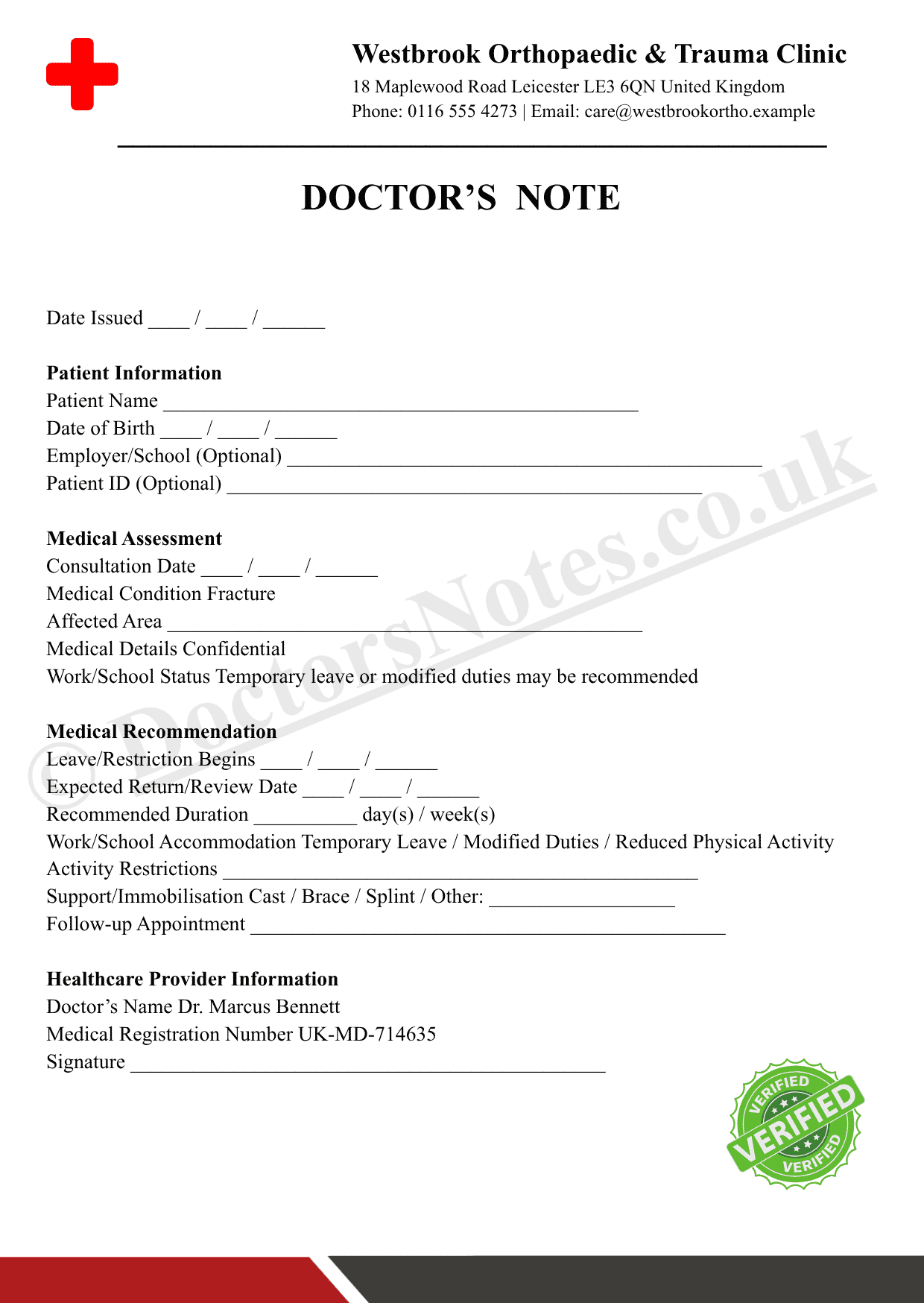
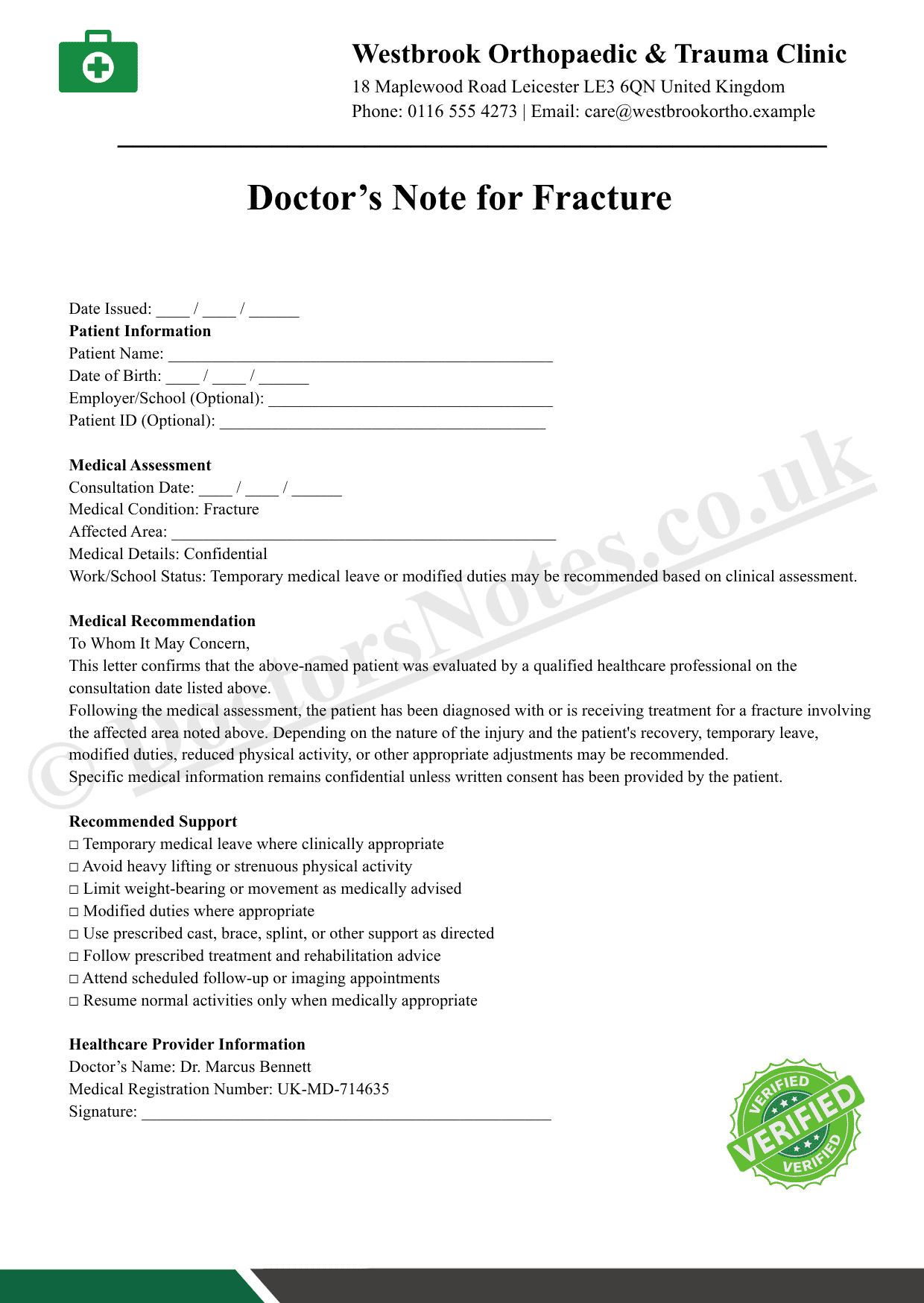
A doctor’s note for a fracture may explain the employee’s work restrictions, the expected duration of those restrictions, and the date of a follow-up assessment. The employee can share the documentation with their employer or HR department to discuss suitable duties during recovery.
The length of time an employee needs light-duty work varies. Some fractures heal within several weeks, while more complex fractures may take months. A healthcare professional should determine when the employee can safely resume normal duties, particularly if the job involves heavy lifting, operating machinery, driving, or other physically demanding activities.
Returning to Work After a Fracture
Returning to work may be gradual.
Your recovery plan can depend on your symptoms and job requirements. Some people return to lighter duties before resuming their normal workload.
Your employer may discuss temporary changes such as:
- Reduced lifting
- Shorter shifts
- Desk-based duties
- Fewer stairs
- Reduced standing
- Flexible working
- Temporary home working
A fit note can support these discussions when clinically appropriate.
Can a Fracture Fit Note Be Backdated?
Backdating is not automatic.
The healthcare professional needs to assess the circumstances and decide what documentation is clinically appropriate. Do not assume that a fit note can be issued simply because you need evidence for an earlier absence.
If you need documentation for previous days, explain the dates clearly during your assessment.
How Long Can a Fracture Fit Note Last?
The duration depends on clinical judgement.
During the first six months of a health condition, a fit note can cover a maximum of three months at a time. A healthcare professional can decide whether a review is needed.
A longer recovery does not automatically mean one fit note will cover the entire period.
What Should You Do After a Fracture?
Follow the treatment plan provided by your healthcare team.
Depending on the injury, treatment may involve:
- A splint
- Cast or plaster
- Walking boot
- Sling
- Pain relief
- Fracture-clinic follow-up
- Physiotherapy
- Surgery for some serious fractures
NHS guidance advises avoiding activities such as heavy lifting until you have been told it is safe.
When Is a Fracture an Emergency?
Seek urgent medical help if the injury is severe.
Warning signs can include:
- A bone visible through the skin
- Severe deformity
- Heavy bleeding
- Numbness or tingling
- Blue, pale, or unusually cold fingers or toes
- Severe or worsening pain
- Major swelling
- Difficulty breathing after a serious injury
For serious suspected fractures, follow NHS emergency guidance or call 999 when appropriate. NHS guidance also advises urgent assessment for suspected broken bones.
Fracture Documentation Checklist
Before your assessment, keep these details ready:
Injury details
- Date of injury
- How the injury happened
- Affected bone or body part
- Main symptoms
Medical information
- X-ray or scan results
- Hospital paperwork
- Treatment details
- Cast, splint, boot, or sling information
- Follow-up appointments
Work information
- Job title
- Main duties
- Physical requirements
- Lifting or standing requirements
- Driving requirements
- Tasks you currently cannot perform
This information can help the healthcare professional understand how the fracture affects your work.
Is a Doctor’s Note for a Fracture Guaranteed?
No.
Medical documentation should follow a genuine healthcare assessment.
A healthcare professional decides whether a fit note or other medical document is appropriate. They also decide what information and duration can be supported by the assessment.
Frequently Asked Questions
Can I get a doctor’s note for a broken bone?
You can discuss your situation with an eligible healthcare professional. They can assess whether a fit note or other medical documentation is appropriate.
Can I get a sick note for a fracture?
Yes, a fracture can affect fitness for work. After assessment, an eligible healthcare professional may issue a fit note when appropriate.
Can I get a fracture doctor’s note online?
An online assessment may be suitable in some cases. The healthcare professional will decide whether remote assessment is enough.
Do I need a sick note for the first 7 days?
You can normally self-certify sickness for the first 7 calendar days. A fit note is generally needed after that if your absence continues.
Can I work with a broken bone?
Possibly. It depends on your injury, treatment, symptoms, and job. Temporary adjustments may make some work possible.
Can a doctor recommend light duties after a fracture?
A fit note can state that you may be fit for work with advice about adjustments. Your employer can then discuss what changes are possible.
How long can I be off work with a fracture?
There is no standard period for every fracture. Recovery depends on the injury and your individual circumstances.
Can I get a fit note after fracture surgery?
Yes, if the healthcare professional assesses that your condition affects your fitness for work.
Can a fracture affect my ability to drive to work?
Yes. Pain, restricted movement, casts, boots, or other treatment can affect driving. Follow medical advice before driving.
Can a fracture fit note be extended?
It can be issued for another period if a healthcare professional reassesses you and considers further documentation clinically appropriate.
Get Medical Documentation for a Fracture
A fracture can affect your mobility, comfort, concentration, and ability to perform normal work duties.
If you need medical documentation, provide accurate details about your injury, treatment, recovery, and work requirements. An appropriate healthcare professional can then assess your situation and determine what documentation is suitable.
Start your assessment for a fracture-related medical note today.


Reviews
There are no reviews yet.