





Sleep plays an essential role in maintaining physical health, mental wellbeing, concentration, and daily performance. When someone experiences ongoing difficulty sleeping, it can affect their ability to work, study, drive safely, or manage everyday responsibilities.
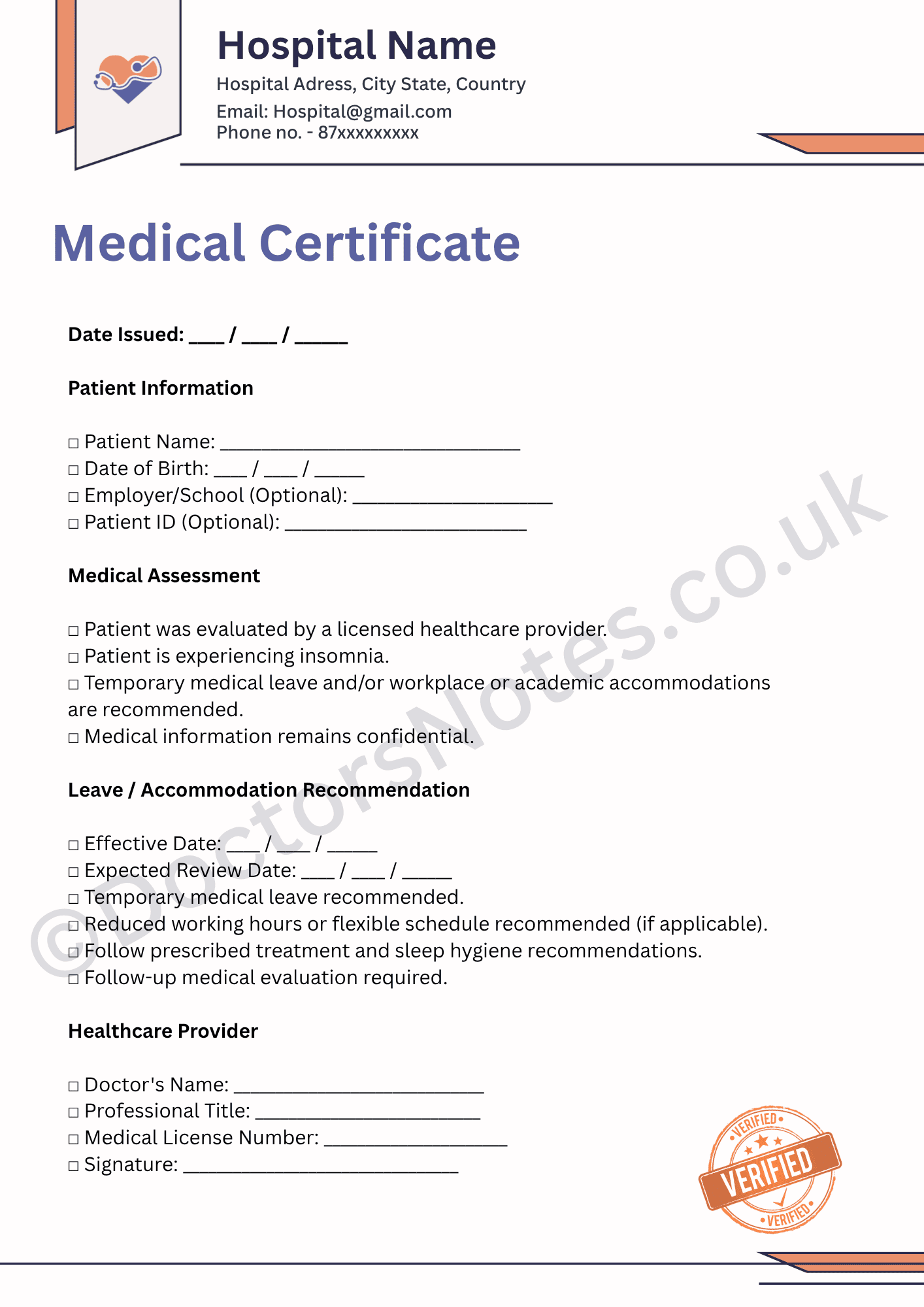
A Doctor’s Note for Insomnia is a medical certificate provided after a healthcare professional assesses your sleep difficulties and determines how they are affecting your overall health and daily functioning.
Insomnia is not simply having a bad night’s sleep occasionally. Persistent sleep problems may require professional evaluation, especially when they continue for weeks or months and begin affecting work performance, mood, energy levels, or quality of life.
This guide explains everything you need to know about obtaining a Doctor’s Note for Insomnia, including symptoms, when a medical certificate may be required, online booking, treatment options, prescription information, validity, legal considerations, and frequently asked questions.
Related Post:
- Doctors Note for Anxiety
- Doctor Note for Depression
- Doctors Note for Stress and Anxiety
- Doctor Note for Sick Leave
- Doctors Note for Reduced Hours
- What Is a Doctor’s Note for Insomnia?
A Doctor’s Note for Insomnia is an official medical document issued after a healthcare professional has reviewed your sleep-related symptoms and completed an appropriate clinical assessment.
The purpose of the note is to provide medical evidence that your sleep condition has been assessed and may be affecting your ability to perform normal activities.
Depending on your individual situation, a doctor’s note may confirm:
- That your insomnia symptoms have been medically assessed.
- That you may require temporary time away from work or education.
- That workplace or study adjustments may be beneficial.
- That further treatment or follow-up may be required.
- That your condition is affecting your ability to function normally.
A doctor’s note is not issued simply because someone reports poor sleep. It is based on a healthcare professional’s clinical judgement.
What Is Insomnia and How Does It Affect Your Health?
Insomnia is a sleep disorder where a person regularly experiences difficulty falling asleep, staying asleep, or getting enough restorative sleep.
People with insomnia may experience:
- Difficulty falling asleep at night.
- Waking frequently during the night.
- Waking earlier than planned and being unable to return to sleep.
- Feeling tired despite spending enough time in bed.
- Poor concentration during the day.
- Low energy levels.
- Irritability or mood changes.
- Reduced ability to complete daily tasks.
Poor sleep can affect many areas of life, including:
- Work performance.
- Academic performance.
- Memory and concentration.
- Emotional wellbeing.
- Physical health.
- Reaction time and safety.
When Might You Need a Doctor’s Note for Insomnia?
A medical certificate may be required when insomnia significantly affects your ability to continue normal responsibilities.
You may need a doctor’s note if:
- Lack of sleep is affecting your ability to work safely.
- You are struggling to concentrate or complete job duties.
- Your employer requires medical evidence for absence.
- You need temporary workplace adjustments.
- Sleep problems are affecting school, college, or university attendance.
- You are experiencing ongoing insomnia linked to another medical condition.
- You require documentation for occupational health assessments.
Insomnia can affect different people in different ways, so the need for medical documentation depends on the severity of symptoms and their impact on daily life.
Common Causes of Insomnia a Healthcare Professional May Assess
Insomnia can develop due to many physical, emotional, and lifestyle factors.
During your consultation, the healthcare professional may explore possible causes such as:
Stress and Emotional Factors
- Work-related pressure.
- Anxiety.
- Major life changes.
- Emotional distress.
- Ongoing worries.
Lifestyle Factors
- Irregular sleep schedules.
- Excessive caffeine intake.
- Shift work.
- Poor sleep environment.
- Excessive screen use before bedtime.
Medical Factors
- Chronic pain.
- Hormonal changes.
- Certain medications.
- Mental health conditions.
- Other underlying health concerns.
Understanding the possible cause helps determine the most appropriate advice and treatment approach.
What Happens During an Insomnia Consultation?
During an online consultation for insomnia, the healthcare professional will focus on understanding your sleep pattern and how it affects your daily life.
They may discuss:
- How long you have experienced sleep problems.
- Your usual sleeping and waking times.
- How often you wake during the night.
- How many hours you sleep.
- Your daytime tiredness and concentration levels.
- Your work or study responsibilities.
- Your stress levels and emotional wellbeing.
- Current medications or health conditions.
- Previous attempts to improve sleep.
The healthcare professional may also ask about your sleep habits and lifestyle factors that could contribute to insomnia.
If further investigation is needed, you may be advised to seek additional medical support or specialist assessment.
When Might a Doctor Recommend Time Off for Insomnia?
A healthcare professional may recommend time away from work, education, or certain activities when insomnia is significantly affecting your ability to function safely and effectively.
The decision is based on your individual condition and how sleep problems are impacting your daily life.
Factors that may be considered include:
- The severity and duration of your sleep difficulties.
- How much your lack of sleep affects concentration, memory, and decision-making.
- Whether your work involves safety-sensitive tasks such as driving, operating machinery, healthcare responsibilities, or working with vulnerable people.
- Your ability to complete normal duties without risking your health or the safety of others.
- Whether treatment has started and how you are responding.
- Whether workplace adjustments could support your recovery.
In some situations, a healthcare professional may recommend alternatives to complete absence, such as:
- Temporary changes to working hours.
- Avoiding night shifts or irregular schedules.
- Reduced workload for a short period.
- Flexible working arrangements.
- A gradual return-to-work plan.
The goal is to help manage your condition while supporting a safe and sustainable return to normal activities.
Prescription Information for Insomnia
Treatment for insomnia depends on the underlying cause, severity, and individual health circumstances.
During your consultation, the healthcare professional may recommend:
- Sleep hygiene improvements.
- Relaxation techniques.
- Changes to bedtime routines.
- Cognitive behavioural approaches for insomnia (CBT-I).
- Managing stress or underlying health concerns.
- Review of existing medications that may affect sleep.
- Referral for specialist sleep assessment where appropriate.
Can Medication Be Prescribed for Insomnia?
In some cases, medication may be considered, but it is not automatically provided.
Important points:
- Sleep medication is prescribed only when clinically appropriate.
- Many insomnia cases are managed through behavioural approaches and lifestyle changes.
- The healthcare professional will consider your medical history, current medications, and possible risks before recommending any treatment.
- Some sleep medications may only be suitable for short-term use and require careful medical supervision.
Always inform the healthcare professional about:
- Existing health conditions.
- Current medicines or supplements.
- Previous reactions to medications.
- Alcohol or substance use that may affect sleep.
How Long Is a Doctor’s Note for Insomnia Valid?
The validity period of a Doctor’s Note for Insomnia depends on the severity of symptoms, the impact on daily functioning, and the healthcare professional’s assessment.
Typical Review Periods
| Insomnia Situation | Typical Review Period* |
|---|---|
| Short-term sleep disruption | A few days to 2 weeks |
| Insomnia affecting work or study | 1–4 weeks |
| Ongoing sleep difficulties requiring treatment | 4–8 weeks with review |
| Insomnia linked to another medical condition | Based on the underlying condition |
| Long-term sleep disorder management | Regular medical review |
*These timeframes are general examples only. The actual duration of a doctor’s note depends on your personal assessment.
Factors That Influence Validity
The healthcare professional may consider:
- The severity of daytime symptoms.
- The effect on concentration and safety.
- The cause of insomnia.
- Response to treatment.
- Job responsibilities.
- Whether adjustments can support recovery.
- Whether further review is required.
If sleep problems continue beyond the original certificate period, a follow-up consultation may be recommended. Where clinically appropriate, updated medical documentation may be issued.
What Documents May Be Issued?
After your consultation, and where clinically appropriate, the healthcare professional may provide medical documentation based on your symptoms, assessment results, and the reason you require evidence.
Possible documents may include:
- Doctor’s Note for Insomnia or Medical Certificate.
- Confirmation that your sleep condition has been medically assessed.
- Fit Note (where applicable) explaining whether you are fit for work or require temporary adjustments.
- Recommendations for workplace changes, such as modified hours or reduced duties.
- Return-to-work guidance after a period of absence.
- Medical advice regarding sleep management and recovery.
- Referral recommendations for sleep specialists, mental health support, or further medical assessment.
- Prescription information or treatment recommendations where clinically appropriate.
The documentation provided will depend on your individual health situation and the healthcare professional’s clinical judgement.
Important Legal Information About Doctor’s Note for Insomnia
A Doctor’s Note for Insomnia is an official medical document and should only be issued after an appropriate health assessment.
Important information to understand:
- A medical certificate is issued only after a licensed healthcare professional evaluates your symptoms and their impact on your daily functioning.
- Booking an online consultation does not guarantee that a doctor’s note will be provided.
- Healthcare professionals must use independent clinical judgement when deciding whether medical documentation is appropriate.
- Insomnia can affect concentration, reaction time, decision-making, and safety, especially in jobs involving driving, machinery, healthcare, or other safety-sensitive responsibilities.
- Employers, schools, universities, insurers, and other organisations may have their own requirements for accepting medical certificates.
- You should follow your workplace or educational institution’s sickness reporting procedures.
- A healthcare professional may recommend adjustments instead of complete absence where appropriate.
- Your sleep-related health information is confidential and should only be shared according to applicable privacy and data protection laws.
- You should provide accurate information during your consultation to ensure your medical assessment and documentation are appropriate.
If insomnia is accompanied by severe anxiety, thoughts of self-harm, extreme distress, or inability to function safely, seek urgent medical support rather than relying only on a routine sick note consultation.
FAQ
Can I get a Doctor’s Note for Insomnia online?
Yes. You can book an online consultation with a licensed healthcare professional to discuss your sleep difficulties. If your condition is assessed as affecting your ability to work, study, or perform normal activities, a doctor’s note may be issued where clinically appropriate.
Is insomnia a valid reason for sick leave?
Yes. Severe or ongoing insomnia can affect concentration, energy, emotional wellbeing, and daily functioning. If a healthcare professional determines that your symptoms affect your ability to work or study, medical documentation may be appropriate.
Will my employer know I have insomnia?
Not necessarily. Many medical certificates focus on your fitness for work rather than providing detailed medical information. The amount of information included depends on the certificate type and applicable requirements.
How long can I be signed off work for insomnia?
There is no fixed duration. The length of time depends on your symptoms, recovery progress, treatment response, and the healthcare professional’s assessment.
Can insomnia be treated without medication?
Yes. Many people improve through sleep routine changes, behavioural approaches, stress management, and addressing underlying causes. Medication is not required for every person experiencing insomnia.
Can I receive sleeping tablets during an online consultation?
Medication may be considered if clinically appropriate, but it is not automatically prescribed. The healthcare professional will assess your individual situation, medical history, and potential risks before recommending treatment.
Can my Doctor’s Note for Insomnia be extended?
Yes. If sleep difficulties continue after the original certificate period, you may need a follow-up consultation. Updated medical documentation may be provided if clinically appropriate.
Can insomnia affect my ability to drive or work safely?
Yes. Poor sleep can reduce concentration, alertness, and reaction time. If your work involves safety-sensitive activities, discuss this with your healthcare professional.
Is my insomnia consultation confidential?
Yes. Your medical information is treated as confidential healthcare information and managed according to applicable privacy and data protection regulations.
Can students get a Doctor’s Note for Insomnia?
Yes. Students experiencing sleep problems that affect attendance, examinations, or academic performance may request medical documentation after an appropriate assessment.
When should I seek urgent help for insomnia?
Seek urgent medical support if insomnia is linked with severe mental distress, thoughts of harming yourself, confusion, hallucinations, or an inability to safely manage daily activities.
Why Choose Our Online Consultation Service?
- Convenient online access to healthcare professionals.
- Simple booking process from home.
- Private and confidential consultations.
- Professional assessment of sleep-related concerns.
- Medical certificates issued only where clinically appropriate.
- Guidance on improving sleep and managing symptoms.
- Support with workplace, education, and other legitimate documentation needs.
Conclusion
Ongoing insomnia can have a significant impact on your physical health, mental wellbeing, concentration, and ability to manage everyday responsibilities. When sleep difficulties begin affecting work, education, or daily life, seeking professional medical advice can help identify the right support.
A Doctor’s Note for Insomnia provides medical documentation following an assessment by a licensed healthcare professional and may support your need for time away, workplace adjustments, or recovery planning where appropriate.
Through an online consultation, you can discuss your sleep concerns, receive personalised medical guidance, and obtain appropriate documentation without unnecessary delays. Every assessment is focused on understanding your individual situation and supporting a safe path towards better sleep and improved wellbeing.



Reviews
There are no reviews yet.