
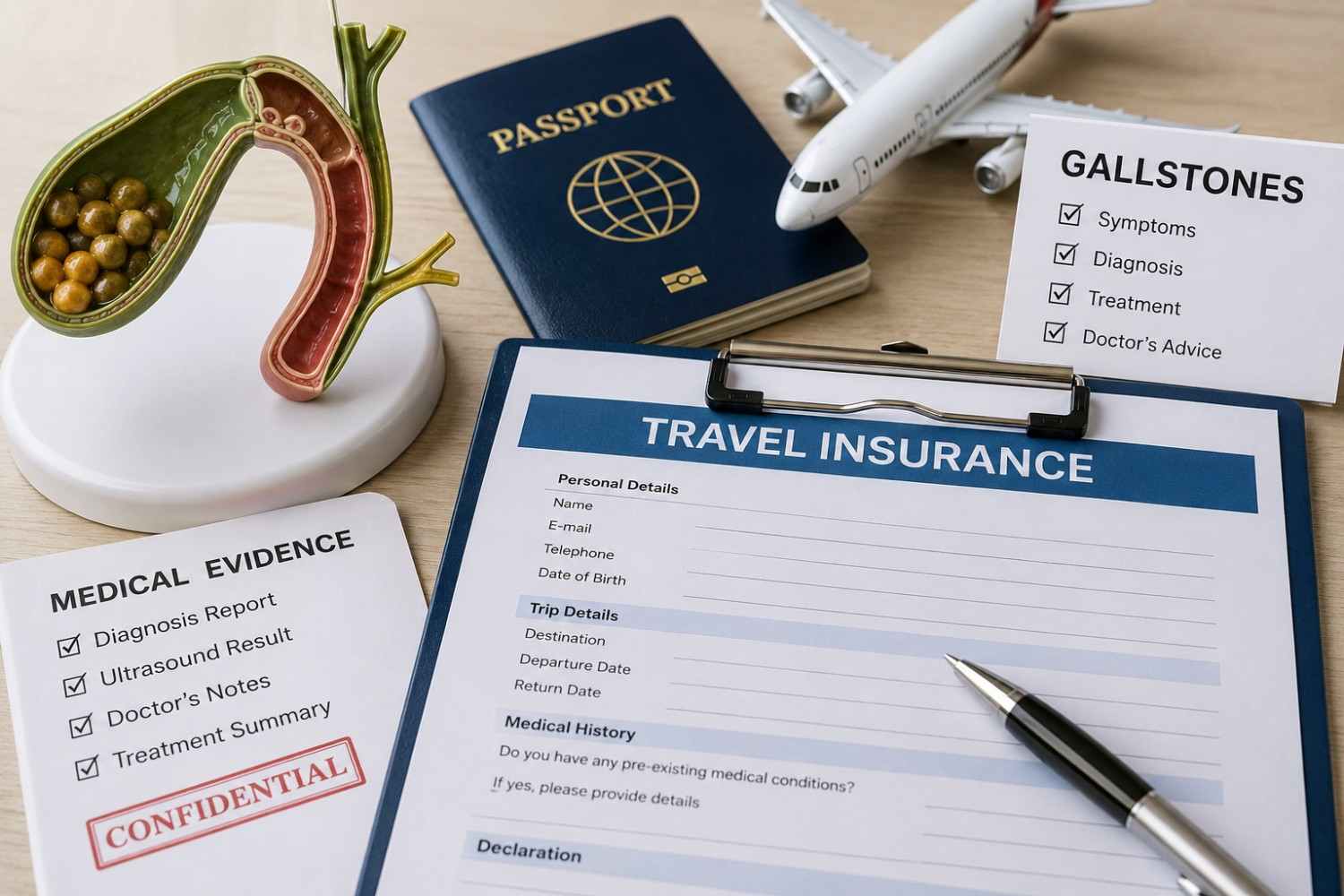
Travel insurance with gallstones can be an important consideration if you have been diagnosed with gallstones, have experienced recent symptoms, or are waiting for gallbladder treatment. Gallstones do not automatically mean you cannot get travel insurance, but your condition may affect what cover is available and what information an insurer needs before you travel.
This becomes particularly important if you are planning a holiday while waiting for surgery, have recently had a gallstone attack, or have been advised to avoid travelling. If you later need to cancel your trip, your insurer may ask for medical evidence showing why you were unable to travel.
The exact outcome depends on your policy, your medical history and what you told the insurer when arranging cover.
Can you get travel insurance with gallstones?
Yes. Having gallstones does not automatically prevent you from getting travel insurance.
However, gallstones may be treated as a pre-existing medical condition, depending on your circumstances and the insurer’s definition. For example, an insurer may want to know whether you have recently experienced symptoms, received medical treatment, had investigations, been prescribed medication or been referred for surgery.
Some people have gallstones without experiencing noticeable symptoms. Others develop episodes of significant abdominal pain, nausea or vomiting. The difference can matter when an insurer assesses your medical risk.
When arranging travel insurance, answer the medical screening questions accurately. Do not assume that a condition is irrelevant simply because you are currently feeling well.
Your insurer may also consider whether you are:
- waiting for gallbladder surgery;
- awaiting test or scan results;
- receiving treatment;
- experiencing recurring gallstone attacks;
- taking medication for related symptoms; or
- under medical investigation for abdominal pain.
The policy wording should explain what you need to declare and whether additional cover or a higher premium applies.
Why gallstones can affect travel insurance
Gallstones can sometimes cause sudden and severe symptoms. In some cases, complications such as cholecystitis, pancreatitis or jaundice can require urgent medical treatment.
This is one reason insurers may ask questions about your gallbladder health when you apply for cover.
It is also important to understand that having gallstones is different from having an active medical problem that has recently changed. A person who has known, symptom-free gallstones may present a different insurance risk from someone who has recently been admitted to hospital or is waiting for a cholecystectomy, which is surgery to remove the gallbladder.
That distinction can become especially important if you later need to make a cancellation claim.
Can gallstones cause you to cancel a holiday?
They can, depending on the circumstances and the terms of your policy.
Imagine that you have booked a non-refundable holiday several months in advance. Shortly before departure, you develop severe abdominal pain and your doctor advises you not to travel. If your policy includes appropriate cancellation cover, you may be able to claim for eligible prepaid expenses.
However, the fact that you have gallstones does not automatically make a cancellation claim valid.
For example, your claim may be stronger if your medical records show that you developed significant symptoms, required treatment or were medically advised not to travel.The insurer will also consider when the problem arose and whether the condition had already been disclosed when you purchased the policy.
What happens if you are waiting for gallbladder surgery?
Waiting for surgery can make travel insurance more complicated.
If your doctor has referred you for a gallbladder removal operation, the insurer may regard this as relevant medical information even if you have not yet had the procedure.
You may be asked about:
- why the operation is needed;
- when you were referred;
- whether you have experienced recent symptoms;
- whether your treatment has been scheduled;
- whether your doctor has placed any restrictions on travelling; and
- whether your condition has changed since you bought the policy.
Do not assume that an upcoming operation automatically means your holiday is cancelled or that an insurer will automatically pay a claim.
The medical advice and the policy terms both matter.
If you have recently been told that surgery is necessary, it is sensible to contact your insurer and check whether your circumstances remain covered before travelling.
What medical evidence might an insurer ask for?
Medical evidence can be an important part of a travel insurance claim involving gallstones.
The insurer may want documentation that supports the reason for your cancellation. Depending on the circumstances, this could include information from your GP, hospital or another treating healthcare professional.
The evidence may need to confirm details such as:
- your diagnosis;
- relevant symptoms;
- treatment or investigations;
- the date your condition became worse;
- whether you were advised against travelling; and
- why travelling was medically unsuitable.
The exact documentation varies between insurers.
A medical certificate or doctor’s note for travel insurance may therefore be useful when it accurately documents a genuine medical situation and is accepted by the insurer. It should reflect the facts of your condition rather than simply state that you were unable to travel without explanation.
If you genuinely need medical documentation for an insurance claim, you can explore our doctor’s note for travel insurance service for information about the documentation available.
This should not replace medical assessment or advice from your own healthcare professional. Always check what evidence your insurer specifically requires before submitting a claim.
Does a gallstone attack mean you can claim?
Not necessarily.
A gallstone attack can cause intense pain, but an insurer will generally look at the circumstances surrounding the cancellation rather than simply the diagnosis.
For example, suppose you have known gallstones but have been stable for several months. You then experience a severe episode shortly before your departure and seek medical attention. Your doctor advises you not to travel because further investigation or treatment is needed.
That is very different from cancelling a holiday simply because you know that you have gallstones.
The insurer may look at your medical records, the timing of your symptoms and the reason you could not travel. Your policy may also contain exclusions or conditions relating to pre-existing medical conditions.
What if you need surgery before your holiday?
Gallbladder surgery can affect your travel plans in several ways.
Even if the operation itself goes well, you may need time to recover before travelling. Your doctor may advise you to avoid certain activities, long journeys or flying during the recovery period.
If surgery is planned before your holiday, check your travel insurance policy and speak with your insurer as soon as possible.
If the operation was unexpected and you need to cancel because you are medically unfit to travel, cancellation cover may apply if the circumstances meet the policy requirements.
Keep any relevant hospital letters, appointment information and medical documentation. These records can help establish what happened and when.
What if gallstones become worse after you buy insurance?
The timing of the medical change can be important. Suppose you buy travel insurance after declaring your existing gallstones. Several weeks later, your symptoms become significantly worse and your doctor recommends urgent treatment.
You should not assume that the original insurance screening automatically covers every future development. Some policies require you to tell the insurer about significant changes in your health after the policy begins. Others have specific rules about medical conditions and changes in circumstances.
Check your policy and contact the insurer if your health changes. Failing to disclose relevant changes when required could create problems later when you make a claim.
How much could you claim for a cancelled holiday?
The amount depends on the policy.
Travel insurance cancellation cover may apply to eligible prepaid and non-refundable expenses, but limits, exclusions and excesses can affect the amount recovered.
For example, your policy might cover certain costs such as:
- flights;
- accommodation;
- pre-booked transport;
- excursions or activities; and
- other eligible prepaid travel arrangements.
However, not every expense will necessarily be recoverable.
You may also need to seek refunds or compensation from the travel provider before the insurer pays the remaining eligible amount. This is why keeping booking confirmations, cancellation records and receipts is important.
Never assume that having medical evidence means the entire cost of a holiday will automatically be reimbursed.
What if you develop gallstones while abroad?
Travel insurance can also be important if you experience gallstone symptoms during your trip.
Sudden abdominal pain, vomiting, fever or jaundice may require urgent medical attention. Gallstones can sometimes lead to complications that need hospital treatment.
If you become seriously unwell abroad, seek appropriate medical care first. Contact your insurer as soon as it is reasonably safe to do so and follow its emergency assistance process.
Keep records of medical treatment, prescriptions, hospital bills and other relevant expenses.
Depending on the policy, travel insurance may provide cover for eligible emergency medical expenses. The exact level of cover and any exclusions will depend on the policy you purchased.
A European Health Insurance Card (EHIC) or Global Health Insurance Card (GHIC), where applicable, should not be treated as a substitute for comprehensive travel insurance.
What if the insurer says your gallstones were a pre-existing condition?
This does not necessarily mean that your claim will automatically be rejected.
The key question is usually whether the condition was covered under the policy and whether you followed the insurer’s requirements.
Pre-existing medical conditions can include conditions that existed before the policy was purchased, but insurers use different definitions and screening questions.
For gallstones, the insurer may consider your previous symptoms, consultations, investigations, medication and treatment plans.
If you believe your claim has been assessed incorrectly, review the policy wording and the reasons given by the insurer. You may also have the right to use the insurer’s complaints process.
The best approach is to be transparent from the beginning. Accurate medical disclosure can reduce the risk of unexpected problems when you need to use your policy.
How to prepare if you have gallstones and are travelling
Good preparation can make things much easier if your health changes while you are away.
Before travelling, check your policy for:
- pre-existing medical condition requirements;
- cancellation and curtailment cover;
- emergency medical expenses;
- policy excesses;
- exclusions;
- medical screening requirements; and
- any rules about changes in your health after buying the policy.
Keep important medical information accessible, including details of your diagnosis, medication and recent treatment.
If you have been advised to undergo gallbladder surgery or are experiencing recurring symptoms, discuss your travel plans with your healthcare professional.
It is also sensible to save your insurer’s emergency assistance details somewhere you can access them while travelling.
Three common gallstone travel scenarios
The way travel insurance responds can vary significantly depending on the situation.
You have gallstones but no recent symptoms
You have previously been diagnosed with gallstones but have remained well and have no current treatment planned.
You may still need to disclose the condition during medical screening. If the insurer accepts it, the policy may provide cover subject to its terms.
You have recurring symptoms and are waiting for surgery
You have experienced several attacks and are waiting for a cholecystectomy.
This is more likely to require careful medical screening because your condition is active and treatment is pending. The insurer may ask more detailed questions before confirming cover.
You become unwell shortly before departure
You develop severe symptoms, seek medical advice and are told not to travel.
If your policy provides appropriate cancellation cover and the circumstances meet its conditions, you may have grounds for a claim. Medical evidence can be particularly important in demonstrating why the trip had to be cancelled.
What should you do before cancelling your holiday?
If gallstones suddenly affect your ability to travel, avoid cancelling everything without first checking what your insurer requires.
Start by obtaining appropriate medical advice. If a healthcare professional confirms that you should not travel, keep the relevant documentation.
Then contact your insurer promptly and ask what steps you need to follow.
You should also keep:
- booking confirmations;
- cancellation invoices;
- receipts;
- medical correspondence;
- hospital documentation;
- prescriptions; and
- communications with the insurer or travel provider.
Following the correct process can make it easier to demonstrate what happened and what costs you are claiming.
Can a doctor’s note help with a gallstones travel insurance claim?
It can, where the insurer accepts that type of evidence and requires it.
A doctor’s note or medical certificate may help document why you were unable to travel, particularly when a claim is based on a recent change in your health.
However, documentation must be accurate and based on genuine medical circumstances. It should not be used to create or support a claim that is not medically justified.
If your insurer has asked you for medical documentation, check exactly what information it requires before arranging any document.
For genuine documentation needs, you can view our doctor’s note for travel insurance options and see which service may be relevant to your situation.
Related Doctor’s Note :
Doctor’s Note for Gastroenteritis
Frequently Asked Questions
Can I get travel insurance if I have gallstones?
Yes. Gallstones do not automatically prevent you from obtaining travel insurance. However, you may need to disclose the condition and complete medical screening.
Are gallstones considered a pre-existing medical condition?
They may be. The definition varies between insurers and policies, so check the insurer’s medical screening requirements rather than making assumptions.
Can I cancel my holiday because of a gallstone attack?
Potentially. If the attack makes you medically unable to travel and your policy covers the circumstances, you may be able to claim. Medical evidence may be required.
Can I claim travel insurance if I am waiting for gallbladder surgery?
Possibly, but the circumstances are important. Waiting for surgery can affect medical screening and may be relevant to cancellation cover.
Do I need a doctor’s note for a travel insurance claim?
Not always. Requirements vary between insurers and claims. If medical evidence is required, the insurer should tell you what documentation it needs.
Does travel insurance cover gallstone treatment abroad?
A suitable policy may cover eligible emergency medical treatment abroad, subject to its terms, limits and exclusions. Pre-existing conditions may need to be declared and accepted for cover.
What happens if my gallstones were not declared?
Non-disclosure can create serious problems with a claim. The insurer may review whether the condition should have been declared and whether cover applies.
Final thoughts
Having gallstones does not automatically mean you have to give up your holiday plans or that travel insurance will be unavailable. The key is understanding how your condition fits within the insurer’s rules and being honest about your medical history.
If your gallstones are stable, your situation may be straightforward. If you are experiencing recurring attacks, awaiting investigations or preparing for gallbladder surgery, the insurance implications can be more significant.
If you later need to cancel because your health has changed, medical evidence can help establish why you were unable to travel. Keep your records, follow the insurer’s claims process and check your policy carefully before making assumptions about what will be covered.
And if your insurer requires genuine medical documentation for your claim, you can explore our doctor’s note for travel insurance service to learn more about the documentation options available.

Dr. Anuj provides convenient online medical consultations for patients across the UK, making it easier to speak with a doctor without the need for an in-person visit.
Through secure online consultations, Dr. Anuj can assess your symptoms, discuss your concerns, and provide appropriate medical guidance. Where medically appropriate and legally permitted, a doctor’s note or medical documentation may also be provided following the consultation.