
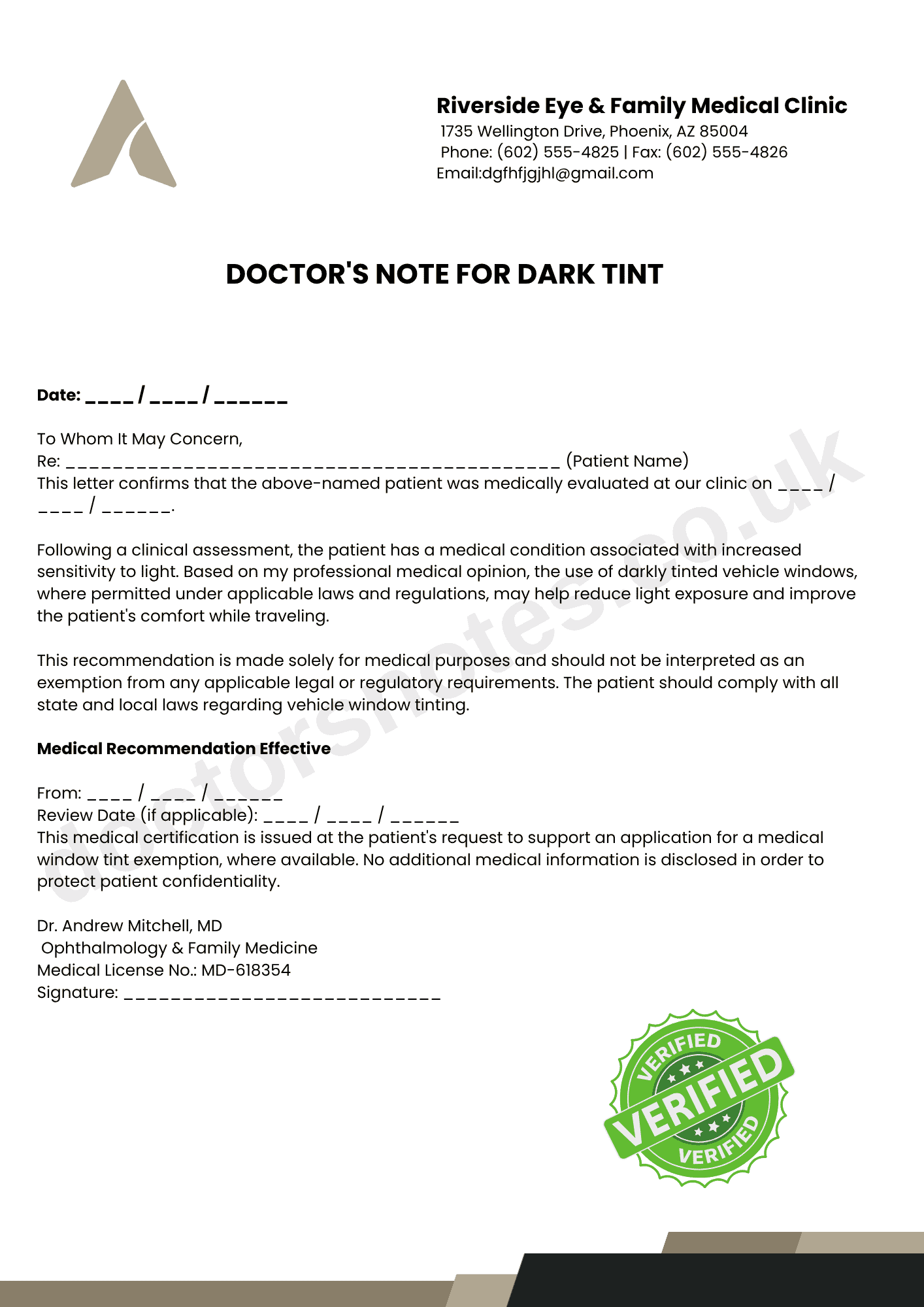


Vehicle window tinting laws are designed to balance driver privacy with road safety. However, some individuals have medical conditions that make them unusually sensitive to sunlight, glare, or ultraviolet (UV) radiation. In these situations, a healthcare professional may determine that darker window tinting could help reduce symptoms or provide additional protection during travel.
A Doctor’s Note for Dark Tint is medical documentation issued after a licensed healthcare professional evaluates your health condition and determines whether recommending darker vehicle window tinting is clinically appropriate.
Unlike a standard sick note for illness or injury, this type of documentation does not certify an inability to work or attend school. Instead, it provides medical evidence that a health condition may benefit from reduced sunlight exposure while travelling in a vehicle.
This guide explains what a Doctor’s Note for Dark Tint is, which medical conditions may qualify, how the assessment process works, treatment considerations, legal information, and other important details you should know.
Related Post:
- Doctors Note for Migraine
- Doctors Note for Eye Infection
- Doctors Note for Headache
- Doctors Note for Allergies
- What Is a Doctor’s Note for Dark Tint?
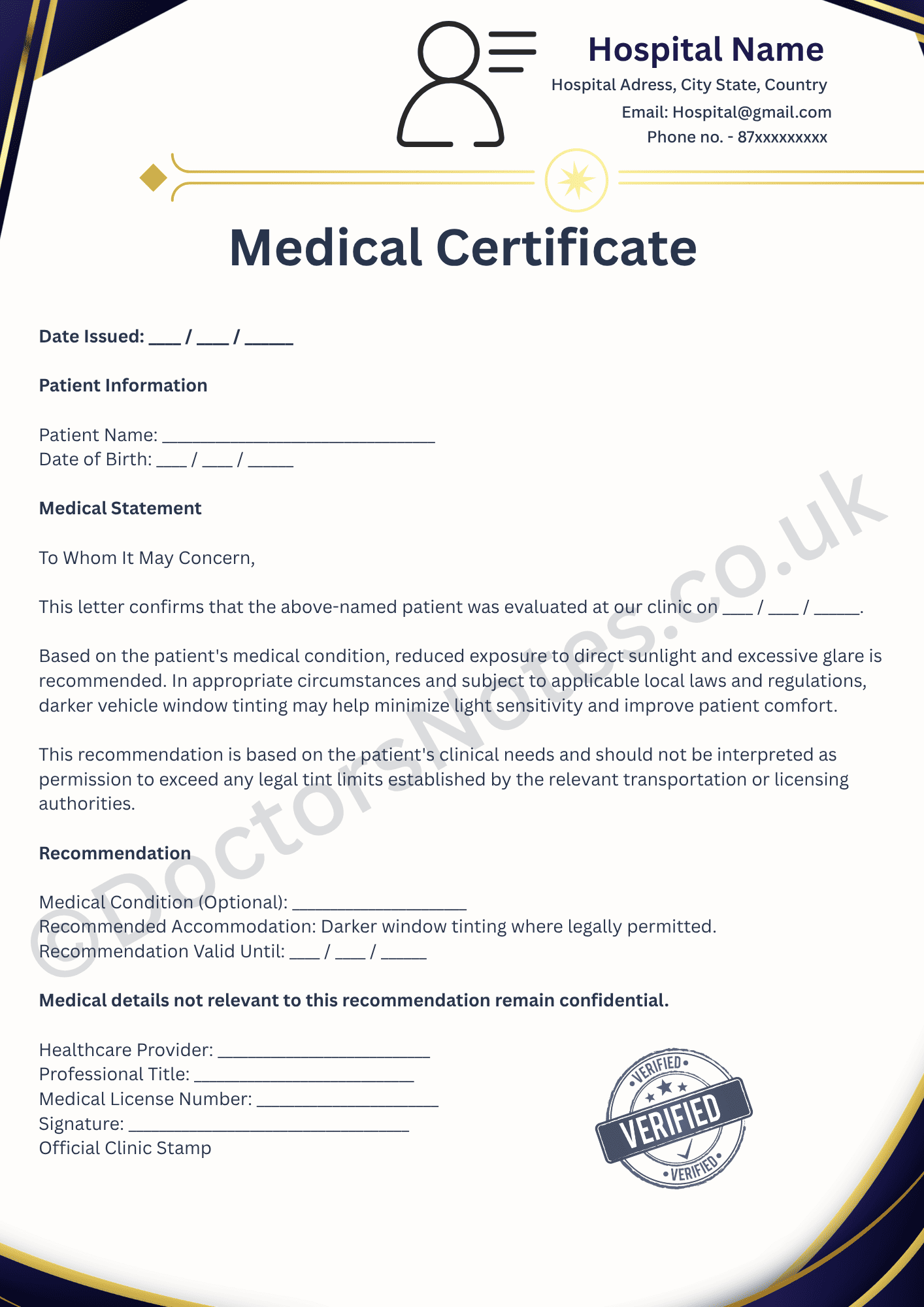
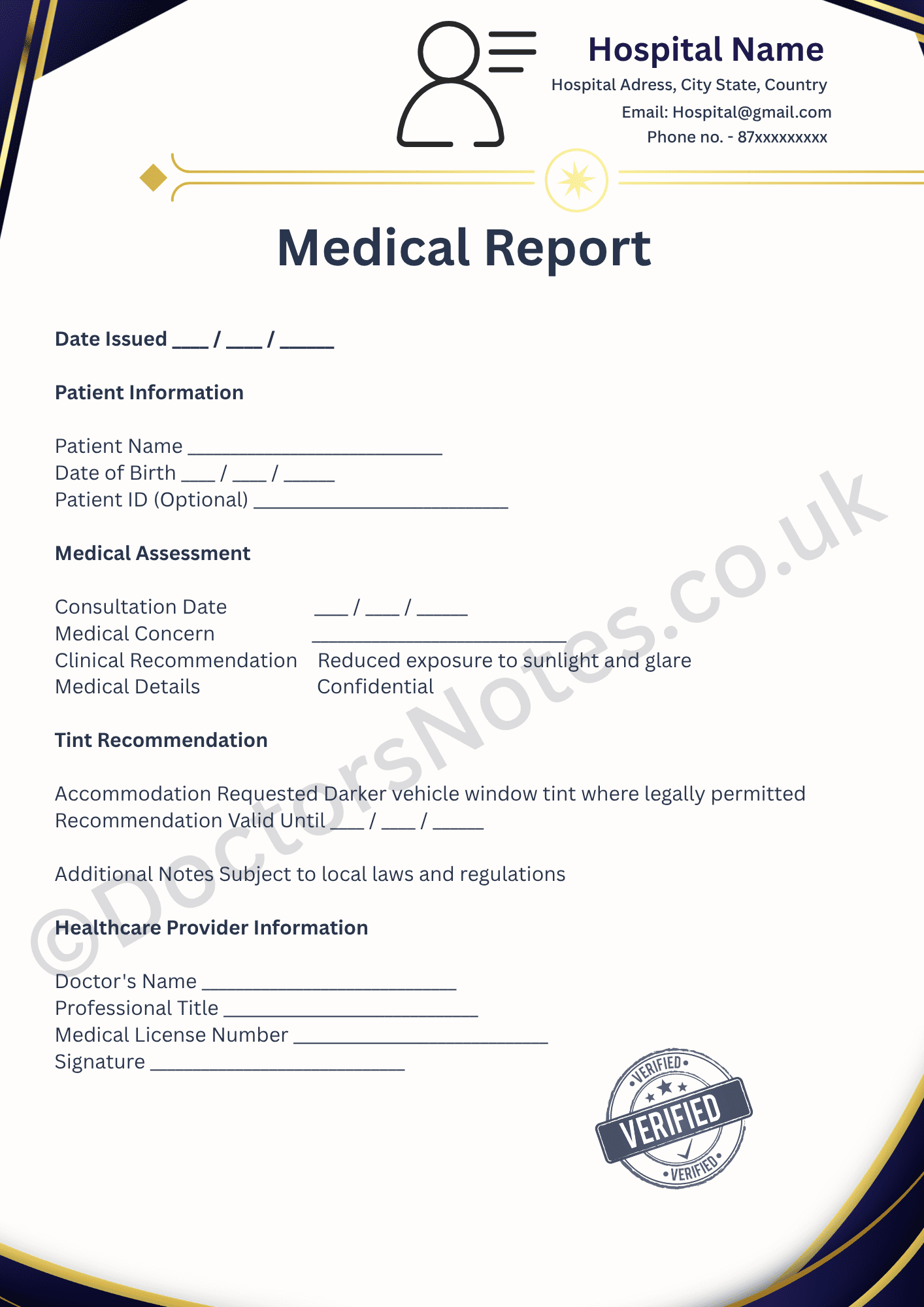
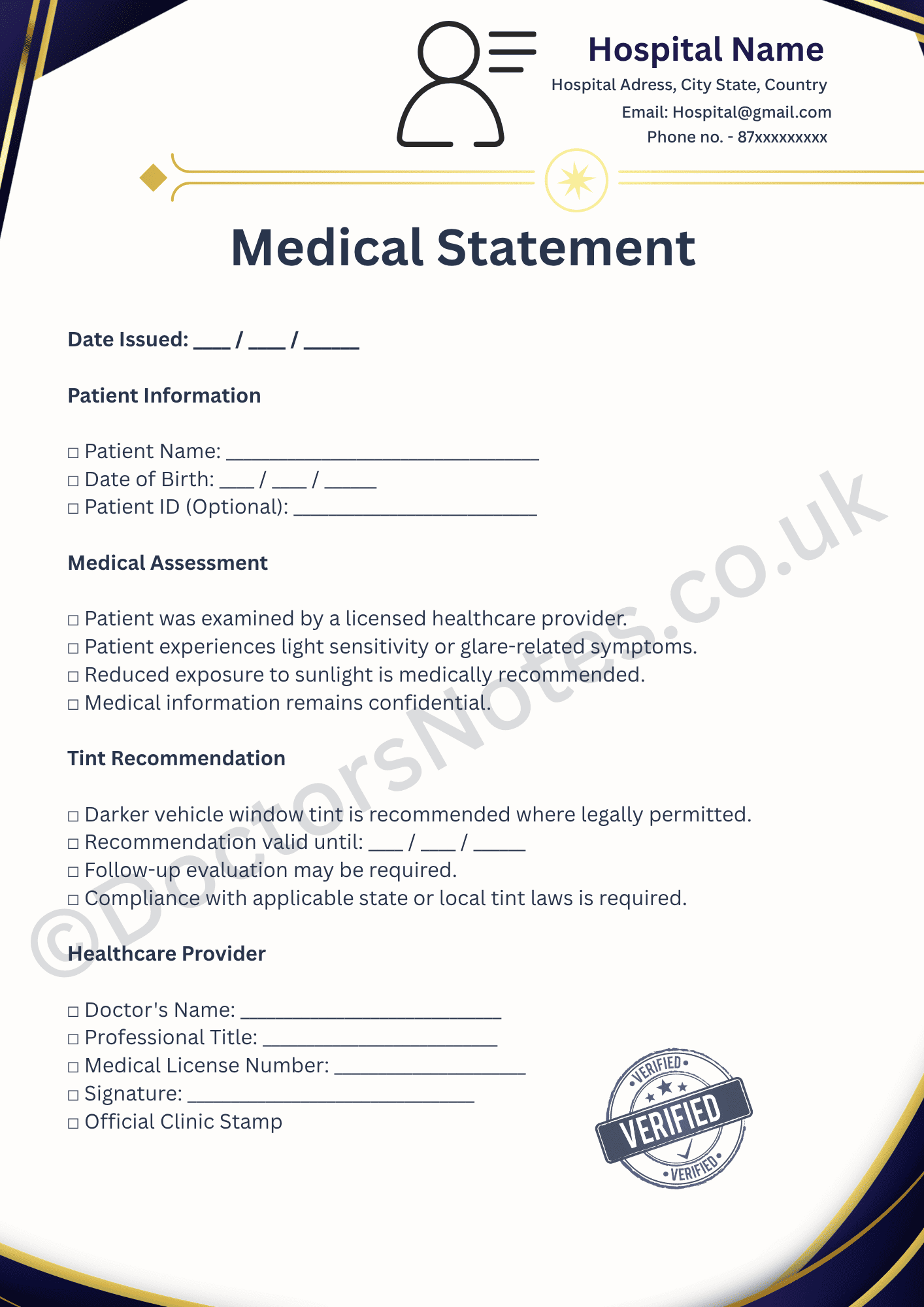
A Doctor’s Note for Dark Tint is an official medical document that explains why a patient may require darker vehicle window tinting because of a recognised medical condition.
Depending on the assessment, the documentation may include:
- Confirmation that a medical condition has been clinically assessed.
- Information about light sensitivity or ultraviolet (UV) sensitivity.
- Recommendations regarding darker vehicle window tint where medically appropriate.
- Suggested duration of the recommendation.
- Advice regarding follow-up medical review if required.
The document provides medical evidence only. It does not automatically authorise darker window tinting or exempt a vehicle from local tint regulations.
Why Might Someone Need a Doctor’s Note for Dark Tint?
Certain medical conditions can make exposure to sunlight, glare, or UV radiation uncomfortable or medically harmful.
In these situations, reducing the amount of sunlight entering a vehicle may help improve comfort or reduce symptom flare-ups during travel.
Medical documentation may be appropriate when a healthcare professional believes darker window tint could form part of your overall management plan.
Medical Conditions That May Support a Dark Tint Recommendation
Every case is assessed individually. A recommendation depends on your symptoms, diagnosis, and clinical findings rather than simply requesting darker windows.
Examples of conditions that may be considered include:
Photosensitivity Disorders
Some medical conditions cause extreme sensitivity to sunlight or ultraviolet exposure.
Lupus (Systemic Lupus Erythematosus)
Many people living with lupus experience increased sensitivity to sunlight, which may trigger skin reactions or disease flare-ups.
Xeroderma Pigmentosum (XP)
This rare genetic condition significantly increases sensitivity to ultraviolet radiation, making strict sun protection essential.
Albinism
Individuals with albinism often have reduced natural protection from UV exposure and may experience significant light sensitivity.
Certain Eye Conditions
Some ophthalmic conditions can increase sensitivity to bright light or glare, making driving uncomfortable.
Examples may include:
- Chronic photophobia.
- Certain retinal disorders.
- Recovery after eye surgery.
- Corneal disease.
Medication-Induced Photosensitivity
Certain prescription medications may temporarily increase sensitivity to sunlight.
The healthcare professional will consider whether your symptoms are related to medication and whether additional protective measures are appropriate.
What Symptoms May Be Associated With Light Sensitivity?
Symptoms vary depending on the underlying medical condition.
Common symptoms include:
- Eye discomfort in bright sunlight.
- Difficulty driving during daylight.
- Excessive squinting.
- Headaches triggered by bright light.
- Migraine attacks associated with sunlight.
- Burning or painful eyes.
- Blurred vision in bright conditions.
- Skin irritation following UV exposure.
- Increased fatigue caused by prolonged sunlight exposure.
These symptoms should always be assessed alongside your medical history.
Who Might Request a Doctor’s Note for Dark Tint?
Medical documentation may be useful for:
Drivers
Individuals who spend long periods driving and experience medically significant light sensitivity.
People With Chronic Medical Conditions
Patients whose symptoms are consistently aggravated by sunlight exposure.
Individuals Recovering From Eye Procedures
Some patients experience temporary light sensitivity following ophthalmic surgery or treatment.
Commercial Vehicle Operators
Drivers who require prolonged road travel and have medically documented sensitivity to bright light.
Patients Seeking a Tint Exemption
Individuals applying for a medical exemption where local laws allow darker window tinting for qualifying health conditions.
What Happens During the Medical Consultation?
During your consultation, the healthcare professional will evaluate both your medical history and the symptoms that make sunlight exposure problematic.
You may be asked about:
- Your diagnosed medical condition.
- When your symptoms began.
- Whether sunlight consistently worsens your symptoms.
- How often you drive.
- Current medications.
- Previous eye conditions or surgery.
- Whether sunglasses or other protective measures provide sufficient relief.
- Previous specialist assessments.
- Any dermatology or ophthalmology treatment.
- Whether your condition affects daily travel or employment.
Following the assessment, the healthcare professional will determine whether recommending darker vehicle window tint is clinically appropriate or whether alternative management strategies should be considered.
Important: A doctor’s note alone does not automatically permit darker-than-legal vehicle window tint. Many regions require a separate application or approval process through the relevant transport or licensing authority, and local tint laws continue to apply unless an official exemption has been granted.
Managing Light Sensitivity Beyond Vehicle Window Tint
Darker window tint may help reduce sunlight exposure while travelling, but it is usually only one part of an overall management plan.
Depending on your condition, the healthcare professional may also recommend:
- UV-blocking sunglasses.
- Prescription tinted lenses where appropriate.
- Wide-brimmed hats when outdoors.
- High-SPF sunscreen for photosensitive skin conditions.
- Avoiding prolonged sun exposure during peak UV hours.
- Regular ophthalmology or dermatology reviews.
- Monitoring for changes in your symptoms over time.
These measures are often used alongside any recommendation regarding vehicle window tinting.
Can Medication Be Prescribed?
Yes, where clinically appropriate.
If your underlying condition requires treatment, the healthcare professional may recommend or prescribe medication depending on your diagnosis.
Treatment may include:
- Medication for inflammatory skin conditions.
- Treatment for autoimmune disorders.
- Migraine management where light sensitivity is a trigger.
- Lubricating eye drops for certain eye conditions.
- Adjustment of medicines that may contribute to photosensitivity where appropriate.
Treatment decisions are based on your medical history, current symptoms, and clinical assessment.
Always inform the healthcare professional about:
- Current medications.
- Known allergies.
- Previous eye conditions.
- Existing skin disorders.
- Pregnancy or breastfeeding where relevant.
How Long Is a Doctor’s Note for Dark Tint Valid?
The validity of a Doctor’s Note for Dark Tint depends on the underlying medical condition and whether your healthcare professional considers the need for additional sun protection to be temporary or ongoing.
Some recommendations may only apply during recovery from an eye procedure, while others may relate to chronic medical conditions that require long-term management.
Typical Review Periods
| Medical Situation | Typical Review Period* |
|---|---|
| Recovery after eye surgery | Several weeks or until reviewed |
| Temporary medication-related photosensitivity | For the duration of treatment |
| Chronic eye disorders | Periodic review as clinically appropriate |
| Autoimmune or dermatological conditions | Based on ongoing medical management |
| Long-term photosensitivity disorders | Regular review according to specialist advice |
*These examples are intended as general guidance only. The duration of any medical recommendation will depend on your diagnosis, response to treatment, and the healthcare professional’s clinical judgement.
Applying for a Medical Window Tint Exemption
If your local laws allow medical exemptions for darker vehicle window tint, the process usually involves more than obtaining a doctor’s note.
Depending on your location, you may also need to:
- Submit an application to the relevant transport or licensing authority.
- Provide the required medical documentation.
- Complete official exemption forms.
- Meet any eligibility criteria established by local regulations.
- Renew your exemption if periodic medical review is required.
Requirements vary between countries, states, and regions. Before modifying your vehicle, always check the applicable window tint regulations and exemption procedures in your area to ensure you remain legally compliant.
What Documents May Be Issued?
Following your consultation, the healthcare professional will decide whether medical documentation is appropriate after considering your diagnosis, symptoms, medical history, and the effect that sunlight or glare has on your daily activities.
Depending on your individual circumstances, you may receive:
- Doctor’s Note for Dark Tint or a medical recommendation letter.
- Medical documentation confirming a clinically assessed light-sensitive medical condition.
- A letter supporting an application for a medical window tint exemption where permitted by local regulations.
- Recommendations regarding UV protection and glare reduction.
- Referral letters to an ophthalmologist, dermatologist, neurologist, or other appropriate specialist if additional assessment is required.
- Advice regarding ongoing monitoring of chronic medical conditions associated with photosensitivity.
- Follow-up review recommendations if your symptoms require further evaluation.
- Treatment recommendations or prescription advice where clinically appropriate.
The documentation provided will always reflect the healthcare professional’s independent clinical judgement and your individual medical assessment.
Important Legal Information
A Doctor’s Note for Dark Tint is intended to provide medical evidence that a healthcare professional believes additional protection from sunlight may be beneficial because of a diagnosed medical condition. It is not the same as legal authorisation to install darker-than-permitted vehicle window tint.
Before requesting documentation, you should understand the following:
- A doctor’s note is only issued after an appropriate medical assessment by a licensed healthcare professional.
- Booking an appointment does not guarantee that documentation supporting darker window tint will be provided.
- Healthcare professionals may only recommend medical accommodations that are supported by your symptoms, diagnosis, and clinical findings.
- Many countries, states, and licensing authorities have specific rules governing medical window tint exemptions. Additional application forms or approval from the relevant transport authority may be required.
- A doctor’s note alone does not override local road traffic laws or vehicle safety regulations.
- Installing vehicle window tint that exceeds the legal limit without the required approval may result in penalties, failed vehicle inspections, or enforcement action depending on your jurisdiction.
- Medical documentation generally contains only information necessary to explain the clinical reason for the recommendation and does not disclose unnecessary confidential medical details unless you consent or disclosure is required by law.
- Your consultation, medical history, uploaded documents, and personal information remain confidential and are handled in accordance with applicable healthcare privacy and data protection legislation.
Important: Before applying dark window tint to any vehicle, always check the regulations issued by the transport or licensing authority responsible for your area. Medical exemption procedures and permitted tint levels vary significantly between jurisdictions.
FAQ
Can I get a Doctor’s Note for Dark Tint online?
Yes. You can book an online consultation with a licensed healthcare professional. If your condition is clinically assessed and additional sun protection is considered medically appropriate, supporting documentation may be issued.
Does a doctor’s note automatically allow darker window tint?
No. A doctor’s note provides medical evidence only. In many areas, you must still apply for a formal exemption through the relevant transport or licensing authority before using darker-than-standard window tint.
Which medical conditions may qualify?
Eligibility depends on your symptoms and diagnosis. Conditions involving significant photosensitivity, certain skin disorders, eye diseases, autoimmune conditions, or other medically recognised causes of light sensitivity may be considered following an individual assessment.
Can temporary medical conditions qualify?
In some cases, yes. Temporary light sensitivity after eye surgery or as a side effect of certain medications may justify short-term medical recommendations where clinically appropriate.
Will I need to provide specialist reports?
Not always. However, if you have previously been assessed by an ophthalmologist, dermatologist, neurologist, or another specialist, providing those reports may assist the healthcare professional during your consultation.
How long is the recommendation valid?
The duration depends on your medical condition. Temporary conditions may require only short-term recommendations, while chronic conditions may require periodic medical review or updated documentation.
Can my application for a tint exemption still be refused?
Yes. Even if you receive a doctor’s note, the authority responsible for approving medical tint exemptions may refuse an application if you do not meet the legal eligibility requirements in your jurisdiction.
Is my medical information kept confidential?
Yes. Your consultation, diagnosis, uploaded records, and medical documentation are managed confidentially in accordance with applicable healthcare privacy and data protection laws.
Can I receive treatment for my underlying condition during the consultation?
Yes. Where appropriate, the healthcare professional may recommend treatment, prescribe medication if clinically indicated, or refer you to an appropriate specialist for further assessment.
When should I seek urgent medical attention?
Seek immediate medical care if you experience sudden loss of vision, severe eye pain, chemical injury to the eye, rapidly worsening neurological symptoms, or any other medical emergency. Online consultations are not suitable for emergency conditions.
Why Choose Our Online Consultation Service?
- Convenient online appointments without unnecessary travel.
- Assessments by licensed healthcare professionals.
- Secure and confidential medical consultations.
- Individual evaluation based on your symptoms, diagnosis, and medical history.
- Medical documentation issued only where clinically appropriate.
- Guidance on managing photosensitivity and reducing UV exposure.
- Referral recommendations when specialist assessment is required.
- Follow-up consultations available if your condition changes.
Conclusion
For individuals living with medical conditions that make sunlight or bright glare difficult to tolerate, travelling by car can become uncomfortable and, in some cases, medically challenging. A professional medical assessment helps determine whether additional protective measures, including darker vehicle window tint where legally permitted, may be appropriate as part of your overall care.
A Doctor’s Note for Dark Tint provides medical documentation based on an individual clinical assessment and may support an application for a medical window tint exemption where local regulations allow. The document does not replace the legal approval process, and any exemption remains subject to the requirements of the relevant transport or licensing authority.
By arranging an online consultation, you can discuss your symptoms with a licensed healthcare professional, receive personalised advice on managing light sensitivity, and obtain appropriate medical documentation where clinically justified.



Reviews
There are no reviews yet.