


Allergies can affect people in many different ways. While some individuals experience only mild seasonal symptoms, others may have allergic reactions that interfere with work, school, travel, or everyday activities. In certain situations, employers, schools, colleges, or other organisations may request medical documentation confirming that allergy-related symptoms have been assessed by a licensed healthcare professional.
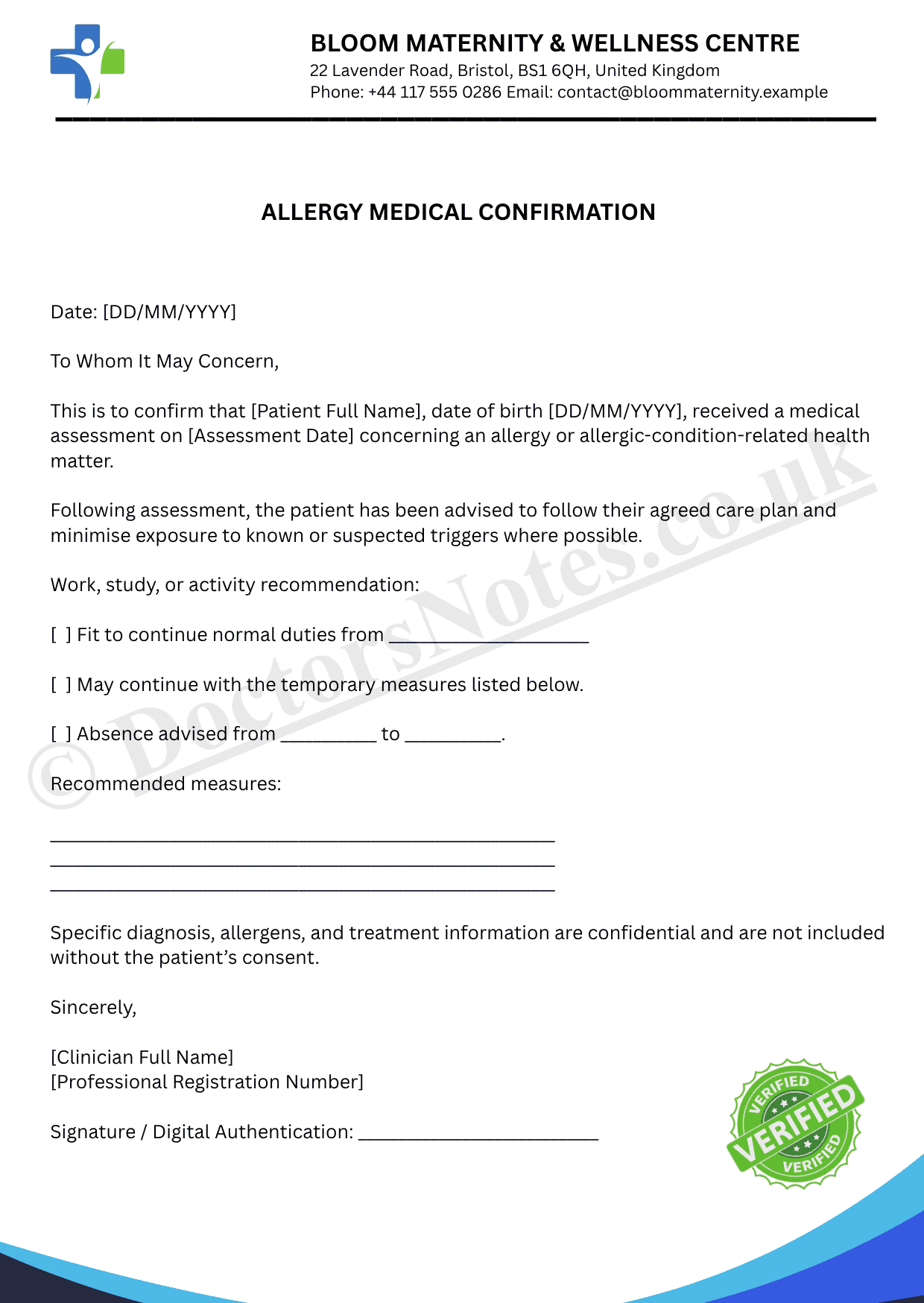
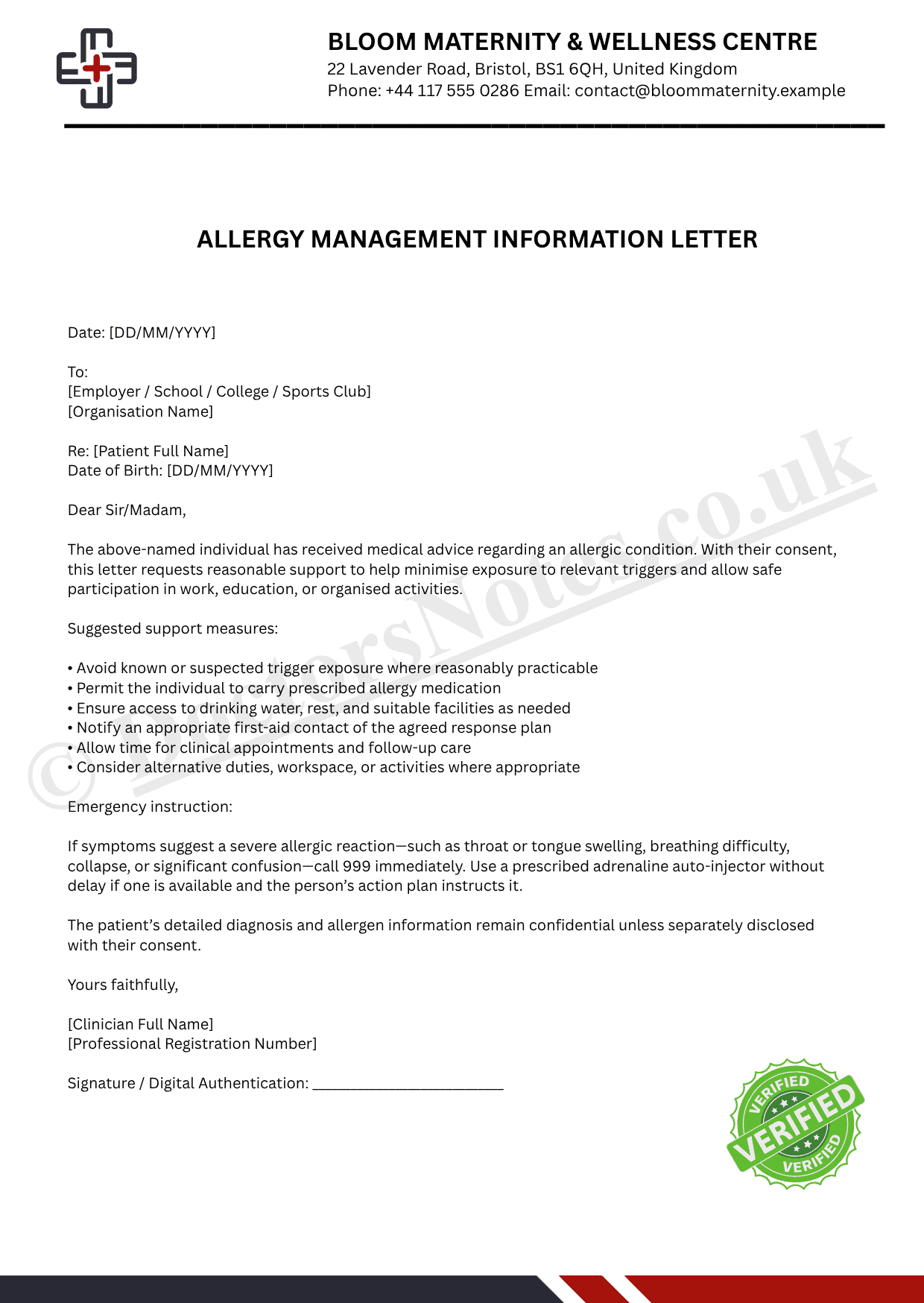
A Doctor’s Note for Allergies is an official medical document issued following a clinical evaluation of your symptoms and medical history. Depending on your individual circumstances, the documentation may confirm that you have been medically assessed for an allergic condition, recommend temporary workplace or educational accommodations, or advise avoiding specific environmental or occupational triggers where clinically appropriate.
This guide explains what a Doctor’s Note for Allergies is, when it may be required, what information it may include, how the consultation works, and important considerations for managing allergy-related symptoms.
What Is a Doctor’s Note for Allergies?
A Doctor’s Note for Allergies is medical documentation prepared by a licensed healthcare professional after evaluating whether allergy symptoms are affecting your health, daily activities, or ability to safely perform work or educational responsibilities.
Depending on your clinical assessment, the documentation may include:
- Confirmation that a medical consultation was completed.
- Recognition of allergy-related symptoms following clinical evaluation.
- Recommendations for temporary workplace or school accommodations where appropriate.
- Advice to minimise exposure to specific allergens.
- Guidance regarding symptom management.
- Recommendations for specialist allergy assessment if further investigation is required.
The document reflects your individual clinical findings and current health rather than providing a general diagnosis.
When Might You Need a Doctor’s Note for Allergies?
Medical documentation may be requested in several allergy-related situations.
Workplace Accommodation Requests
Some employees develop symptoms that become worse because of allergens present in their working environment.
Examples may include exposure to:
- Dust.
- Animal dander.
- Mould.
- Cleaning products.
- Chemical irritants.
- Pollen entering the workplace.
A healthcare professional may recommend temporary workplace adjustments where clinically appropriate.
School or College Documentation
Students experiencing significant allergy symptoms may occasionally require medical documentation to explain temporary absences or request practical accommodations.
Examples include:
- Seasonal allergy flare-ups.
- Classroom environmental adjustments.
- Temporary absence due to allergic symptoms.
- Participation in outdoor activities.
Institutional policies vary depending on the organisation.
Food Allergy Management
Individuals with confirmed or suspected food allergies may require medical documentation when requesting dietary accommodations.
This may be relevant for:
- School meal programmes.
- University accommodation.
- Workplace catering.
- Organised events.
- Residential programmes.
Recommendations depend on your individual medical assessment.
Seasonal Allergy Symptoms
Seasonal allergies may temporarily affect concentration, sleep quality, or daily comfort during periods of high pollen exposure.
Common symptoms include:
- Sneezing.
- Nasal congestion.
- Runny nose.
- Itchy eyes.
- Watery eyes.
- Throat irritation.
If symptoms significantly interfere with normal activities, medical advice may be appropriate.
What Information May Be Included in the Doctor’s Note?
The contents depend on your consultation and the purpose of the documentation.
A doctor’s note may include:
- Confirmation of medical assessment.
- Date of consultation.
- Recommendations regarding allergen avoidance where appropriate.
- Temporary workplace or educational accommodations.
- Guidance regarding symptom management.
- Recommendations for follow-up review or specialist referral if indicated.
Healthcare professionals generally include only the information necessary for administrative purposes while protecting your confidential medical information.
Common Allergy Triggers
Allergy symptoms can develop after exposure to many different substances.
Common triggers include:
- Tree, grass, and weed pollen.
- House dust mites.
- Animal fur or dander.
- Mould spores.
- Certain foods.
- Insect stings.
- Latex.
- Some medications.
- Workplace chemicals or airborne irritants.
Identifying the trigger often helps guide long-term allergy management and prevention strategies.
What Happens During the Medical Consultation?
During your consultation, the healthcare professional will assess your symptoms, possible allergy triggers, medical history, and how your condition affects your daily activities.
You may be asked about:
- When your symptoms first began.
- Whether symptoms occur seasonally or throughout the year.
- Suspected allergy triggers.
- Previous allergic reactions.
- Current medications.
- Previous allergy testing.
- Existing medical conditions such as asthma or eczema.
- Your work, school, or home environment.
- Whether medical documentation has been requested by your employer or educational institution.
Following the assessment, the healthcare professional will determine whether a Doctor’s Note for Allergies is clinically appropriate and whether further testing, treatment, referral, or workplace recommendations should be included.
Important: A Doctor’s Note for Allergies provides medical documentation following an individual clinical assessment. It does not automatically guarantee workplace accommodations, school exemptions, dietary changes, disability benefits, or other administrative approvals. Final decisions remain the responsibility of the relevant employer, educational institution, or organisation under their own policies and applicable laws.
How to Get a Doctor’s Note for Allergies
If allergy symptoms are affecting your ability to work, attend school, or carry out your daily activities, you can arrange an online consultation with a licensed healthcare professional. During the consultation, your symptoms, possible allergy triggers, and medical history will be assessed to determine whether a Doctor’s Note for Allergies is clinically appropriate.
Step 1: Book an Online Allergy Consultation
Schedule an appointment at a convenient time. If your employer, school, or another organisation has requested medical documentation, try to arrange your consultation as soon as possible after your symptoms develop.
Step 2: Register or Sign In
New patients can create an online account by completing the registration process. Returning patients can simply log in using their existing account details.
Step 3: Choose the Appropriate Consultation
Select a consultation for allergy symptoms, allergic reactions, workplace accommodations, school documentation, or general medical certificates.
If your employer or educational institution has a medical form that needs to be completed, mention this when booking your appointment.
Step 4: Complete Your Medical Questionnaire
Before your consultation, you will be asked questions about your symptoms and possible allergy triggers.
The healthcare professional may ask about:
- Your current symptoms.
- When your symptoms first appeared.
- Whether symptoms occur seasonally or throughout the year.
- Foods, medications, or environmental substances that may trigger your allergies.
- Previous allergic reactions.
- Current allergy medications.
- Existing conditions such as asthma or eczema.
- Whether your symptoms affect your work or studies.
- Whether allergy testing has previously been performed.
- The reason medical documentation is required.
Providing detailed information helps the healthcare professional carry out a thorough clinical assessment.
Step 5: Upload Supporting Information (If Available)
You may upload relevant medical documents such as:
- Previous allergy test results.
- Specialist allergy clinic reports.
- Hospital or emergency department records.
- Prescription history.
- Immunotherapy treatment records.
- Employer or school accommodation forms.
- Previous medical certificates.
These documents may assist the healthcare professional but are not always required.
Step 6: Attend Your Consultation
During your consultation, the healthcare professional will assess your symptoms, discuss potential allergy triggers, and determine whether your condition requires medical documentation or additional treatment.
Topics discussed may include:
- The severity and frequency of your symptoms.
- Possible environmental or occupational triggers.
- Whether symptoms interfere with work, education, or daily activities.
- Current treatment effectiveness.
- Whether additional investigations or allergy testing may be appropriate.
- Recommendations for reducing allergen exposure.
- Whether specialist referral is advisable.
Your treatment plan and documentation will be tailored to your individual circumstances.
Step 7: Receive Your Doctor’s Note
If the healthcare professional determines that medical documentation is clinically appropriate, your Doctor’s Note for Allergies will be prepared after your consultation.
Depending on your assessment, the documentation may:
- Confirm your medical evaluation.
- Support temporary workplace or educational accommodations.
- Recommend avoiding specific allergens where appropriate.
- Provide guidance regarding symptom management.
- Recommend follow-up assessment or specialist referral if necessary.
Important: A consultation does not automatically result in a doctor’s note. Medical documentation is issued only when supported by the healthcare professional’s independent clinical assessment.
Managing Allergy Symptoms in Everyday Life
Although allergies cannot always be prevented, reducing exposure to known triggers and following an appropriate treatment plan may help minimise symptoms and improve quality of life.
Your healthcare professional may recommend:
- Identifying and avoiding known allergens whenever possible.
- Taking allergy medications exactly as prescribed.
- Keeping windows closed during periods of high pollen counts if seasonal allergies are a trigger.
- Using air filtration or regularly cleaning indoor environments where appropriate.
- Washing hands and changing clothing after exposure to outdoor allergens.
- Reading food labels carefully if you have food allergies.
- Carrying emergency medication if previously prescribed for severe allergic reactions.
- Attending regular follow-up appointments if symptoms are ongoing.
The most effective management plan depends on your specific allergy and overall medical history.
Can Treatment Be Reviewed During the Consultation?
Yes. In addition to assessing your need for medical documentation, the healthcare professional can review your current allergy management plan.
Depending on your symptoms, this may include:
- Reviewing prescription or over-the-counter allergy medications.
- Discussing nasal sprays, eye drops, or other symptom relief options.
- Assessing whether current treatment is adequately controlling your symptoms.
- Discussing allergy testing if the trigger is unknown.
- Considering referral to an allergy specialist where appropriate.
- Providing advice on avoiding common environmental or occupational allergens.
If your symptoms suddenly become severe or suggest a serious allergic reaction, immediate emergency medical care should be sought rather than relying on routine medical documentation.
How Long Is a Doctor’s Note for Allergies Valid?
The duration covered by a Doctor’s Note for Allergies depends on your symptoms, the nature of your allergic condition, and the healthcare professional’s clinical assessment.
Some documentation may relate to a temporary allergy flare-up, while other recommendations may support longer-term workplace or educational accommodations for ongoing allergic conditions.
Examples of Allergy-Related Recommendations
| Clinical Situation | Possible Medical Recommendation* |
|---|---|
| Seasonal allergy flare-up | Short-term symptom management |
| Workplace exposure to allergens | Temporary workplace accommodation |
| Food allergy affecting school or workplace | Dietary or environmental recommendations |
| Ongoing allergic condition | Follow-up review and long-term management |
| Symptoms not responding to treatment | Specialist allergy assessment |
*These examples are for general information only. Recommendations are determined individually after your clinical assessment.
Can You Get a Doctor’s Note for Allergies Through Telehealth?
Yes, you may be able to get a doctor’s note for allergies through telehealth. A healthcare provider can assess symptoms such as sneezing, a runny nose, itchy eyes, skin rashes, or fatigue during an online consultation.
If medically appropriate, the doctor may recommend time off work or school, reduced duties, or temporary workplace adjustments. The note can document the recommended absence period or restrictions.
Whether a note can be issued depends on the provider’s assessment and your employer’s requirements. Seek urgent medical care if you experience difficulty breathing or swelling of the face or throat.
Can Allergies Qualify for Time Off Work?
Yes, allergies can qualify for time off work if symptoms are severe enough to affect daily activities or job performance. Symptoms such as persistent sneezing, itchy eyes, congestion, fatigue, or breathing difficulties may make it difficult to work safely and comfortably.
A doctor may recommend sick leave, remote work, reduced duties, or temporary workplace adjustments depending on the symptoms and job requirements. A doctor’s note can document the recommended absence period or restrictions.
If allergy symptoms interfere with work, consult a healthcare professional for assessment and appropriate documentation. Seek urgent medical care for difficulty breathing or swelling of the face or throat.
When Should You Arrange Another Medical Review?
A follow-up consultation is recommended if:
- Your symptoms continue despite treatment.
- Allergy symptoms become more frequent or severe.
- You experience a new allergic trigger.
- Your employer or school requests updated medical documentation.
- Your medications are no longer effective.
- You develop symptoms affecting your breathing or overall health.
- Your healthcare professional recommends additional monitoring or specialist referral.
Regular medical reviews help ensure that your allergy management plan continues to meet your changing health needs.
What Documents May Be Issued?
After reviewing your symptoms, medical history, and possible allergy triggers, the healthcare professional will determine which medical documentation is appropriate for your individual circumstances.
Depending on your clinical assessment, you may receive:
- Doctor’s Note for Allergies confirming that you have been medically evaluated for allergy-related symptoms.
- A medical certificate supporting temporary absence from work or school where clinically appropriate.
- Documentation recommending workplace or educational accommodations to reduce exposure to allergens.
- Guidance regarding temporary activity or environmental restrictions.
- Recommendations for avoiding specific allergy triggers where medically appropriate.
- Referral recommendations for allergy testing or specialist evaluation.
- Follow-up documentation if your symptoms require ongoing medical review.
- Confirmation of attendance at a medical consultation.
Each document is prepared according to your individual health needs and the healthcare professional’s independent clinical judgement.
Important Legal Information About a Doctor’s Note for Allergies
A Doctor’s Note for Allergies is an official medical document issued by a licensed healthcare professional following a clinical assessment of your allergy-related symptoms or condition. The documentation is intended to provide objective medical information and, where appropriate, recommendations that may assist employers, schools, or other organisations in understanding your medical needs.
Before requesting allergy-related documentation, it is important to understand:
- A doctor’s note is issued only after an appropriate medical consultation and assessment.
- Booking an appointment does not guarantee that medical documentation will be provided.
- Healthcare professionals must ensure that all medical documentation accurately reflects their clinical findings.
- A doctor’s note may recommend temporary workplace adjustments, educational accommodations, or environmental modifications where clinically appropriate, but it does not require an employer or institution to approve those requests automatically.
- Employers, schools, universities, and other organisations determine whether accommodations will be provided according to their own policies and applicable legal requirements.
- A doctor’s note is not a substitute for formal allergy testing, specialist allergy reports, emergency action plans, or official disability documentation where these are specifically required.
- Medical documentation generally includes only the information necessary to explain functional limitations or recommended accommodations while protecting your medical privacy.
- Your consultation, allergy history, treatment records, and personal health information remain confidential and are protected under applicable healthcare privacy and data protection laws.
- If your symptoms change significantly or new allergy triggers are identified, another medical assessment may be necessary before updated documentation can be issued.
Important: If you develop symptoms of a severe allergic reaction—such as difficulty breathing, swelling of the face or throat, widespread hives, fainting, or signs of anaphylaxis—seek emergency medical care immediately. A routine doctor’s note should never delay emergency treatment.
FAQ
Can I get a Doctor’s Note for Allergies online?
Yes. You can schedule an online consultation with a licensed healthcare professional. If your clinical assessment supports the need for medical documentation, a doctor’s note may be issued where medically appropriate.
Can I request a doctor’s note for seasonal allergies?
Yes. If seasonal allergies significantly affect your ability to work, attend school, or carry out your usual activities, the healthcare professional can assess your symptoms and determine whether documentation is appropriate.
Will the doctor’s note identify my allergy?
Only if it is clinically relevant or necessary for the purpose of the documentation. In many cases, the note focuses on functional limitations or accommodation recommendations while protecting your confidential medical information.
Can this documentation support a workplace accommodation request?
Yes. Where clinically appropriate, the healthcare professional may recommend workplace adjustments that reduce exposure to allergy triggers. Final approval of accommodations remains the responsibility of your employer.
Can schools accept this doctor’s note?
Many schools, colleges, and universities accept medical documentation to support temporary absences or accommodation requests. Individual requirements vary between institutions.
Does this note replace an allergy specialist’s report?
No. Some employers, educational institutions, or organisations may require additional documentation from an allergy specialist, particularly for long-term management plans or severe allergies.
Is my consultation confidential?
Yes. Your consultation and medical records are managed confidentially in accordance with applicable healthcare privacy and data protection laws.
What if my allergy symptoms become worse?
Arrange another medical consultation if your symptoms worsen, your current treatment is no longer effective, or you experience new allergic reactions. Emergency symptoms require immediate medical attention.
Can this documentation be used for food allergy accommodations?
In many situations, yes. A doctor’s note may support requests for reasonable accommodations, although some organisations may require additional documentation depending on their policies.
Does a Doctor’s Note for Allergies guarantee approval of accommodations?
No. The doctor’s note provides a medical opinion based on your clinical assessment. Decisions regarding workplace changes, school accommodations, or other adjustments are made by the relevant organisation according to its own policies and applicable laws.
Why Choose Our Online Allergy Consultation?
- Licensed healthcare professionals experienced in assessing allergy-related conditions.
- Convenient online consultations from your home or workplace.
- Individual assessments based on your symptoms, medical history, and potential allergy triggers.
- Medical documentation issued only when clinically appropriate.
- Guidance on managing allergies, reducing allergen exposure, and improving symptom control.
- Confidential, secure, and patient-focused care.
- Follow-up consultations available if your symptoms change or additional documentation becomes necessary.
Conclusion
Allergies can affect much more than physical comfort—they may influence your ability to work, study, travel, or participate fully in everyday activities. A professional medical assessment helps identify how your symptoms are affecting you and whether medical documentation or practical accommodations may be appropriate.
A Doctor’s Note for Allergies provides objective medical documentation based on an individual clinical evaluation and may support workplace, educational, or administrative requirements while protecting your privacy. By arranging an online consultation, you can receive personalised medical advice, discuss strategies for managing your allergies, and obtain appropriate documentation that reflects your current health and functional needs.


Reviews
There are no reviews yet.