

Doctor’s Note for Family Emergencies can arise without warning and may require you to take time away from work, school, or other responsibilities. In some situations, the emergency involves a close family member experiencing a serious illness, injury, surgery, or another medical condition that requires your immediate support or caregiving.
This guide explains what a Doctor’s Note for Family Emergency is, when it may be appropriate, who may require one, how the consultation process works, and other important information.
Related Post:
- Doctors Note for Returning from FMLA
- Doctors Note for Work Absence
- Emergency Excuses to Not Go to Work
What Is a Doctor’s Note for a Family Emergency?
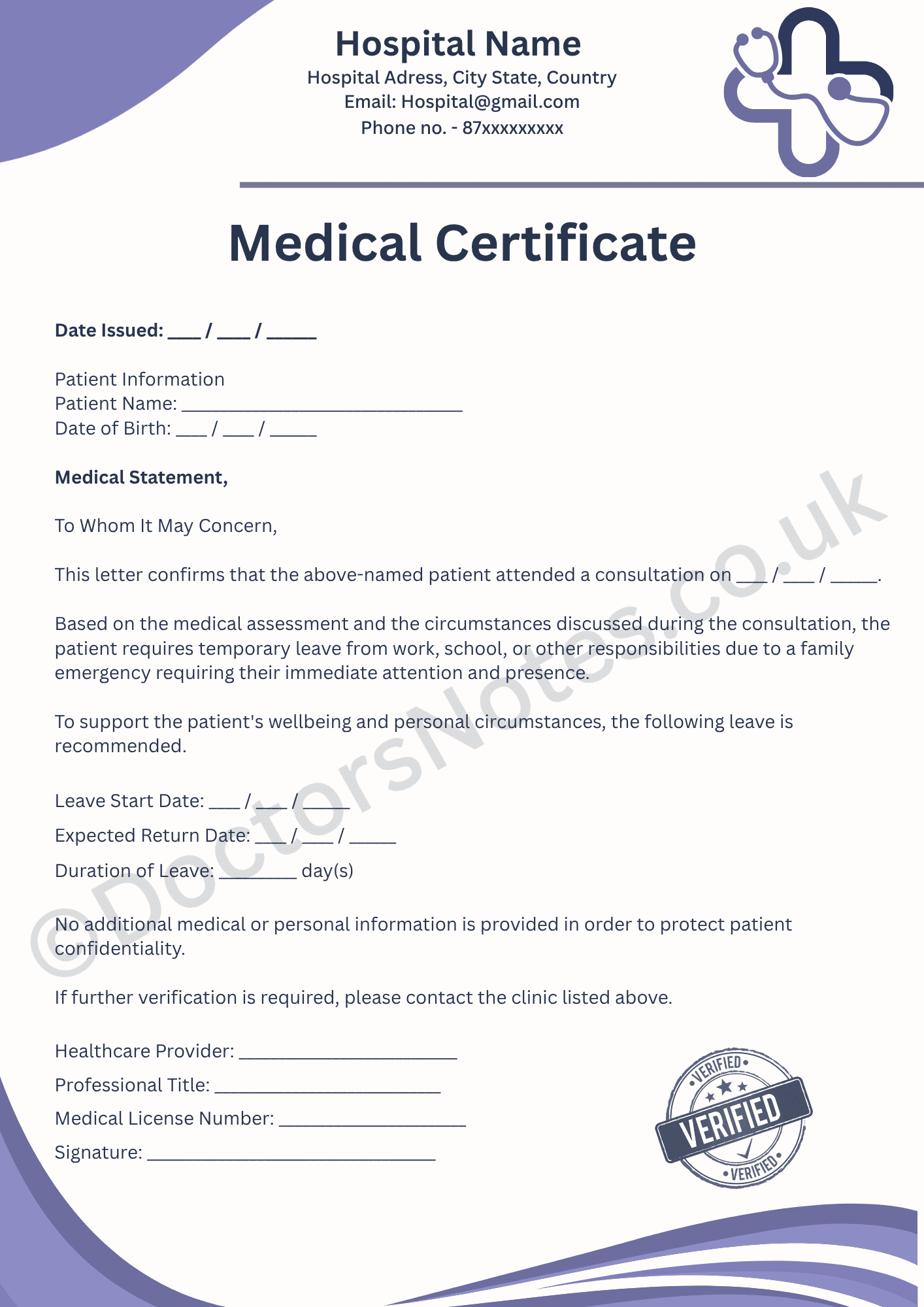
A Doctor’s Note for Family Emergency is medical documentation confirming that a healthcare professional has assessed a situation involving a family member’s health, or where appropriate, has assessed your need to provide care or support because of that medical situation.
Depending on the circumstances and applicable privacy requirements, the documentation may include:
- Confirmation that medical circumstances affecting a family member have been reviewed.
- Verification that caregiving or family support may be necessary.
- Recommendations regarding a temporary absence from work where appropriate.
- Suggested duration of leave based on the available medical information.
- Advice regarding follow-up or reassessment if circumstances change.
- Confirmation of attendance at a medical consultation where relevant.
To protect patient confidentiality, the documentation generally avoids sharing detailed medical information about the family member unless appropriate consent has been provided.
When Might You Need a Doctor’s Note for a Family Emergency?
Medical documentation may be helpful in several situations where a close relative requires urgent care or assistance.
Examples include:
Caring for a Sick Child
Parents or guardians may need time away from work when a child becomes seriously ill and requires care at home or in hospital.
Supporting a Hospitalised Family Member
A spouse, parent, sibling, or other close relative may require assistance during hospital admission, surgery, or recovery.
Medical Emergencies
Unexpected illnesses, injuries, or emergency medical treatment involving a close family member may require your immediate presence.
Recovery Following Surgery
Some patients need temporary help with mobility, transport, medication management, or daily activities after a surgical procedure.
End-of-Life or Palliative Care
Family members may require time away from work to provide care and emotional support to a loved one receiving end-of-life care.
Ongoing Caregiving Responsibilities
A sudden worsening of a chronic medical condition may temporarily increase caregiving responsibilities until additional support becomes available.
Who May Request a Doctor’s Note for a Family Emergency?
Depending on the circumstances, medical documentation may be requested by:
- Employees requesting compassionate or emergency family leave.
- Parents caring for an ill child.
- Individuals supporting a spouse or partner during medical treatment.
- Adults caring for elderly parents.
- Family members assisting relatives recovering from surgery.
- Legal guardians responsible for the care of a dependent.
- Individuals requesting temporary workplace flexibility because of urgent caregiving responsibilities.
Each request is considered individually and depends on the medical circumstances involved.
What Types of Family Emergencies May Be Covered?
Every situation is different, but examples may include:
- Serious illness requiring hospital admission.
- Emergency surgery.
- Unexpected injury.
- Severe infections.
- Childhood illnesses requiring parental care.
- Complications related to pregnancy or childbirth.
- Cancer treatment appointments.
- Recovery following major medical procedures.
- Acute worsening of long-term medical conditions.
- Palliative or end-of-life care.
The healthcare professional will assess whether medical documentation is appropriate based on the available clinical information and applicable professional standards.
What Happens During the Medical Consultation?
The consultation focuses on understanding the medical circumstances giving rise to the request and determining whether documentation can be provided in accordance with clinical and privacy requirements.
Depending on the situation, the healthcare professional may discuss:
- Your relationship to the affected family member.
- The nature of the family emergency.
- Whether ongoing care or supervision is required.
- The expected duration of caregiving responsibilities.
- Whether you are the primary caregiver.
- Any existing medical documentation already available.
- Whether your employer requires specific forms or certificates.
- Whether additional medical evidence may be needed.
The healthcare professional will then determine whether a Doctor’s Note for Family Emergency can be issued based on the information available and applicable clinical guidance.
Important: A doctor’s note for a family emergency is not intended to verify non-medical personal matters such as family disputes, childcare arrangements unrelated to illness, financial difficulties, or other non-health-related emergencies. It is designed specifically for situations where a medical condition affecting a family member creates a legitimate need for temporary caregiving or support.
Supporting a Family Member During a Medical Emergency
When a loved one experiences a sudden health issue, managing practical responsibilities alongside emotional concerns can be challenging. While every family situation is different, some general steps may help during this period.
Helpful considerations include:
- Keeping records of important medical appointments and communication.
- Following the healthcare team’s instructions regarding care.
- Organising transport to medical appointments when needed.
- Ensuring medication schedules are followed correctly.
- Communicating with employers or educational institutions as early as possible.
- Asking healthcare providers about available support services.
- Arranging additional help if caregiving responsibilities become difficult to manage.
A healthcare professional can provide guidance based on the specific circumstances of the family member’s condition.
Can Treatment or Medical Advice Be Provided?
Yes, where clinically appropriate.
The consultation may include general medical guidance depending on the circumstances surrounding the family emergency.
The healthcare professional may provide:
- Advice on managing a family member’s health situation.
- Guidance on when further medical attention may be required.
- Recommendations for follow-up care.
- Information about seeking specialist support.
- Advice on managing your own wellbeing while providing care.
However, if the family member requires diagnosis, treatment, or emergency medical care, they may need to be assessed directly by an appropriate healthcare provider.
How Long Is a Doctor’s Note for Family Emergency Valid?
The validity of a Doctor’s Note for Family Emergency depends on the nature of the medical situation, the level of support required, and the policies of the organisation requesting the documentation.
Some family emergencies require only short-term assistance, while others may involve longer periods of caregiving or ongoing medical support.
Typical Situations
| Family Medical Situation | Possible Documentation Period* |
|---|---|
| Sudden illness requiring immediate support | Short-term absence period |
| Hospital admission of a close relative | Based on recovery or treatment needs |
| Post-surgery caregiving support | Until follow-up or recovery assessment |
| Child requiring parental care | Based on medical advice and circumstances |
| Ongoing serious health condition | May require further review |
*These examples are general guidance only. The healthcare professional will determine whether documentation is appropriate and the timeframe based on the individual circumstances.
Returning to Work After a Family Emergency
Returning to normal responsibilities after a family emergency depends on the medical situation and your personal circumstances.
Before returning, consider:
- Whether the immediate medical crisis has been managed.
- Whether additional caregiving support is available.
- Whether your workplace needs updated information.
- Whether further time or flexibility may be required.
- Whether a follow-up consultation is needed.
If the family member’s condition changes or additional support becomes necessary, updated medical advice may be appropriate.
What Documents May Be Issued?
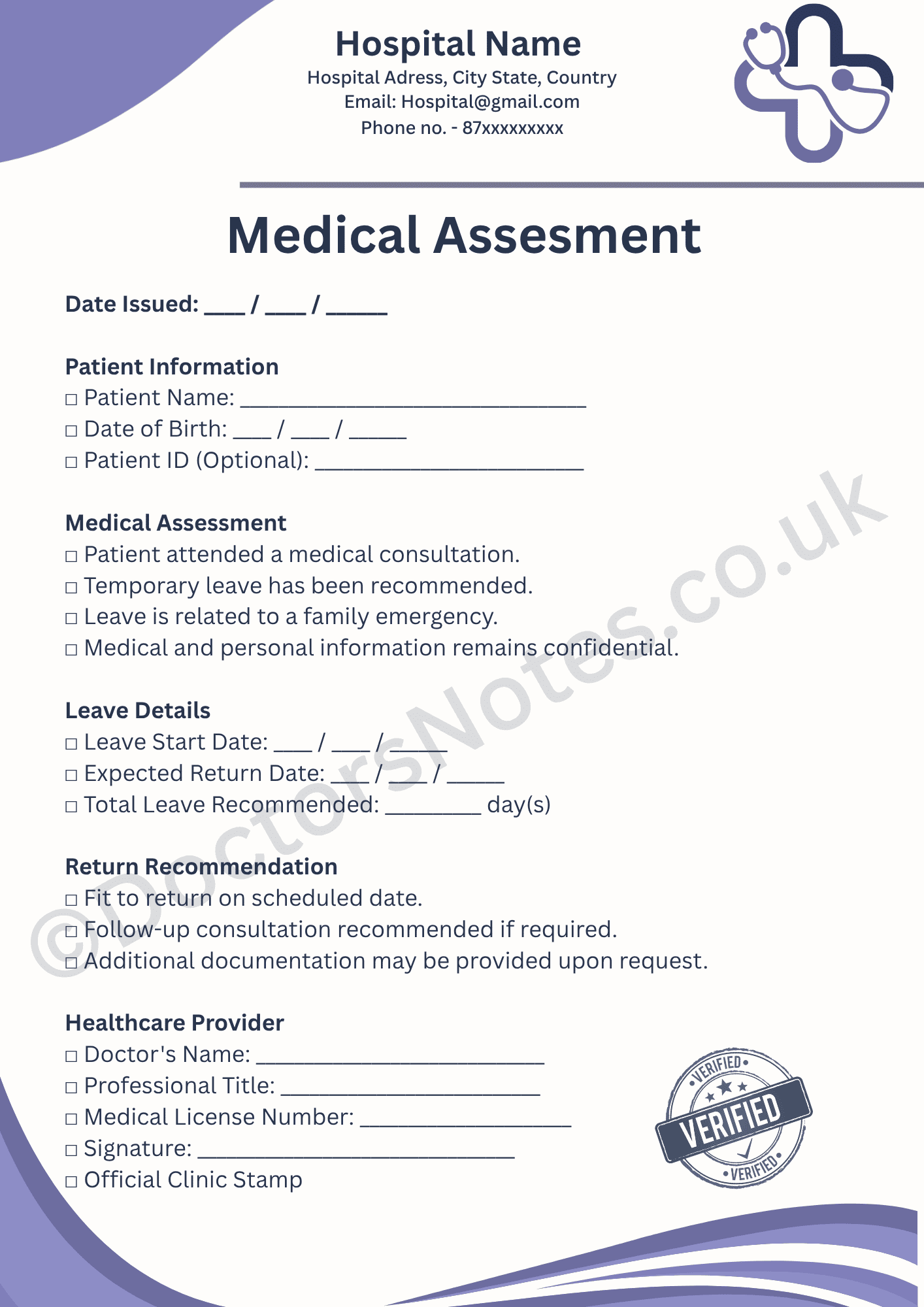
After reviewing your circumstances, the healthcare professional will determine whether medical documentation is appropriate based on the nature of the family emergency, available medical information, and the reason the documentation has been requested.
Depending on the assessment, you may receive:
- Doctor’s Note for Family Emergency or a medical confirmation letter.
- Documentation supporting a request for compassionate leave or emergency family absence.
- Confirmation that a medical situation affecting a family member has been reviewed.
- Recommendations regarding temporary time away from work or other commitments.
- Supporting information for workplace flexibility requests where appropriate.
- Follow-up recommendations if the family situation requires continued medical review.
- Referral guidance if additional healthcare support or specialist services may be required.
The type of documentation provided depends on the healthcare professional’s assessment and the specific circumstances involved.
Important Legal Information
A Doctor’s Note for Family Emergency is a medical document issued after an appropriate review by a licensed healthcare professional. It provides confirmation related to a health-related family situation where medical circumstances may affect your ability to attend work, education, or other responsibilities.
Before requesting this type of documentation, it is important to understand:
- A doctor’s note is only provided after a healthcare professional has reviewed the relevant circumstances.
- Booking a consultation does not guarantee that medical documentation will be issued.
- Healthcare professionals must follow professional standards and can only provide documentation based on accurate and clinically relevant information.
- A doctor’s note may support a request for family-related absence but does not automatically approve leave from work or guarantee payment during absence.
- Employers, schools, universities, and other organisations may have their own rules regarding family emergency leave and acceptance of medical documents.
- The final decision regarding leave approval, paid time off, or workplace arrangements remains with the relevant organisation.
- Medical information about another person is confidential and cannot usually be shared without appropriate permission or legal authority.
- Documentation normally includes only necessary information and avoids revealing private health details that are not required for the purpose of the request.
- Your consultation details and personal information are handled confidentially in accordance with applicable healthcare privacy and data protection regulations.
Important: A family emergency doctor’s note should only be requested for genuine medical circumstances involving a family member’s health. Non-medical situations, personal conflicts, financial difficulties, travel problems, or general family commitments are not normally supported by medical documentation.
FAQ
Can I get a Doctor’s Note for Family Emergency online?
Yes. You can arrange an online consultation with a licensed healthcare professional. After reviewing your circumstances, medical documentation may be provided if it is considered clinically appropriate.
Does a doctor’s note guarantee family emergency leave from work?
No. A doctor’s note provides medical documentation, but approval of family emergency leave depends on your employer’s policies and applicable workplace regulations.
Can I get a doctor’s note if my child is sick?
In some situations, yes. If your child’s medical condition requires your care or supervision, a healthcare professional may assess whether documentation is appropriate.
Can a doctor’s note be issued for caring for an elderly parent?
Yes, depending on the circumstances. If a parent’s medical condition requires your involvement or caregiving support, documentation may be considered following an appropriate assessment.
Will the doctor’s note include my family member’s diagnosis?
Not usually. Healthcare information is confidential, and documentation generally includes only the information necessary for the intended purpose.
Can I use this note for compassionate leave?
It may support a compassionate leave request, but whether leave is approved depends on your employer’s policies and the specific circumstances.
Can I request documentation after the family emergency has already happened?
Yes, in some situations. The healthcare professional will review the available information and determine whether medical documentation can appropriately be provided.
How long can a family emergency doctor’s note cover?
The timeframe depends on the seriousness of the medical situation, caregiving requirements, and the healthcare professional’s assessment.
Is my consultation confidential?
Yes. Your consultation information and any personal details shared during the assessment are treated confidentially according to healthcare privacy requirements.
When should I seek emergency medical help for my family member?
If your family member experiences life-threatening symptoms such as difficulty breathing, severe chest pain, loss of consciousness, uncontrolled bleeding, severe allergic reactions, or sudden deterioration, seek emergency medical assistance immediately.
Why Choose Our Online Consultation Service?
- Convenient access to healthcare professionals from home.
- Flexible appointment options during stressful family situations.
- Secure and confidential consultations.
- Individual assessment based on your circumstances.
- Medical documentation provided only where clinically appropriate.
- Guidance on next steps and available support options.
- Follow-up consultations available if the situation continues.
Conclusion
A sudden family medical emergency can create emotional, practical, and professional challenges. When a loved one’s health condition requires your involvement, obtaining appropriate medical advice can help you understand your options and provide supporting documentation where necessary.
A Doctor’s Note for Family Emergency is prepared following an individual assessment and may support requests related to family caregiving responsibilities, compassionate leave, or temporary absence where medically appropriate. The acceptance of the documentation depends on the policies of your employer, educational institution, or other organisation.
By arranging an online consultation, you can discuss your circumstances with a licensed healthcare professional, receive appropriate guidance, and obtain medical documentation when clinically justified, helping you manage urgent family responsibilities while maintaining proper records.



Reviews
There are no reviews yet.