

A common cold is one of the most frequent viral illnesses affecting people of all ages. Although most colds are mild and improve with rest, fluids, and supportive care, symptoms such as persistent coughing, nasal congestion, sore throat, fever, fatigue, headaches, and body aches can temporarily make it difficult to work, attend school, travel, or carry out normal daily activities.
This guide explains what a Doctor’s Note for Cold is, when it may be required, how the assessment works, what information it may include, and other important details.
Related Post:
- Doctors Note for Flu
- Doctors Note for Hay Fever
- Doctors Note for Cough
- Doctors Note for Upper Respiratory Infection
What Is a Doctor’s Note for Cold?
A Doctor’s Note for Cold is a medical document prepared by a licensed healthcare professional following an assessment of your symptoms.
Depending on your condition, the documentation may include:
- Confirmation that a medical consultation has taken place.
- Assessment of your current respiratory symptoms.
- Recommended recovery period where appropriate.
- Advice regarding temporary absence from work or school.
- Guidance on reducing physical activity if necessary.
- Recommendations for follow-up care if symptoms persist or worsen.
The purpose of the note is to provide accurate medical documentation based on your health at the time of assessment.
When Might You Need a Doctor’s Note for a Cold?
While many people recover from a cold within a few days, some situations require medical confirmation before returning to normal responsibilities.
Work Absence
Employees may need a doctor’s note when cold symptoms make it difficult to perform their duties or when workplace policies require medical evidence after sickness absence.
This may be especially relevant for individuals who:
- Work closely with the public.
- Provide healthcare services.
- Handle food or beverages.
- Care for children or vulnerable adults.
- Perform physically demanding work.
School or University Attendance
Students experiencing significant cold symptoms may temporarily struggle with concentration, attendance, examinations, or practical activities.
Medical documentation may support:
- Absence from classes.
- Missed examinations.
- Coursework extensions.
- Temporary academic considerations.
Preventing the Spread of Illness
Because the common cold is contagious, some organisations encourage employees or students to remain at home while symptoms are most active to help reduce the spread of infection.
A healthcare professional can advise when returning to shared environments is appropriate based on your symptoms.
Recovery Following Complications
Most colds resolve without complications, but some individuals may develop secondary problems such as sinus infections, ear infections, or worsening respiratory symptoms that require additional medical review.
In these situations, updated documentation may be appropriate.
Common Symptoms of a Cold
Cold symptoms usually develop gradually and can vary from person to person.
Common symptoms include:
Respiratory Symptoms
- Runny or blocked nose.
- Sneezing.
- Sore throat.
- Cough.
- Hoarse voice.
General Symptoms
- Fatigue.
- Mild fever in some individuals.
- Headache.
- Muscle aches.
- Reduced energy levels.
Symptoms That May Affect Daily Activities
- Difficulty concentrating.
- Poor sleep due to congestion.
- Reduced physical stamina.
- Voice strain.
- Discomfort during prolonged speaking or physical activity.
The severity and duration of symptoms vary depending on the individual and their overall health.
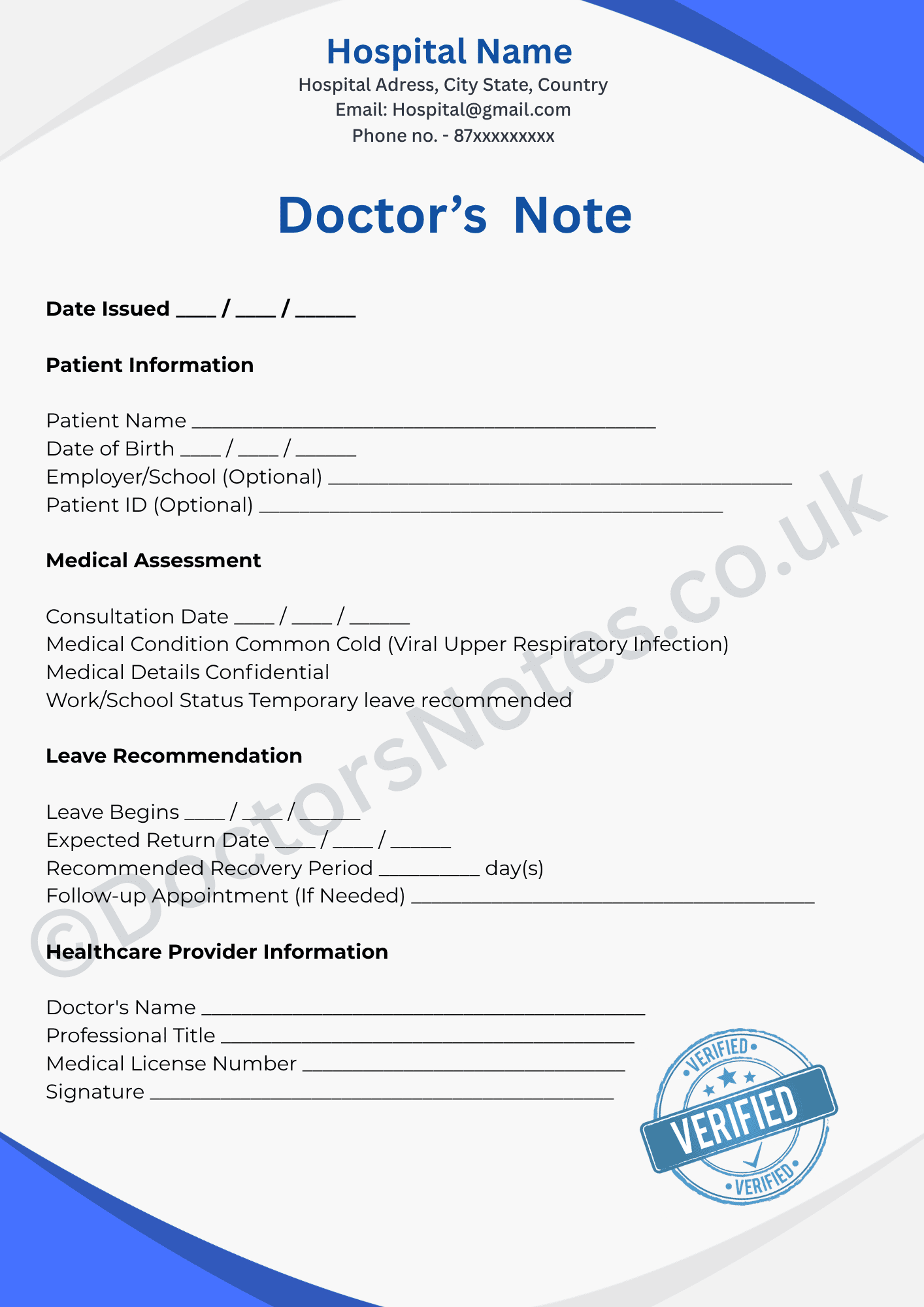
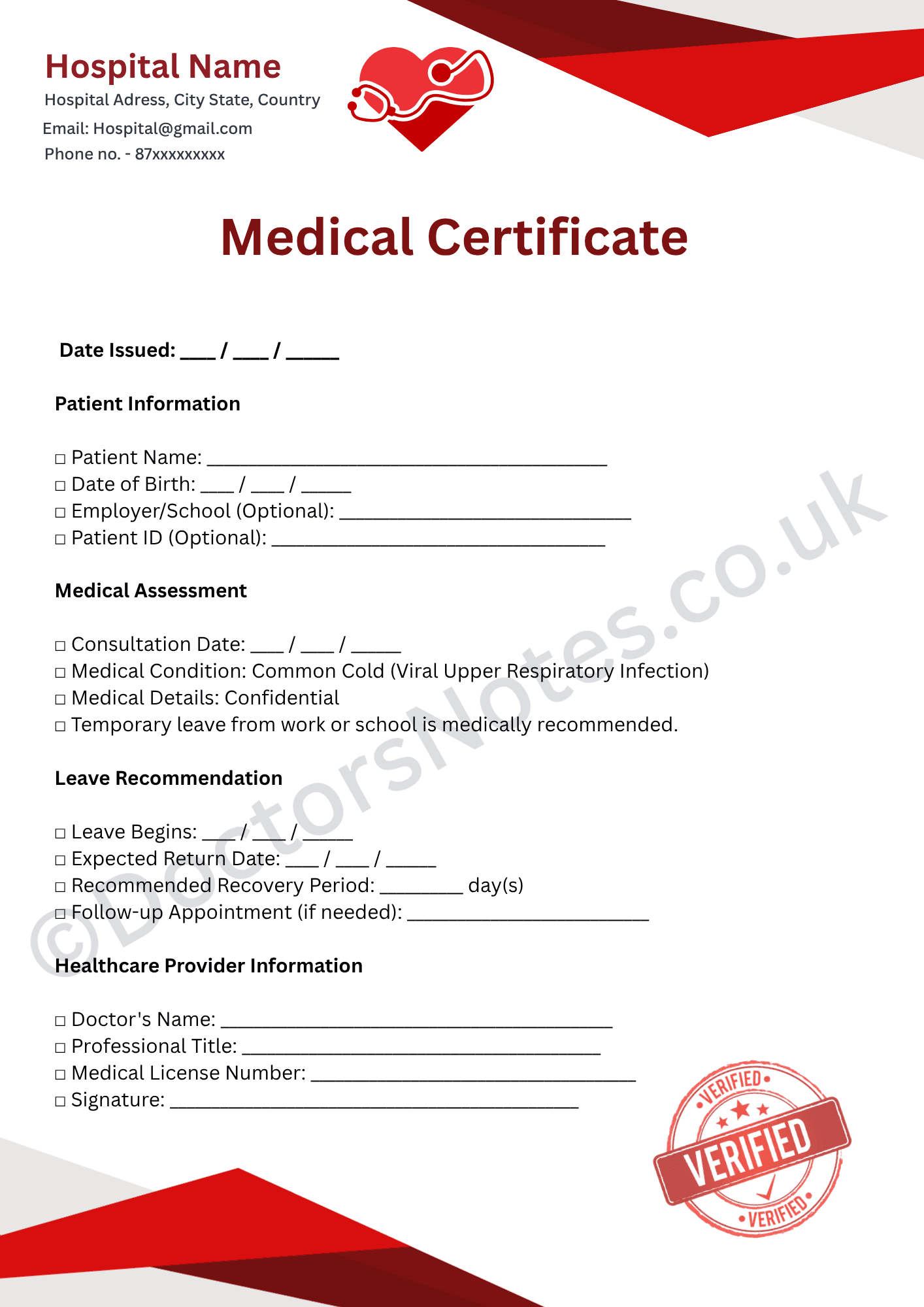
What Information May Be Included in the Doctor’s Note?
Following your consultation, the healthcare professional may include information such as:
- Confirmation of your medical assessment.
- Date of consultation.
- General confirmation of an acute respiratory illness where appropriate.
- Recommended recovery period.
- Advice regarding temporary work or school absence.
- Suggested activity limitations.
- Follow-up recommendations if symptoms do not improve.
Only information necessary for the intended purpose is normally included to help protect your medical privacy.
Cold vs Flu: Why a Medical Assessment Matters
Although the common cold and influenza share some symptoms, they are different illnesses and may require different medical advice.
| Common Cold | Influenza (Flu) |
|---|---|
| Symptoms usually develop gradually | Symptoms often begin suddenly |
| Mild to moderate illness in most people | Often causes more severe symptoms |
| Runny nose and sore throat are common | High fever and significant body aches are more common |
| Recovery usually occurs within a short period | Recovery may take longer and sometimes requires additional medical care |
A healthcare professional can help determine whether your symptoms are consistent with a common cold or whether another condition should be considered.
What Happens During the Medical Consultation?
During your consultation, the healthcare professional will review your symptoms and assess how they are affecting your daily activities.
You may be asked about:
- When your symptoms began.
- Whether your symptoms are improving or worsening.
- Presence of fever, cough, sore throat, or congestion.
- Breathing difficulties or chest symptoms.
- Current medications.
- Existing medical conditions.
- Recent contact with people who were unwell.
- Your work or educational responsibilities.
- The reason medical documentation is required.
Following the assessment, the healthcare professional will determine whether a Doctor’s Note for Cold is medically appropriate and whether further treatment or investigation is necessary.
Important: A doctor’s note is based on your clinical assessment. It does not automatically approve sick leave or other administrative requests, and it should not be used as a substitute for emergency medical care if you develop severe breathing problems, chest pain, persistent high fever, or other serious symptoms.
Managing a Cold During Recovery
Most common colds improve with supportive care and adequate rest. Giving your body time to recover may help reduce symptoms and lower the risk of spreading the infection to others.
During recovery, a healthcare professional may recommend:
- Getting sufficient sleep each night.
- Drinking plenty of fluids to stay hydrated.
- Eating nutritious meals when possible.
- Resting if you feel unusually tired.
- Using medications as advised for symptom relief.
- Washing your hands regularly to reduce transmission.
- Covering coughs and sneezes appropriately.
- Limiting close contact with others while symptoms are active.
Recovery time varies from person to person depending on age, general health, and the severity of symptoms.
Can Medication Be Discussed During the Consultation?
Yes. If appropriate, the healthcare professional may discuss treatment options to help manage your symptoms.
Depending on your condition, this may include advice regarding:
- Fever and pain relief medication.
- Cough management.
- Nasal congestion treatments.
- Hydration and nutrition.
- Rest and recovery strategies.
- When antibiotics are not appropriate for viral illnesses such as the common cold.
- Whether additional testing or treatment is required.
Always inform the healthcare professional about:
- Current prescription medications.
- Medication allergies.
- Existing medical conditions.
- Pregnancy, if applicable.
- Any worsening or unusual symptoms.
How Long Is a Doctor’s Note for a Cold Valid?
The validity of a Doctor’s Note for Cold depends on your symptoms, recovery progress, and the healthcare professional’s assessment.
Because a common cold is generally a short-term illness, medical documentation is usually issued for the expected recovery period rather than for an extended duration.
Examples of Medical Review Periods
| Medical Situation | Possible Review Period* |
|---|---|
| Mild cold symptoms | Short-term recovery |
| Cold with significant fatigue | Based on symptom improvement |
| Respiratory symptoms affecting work | Until medically fit to return |
| Cold with secondary complications | Further assessment may be required |
| Persistent symptoms | Follow-up consultation recommended |
*These examples are for general information only. The healthcare professional determines the appropriate duration based on your individual clinical assessment.
When Should You Arrange Another Medical Assessment?
You should consider arranging another consultation if:
- Your symptoms last longer than expected.
- Your cough becomes significantly worse.
- You develop a persistent high fever.
- Breathing becomes difficult.
- Ear pain or sinus pain develops.
- You require updated medical documentation.
- Your employer or educational institution requests additional medical evidence.
A follow-up assessment helps ensure that your recovery is progressing appropriately and allows the healthcare professional to determine whether further investigation or treatment is needed.
What Documents May Be Issued?
After your consultation, the healthcare professional will determine which type of medical documentation is appropriate based on your symptoms, overall health, and the purpose for which the documentation is required.
Depending on your assessment, you may receive:
- Doctor’s Note for Cold confirming that your respiratory illness has been medically assessed.
- Medical documentation supporting a short-term absence from work, school, or other responsibilities.
- Recommendations regarding temporary rest while symptoms improve.
- Advice about returning to work, education, or normal activities when medically appropriate.
- Follow-up documentation if your symptoms continue or require further review.
- Referral recommendations if additional assessment or specialist care becomes necessary.
- General medical guidance for managing your recovery.
The document issued will reflect your individual medical circumstances and the healthcare professional’s clinical judgement.
Important Legal Information
A Doctor’s Note for Cold is an official medical document prepared after a licensed healthcare professional has assessed your symptoms. It is intended to provide accurate medical confirmation of your condition and any temporary limitations caused by your illness.
Before requesting this documentation, it is important to understand:
- A doctor’s note is only issued following an appropriate medical consultation.
- Booking an appointment does not guarantee that medical documentation will be provided.
- Healthcare professionals are required to prepare documentation that is accurate, evidence-based, and supported by their clinical assessment.
- A doctor’s note may recommend temporary absence or reduced activity, but it does not automatically entitle you to paid sick leave, academic extensions, insurance benefits, or workplace accommodations.
- Employers, schools, universities, insurers, and other organisations decide independently whether to accept medical documentation according to their own policies.
- Medical documentation generally includes only information that is necessary for its intended purpose while protecting your personal privacy.
- Personal health information remains confidential and is managed in accordance with applicable healthcare privacy and data protection laws.
- If your symptoms change significantly or your illness lasts longer than expected, an additional medical assessment may be required before updated documentation can be provided.
Important: Most common colds improve without complications. However, if your symptoms become unusually severe or persist beyond the expected recovery period, further medical evaluation may be necessary to rule out other respiratory illnesses.
FAQ
Can I get a Doctor’s Note for a Cold online?
Yes. You can arrange an online consultation with a licensed healthcare professional. If your symptoms are assessed and medical documentation is considered appropriate, a doctor’s note may be issued.
Can a common cold be a valid reason for missing work?
Yes. If your symptoms significantly affect your ability to perform your job or if staying home helps prevent spreading the illness to others, a healthcare professional may recommend temporary absence.
Can students use a doctor’s note for a cold?
Yes. Students may require medical documentation for missed classes, examinations, practical sessions, or assignment extensions, depending on their institution’s policies.
Will my doctor’s note state that I have a cold?
The information included depends on the purpose of the document. In many cases, only the medical information necessary to support your request is provided.
Can I receive medication during the consultation?
If appropriate, the healthcare professional may discuss treatment options, recommend symptom management, or prescribe medication where clinically indicated and permitted.
Can a doctor’s note be extended if I am still unwell?
Yes. If your symptoms continue or worsen, you may arrange another consultation. Updated documentation may be provided following reassessment if medically appropriate.
Can I return to work while I still have mild symptoms?
This depends on your symptoms, your job responsibilities, and workplace policies. A healthcare professional can advise when returning to work is appropriate.
Is a common cold contagious?
Yes. The common cold spreads easily through respiratory droplets and contaminated surfaces. Good hygiene practices and limiting close contact while symptomatic can help reduce transmission.
What should I do if my cold does not improve?
If symptoms persist, become more severe, or you develop chest pain, difficulty breathing, persistent fever, or other concerning symptoms, arrange a follow-up medical assessment promptly.
Is my consultation confidential?
Yes. Your consultation, medical records, and any documentation issued are handled confidentially in accordance with healthcare privacy and data protection requirements.
Why Choose Our Online Consultation Service?
- Convenient online appointments with licensed healthcare professionals.
- Confidential and secure medical consultations.
- Individual assessment based on your symptoms and overall health.
- Medical advice tailored to your recovery needs.
- Documentation issued only when clinically appropriate.
- Support for work, school, travel, and other legitimate documentation requirements.
- Follow-up consultations available if your symptoms continue.
Conclusion
Although the common cold is usually a mild and self-limiting illness, its symptoms can temporarily affect your ability to work, study, travel, or manage everyday responsibilities. Seeking medical advice can help ensure you receive appropriate treatment recommendations and official documentation when needed.
A Doctor’s Note for Cold provides professional medical confirmation following an individual clinical assessment and may assist with legitimate requests for short-term leave, academic absences, or other administrative purposes when medically appropriate.
By booking an online consultation, you can discuss your symptoms with a licensed healthcare professional, receive guidance on managing your recovery, and obtain medical documentation that accurately reflects your current health condition.


Reviews
There are no reviews yet.