



Influenza (commonly known as the flu) is a contagious viral infection that can cause sudden illness, making it difficult to work, attend school, travel, or carry out normal daily activities. Unlike the common cold, the flu often develops quickly and may leave you feeling exhausted for several days or even weeks.
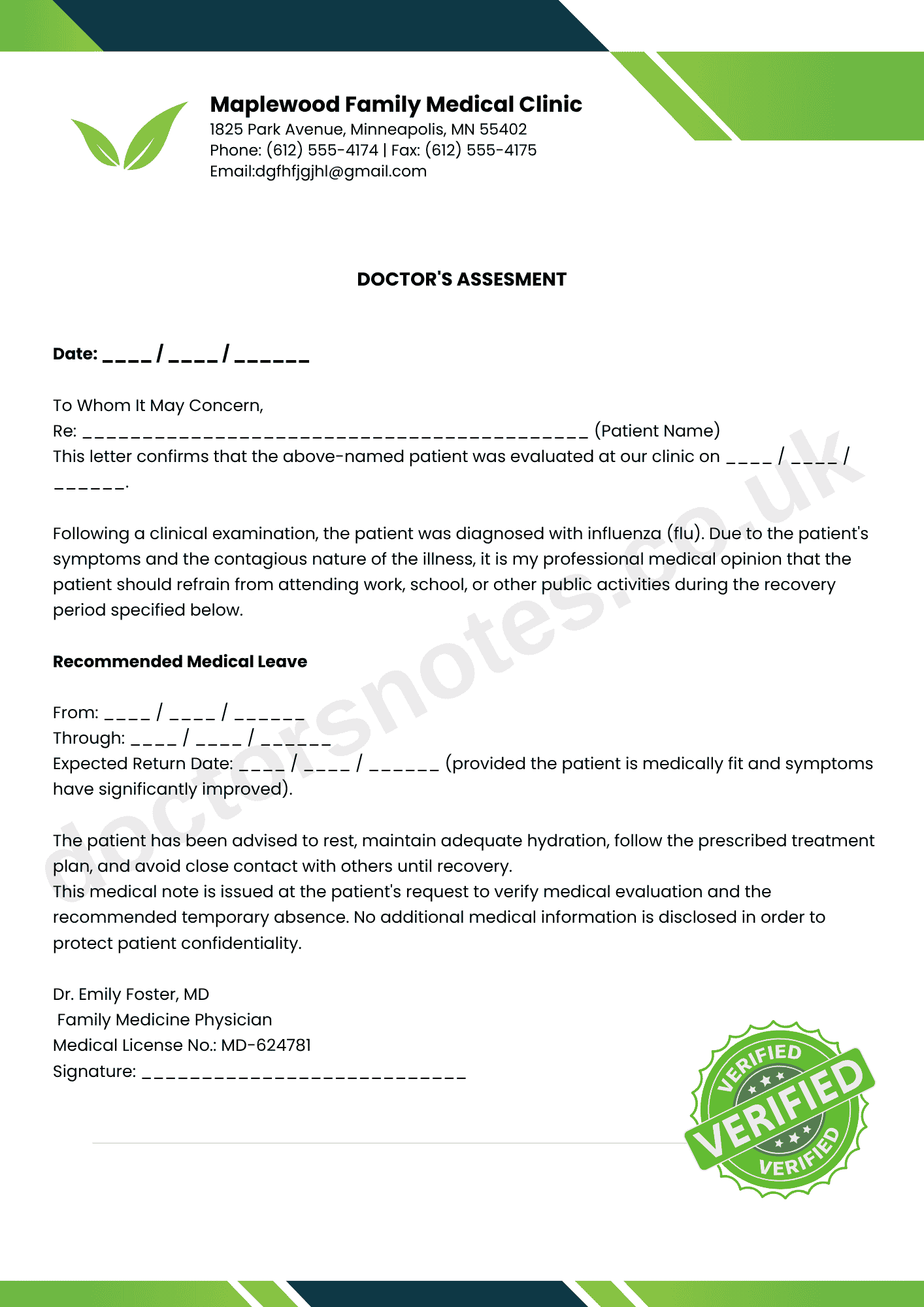
A Doctor’s Note for Flu is a medical certificate issued after a licensed healthcare professional evaluates your symptoms and determines whether your illness requires medical leave, workplace adjustments, or further treatment.
Many people recover from influenza at home with rest and supportive care, while others—particularly those with underlying health conditions, weakened immune systems, or more severe symptoms—may need closer medical supervision.
This guide explains everything you need to know about obtaining a Doctor’s Note for Flu, including who may need one, how online consultations work, available treatment options, certificate validity, legal considerations, and frequently asked questions.
Related Post:
- Doctors Note for Hay Fever
- Online Doctor Note for Fever
- Doctors Note for Cold
- Doctors Note for Upper Respiratory Infection
- Doctors Note for Cough
What Is a Doctor’s Note for Flu?
A Doctor’s Note for Flu is an official medical document confirming that a healthcare professional has assessed your influenza symptoms and your ability to carry out your usual responsibilities.
Depending on the outcome of your consultation, the document may indicate that:
- Your symptoms are consistent with influenza or another viral illness.
- You require a period of rest and recovery.
- You should temporarily avoid work, school, or other activities.
- A phased return or temporary adjustments may be beneficial.
- Additional medical follow-up is recommended if symptoms persist or worsen.
Every doctor’s note is based on an individual clinical assessment and is never issued automatically simply because flu-like symptoms are reported.
How Is the Flu Different From a Common Cold?
Although both illnesses affect the respiratory system, influenza usually causes more intense symptoms and develops much more suddenly.
People with the flu commonly experience:
- High fever.
- Chills.
- Significant muscle and joint aches.
- Severe tiredness.
- Dry or persistent cough.
- Headache.
- Sore throat.
- Runny or blocked nose.
- Reduced appetite.
Unlike a cold, influenza often makes normal daily activities difficult because of fatigue and body aches.
When Might You Need a Doctor’s Note for Flu?
Medical documentation may be appropriate if influenza is affecting your ability to meet your usual responsibilities.
Examples include:
- Your employer requires evidence for sickness absence.
- Your symptoms make it unsafe to attend work.
- You need time away from physically demanding duties.
- You work in healthcare, education, childcare, hospitality, or other environments where spreading infection is a concern.
- You miss examinations, classes, or coursework because of illness.
- You require documentation for travel or insurance purposes.
- Recovery is taking longer than expected.
The need for a doctor’s note depends on the severity of your illness rather than the diagnosis alone.
Who May Benefit From a Doctor’s Note for Flu?
A doctor’s note may be useful for a wide range of people, including:
Office Employees
When fever, fatigue, or persistent coughing affects productivity or the ability to attend the workplace.
Frontline and Customer-Facing Workers
Individuals who interact closely with colleagues, customers, or members of the public and may need to reduce the risk of spreading infection.
Healthcare Professionals
People working in hospitals, clinics, care homes, or other healthcare settings where returning before recovery could place vulnerable patients at risk.
Students
Those who need medical evidence for missed classes, examinations, coursework, or attendance requirements.
Self-Employed Individuals
People who require medical documentation for insurance claims, contractual obligations, or professional records.
What Happens During an Online Flu Consultation?
Your consultation is designed to assess both the severity of your symptoms and whether further medical care may be required.
The healthcare professional may ask about:
- When your symptoms first appeared.
- Whether they started suddenly.
- Your current temperature or recent fever.
- Presence of cough, sore throat, or congestion.
- Muscle aches or headaches.
- Breathing difficulties, if any.
- Existing health conditions.
- Current medications.
- Influenza vaccination history, where relevant.
- Whether your symptoms are affecting your ability to work or study.
The healthcare professional will also consider whether your symptoms are more consistent with influenza or another respiratory illness that may require different management.
When Should You Avoid Work or Public Activities?
Influenza spreads easily through respiratory droplets, making it important to reduce contact with others while you are infectious.
A healthcare professional may advise avoiding work, school, or public activities if:
- You have an ongoing fever.
- You are experiencing significant fatigue.
- Persistent coughing makes attending work difficult.
- Your workplace involves close contact with vulnerable individuals.
- Your symptoms increase the risk of spreading infection.
- You are not physically well enough to perform your normal duties safely.
The timing of your return depends on your recovery, overall health, and the nature of your work rather than a fixed number of days.
Prescription Information for Flu
Because influenza is caused by a virus, treatment is usually aimed at relieving symptoms while your body recovers.
During your consultation, the healthcare professional may discuss:
- Your current symptoms.
- How long you have been unwell.
- Whether you are at higher risk of complications.
- Your medical history.
- Whether further assessment is required.
Can Medication Be Prescribed?
If clinically appropriate, treatment recommendations may include:
- Medication to reduce fever or relieve discomfort.
- Advice on maintaining hydration and adequate rest.
- Guidance on managing cough or sore throat symptoms.
- Antiviral medication for eligible patients when appropriate and started within the recommended timeframe.
- Review of existing medications if you have long-term health conditions.
Important information:
- Antibiotics are not effective against influenza unless a separate bacterial infection is also present.
- Antiviral medicines are not suitable or necessary for everyone with flu.
- Always complete any prescribed course of medication exactly as directed.
- Inform the healthcare professional about pregnancy, allergies, chronic medical conditions, and all medicines you currently take before treatment is recommended.
How Long Is a Doctor’s Note for Flu Valid?
The duration of a Doctor’s Note for Flu depends on your symptoms, recovery, general health, and the healthcare professional’s assessment.
Although many people begin feeling better within a week, tiredness and weakness can continue for longer, particularly after more severe influenza.
Typical Review Periods
| Flu Recovery Stage | Typical Duration* |
|---|---|
| Mild influenza symptoms | 2–5 days |
| Moderate flu with fever and fatigue | 5–10 days |
| Persistent weakness after flu | 1–3 weeks |
| Flu complicated by another medical condition | Individual clinical assessment |
| Recovery for physically demanding occupations | Based on symptoms and job requirements |
*These are general examples only. The healthcare professional decides the duration of any medical certificate based on your individual condition.
Factors That Influence the Length of Your Medical Certificate
Several factors may affect how long your doctor’s note remains valid, including:
- Whether you still have a fever.
- Your overall energy levels.
- Persistence of coughing.
- Existing medical conditions.
- Risk of transmitting infection to others.
- Type of work you perform.
- Whether your duties involve vulnerable people.
- Progress of your recovery.
- Whether additional medical review is required.
If your symptoms continue beyond the original certificate period or new symptoms develop, a follow-up consultation may be recommended.
Recovering Safely From Influenza
Most people recover completely from influenza with appropriate rest and supportive care, but returning to normal activities too quickly may delay recovery.
During your recovery, healthcare professionals commonly recommend:
- Getting adequate rest.
- Drinking plenty of fluids.
- Eating balanced meals as your appetite improves.
- Following medication instructions carefully.
- Monitoring symptoms for any signs of worsening illness.
- Returning to work or education only when you are well enough and no longer likely to spread infection.
If your breathing becomes difficult, fever persists despite treatment, chest pain develops, or your symptoms worsen after initially improving, seek prompt medical attention.
What Documents May Be Issued?
After your consultation, and where clinically appropriate, the healthcare professional may provide medical documentation based on your symptoms, recovery progress, and the reason you require medical evidence.
Depending on your assessment, you may receive:
- Doctor’s Note for Flu or Medical Certificate.
- Confirmation that your illness has been medically assessed.
- Fit Note (where applicable) explaining whether you are temporarily unfit for work or require workplace adjustments.
- Recommendations for rest, recovery, or a phased return to work.
- Medical advice regarding infection control and reducing the spread of illness.
- Prescription information, where treatment is clinically appropriate.
- Referral recommendations for further investigations or specialist assessment if symptoms do not improve.
- Supporting documentation for employers, educational institutions, or other organisations requesting medical evidence.
The documentation issued depends on your individual medical assessment and the healthcare professional’s clinical judgement.
Important Legal Information About Doctor’s Note for Flu
A Doctor’s Note for Flu is an official medical document and should only be issued after a licensed healthcare professional has completed an appropriate clinical assessment.
Before requesting a medical certificate, it is important to understand the following:
- A doctor’s note confirms that your illness has been medically assessed at the time of your consultation.
- Booking an online appointment does not guarantee that a medical certificate will be issued.
- Healthcare professionals must use independent clinical judgement when deciding whether medical leave or workplace restrictions are medically necessary.
- Influenza is a contagious illness, and returning to work too early may increase the risk of spreading infection to colleagues, customers, patients, or classmates.
- Employers, schools, universities, insurers, and other organisations may have their own policies regarding sickness absence and acceptance of medical certificates.
- Medical certificates generally state your fitness for work or recommended recovery period without including unnecessary clinical details unless disclosure is required or you have given consent.
- Your personal health information remains confidential and is managed in accordance with applicable healthcare privacy and data protection laws.
- Providing complete and accurate information during your consultation helps ensure that any documentation accurately reflects your medical condition.
Important: If you experience severe breathing difficulties, persistent chest pain, confusion, dehydration, blue lips or fingertips, a fever that does not improve, or symptoms that rapidly worsen, seek urgent or emergency medical care immediately. An online consultation should not replace emergency treatment.
FAQ
Can I get a Doctor’s Note for Flu online?
Yes. You can arrange an online consultation with a licensed healthcare professional. If your symptoms are assessed and medical documentation is considered clinically appropriate, a doctor’s note may be issued.
Is influenza a valid reason for taking sick leave?
Yes. Influenza can cause fever, body aches, fatigue, coughing, and weakness that may make it unsafe or impractical to work, attend school, or carry out normal daily activities.
How long does the flu usually last?
Many people begin to recover within 5 to 7 days, although tiredness and coughing may continue for 1 to 3 weeks. Recovery varies depending on your age, overall health, and the severity of the illness.
Can I return to work while I still have a cough?
A cough may continue after the infection begins to improve. Your ability to return depends on your overall recovery, whether you still have a fever, and whether you remain well enough to perform your duties safely.
Will I receive antibiotics for flu?
Not usually. Influenza is caused by a virus, so antibiotics are not effective unless you also have a confirmed or suspected bacterial infection.
Can antiviral medication be prescribed?
In some cases, yes. Antiviral medicines may be considered for eligible patients, particularly if treatment begins early or if you are at increased risk of complications. A healthcare professional will determine whether they are appropriate.
Can my Doctor’s Note for Flu be extended?
Yes. If your symptoms have not improved by the end of the original certificate period, you may book a follow-up consultation. Updated medical documentation may be issued if clinically appropriate.
Is my consultation confidential?
Yes. Your consultation and medical records are confidential and managed according to applicable healthcare privacy and data protection regulations.
Can I get a doctor’s note for my child who has the flu?
Requirements vary depending on the healthcare provider and local regulations. If your child is unwell, seek appropriate medical advice regarding assessment and documentation.
When should I seek emergency medical attention?
Seek urgent medical care immediately if you develop:
- Severe shortness of breath.
- Chest pain.
- Persistent high fever that does not improve.
- Confusion or difficulty staying awake.
- Signs of dehydration.
- Blue lips or fingertips.
- Symptoms that become significantly worse after initially improving.
Why Choose Our Online Consultation Service?
- Fast and convenient online appointments.
- Access to licensed healthcare professionals without leaving home.
- Secure and confidential consultations.
- Professional assessment of flu symptoms.
- Medical certificates issued only where clinically appropriate.
- Personalised treatment and recovery advice.
- Support with legitimate workplace, education, and travel documentation where appropriate.
Conclusion
Influenza can develop quickly and leave you feeling too unwell to work, study, or carry out your normal routine. Giving your body enough time to recover and following professional medical advice can help reduce complications and support a safe return to everyday activities.
A Doctor’s Note for Flu provides medical documentation following an assessment by a licensed healthcare professional and may assist with workplace absence, educational requirements, or other situations where evidence of illness is required.
With an online consultation, you can discuss your symptoms, receive personalised medical guidance, and obtain appropriate documentation where clinically suitable. Every consultation is based on your individual health needs, ensuring that any medical advice and certification are tailored to your recovery.


Reviews
There are no reviews yet.