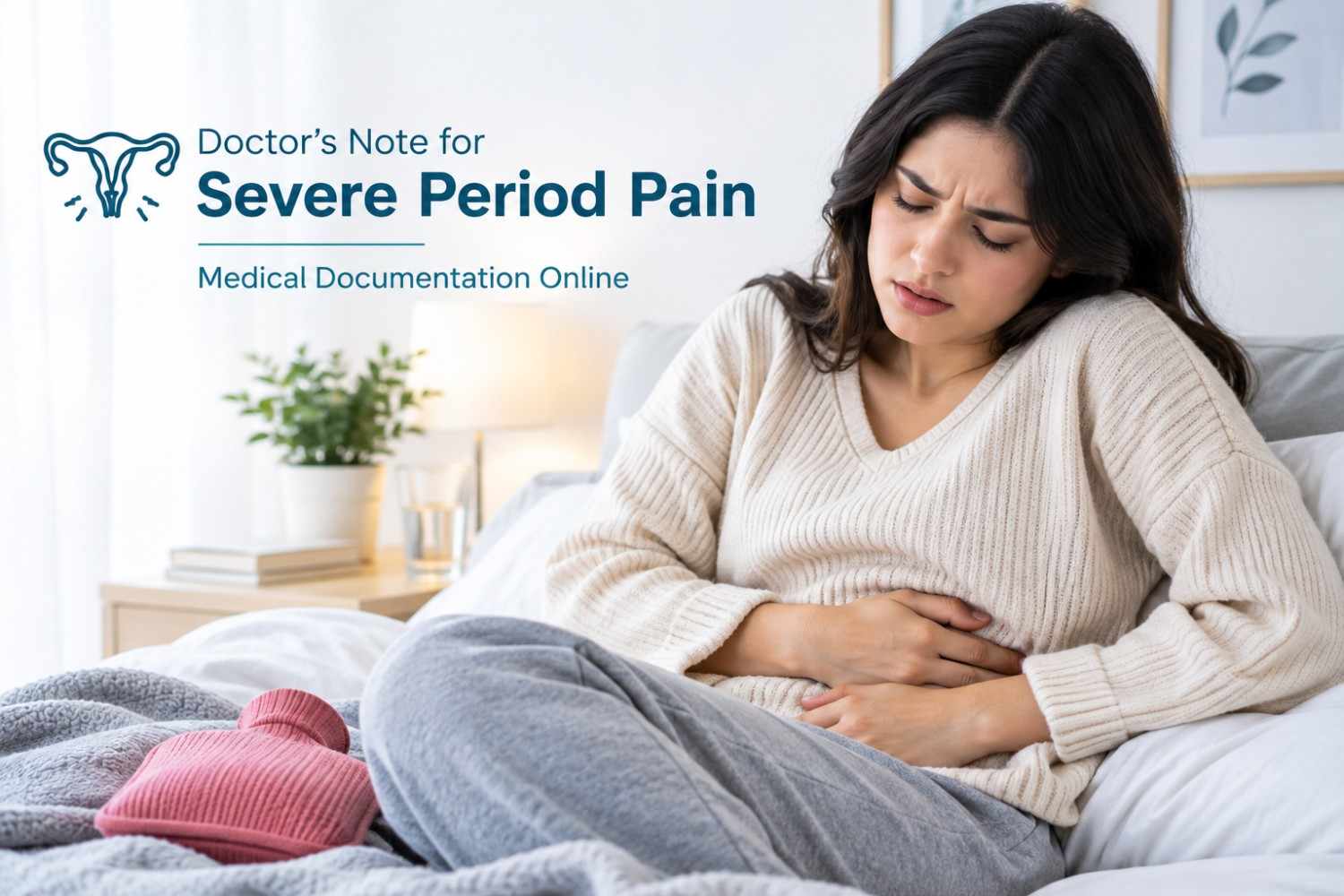
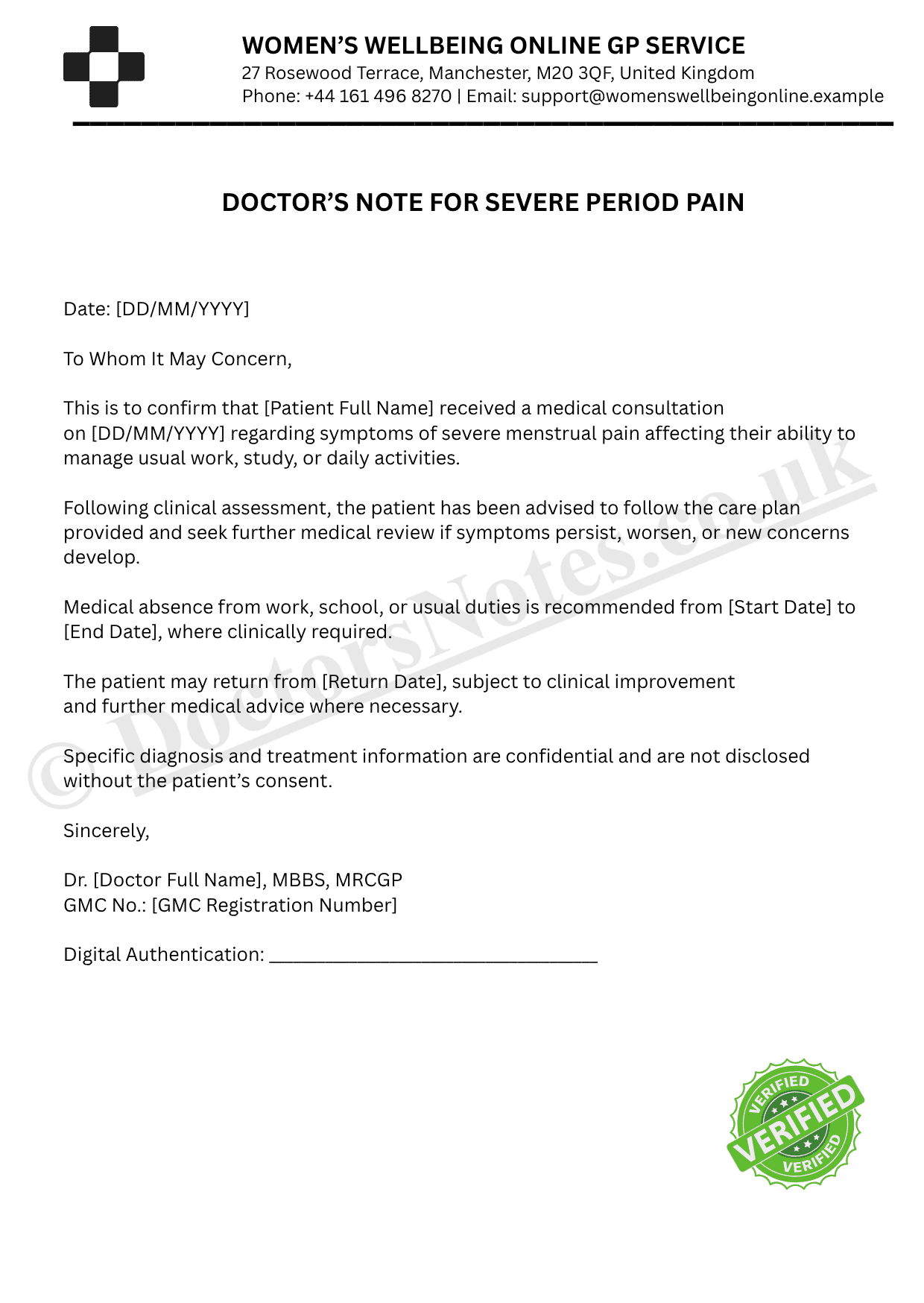
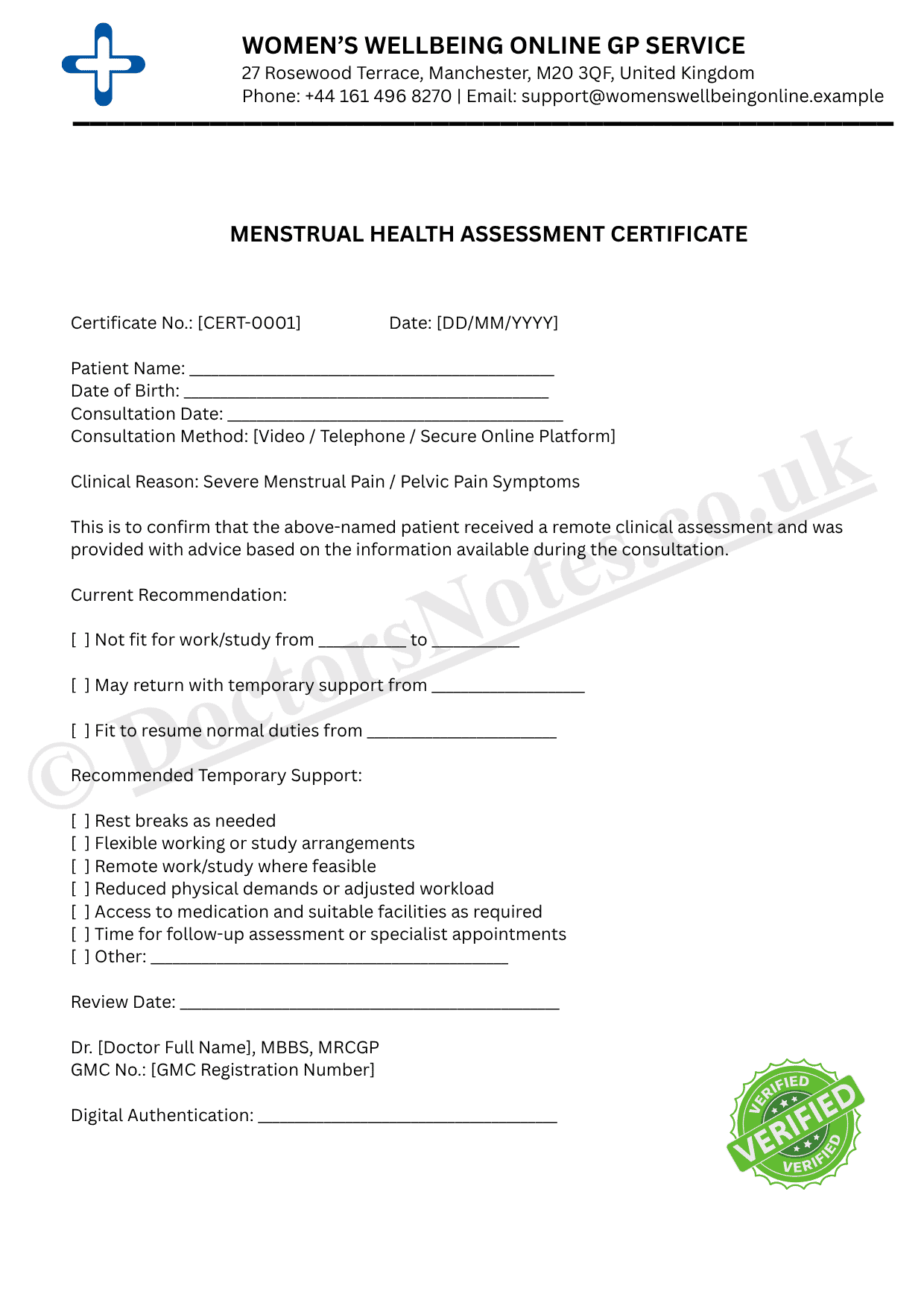
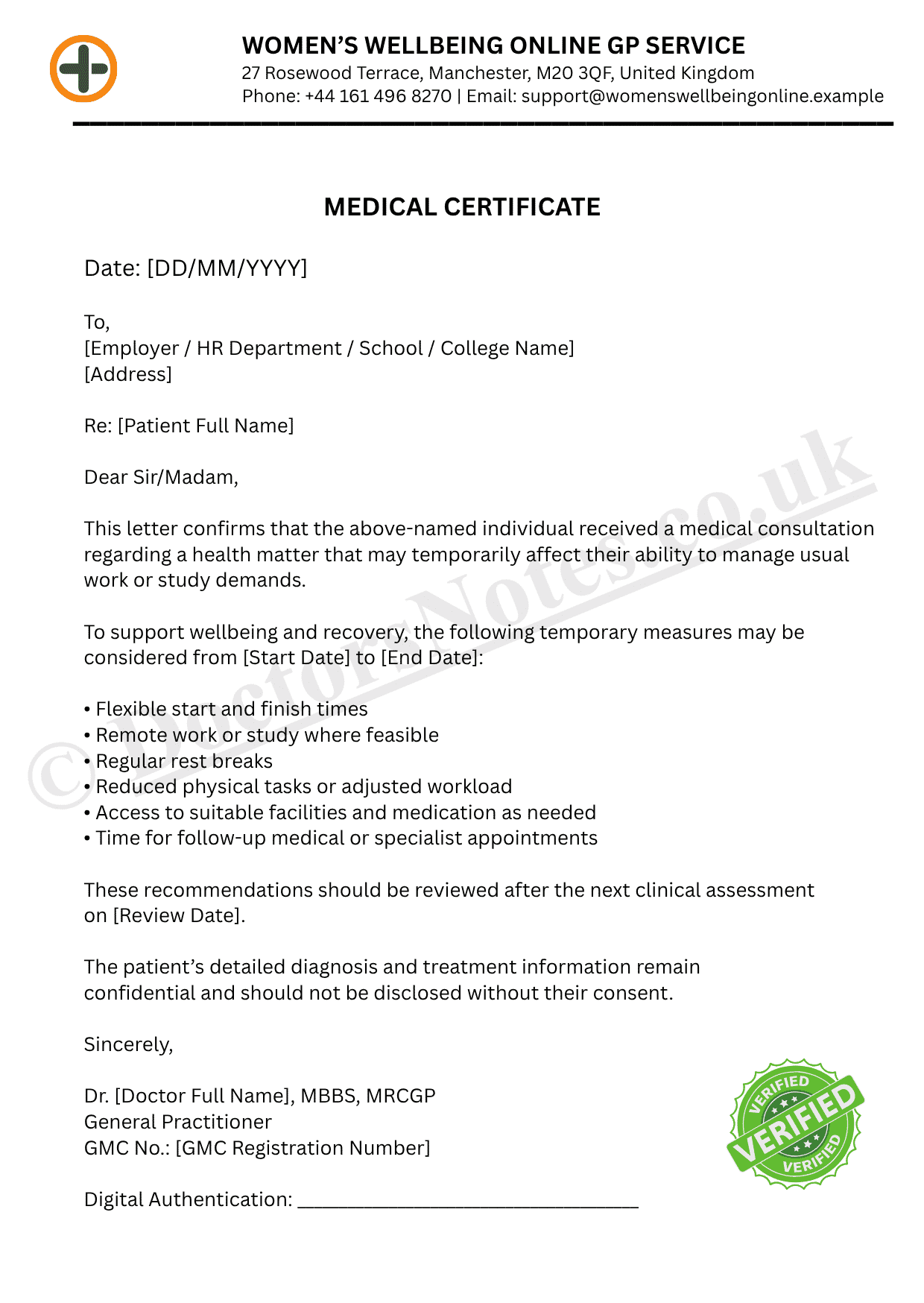


Severe period pain can make it difficult to work, study, travel, or manage normal daily activities. If menstrual pain is affecting your ability to work, a doctor’s note for severe period pain may be considered after a suitable healthcare assessment.
Severe Period Pain and Work
| Situation | What may help |
|---|---|
| Severe cramps | Medical assessment and appropriate treatment |
| Pain affecting concentration | Rest or temporary work adjustments |
| Difficulty standing or walking | Temporary changes to physical duties |
| Pain causing sickness absence | Appropriate medical documentation |
| Repeated painful periods | Assessment for an underlying cause |
| Pain returning every month | Symptom tracking and medical review |
| Work affected for several days | Discuss fitness for work with a healthcare professional |
Severe period pain should not simply be dismissed as something you have to tolerate. NHS guidance recommends seeking medical advice when period pain affects daily life or becomes severe.
What Is Severe Period Pain?
Period pain is also called dysmenorrhoea.
It commonly causes cramps around the start of a period. The pain can spread to the back or thighs and may feel sharp, aching, or cramping.
Typical period pain can last for up to three days.
Some people experience much stronger symptoms that interfere with everyday activities.
When Can Period Pain Affect Your Ability to Work?
Menstrual pain can affect work in several ways.
You may find it difficult to:
- Sit comfortably for long periods.
- Stand for extended periods.
- Walk or move around.
- Concentrate on detailed tasks.
- Attend meetings.
- Commute to work.
- Complete physical duties.
- Work normal hours.
- Sleep properly before a working day.
- Manage customer-facing responsibilities.
The effect depends on the severity of your symptoms and the demands of your job.
Doctor’s Note for Severe Period Pain for Work
If period pain is preventing you from working normally, explain the functional effect of your symptoms during your healthcare assessment.
For example, you might explain:
“My period pain is severe enough that I cannot concentrate or complete my normal duties.”
This is more useful than simply saying that you have painful periods.
UK fit-note guidance says healthcare professionals assess how a health condition affects what a person can do at work.
Can Severe Period Pain Make You Take Time Off Work?
Yes, it can.
However, needing time away from work depends on your individual symptoms and circumstances.
For some people, pain may be manageable with treatment or temporary adjustments. For others, severe symptoms may make normal work difficult.
A healthcare professional can assess your fitness for work rather than assuming that every case requires absence.
What Symptoms Can Occur With Severe Period Pain?
Severe menstrual pain may occur alongside other symptoms.
These can include:
- Lower abdominal cramps.
- Back pain.
- Pain spreading into the thighs.
- Nausea.
- Headaches.
- Fatigue.
- Heavy menstrual bleeding.
- Pain when passing urine.
- Pain when opening your bowels.
- Pain during or after sex.
Not everyone experiences these symptoms.
If you have symptoms outside your normal menstrual pattern, mention them during your assessment.
What Can Cause Severe Period Pain?
Period pain is often caused by contractions of the womb.
However, severe or worsening pain can sometimes be linked to an underlying condition.
Possible causes include:
| Possible cause | Possible features |
|---|---|
| Primary period pain | Pain without another underlying condition |
| Endometriosis | Severe pain, heavy periods and pelvic symptoms |
| Adenomyosis | Painful or heavy periods |
| Fibroids | Pain, heavy bleeding or pressure symptoms |
| Pelvic inflammatory disease | Pelvic pain with other symptoms of infection |
| IUD | Period pain can increase, particularly during the first few months |
These conditions require proper medical assessment rather than self-diagnosis.
Severe Period Pain and Endometriosis
Repeated severe period pain can sometimes be associated with endometriosis.
Endometriosis can cause pain that interferes with normal activities. Other symptoms can include heavy periods, pelvic pain, pain when using the toilet, pain during or after sex, and significant fatigue.
If your period pain repeatedly affects work or daily life, discuss the pattern with a healthcare professional.
A doctor’s note can address work-related documentation, but it does not replace investigation of an underlying condition.
Can Period Pain Affect Different Types of Jobs?
Yes.
The same symptoms can have different effects depending on your work.
| Job type | Possible difficulty |
|---|---|
| Office work | Sitting, concentration and screen-based tasks |
| Retail | Standing and customer interaction |
| Hospitality | Standing, walking and long shifts |
| Healthcare | Patient care and physical activity |
| Warehouse work | Lifting, carrying and movement |
| Teaching | Standing, speaking and classroom duties |
| Driving | Sitting for long periods and commuting |
| Outdoor work | Working through pain without easy access to rest |
| Remote work | Flexible environment but concentration may still be difficult |
Your job duties should be explained during the assessment.
Can You Work With Severe Period Pain?
Possibly.
Some people can continue working with suitable support. Others may need time away from work.
Factors that can matter include:
- Pain intensity.
- Duration of symptoms.
- Heavy bleeding.
- Fatigue.
- Nausea.
- Medication side effects.
- Physical job demands.
- Ability to take breaks.
- Access to suitable facilities.
- Whether symptoms affect concentration.
The goal of a fit-note assessment is to consider your overall ability to work.
Could Workplace Adjustments Help?
In some cases, yes.
If you are assessed as may be fit for work, possible adjustments can include:
- Altered working hours.
- Temporary changes to duties.
- A phased return.
- Workplace adaptations.
- Working from home where appropriate.
These options can be discussed with your employer. They are not automatically binding.
For example, someone with severe menstrual pain might find shorter shifts or easier access to breaks helpful.
Can Severe Period Pain Qualify for Time Off Work?
Yes, severe period pain can qualify for time off work when menstrual cramps or related symptoms make it difficult to perform daily tasks. Symptoms such as intense abdominal pain, back pain, nausea, fatigue, dizziness, or heavy bleeding may affect concentration, mobility, and productivity.
A healthcare provider can assess your symptoms and recommend time off if medically necessary. Depending on your condition, the provider may also suggest reduced working hours, remote work, or temporary adjustments to your duties. A doctor’s note can document the recommended leave period or work restrictions.
Whether time off is approved depends on your employer’s policies and applicable local laws. If period pain regularly interferes with work, consult a healthcare professional to check for possible causes such as endometriosis or fibroids. Seek urgent medical care for sudden, severe pelvic pain, fainting, or unusually heavy bleeding.
Severe Period Pain and Physical Work
Physical jobs can become particularly difficult during painful periods.
You may struggle with:
- Repeated lifting.
- Long periods of standing.
- Bending.
- Walking long distances.
- Climbing stairs.
- Fast-paced duties.
- Extended shifts.
Tell the healthcare professional which activities make your symptoms worse.
This can help them understand the practical impact of your condition.
Severe Period Pain and Office Work
Period pain can affect office workers too.
You may have difficulty with:
- Sitting for long periods.
- Concentrating.
- Attending meetings.
- Working through headaches.
- Maintaining normal productivity.
- Travelling to the office.
- Working during prolonged pain.
Working from home may help some people, but it does not necessarily solve severe symptoms.
Can a Fit Note Recommend Working From Home?
Working from home can be considered as a workplace adaptation when appropriate.
UK guidance lists working from home among examples of workplace adaptations that may support someone who is assessed as “may be fit for work.”
Whether it is suitable depends on your health, role, employer, and working environment.
Sick Note vs Fit Note for Severe Period Pain
People commonly say sick note.
The formal UK document is a fit note, also known as a Statement of Fitness for Work.
A healthcare professional may assess you as:
- Fit for work
- May be fit for work
- Not fit for work
The assessment considers what you are able to do, rather than simply confirming that you have period pain.
Do You Need a Fit Note for Period Pain?
Not necessarily.
Employees can generally self-certify sickness for the first 7 calendar days, including weekends and bank holidays.
A fit note is normally relevant when sickness continues beyond that period.
Your employer may also have its own absence-reporting procedure.
Who Can Issue a Fit Note for Period Pain?
Eligible healthcare professionals include:
- Doctors.
- Nurses.
- Physiotherapists.
- Occupational therapists.
- Pharmacists.
The professional needs to carry out an appropriate assessment before providing a fit note.
How Can an Online Assessment Help?
An online assessment may be suitable when your symptoms can be assessed remotely.
You can explain:
- When the pain started.
- Where you feel it.
- How severe it is.
- How long it normally lasts.
- Whether the pain happens every period.
- Whether bleeding is heavy.
- Other symptoms you experience.
- How the symptoms affect your work.
- Any treatment you have tried.
- Any existing diagnosis.
The healthcare professional can then decide whether remote assessment is appropriate.
If your symptoms require physical examination or further investigation, you may be advised to seek in-person care.
How to Prepare for an Online Period Pain Assessment
A menstrual symptom diary can be useful.
Record:
Timing
- First day of pain.
- First day of bleeding.
- Number of days symptoms last.
Pain
- Where the pain occurs.
- How severe it becomes.
- Whether it spreads to your back or legs.
- What makes it worse.
Bleeding
- Whether periods are heavier than usual.
- How frequently you need to change menstrual products.
- Any bleeding between periods.
Other symptoms
- Nausea.
- Fatigue.
- Headaches.
- Bowel symptoms.
- Urinary symptoms.
- Pain during sex.
Work impact
- Tasks you cannot complete.
- Hours you miss.
- Whether commuting is difficult.
- Whether you need additional breaks.
NHS guidance suggests keeping a diary of period symptoms before seeing a GP because it can help show how symptoms change during the menstrual cycle.
What Should You Tell the Healthcare Professional?
Avoid minimising your symptoms.
Instead of saying:
“My periods are painful.”
Explain what the pain prevents you from doing.
For example:
“The pain becomes severe during the first two days. I struggle to stand, concentrate, and complete my normal shift.”
Also mention if your symptoms are becoming more painful, heavier, or irregular.
When Should You See a Doctor About Period Pain?
You should arrange medical advice if your period pain:
- Stops you doing normal activities.
- Is becoming more painful.
- Is becoming heavier.
- Becomes irregular.
- Happens with pain during sex.
- Causes pain when you pee or poo.
- Occurs with bleeding between periods.
- Comes with changes in bowel or bladder habits.
- Occurs with a swollen abdomen.
- Is associated with unexplained weight loss.
These can be reasons for further assessment.
When Is Severe Period Pain Urgent?
Severe pelvic or period pain should not be treated as simply a documentation issue.
NHS guidance recommends urgent GP advice or NHS 111 when period or pelvic pain is severe or worse than usual and painkillers have not helped.
If you feel seriously unwell or have another emergency symptom, seek urgent medical care.
Can Severe Period Pain Be a Sign of Endometriosis?
It can be one possible sign.
Endometriosis may cause severe period pain that interferes with normal activities, alongside symptoms such as heavy periods, pelvic pain, pain during or after sex, and pain when using the toilet.
However, severe period pain has several possible causes.
Only a healthcare professional can assess your symptoms and determine whether further investigation is needed.
What Treatment May Be Discussed?
Treatment depends on the cause and your circumstances.
Depending on your assessment, a healthcare professional may discuss:
- Pain relief.
- Anti-inflammatory medicines.
- Hormonal contraception.
- TENS.
- Further investigation.
- Referral to a gynaecology service.
NHS guidance lists anti-inflammatory medicines, TENS and some forms of hormonal contraception among treatments that may help period pain.
Do not start or change medication without checking that it is suitable for you.
Can Severe Period Pain Affect Attendance Every Month?
It can.
If pain repeatedly causes missed work, it is worth discussing the pattern with a healthcare professional.
Regular absence can sometimes indicate that the underlying problem needs investigation or better symptom management.
A medical assessment can look beyond the immediate need for workplace documentation.
Can a Severe Period Pain Fit Note Be Backdated?
It may be possible in some circumstances.
A healthcare professional can consider whether your condition affected your fitness for work during an earlier period.
Backdating is a clinical decision and is not guaranteed.
How Long Can a Severe Period Pain Fit Note Last?
There is no single duration that applies to everyone.
The healthcare professional decides the appropriate period based on your circumstances.
During the first six months of a health condition, a fit note can normally cover a maximum of three months at a time.
A review may be appropriate if symptoms continue.
What If Your Employer Cannot Offer Adjustments?
If you receive “may be fit for work” advice, you can discuss the suggested changes with your employer.
Possible options may include:
- Different duties.
- Altered hours.
- A phased return.
- Workplace adaptations.
If the recommended adjustments cannot be provided, the same fit note can be used for sickness procedures. A new fit note is not automatically required simply because an employer cannot make the suggested changes.
Can a Doctor’s Note for Severe Period Pain Be Guaranteed?
No.
Medical documentation must reflect the outcome of a healthcare assessment.
A healthcare professional may decide that you are fit for work, may be fit with adjustments, or not fit for work.
The decision depends on your symptoms and clinical circumstances.
Severe Period Pain Assessment Checklist
Before your consultation, have these details ready:
Your symptoms
☐ Start date of your period
☐ Start of the pain
☐ Pain location
☐ Pain severity
☐ How long the pain lasts
☐ Heavy or unusual bleeding
☐ Back or leg pain
☐ Nausea or headaches
☐ Bowel or urinary symptoms
☐ Pain during or after sex
Your work
☐ Job title
☐ Main duties
☐ Physical demands
☐ Working hours
☐ Commuting requirements
☐ Ability to work from home
☐ Tasks affected by your symptoms
Your medical history
☐ Previous diagnosis
☐ Current medication
☐ Previous treatment
☐ Previous investigations
☐ Previous episodes of severe pain
FAQs
Can you get a doctor’s note for severe period pain?
You may receive appropriate medical documentation when a healthcare professional assesses that your symptoms affect your fitness for work.
Can you get a doctor’s note for period pain for work?
Yes, severe menstrual pain can be assessed in relation to your ability to work. The outcome depends on the individual assessment.
Can I get an online doctor’s note for severe period pain?
An online assessment may be suitable in some cases. The healthcare professional decides whether remote assessment is appropriate.
Can severe period pain qualify for a sick note?
It can affect fitness for work, but a fit note is issued only after an appropriate healthcare assessment.
Is severe period pain normal?
Some period pain is common. Pain that is severe or interferes with normal activities should be discussed with a healthcare professional.
Can period pain stop you working?
Severe symptoms can make normal work difficult. Whether you need time off depends on your individual circumstances.
Can period pain affect concentration?
Yes. Pain, fatigue, headaches, poor sleep and other menstrual symptoms can make concentration more difficult.
Can severe period pain be caused by endometriosis?
Endometriosis is one possible cause of severe period pain. It can also cause heavy periods, pelvic pain and other symptoms.
Can severe period pain be caused by fibroids?
Fibroids can be associated with painful periods and heavy bleeding. A healthcare professional can assess whether further investigation is appropriate.
Can a fit note recommend working from home for period pain?
Working from home can be considered as a workplace adaptation when appropriate.
Can a fit note recommend reduced hours?
Altered hours can be considered when a healthcare professional believes they may help you stay in or return to work.
Do I need a fit note for the first seven days?
Generally, no. You can normally self-certify sickness for the first seven calendar days.
Can a period pain fit note be backdated?
It may be possible following a healthcare professional’s assessment, but backdating is not guaranteed.
How long can a fit note for period pain last?
The duration depends on clinical judgement and your circumstances. During the first six months of a condition, a fit note can normally cover up to three months at a time.
Who can issue a fit note for severe period pain?
Doctors, nurses, physiotherapists, occupational therapists and pharmacists can certify fit notes when appropriate.
What if my period pain is getting worse?
Arrange a medical assessment. Increasing pain can warrant investigation, particularly when it starts affecting everyday life.
What if painkillers are not helping?
NHS guidance recommends urgent GP advice or NHS 111 when period or pelvic pain is severe or worse than usual and painkillers have not helped.
What should I tell the healthcare professional?
Explain your pain pattern, bleeding, other symptoms, previous treatment, and exactly how the symptoms affect your work.
Get Medical Documentation for Severe Period Pain
Severe period pain can affect more than comfort. It can interfere with concentration, movement, attendance, and your ability to complete normal work duties.
If menstrual pain is affecting your work, an online medical assessment can give you an opportunity to explain your symptoms and discuss your fitness for work and documentation needs.
Explain how your period pain affects your normal activities and work during your assessment.



Reviews
There are no reviews yet.