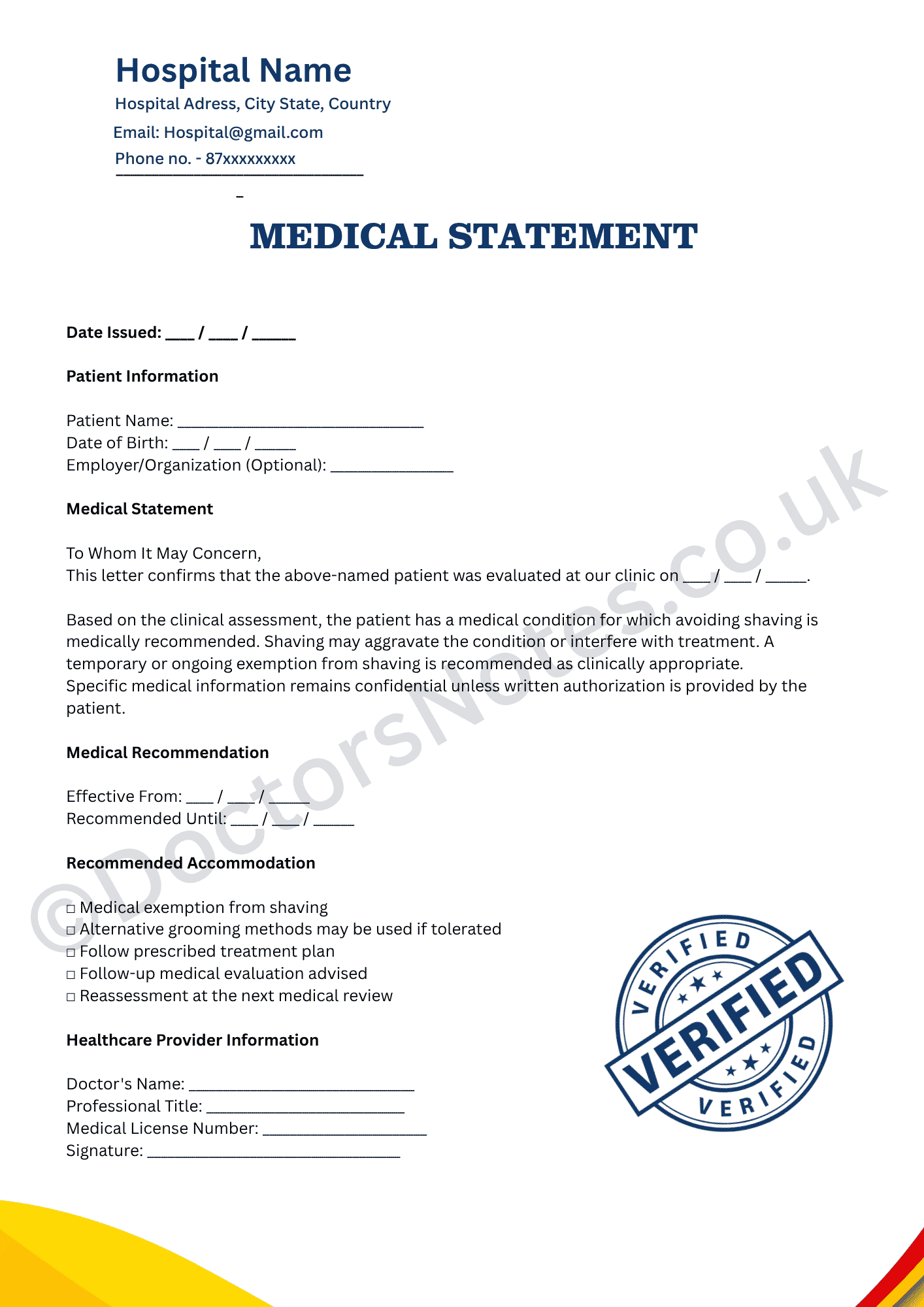
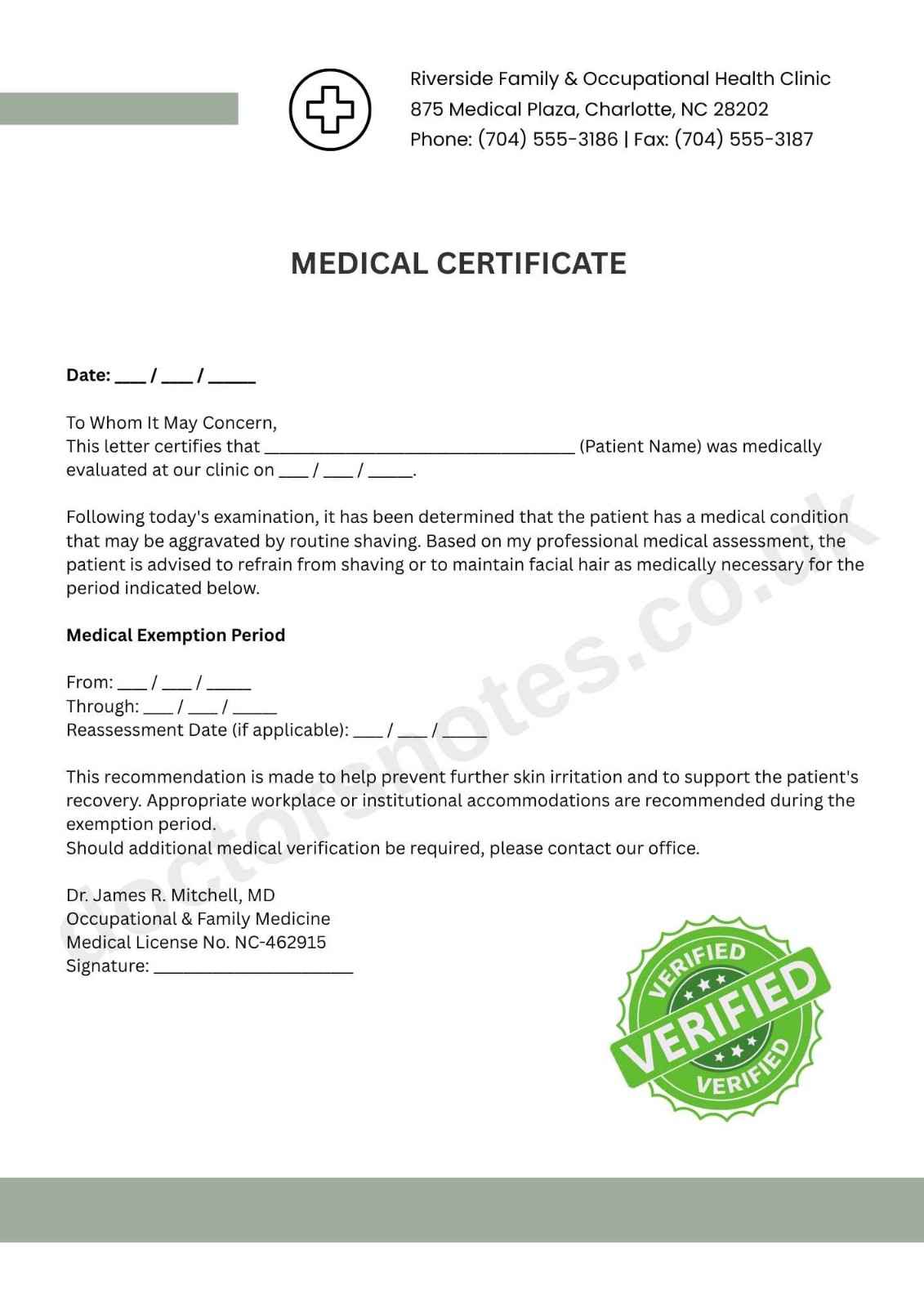


For many people, shaving is a routine part of personal grooming. However, certain medical conditions can make shaving painful, unsafe, or likely to worsen existing skin problems. In these situations, a healthcare professional may recommend avoiding shaving temporarily or, in some cases, for a longer period.
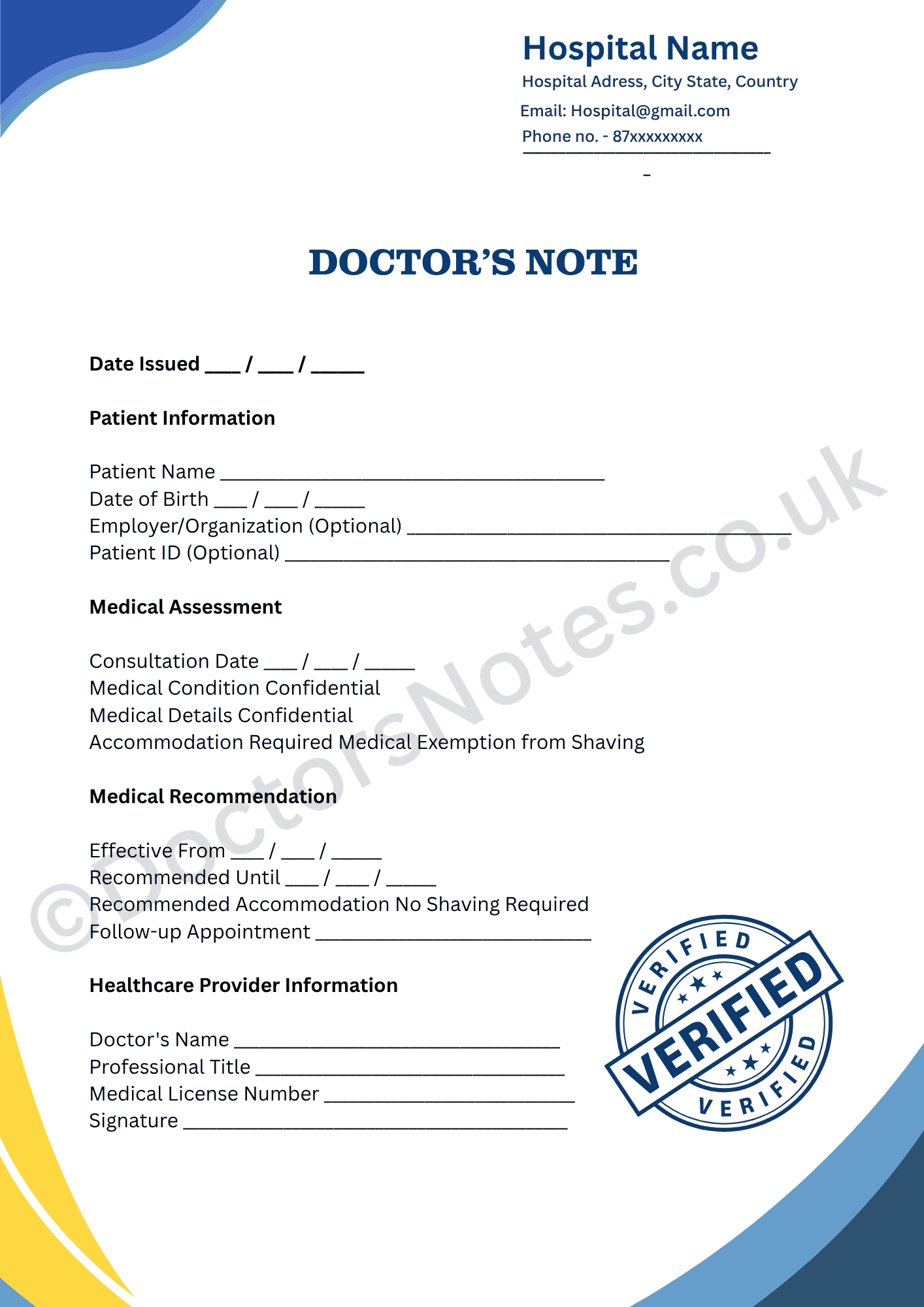
A Doctor’s Excuse for Not Shaving is a medical document issued after a licensed healthcare professional assesses your condition and determines whether a shaving exemption or temporary restriction is medically appropriate.
This guide explains what a Doctor’s Excuse for Not Shaving is, who may need one, the conditions that may qualify, how online consultations work, treatment options, validity periods, legal considerations, and frequently asked questions.
Related Post:
- Online Doctor for Skin Problems
- Doctors Note for Eczema
- Doctors Note for Allergies
- Doctors Note for Hives
- Doctors Note for Reduced Hours
- What Is a Doctor’s Excuse for Not Shaving?
A Doctor’s Excuse for Not Shaving is a medical certificate stating that a healthcare professional has assessed your skin or medical condition and believes that shaving may aggravate your symptoms or delay healing.
Depending on the assessment, the documentation may recommend:
- Temporarily avoiding shaving.
- Maintaining a short, neatly trimmed beard instead of a clean shave.
- Using alternative grooming methods.
- Following a treatment plan before resuming shaving.
- Returning for review before normal shaving is recommended.
The document is based entirely on clinical findings and should never be used simply to avoid workplace grooming requirements without a genuine medical reason.
Medical Conditions That May Require a Shaving Exemption
Several health conditions can make shaving uncomfortable or medically unsuitable.
Examples include:
Pseudofolliculitis Barbae (Razor Bumps)
One of the most common reasons for a shaving exemption, where shaved hairs grow back into the skin, causing inflammation, painful bumps, and irritation.
Severe Razor Burn
Repeated shaving may cause persistent redness, burning, and skin sensitivity that requires time to heal.
Folliculitis
Inflammation or infection of hair follicles that can worsen with frequent shaving.
Eczema or Dermatitis
People with inflammatory skin conditions may experience flare-ups when shaving irritates already sensitive skin.
Psoriasis
Shaving over psoriasis plaques may increase discomfort and damage affected skin.
Active Skin Infections
Cuts, infected follicles, or other skin infections may require shaving to be avoided until healing occurs.
Surgical Recovery
People recovering from facial surgery, stitches, burns, skin grafts, or dermatological procedures may be advised not to shave for a period of time.
Who Might Need a Doctor’s Excuse for Not Shaving?
Medical shaving exemptions are commonly requested by:
Employees
Workers whose employer requires a clean-shaven appearance but whose medical condition makes shaving unsuitable.
Military Personnel
Some armed forces allow medically approved beard exemptions where supported by appropriate healthcare documentation and organisational policy.
Security and Emergency Service Workers
Certain occupations have grooming standards, although medical exceptions may be considered according to workplace procedures.
Students
Some schools, colleges, or training institutions with appearance policies may request medical evidence for an exemption.
Individuals Undergoing Medical Treatment
People recovering from dermatological procedures or facial injuries may require temporary documentation while healing.
What Happens During the Medical Assessment?
During your consultation, the healthcare professional will evaluate whether avoiding shaving is medically appropriate.
The assessment may include questions about:
- Your current skin condition.
- How long the problem has been present.
- Whether symptoms occur every time you shave.
- Pain, itching, swelling, or bleeding.
- Previous skin infections.
- Any prescribed creams or medications.
- Existing skin disorders.
- Previous medical treatment.
- Whether your workplace or organisation requires medical documentation.
If possible, you may also be asked to provide photographs of the affected skin if the consultation is conducted remotely and this is clinically appropriate.
When Can a Healthcare Professional Recommend Not Shaving?
A recommendation to avoid shaving depends on whether continuing to shave is likely to worsen your condition or interfere with healing.
Examples where temporary or longer-term shaving restrictions may be considered include:
- Recurrent razor bumps despite proper shaving technique.
- Painful facial inflammation.
- Healing surgical wounds.
- Active bacterial skin infections.
- Severe eczema flare-ups affecting the beard area.
- Persistent skin irritation that has not responded to routine care.
- Ongoing dermatological treatment requiring minimal skin trauma.
The healthcare professional will recommend the least restrictive approach that safely supports your recovery, which may include trimming instead of complete shaving avoidance in some situations.
Treatment and Skin Care Recommendations
The main goal of treatment is to reduce irritation, allow the skin to heal, and prevent future flare-ups.
Depending on your condition, the healthcare professional may recommend:
- Temporarily stopping shaving.
- Switching to an electric trimmer instead of a close razor shave.
- Using fragrance-free shaving products.
- Applying moisturisers designed for sensitive skin.
- Using medicated creams where clinically appropriate.
- Improving shaving technique to reduce skin irritation.
- Referral to a dermatologist if symptoms continue.
Treatment recommendations will vary depending on the underlying skin condition rather than applying the same approach to everyone.
Can Medication Be Prescribed?
If clinically appropriate, medication may be recommended or prescribed.
This may include:
- Anti-inflammatory creams.
- Antibiotic treatment for infected hair follicles.
- Medication for eczema or dermatitis.
- Treatments for fungal or bacterial skin infections where diagnosed.
- Advice on long-term skin care.
Important points to remember:
- Medication is prescribed only when medically necessary.
- Not every shaving-related skin problem requires prescription treatment.
- Some conditions improve with changes to grooming habits alone.
- Always inform the healthcare professional about allergies, previous reactions to medications, and any treatments you are currently using.
How Long Is a Doctor’s Excuse for Not Shaving Valid?
The duration of a Doctor’s Excuse for Not Shaving depends on your diagnosis, the severity of your symptoms, your response to treatment, and whether the condition is expected to resolve or require ongoing management.
Typical Validity Periods
| Medical Situation | Typical Review Period* |
|---|---|
| Mild razor burn or temporary irritation | 3–7 days |
| Folliculitis requiring treatment | 1–3 weeks |
| Pseudofolliculitis barbae (razor bumps) | 2–8 weeks, depending on improvement |
| Recovery after facial surgery or skin procedure | Until healing is complete, often 2–6 weeks |
| Chronic skin conditions such as eczema or psoriasis | Individual review with periodic reassessment |
*These are general examples only. The exact duration of any medical certificate depends on the healthcare professional’s clinical assessment.
Factors That May Affect the Length of Your Shaving Exemption
Before deciding how long the medical recommendation should remain in place, the healthcare professional may consider:
- The diagnosed skin condition.
- Severity of irritation or inflammation.
- Whether infection is present.
- Progress with treatment.
- Your occupation and grooming requirements.
- Risk of the condition worsening if shaving continues.
- Previous history of recurring symptoms.
- Whether specialist dermatology review is required.
If your symptoms continue after the original certificate expires, a follow-up consultation may be recommended. Where clinically appropriate, updated medical documentation may be issued after reassessment.
What Documents May Be Issued?
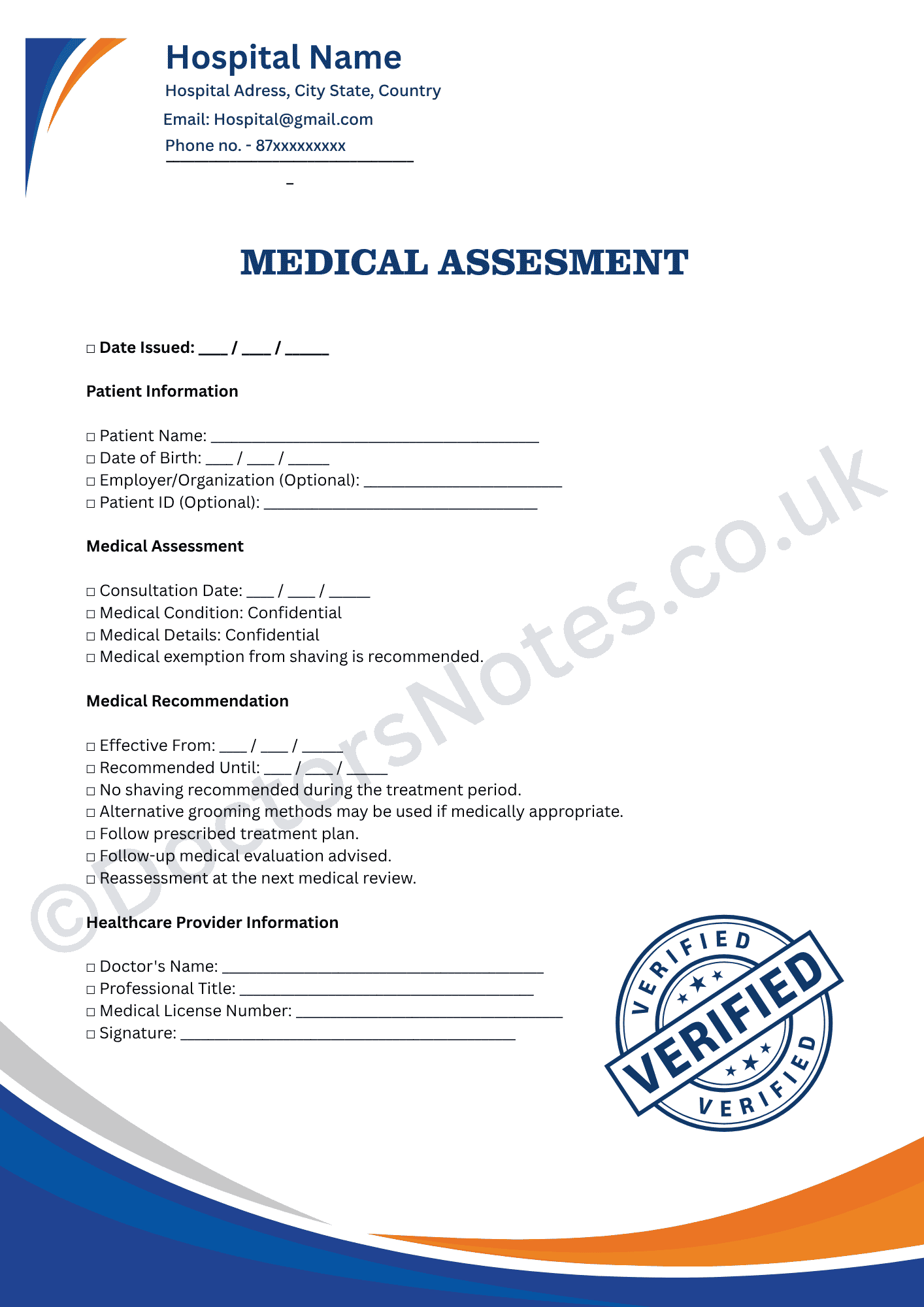
After your consultation, and where clinically appropriate, the healthcare professional may provide documentation that reflects your skin condition and the recommendations made during your assessment.
Depending on your individual circumstances, you may receive:
- Doctor’s Excuse for Not Shaving or Medical Certificate.
- Confirmation that your skin condition has been medically evaluated.
- A recommendation to temporarily avoid shaving while your skin heals.
- Guidance on maintaining a neatly trimmed beard instead of close shaving, where appropriate.
- A Fit Note (where applicable) if your condition is also affecting your ability to perform certain workplace duties.
- Advice on skin care, treatment, and follow-up.
- Prescription recommendations where medication is clinically appropriate.
- Referral to a dermatologist or another specialist if further assessment is needed.
The type of documentation issued depends entirely on the healthcare professional’s assessment and the medical evidence available during your consultation.
Important Legal Information About a Doctor’s Excuse for Not Shaving
A Doctor’s Excuse for Not Shaving is an official medical document and should only be issued after an appropriate clinical assessment by a licensed healthcare professional.
Before requesting medical documentation, it is important to understand the following:
- A shaving exemption is issued only when there is a genuine medical reason for avoiding or limiting shaving.
- Booking an online consultation does not guarantee that a shaving exemption or medical certificate will be provided.
- Healthcare professionals must base their decision on independent clinical judgement and your medical condition.
- The certificate supports a medical recommendation but does not automatically override an employer’s, school’s, military organisation’s, or other institution’s grooming policies. Each organisation decides how medical exemptions are managed under its own procedures.
- If your organisation requests additional medical evidence, further assessment or specialist documentation may be required.
- Medical certificates generally explain the recommended restriction or review period without including unnecessary personal medical details unless required or authorised.
- Your consultation, photographs, and medical information are treated as confidential and handled in accordance with applicable healthcare privacy and data protection laws.
- Providing accurate information and clear photographs (when requested) helps ensure that any medical documentation reflects your actual condition.
Important: If you develop rapidly spreading redness, significant swelling, pus, severe facial pain, fever, or signs of a serious skin infection, seek prompt in-person medical care rather than relying solely on an online consultation.
FAQ
Can I get a Doctor’s Excuse for Not Shaving online?
Yes. You can arrange an online consultation with a licensed healthcare professional. If your skin condition is assessed and a shaving restriction is considered medically appropriate, documentation may be issued.
What medical conditions commonly qualify for a shaving exemption?
Conditions may include pseudofolliculitis barbae (razor bumps), folliculitis, eczema, psoriasis, severe razor burn, active skin infections, recovery after facial surgery, or other skin conditions where shaving may delay healing or worsen symptoms.
Does a doctor’s note permanently excuse me from shaving?
Not necessarily. Some conditions require only a short recovery period, while others may need ongoing review. The duration depends on your diagnosis, response to treatment, and the healthcare professional’s assessment.
Will my employer have to accept the doctor’s note?
A medical certificate provides professional medical evidence, but each employer or organisation has its own policies regarding grooming standards and medical accommodations. You should check your workplace’s specific procedures.
Can I trim my beard instead of shaving?
In some cases, yes. Depending on your condition, the healthcare professional may recommend keeping facial hair neatly trimmed rather than completely avoiding all grooming. The advice will depend on your individual assessment.
Can medication help me shave again in the future?
For many people, appropriate treatment and improved shaving techniques help control symptoms. Once the skin has recovered, some individuals can gradually return to shaving under medical guidance.
Can my shaving exemption be extended?
Yes. If your skin has not healed by the end of the original review period, you may arrange a follow-up consultation. Updated documentation may be issued if it remains clinically appropriate.
Is my consultation confidential?
Yes. Your consultation, uploaded photographs, and medical records are handled confidentially and protected under applicable healthcare privacy and data protection requirements.
Can I use this certificate for military or security service requirements?
Some organisations may consider medical shaving exemptions, but acceptance depends on their internal medical and grooming policies. A doctor’s note supports your request but does not guarantee approval.
When should I seek urgent medical care?
Seek prompt medical attention if you experience:
- Rapidly worsening facial swelling.
- Severe pain.
- Fever with skin infection.
- Pus or spreading redness.
- Difficulty opening your mouth or swallowing because of facial swelling.
- Any symptoms suggesting a serious skin or soft tissue infection.
Why Choose Our Online Consultation Service?
- Convenient consultations without visiting a clinic.
- Access to licensed healthcare professionals.
- Confidential assessment of skin and shaving-related conditions.
- Ability to upload photographs for clinical review where appropriate.
- Medical certificates issued only when clinically justified.
- Personalised treatment and skin care recommendations.
- Guidance on managing workplace or organisational documentation requirements.
Conclusion
Shaving should not come at the expense of your skin health. If shaving causes significant irritation, recurring razor bumps, infection, or worsens an underlying skin condition, seeking medical advice can help you receive appropriate treatment while protecting your skin during recovery.
A Doctor’s Excuse for Not Shaving provides medical documentation following a professional assessment and may support requests for temporary grooming exemptions where a legitimate medical reason exists. Whether the exemption is accepted remains subject to your employer’s, educational institution’s, or organisation’s own policies.
Through an online consultation, you can discuss your symptoms, receive tailored medical advice, and obtain appropriate documentation where clinically suitable. The primary goal is to promote healthy skin, effective treatment, and a safe return to your normal grooming routine when your condition has improved.



Reviews
There are no reviews yet.