



Asthma is a long-term respiratory condition that affects the airways, making breathing difficult when symptoms flare up. While many people manage their asthma successfully with medication, flare-ups can sometimes become severe enough to interfere with work, education, travel, or everyday activities.
A Doctor’s Note for Asthma is a medical certificate issued after a healthcare professional evaluates your symptoms, reviews your medical history, and determines whether your condition requires temporary leave, workplace adjustments, or further treatment.
Whether your asthma has worsened unexpectedly, you’ve recently experienced an asthma attack, or your symptoms are preventing you from performing your usual duties safely, obtaining appropriate medical documentation can help explain your absence and support your recovery.
This guide explains everything you need to know about obtaining a Doctor’s Note for Asthma, including when you may need one, how online consultations work, treatment options, prescription information, certificate validity, legal considerations, and frequently asked questions.
Related Post:
- Doctors Note for Pneumonia
- Doctors Note for Upper Respiratory Infection
- Doctors Note for Shortness of Breath
- Doctors Note for Work Absence
What Is a Doctor’s Note for Asthma?
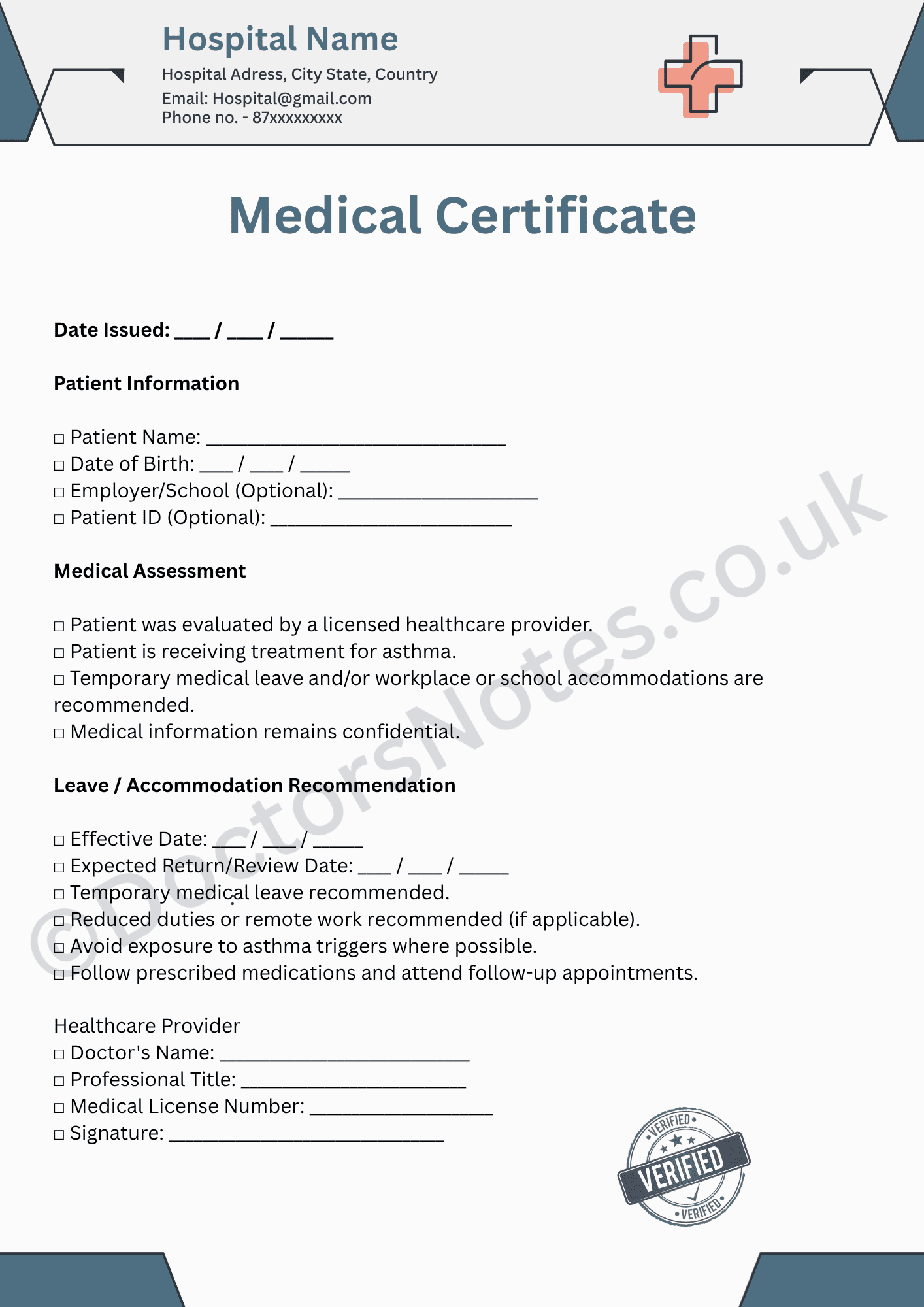
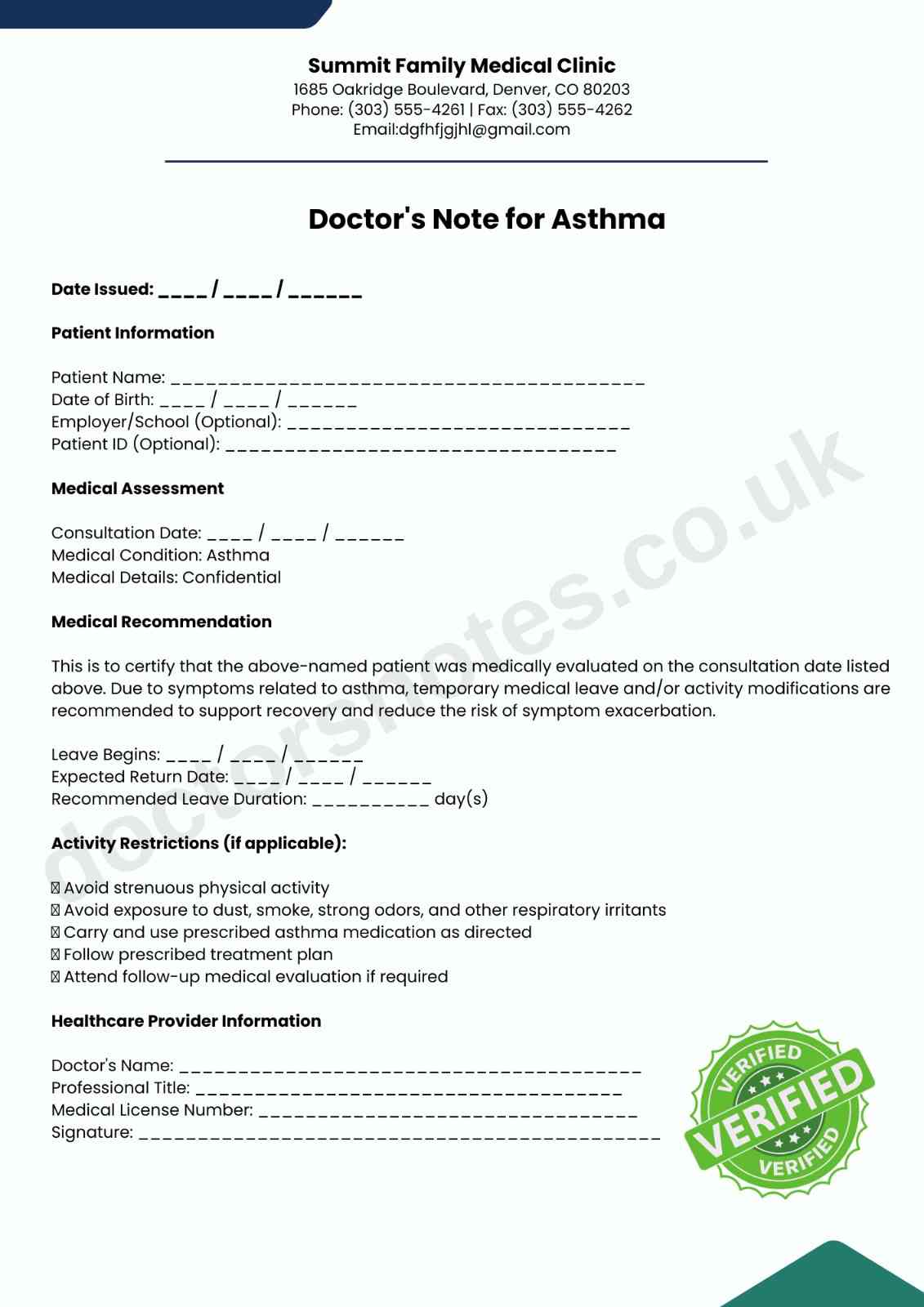
A Doctor’s Note for Asthma is an official medical document provided following a clinical assessment by a licensed healthcare professional.
It confirms that your respiratory condition has been assessed and, where medically appropriate, explains how your asthma is affecting your ability to carry out normal activities.
Depending on your assessment, the certificate may indicate that:
- You require temporary time away from work or education.
- Your symptoms limit your ability to perform certain duties.
- Workplace adjustments may assist your recovery.
- Follow-up medical care is recommended.
- Your asthma requires ongoing monitoring or treatment.
Every medical certificate is based on an individual clinical assessment rather than the diagnosis alone.
Understanding Asthma
Asthma is a condition in which the airways become inflamed and narrow, making it harder for air to move in and out of the lungs.
Symptoms can vary from mild to severe and may come and go over time.
Common asthma symptoms include:
- Wheezing.
- Shortness of breath.
- Chest tightness.
- Persistent coughing.
- Difficulty breathing during exercise.
- Night-time coughing.
- Increased symptoms during cold weather or allergy seasons.
For some individuals, symptoms are occasional. For others, asthma may significantly interfere with daily life if not well controlled.
Common Asthma Triggers
One of the most important parts of asthma management is identifying what triggers your symptoms.
Common triggers include:
Environmental Allergens
- Pollen.
- Dust mites.
- Pet dander.
- Mould.
Respiratory Infections
- Common cold.
- Influenza.
- Viral respiratory illnesses.
Workplace Exposure
- Dust.
- Smoke.
- Strong chemicals.
- Cleaning products.
- Paint fumes.
- Industrial particles.
Lifestyle and Physical Factors
- Exercise.
- Cold air.
- Tobacco smoke.
- Air pollution.
- Emotional stress.
During your consultation, the healthcare professional may discuss possible triggers that could be contributing to your symptoms.
When Might You Need a Doctor’s Note for Asthma?
A doctor’s note may be appropriate when asthma symptoms begin affecting your normal responsibilities.
Examples include:
- An asthma flare-up that prevents you from working.
- Recovery after an asthma attack.
- Symptoms affecting concentration due to breathing difficulty.
- Night-time asthma causing significant daytime fatigue.
- Workplace exposure making symptoms worse.
- Medical appointments or treatment affecting attendance.
- Temporary adjustments being needed while symptoms improve.
The healthcare professional will assess how your asthma affects your ability to perform your usual activities safely.
What Happens During an Asthma Consultation?
An asthma consultation focuses on understanding your symptoms, current treatment, and overall asthma control.
The healthcare professional may ask about:
- When your symptoms started or worsened.
- How often you experience asthma symptoms.
- Whether you have recently had an asthma attack.
- Current inhalers or asthma medications.
- Any recent hospital or emergency treatment.
- Known asthma triggers.
- Smoking history, if relevant.
- How asthma affects your work, education, exercise, or sleep.
- Existing medical conditions.
If your symptoms suggest poorly controlled asthma or another respiratory condition, additional medical assessment or follow-up may be recommended.
When Might a Doctor Recommend Time Away From Work?
Time away from work is not recommended for everyone with asthma. The decision depends on how your symptoms affect your ability to work safely and whether adjustments could reduce exposure to triggers.
A healthcare professional may consider:
- Severity of breathlessness.
- Frequency of asthma symptoms.
- Recovery following an asthma attack.
- Whether your work involves physical exertion.
- Exposure to dust, smoke, fumes, or chemicals.
- Whether you operate machinery or perform safety-critical tasks.
- Response to current treatment.
In some cases, workplace adjustments may be recommended instead of complete absence, such as:
- Temporary relocation away from irritants.
- Modified duties.
- Reduced physical activity.
- Flexible working arrangements.
- Short-term recovery leave.
Recommendations are always based on your individual health assessment and the nature of your work.
Prescription Information for Asthma
Asthma treatment aims to control symptoms, reduce inflammation, and help prevent future flare-ups.
During your consultation, the healthcare professional may review:
- Your current inhaler technique.
- Whether your asthma appears well controlled.
- How often you experience symptoms.
- Any recent worsening of your condition.
- Whether your current treatment remains effective.
Can Asthma Medication Be Prescribed?
If clinically appropriate, the healthcare professional may recommend or prescribe treatment based on your assessment.
Depending on your needs, this may include:
- Reliever inhalers for sudden symptoms.
- Preventer inhalers for long-term asthma control.
- Review or adjustment of your existing asthma medication.
- Advice on avoiding asthma triggers.
- Referral for further respiratory assessment if needed.
Important points to remember:
- Medication is prescribed only when medically appropriate.
- Existing treatment may be adjusted rather than replaced.
- Some patients require additional investigations before treatment changes are made.
- Always tell the healthcare professional about allergies, pregnancy, other medical conditions, and any medicines you currently take.
If your asthma symptoms become severe, you should seek emergency medical attention rather than relying on an online consultation.
How Long Is a Doctor’s Note for Asthma Valid?
The validity period of a Doctor’s Note for Asthma depends on the severity of your symptoms, your response to treatment, and how asthma affects your ability to carry out normal activities.
Typical Review Periods
| Asthma Situation | Typical Review Period* |
|---|---|
| Mild asthma flare-up | 1–5 days |
| Moderate symptoms affecting work | 1–2 weeks |
| Recovery after an asthma attack | 1–4 weeks |
| Poorly controlled asthma requiring treatment review | 2–6 weeks |
| Ongoing asthma management with workplace adjustments | Individual review based on clinical assessment |
*These timeframes are general examples only. The duration of any medical certificate is decided by the healthcare professional after assessing your individual circumstances.
Factors That May Affect the Length of Your Medical Certificate
When deciding how long a doctor’s note should remain valid, the healthcare professional may consider:
- The severity of your asthma symptoms.
- Whether you have recently experienced an asthma attack.
- Your response to medication.
- Whether your symptoms are improving.
- The type of work or study you undertake.
- Exposure to dust, smoke, chemicals, or allergens in your environment.
- Whether temporary workplace adjustments could support your recovery.
- Whether further respiratory review is required.
If your symptoms continue beyond the original certificate period, you may require a follow-up consultation. If medically appropriate, an updated doctor’s note may be issued following reassessment.
Living Well With Asthma
Managing asthma involves more than treating symptoms when they occur. Good long-term asthma control can help reduce flare-ups and minimise disruption to your work and personal life.
Healthcare professionals often recommend:
- Taking prescribed medication exactly as directed.
- Carrying your reliever inhaler when advised.
- Attending regular asthma reviews.
- Identifying and avoiding personal triggers.
- Following your asthma action plan if you have one.
- Seeking medical advice if symptoms become more frequent or severe.
Keeping your asthma well managed may reduce the need for future sickness absence and help you continue your normal activities with greater confidence.
What Documents May Be Issued?
Following your consultation, and where clinically appropriate, the healthcare professional may provide medical documentation based on your asthma symptoms, clinical assessment, and the reason you require evidence.
Possible documents may include:
- Doctor’s Note for Asthma or Medical Certificate.
- Confirmation that your asthma has been medically assessed.
- Fit Note (where applicable) confirming whether you are fit for work or require temporary adjustments.
- Recommendations for modified duties or reduced exposure to asthma triggers in the workplace.
- Return-to-work guidance following an asthma flare-up or hospital treatment.
- An updated asthma management plan or treatment advice where appropriate.
- Prescription information, if medication is clinically indicated.
- Referral recommendations for respiratory specialists, allergy testing, or further investigations if required.
The documentation you receive will depend on your individual assessment and the purpose for which medical evidence is needed.
Can a Doctor Recommend Reduced Physical Activity for Asthma?
Important Legal Information About Doctor’s Note for Asthma
A Doctor’s Note for Asthma is an official medical document that should only be issued after a licensed healthcare professional has completed an appropriate clinical assessment.
Important information to understand:
- A medical certificate confirms that your respiratory condition has been assessed at the time of consultation.
- Booking an online consultation does not guarantee that a doctor’s note will be issued.
- Healthcare professionals must use independent clinical judgement when deciding whether medical leave or workplace adjustments are medically appropriate.
- Asthma is a recognised long-term medical condition, but not every asthma flare-up requires time away from work or study.
- Employers, schools, universities, insurers, and other organisations may have their own requirements regarding the acceptance of medical certificates.
- If your work exposes you to dust, fumes, chemicals, smoke, or other respiratory irritants, additional occupational health guidance may be appropriate.
- Medical certificates generally focus on your fitness for work or recommended restrictions rather than providing detailed clinical information unless required.
- Your medical records and consultation details remain confidential and are protected under applicable healthcare privacy and data protection laws.
- Providing accurate information during your consultation helps ensure that any medical documentation reflects your actual health condition.Emergency Advice: If you experience severe shortness of breath, blue lips or fingers, difficulty speaking because of breathlessness, chest tightness that is rapidly worsening, or your reliever inhaler is not helping, seek emergency medical care immediately. An online doctor’s note consultation is not a substitute for emergency treatment.
FAQ
Can I get a Doctor’s Note for Asthma online?
Yes. You can arrange an online consultation with a licensed healthcare professional. If your asthma symptoms are assessed as affecting your ability to work, study, or carry out normal activities, a doctor’s note may be issued where clinically appropriate.
Can asthma be a valid reason for sick leave?
Yes. An asthma flare-up or poorly controlled asthma may temporarily affect your ability to work safely or perform your normal duties. The need for sick leave depends on the severity of your symptoms and the healthcare professional’s assessment.
How long can a Doctor’s Note for Asthma be issued?
There is no standard duration. The length of the certificate depends on factors such as symptom severity, recovery, treatment response, and the type of work you perform.
Can I receive an asthma inhaler during an online consultation?
If clinically appropriate, the healthcare professional may recommend or prescribe asthma medication in accordance with applicable prescribing regulations. Not every consultation results in a prescription.
Will my employer know I have asthma?
Not necessarily. Most medical certificates focus on whether you are fit for work or require adjustments rather than providing your diagnosis, unless disclosure is necessary or you have agreed to it.
Can I get a doctor’s note after an asthma attack?
Yes. If you have recently experienced an asthma attack and it affects your recovery or ability to work, a healthcare professional can assess your condition and determine whether medical documentation is appropriate.
Can my doctor’s note recommend workplace adjustments instead of time off?
Yes. Depending on your symptoms and job role, recommendations may include reduced physical activity, avoiding respiratory irritants, modified duties, or flexible working arrangements instead of complete absence.
Can my asthma doctor’s note be extended?
Yes. If your symptoms continue beyond the original certificate period, you can arrange a follow-up consultation. If clinically appropriate, updated documentation may be issued.
Is my consultation confidential?
Yes. Your consultation and medical information are confidential and handled according to applicable healthcare privacy and data protection requirements.
When should I seek urgent medical care instead of an online consultation?
Seek emergency medical attention if you have severe breathing difficulty, your inhaler is not relieving symptoms, you are struggling to speak because of breathlessness, or your condition is rapidly worsening.
Why Choose Our Online Consultation Service?
- Convenient online consultations without travelling.
- Access to licensed healthcare professionals.
- Secure and confidential appointments.
- Professional assessment of asthma symptoms.
- Medical certificates issued only where clinically appropriate.
- Personalised advice on symptom control and recovery.
- Guidance on workplace adjustments and return-to-work planning where appropriate.
Conclusion
Asthma can range from mild, well-controlled symptoms to flare-ups that temporarily affect your ability to work, study, or carry out everyday activities. Seeking prompt medical advice when symptoms worsen can help you manage your condition safely and reduce the risk of complications.
A Doctor’s Note for Asthma provides medical documentation following a professional assessment and may support workplace absence, temporary adjustments, or other legitimate situations where medical evidence is required.
With an online consultation, you can discuss your symptoms with a licensed healthcare professional, receive tailored medical advice, and obtain appropriate documentation where clinically suitable. The priority is helping you manage your asthma effectively while supporting a safe return to your normal routine.


Reviews
There are no reviews yet.