

Your shoulder plays a vital role in almost every daily movement—from lifting and carrying to driving, typing, reaching overhead, exercising, and performing work-related tasks. When a shoulder injury occurs, even simple activities can become painful or impossible. Whether the injury happened during sports, at work, in a road traffic accident, or from a fall at home, proper medical assessment is often necessary to support recovery and determine whether temporary work restrictions or time away from normal activities are appropriate.
A Doctor’s Note for Shoulder Injury is a professional medical document issued following an assessment by a qualified healthcare provider. It confirms that your shoulder condition has been evaluated and, where clinically appropriate, provides medical recommendations regarding work, education, or activity limitations.
Unlike a general absence note, this documentation focuses on how your shoulder injury affects your functional movement, helping employers, schools, universities, insurers, or other organisations understand why certain activities may need to be modified while you recover.
Related Post:
- Doctors Note for Torn Muscle
- Doctors Note for Joint Pain
- Doctors Note for Breast Surgery Recovery
- Doctors Note for Back Injury
Why You May Need a Doctor’s Note for a Shoulder Injury
A shoulder injury can interfere with much more than physical labour. Even office-based work may become difficult when shoulder movement causes pain or limits arm function.
Medical documentation may be requested if you need:
- Sick leave from work
- Modified job responsibilities
- Light-duty assignments
- Time away from university or college
- School absence documentation
- Support for insurance claims
- Medical evidence for occupational health
- Fitness-for-work assessments
- Return-to-work planning
A Medical Certificate for Shoulder Injury provides independent medical evidence following an appropriate clinical evaluation.
Common Causes of Shoulder Injuries
Shoulder problems can develop suddenly after trauma or gradually because of repetitive strain.
Sudden Accidents
Acute injuries may occur following:
- Falls
- Sporting accidents
- Road traffic collisions
- Heavy lifting
- Workplace incidents
Repetitive Overuse
Repeated shoulder movements over weeks or months may cause irritation of muscles, tendons, or joints.
Examples include:
- Repetitive lifting
- Warehouse work
- Painting
- Construction work
- Overhead reaching
- Assembly line tasks
Exercise and Sports
Weightlifting, swimming, tennis, cricket, rugby, and other sports can place significant stress on the shoulder.
Degenerative Conditions
Age-related wear and tear can also contribute to shoulder pain and reduced mobility.
Signs and Symptoms of a Shoulder Injury
Symptoms vary depending on the type and severity of the injury.
Common symptoms include:
Shoulder Pain
Pain may occur:
- During movement
- At rest
- While sleeping
- When lifting objects
- When reaching overhead
Limited Range of Motion
Some people find it difficult to:
- Raise the arm
- Reach behind the back
- Lift objects
- Push or pull
Weakness
Reduced shoulder strength may affect everyday tasks.
Swelling or Tenderness
Inflammation may develop following injury.
Other symptoms may include:
- Stiffness
- Bruising
- Clicking sensations
- Muscle spasms
- Difficulty dressing
- Pain while driving
How a Shoulder Injury Can Affect Your Job
Different occupations place different demands on the shoulder.
Physically Demanding Roles
Employees may struggle with:
- Manual handling
- Carrying equipment
- Loading materials
- Operating machinery
- Climbing ladders
Office-Based Jobs
Even desk work can become difficult due to:
- Keyboard use
- Mouse movements
- Prolonged sitting
- Writing
- Filing documents
Customer-Facing Roles
Standing for extended periods or repetitive reaching may increase discomfort.
A Doctor’s Note for Shoulder Injury for Work may recommend temporary adjustments depending on your functional abilities.
Shoulder Injury and Workplace Accommodations
In some cases, complete absence from work is not necessary. Instead, temporary adjustments may allow safe continuation of employment.
Examples include:
- Light-duty work
- Reduced lifting
- Avoiding overhead tasks
- Flexible working hours
- Ergonomic workstation adjustments
- Temporary remote working where suitable
- More frequent rest breaks
Accommodation decisions remain the responsibility of your employer after considering medical recommendations and workplace requirements.
Doctor’s Note for School, College, or University
Students may also experience significant disruption after a shoulder injury.
Difficulties may include:
- Carrying books or equipment
- Writing during examinations
- Participating in laboratory sessions
- Completing practical assessments
- Attending sports activities
- Travelling between classrooms
Medical documentation may support requests for:
- Academic absence
- Assignment extensions
- Alternative examination arrangements
- Temporary participation adjustments
Each educational institution applies its own academic policies.
Medical Assessment for a Shoulder Injury
A doctor’s note is issued only after an appropriate clinical assessment.
During your consultation, the healthcare professional may ask about:
- How the injury occurred
- When symptoms started
- Pain severity
- Arm movement limitations
- Previous shoulder problems
- Occupation or educational activities
- Current treatment
The clinician may also assess:
- Shoulder mobility
- Muscle strength
- Pain during movement
- Functional limitations
- Signs of swelling or instability
Additional investigations such as imaging may be recommended if clinically necessary.
What Information Can Be Included in a Doctor’s Note for Shoulder Injury?
The contents depend on your assessment and the reason documentation is required.
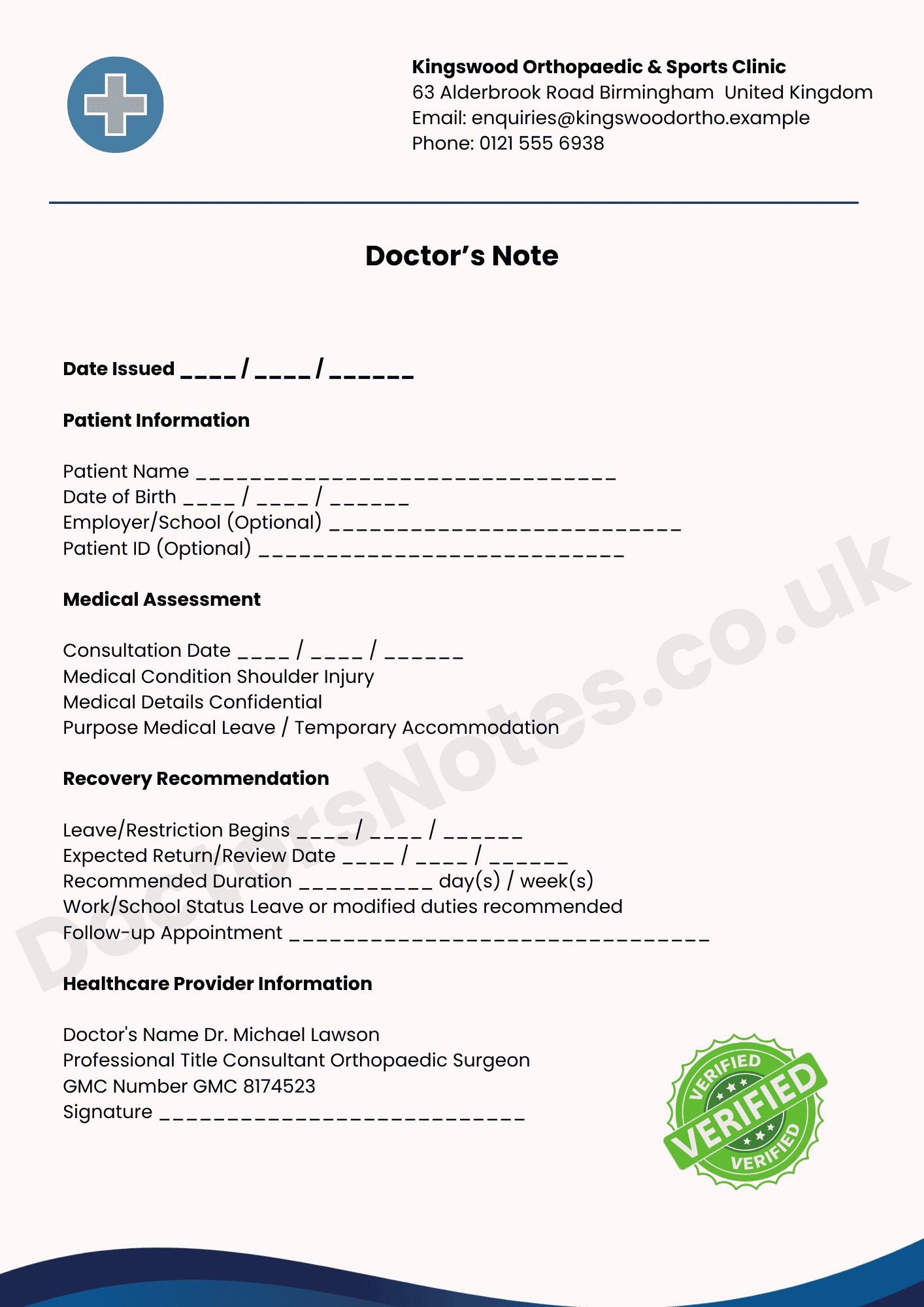
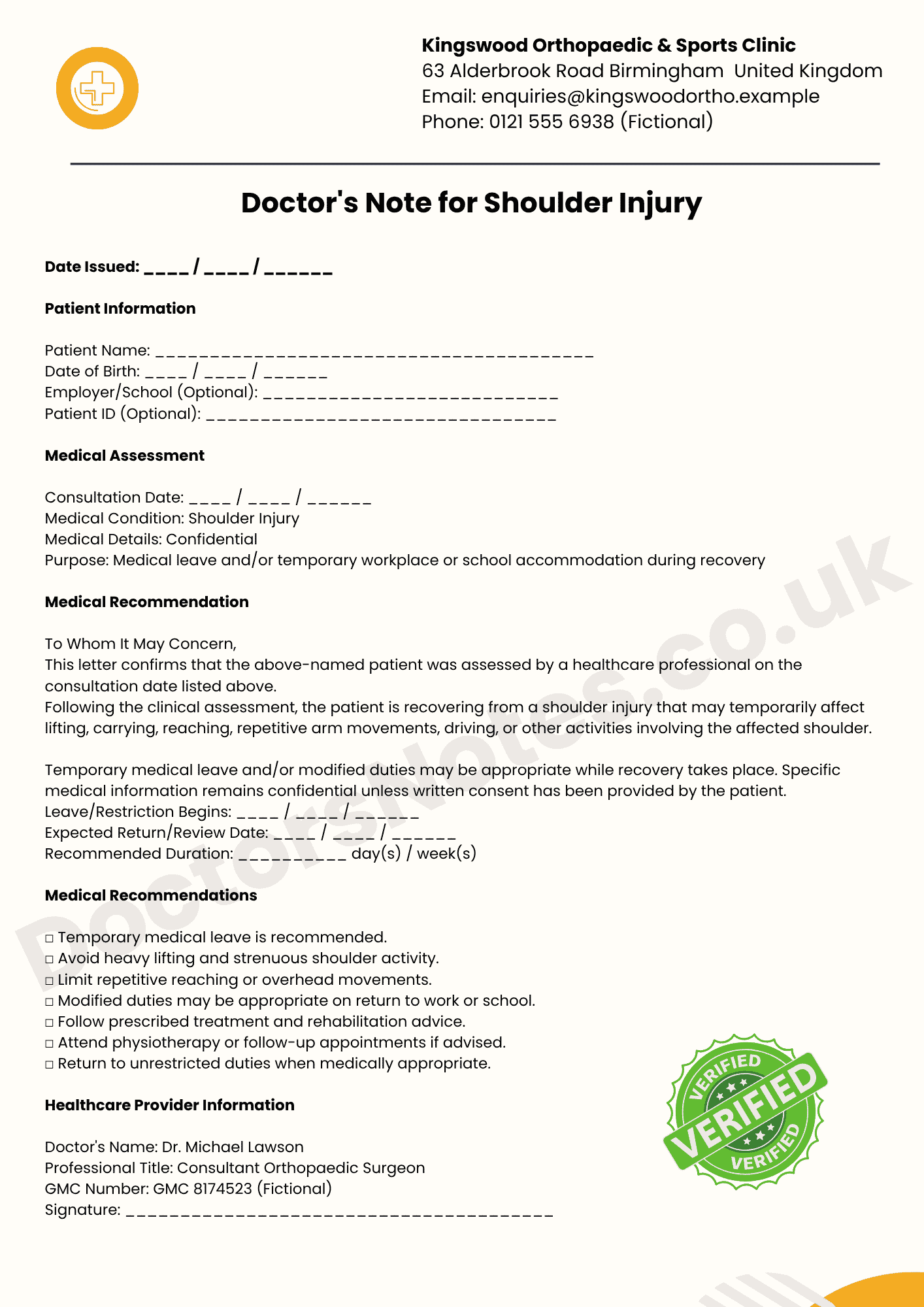
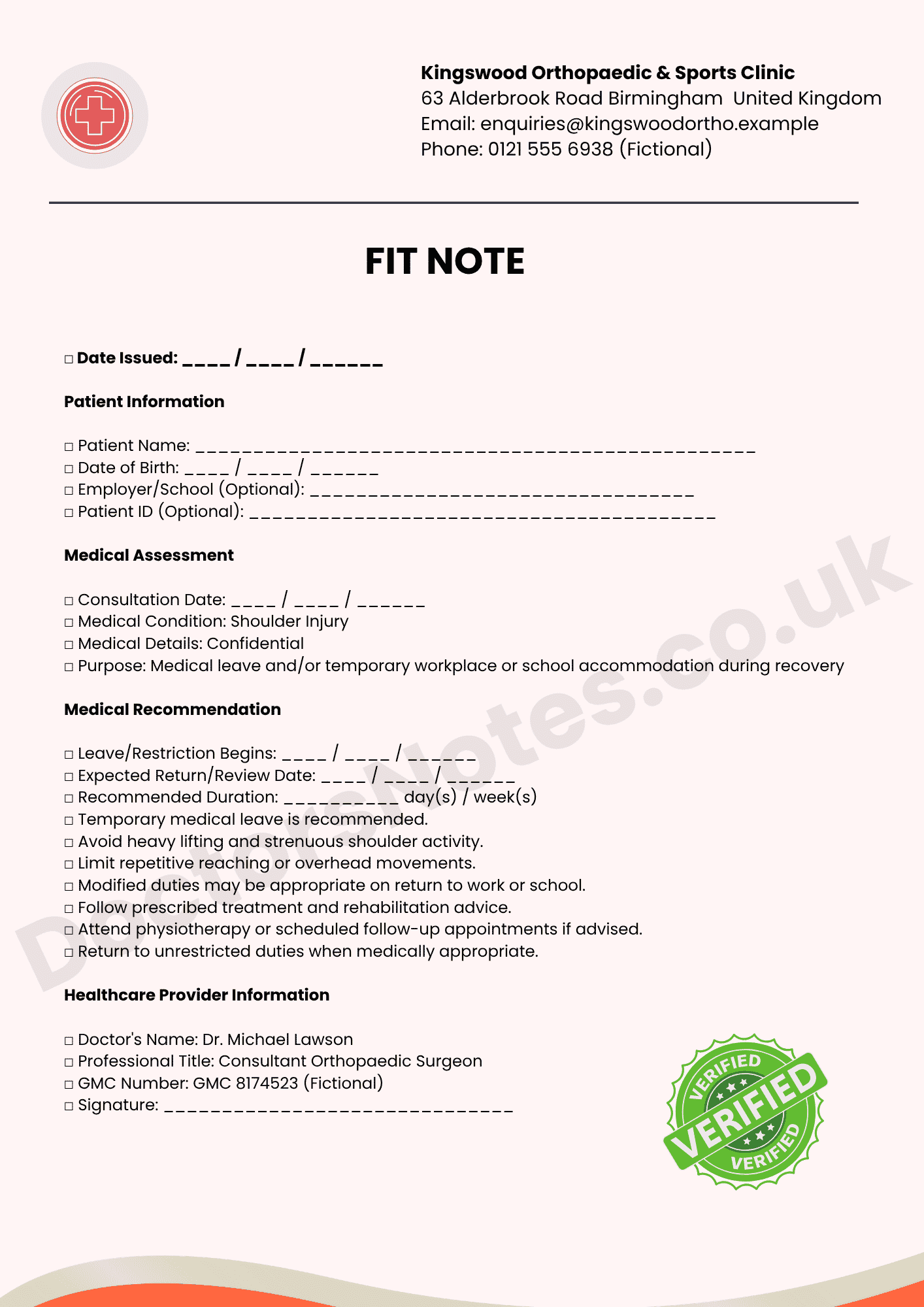
A shoulder injury doctor’s note may include:
| Information Included | Purpose |
|---|---|
| Patient identification | Confirms who received the assessment |
| Consultation date | Records the medical evaluation |
| Confirmation of clinical assessment | Verifies examination by a healthcare professional |
| Functional limitations | Explains movement restrictions where appropriate |
| Work or study recommendations | Provides temporary activity guidance if clinically suitable |
| Review period | Indicates whether reassessment may be needed |
| Healthcare provider details | Confirms the issuing clinician |
Medical documentation focuses on functional ability rather than unnecessary personal health information.
Recovery From a Shoulder Injury
Recovery depends on several factors, including:
- Type of injury
- Severity
- Age
- General health
- Treatment plan
- Rehabilitation progress
Some minor shoulder injuries improve within a few weeks, while more significant injuries involving ligaments, tendons, or fractures may require several months of rehabilitation.
Following medical advice and prescribed exercises can support recovery.
Treatment Options for Shoulder Injuries
Treatment varies depending on the diagnosis.
A healthcare professional may recommend:
- Rest
- Activity modification
- Ice application during the early stage
- Pain management
- Physiotherapy
- Rehabilitation exercises
- Temporary use of a sling where appropriate
- Specialist referral if necessary
Treatment plans are always individualised according to clinical findings.
Can You Return to Work With a Shoulder Injury?
Many people can return to work before full recovery if suitable adjustments are available.
Factors considered include:
- Job responsibilities
- Pain levels
- Ability to lift
- Arm mobility
- Workplace safety
- Risk of worsening the injury
Returning too early to physically demanding work may delay healing or increase the likelihood of reinjury.
Legal and Workplace Considerations
Employers often request medical evidence when an injury affects an employee’s ability to perform their normal duties.
Depending on the country and workplace, employers may consider:
- Occupational health advice
- Temporary work restrictions
- Reasonable workplace adjustments
- Return-to-work planning
- Health and safety responsibilities
For UK guidance regarding workplace health and employee rights, individuals can consult GOV.UK Workplace Health Guidance.
Medical recommendations assist discussions but do not automatically determine workplace decisions.
Can You Request a Shoulder Injury Doctor’s Note Online?
Yes, where clinically appropriate.
An online consultation allows a qualified healthcare professional to:
- Review your symptoms
- Discuss how the injury occurred
- Assess functional limitations
- Provide medical advice
- Determine whether documentation is appropriate
Some injuries may require an in-person examination, imaging studies, or specialist referral before final recommendations can be made.
Why People Choose an Online Consultation
Faster Access to Medical Advice
You can discuss your symptoms without unnecessary travel, particularly if movement is painful.
Supports Workplace Communication
Medical documentation helps explain temporary physical limitations to employers.
Appropriate for Academic Needs
Students can request documentation when shoulder injuries affect attendance or assessments.
Professionally Prepared Medical Evidence
Documentation is based on clinical assessment rather than self-reported information alone.
Frequently Asked Questions
Can I request a Doctor’s Note for Shoulder Injury online?
Yes. Following an appropriate medical assessment, a qualified healthcare professional may issue documentation if clinically appropriate.
Can a shoulder injury require time off work?
Yes. Depending on your symptoms and job duties, temporary absence or modified work may be medically recommended.
Will the note explain my work restrictions?
Where appropriate, the documentation may describe functional limitations rather than detailed medical diagnoses.
Can I use this note for university or college?
Many educational institutions accept medical documentation for illness or injury, although each follows its own policies.
How long does shoulder recovery usually take?
Recovery varies greatly depending on the nature and severity of the injury. Your healthcare professional can provide advice based on your individual assessment.
Will confidential medical information be included?
Only information relevant to your work, education, or accommodation request is generally included while protecting your privacy.
Can I continue exercising with a shoulder injury?
Activity recommendations depend on your diagnosis. Always follow professional medical advice before returning to exercise.
What if my symptoms become worse?
Seek further medical assessment promptly if pain, weakness, swelling, or movement limitations increase.
Request Your Doctor’s Note for Shoulder Injury Today
A shoulder injury can significantly affect your ability to work, study, drive, exercise, and manage everyday responsibilities. Having clear medical documentation allows you to communicate your condition confidently while focusing on safe recovery rather than unnecessary administrative stress.
A Doctor’s Note for Shoulder Injury provides professionally prepared medical evidence following an appropriate healthcare assessment and may support workplace discussions, academic absence requests, occupational health reviews, or temporary activity modifications where clinically appropriate.
Our online consultation service enables you to consult with a qualified healthcare professional, receive personalised medical guidance, and determine whether shoulder injury documentation is suitable—helping you recover safely while meeting your work, education, or personal obligations.


Reviews
There are no reviews yet.