
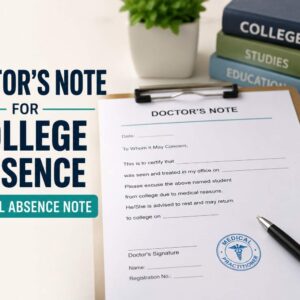

Missing an important examination because of illness or an unexpected medical condition can be stressful. Whether you are preparing for university finals, college assessments, professional certification exams, or other academic evaluations, your health should always come first. Many educational institutions understand that genuine medical issues can affect exam performance and therefore have procedures that allow students to request an exam deferral supported by appropriate medical evidence.
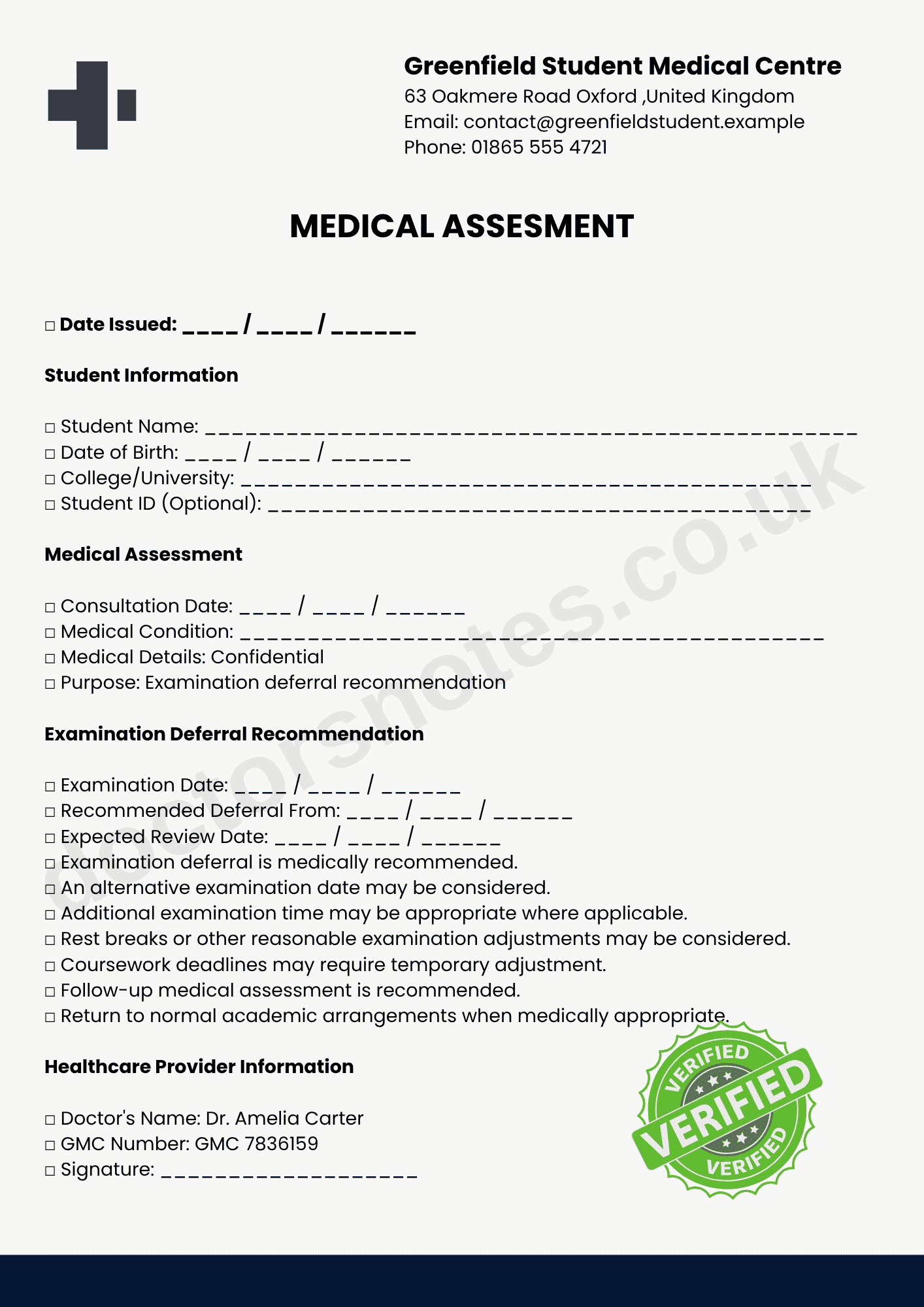
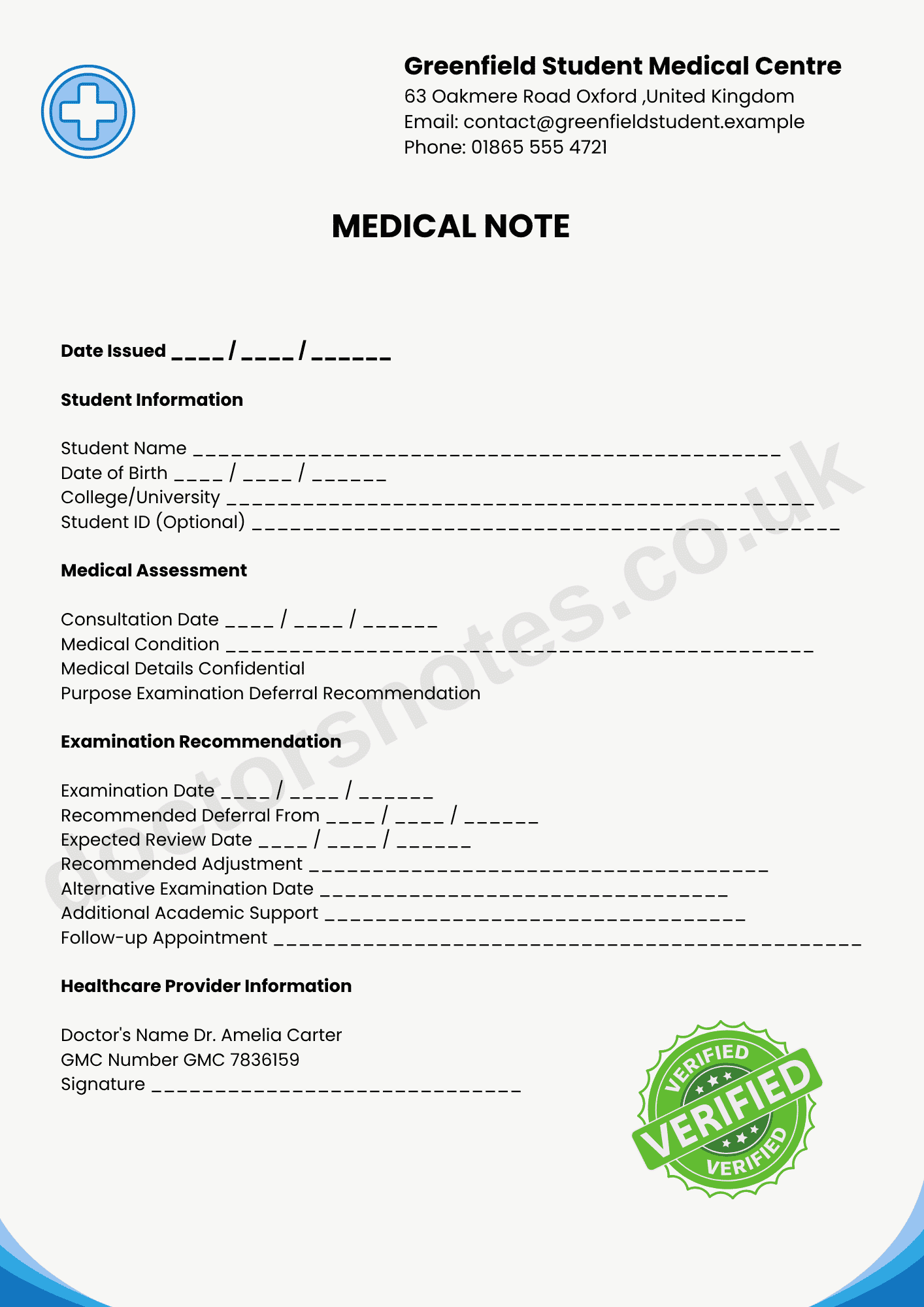
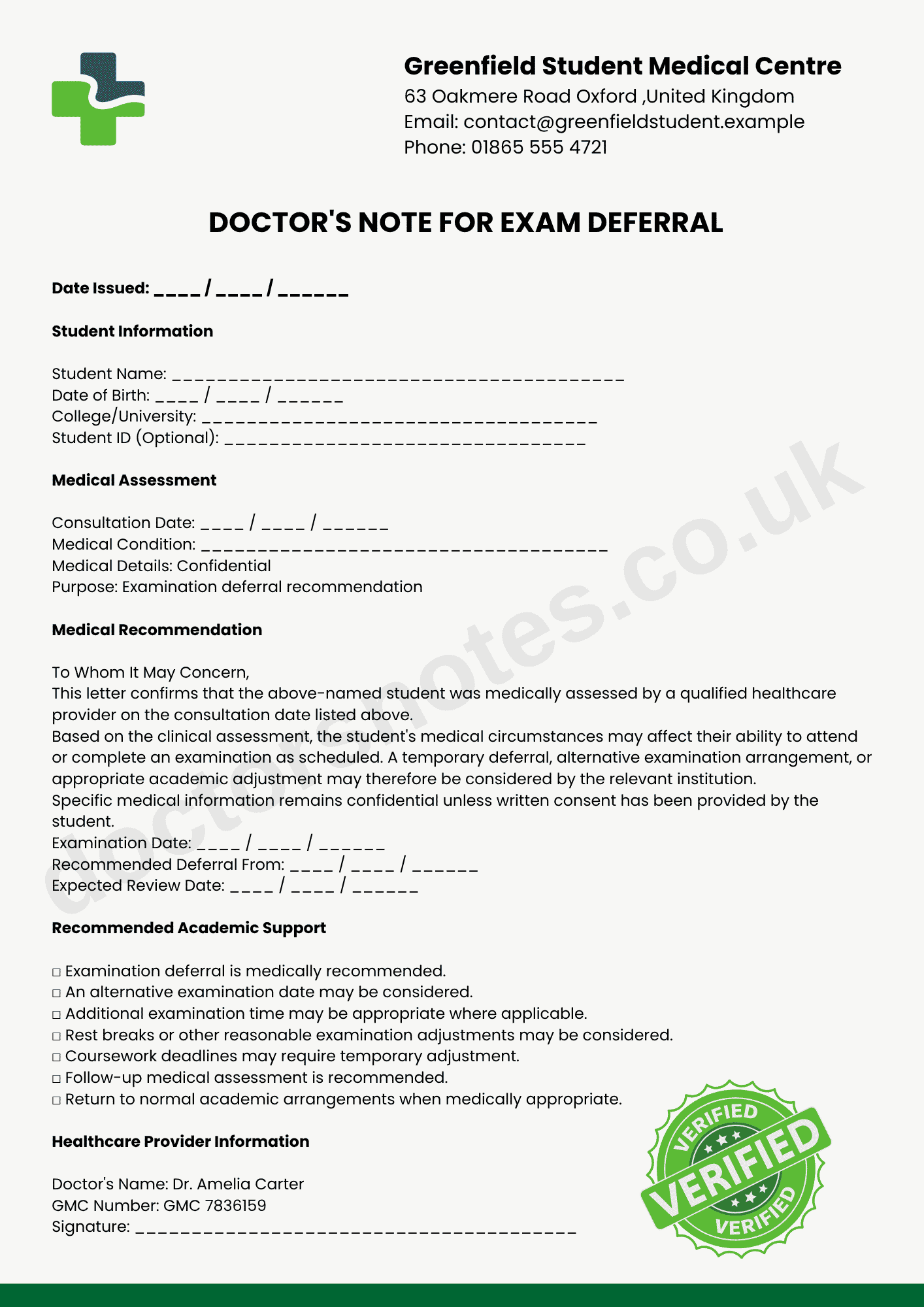
A Doctor’s Note for Exam Deferral is a medical document issued after a healthcare assessment confirming that your health condition affected your ability to sit an examination safely or perform at your normal academic level during a specific period.
Rather than simply confirming that you were ill, this documentation helps explain how your medical condition may have impacted your ability to attend, complete, or fairly participate in an examination. It can be submitted as part of an application for deferred assessment, mitigating circumstances, or academic consideration, depending on your institution’s policies.
Related Post:
What Is an Exam Deferral?
An exam deferral allows a student to complete an assessment at a later approved date because exceptional circumstances prevented them from attending or performing fairly during the original examination.
Universities, colleges, and examination boards may consider a deferral when a student’s health is significantly affected by:
- Sudden illness
- Acute injury
- Hospital treatment
- Medical emergencies
- Worsening of an existing medical condition
- Other health issues supported by appropriate evidence
Approval of a deferred examination is always decided by the educational institution—not the healthcare provider.
Why You May Need a Doctor’s Note for an Exam Deferral
Educational institutions generally require independent medical evidence before considering changes to assessment schedules.
A Medical Certificate for Exam Deferral may support applications involving:
- Missed examinations
- Inability to complete an exam
- Severe illness during assessment
- Deferred university examinations
- College examination postponement
- Professional licensing exams
- Practical examinations
- Clinical assessments
- Coursework linked to examination attendance
Medical documentation helps institutions understand that your request is based on a genuine health concern rather than personal preference.
Medical Situations That May Affect Examination Performance
Health conditions vary widely, and not every illness affects students in the same way.
Examples of situations that may interfere with examination performance include:
Infectious Illness
Conditions that cause fever, weakness, vomiting, or require isolation.
Examples include:
- Influenza
- COVID-19
- Gastroenteritis
- Viral infections
- Severe throat infections
Physical Injuries
Unexpected injuries may prevent writing, travelling, or concentrating.
Examples include:
- Broken bones
- Wrist injuries
- Head injuries
- Severe sprains
Acute Medical Conditions
Certain medical problems develop suddenly and may require immediate attention.
Examples include:
- Severe migraine
- Allergic reactions
- Food poisoning
- Dehydration
Chronic Health Conditions
Existing medical conditions sometimes worsen unexpectedly.
Examples include:
- Endometriosis
- Fibromyalgia
- Asthma flare-ups
- Autoimmune disorders
Every request should be assessed individually by a qualified healthcare professional.
How Illness Can Affect Examination Performance
Academic examinations require physical and mental readiness. Even when a student is present, illness may significantly reduce performance.
Medical conditions may affect:
Concentration
Symptoms such as fever, pain, dizziness, or fatigue can reduce focus.
Memory and Cognitive Function
Some illnesses temporarily affect processing speed, recall, and decision-making.
Physical Endurance
Long examination sessions may become difficult when experiencing weakness or discomfort.
Ability to Travel
Some medical conditions make travelling to an examination venue unsafe or impractical.
Communication and Practical Skills
Health problems may affect practical examinations, presentations, or clinical assessments.
These factors may be considered when discussing your medical assessment.
Doctor’s Note for University Exam Deferral
Many universities have formal procedures for requesting deferred assessments when illness prevents students from completing examinations.
A Doctor’s Note for University Exam Deferral may support requests involving:
- Undergraduate examinations
- Postgraduate assessments
- Dissertation defences
- Clinical placements
- Laboratory examinations
- Practical assessments
- Final examinations
Each university decides whether medical evidence satisfies its own academic regulations.
Doctor’s Note for College Exam Postponement
Further education colleges and vocational institutions may also request medical documentation when students cannot attend scheduled assessments.
Documentation may assist applications relating to:
- Internal examinations
- Practical evaluations
- Coursework assessments
- Skills testing
- Training programme examinations
Students should always follow their institution’s reporting deadlines.
What Happens During the Medical Assessment?
Before any medical documentation is issued, a healthcare professional performs an appropriate clinical assessment.
The consultation may include discussion about:
- Your current symptoms
- When the illness began
- Whether symptoms affected the examination date
- Medical history where appropriate
- Treatment received
- Current recovery progress
The assessment allows the clinician to determine whether issuing medical documentation is clinically appropriate.
What Information Can Be Included in a Doctor’s Note for Exam Deferral?
Medical documentation is designed to confirm a healthcare assessment while respecting patient confidentiality.
A typical exam deferral note may include:
| Information Included | Why It Matters |
|---|---|
| Patient identification | Confirms who was medically assessed |
| Consultation date | Records the clinical review |
| Confirmation of assessment | Verifies evaluation by a healthcare professional |
| Functional impact | Explains how the condition affected examination ability where appropriate |
| Recommended recovery period | Indicates if temporary academic absence was advised |
| Healthcare provider information | Confirms the issuing clinician |
| Issue date | Establishes document validity |
The wording depends entirely on the outcome of the consultation.
Applying for Academic Consideration After Illness
Different institutions use different names for academic support processes.
You may encounter terms such as:
- Exam deferral
- Deferred assessment
- Extenuating circumstances
- Mitigating circumstances
- Special consideration
- Academic adjustment request
A doctor’s note supports your application, but the institution decides whether the request meets its academic regulations.
Can You Request a Doctor’s Note Online?
When illness makes travelling difficult, an online consultation may provide a convenient way to speak with a qualified healthcare professional.
Where clinically appropriate, the consultation may include:
- Review of symptoms
- Discussion of examination circumstances
- Assessment of functional impact
- Medical advice
- Consideration of appropriate documentation
Some medical conditions may still require an in-person examination or additional investigations.
Your Responsibilities When Requesting an Exam Deferral
Medical documentation is only one part of the process.
Students should also:
- Inform the university or examination board as soon as possible
- Follow published deferral procedures
- Submit documentation before institutional deadlines
- Keep copies of all submitted forms
- Continue following medical advice
- Respond promptly to requests for additional information
Timely communication often improves the administration of academic requests.
Doctor’s Note vs Examination Board Decision
A healthcare professional confirms medical findings.
An educational institution decides:
- Whether a deferral is approved
- The new examination date
- Alternative assessment arrangements
- Additional evidence requirements
Medical documentation supports the application but does not guarantee approval.
Is a Doctor’s Note for Exam Deferral Official?
Yes, when issued following an appropriate assessment by a licensed healthcare professional, a doctor’s note is recognised as legitimate medical documentation.
Acceptance depends on the policies of your:
- University
- College
- Professional examination board
- Training provider
- Educational institution
Students should never submit altered, misleading, or fraudulent medical documents.
For information about higher education guidance in the UK, students can consult official resources through GOV.UK Higher Education Guidance.
Advantages of Obtaining Medical Documentation Promptly
Protects Your Academic Record
Timely documentation helps demonstrate that your absence or reduced performance was linked to a medically assessed condition.
Supports Fair Academic Review
Medical evidence allows institutions to evaluate your request using established academic procedures.
Reduces Administrative Delays
Submitting documentation early may help avoid missed institutional deadlines.
Gives You Time to Recover Properly
Instead of attempting an examination while unwell, you can focus on your health before returning to academic responsibilities.
FAQ
Can I request a Doctor’s Note for Exam Deferral online?
Yes. Following an appropriate medical assessment, a qualified healthcare professional may determine whether medical documentation is suitable.
Does a doctor’s note automatically guarantee exam deferral?
No. The note provides medical evidence, but approval is determined by your educational institution according to its regulations.
Can I use this documentation for university and college exams?
Many universities and colleges accept medical evidence, although each institution has its own requirements and deadlines.
What if I became ill during the examination?
If your symptoms affected your ability to complete the exam, discuss this during your medical consultation and follow your institution’s reporting procedures.
Can I apply for special consideration instead of deferral?
Some institutions offer special consideration rather than postponement. The available options depend on your academic policies.
Will the doctor’s note include detailed medical information?
Medical documentation usually includes only information necessary to support your academic request while respecting patient confidentiality.
What should I do if my recovery takes longer than expected?
Arrange a further medical assessment and keep your educational institution informed if additional recovery time is required.
Can professional examination boards request medical evidence?
Yes. Many licensing and certification organisations require medical documentation when illness affects scheduled examinations.
Request Your Doctor’s Note for Exam Deferral Today
Unexpected illness should not force you to choose between protecting your health and protecting your academic future. When a medical condition genuinely affects your ability to attend or perform during an examination, appropriate medical documentation can support clear communication with your educational institution.
A Doctor’s Note for Exam Deferral provides professionally prepared medical evidence following a clinical assessment and may assist with applications for deferred examinations, mitigating circumstances, or academic consideration where permitted by institutional policies.
Our online consultation service allows you to speak with a qualified healthcare professional, discuss how your condition affected your examination, and determine whether medical documentation is appropriate—helping you prioritise recovery while managing your academic responsibilities with confidence.



Reviews
There are no reviews yet.