
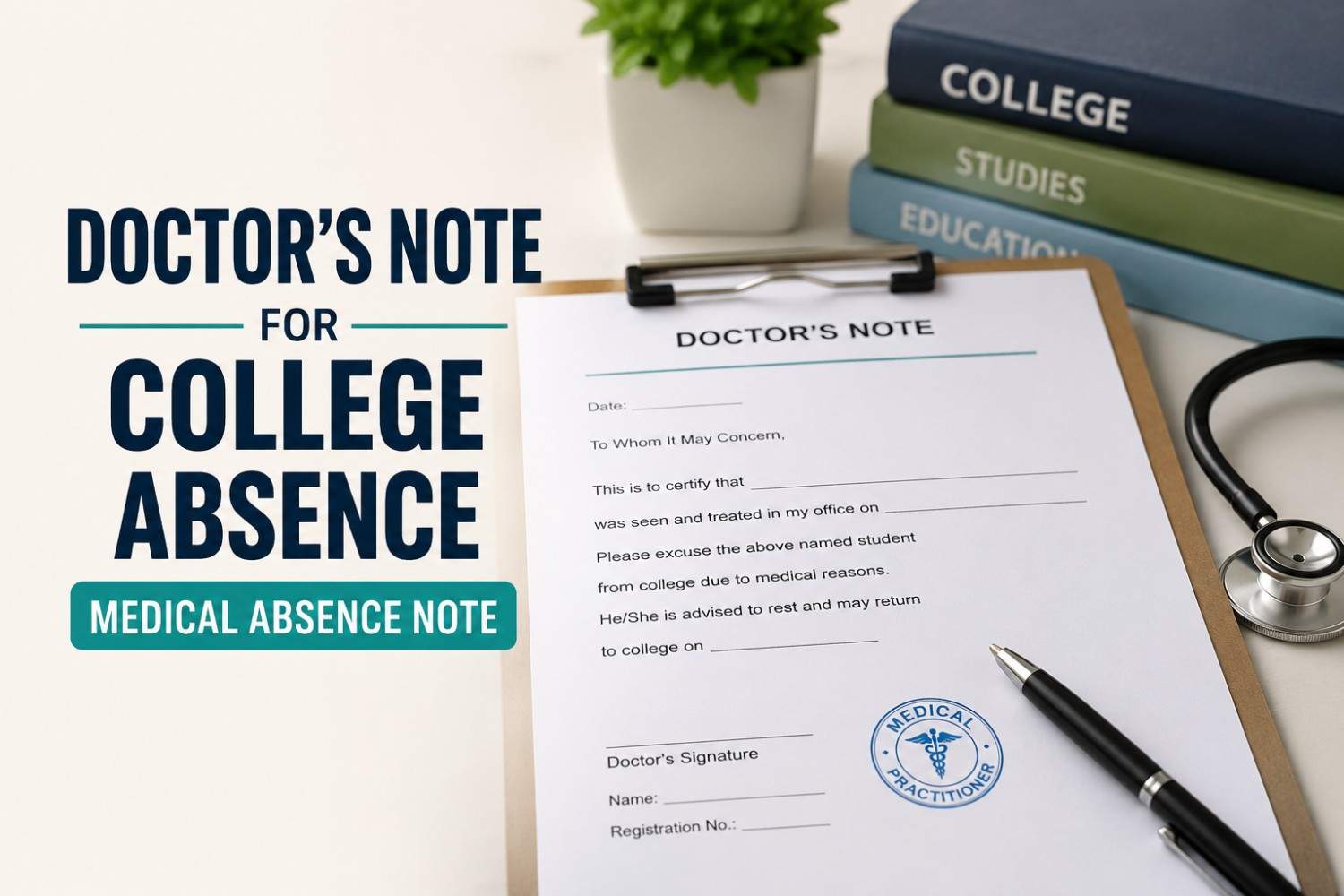

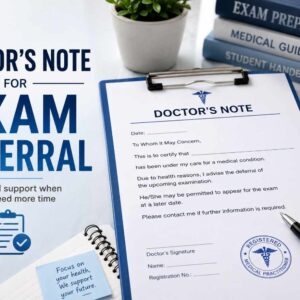
A Doctor’s Note for College Absence is a medical document prepared after a clinical assessment by a qualified healthcare professional. It confirms that your health has been evaluated and, when medically appropriate, explains how your condition temporarily affected your ability to attend lectures, seminars, practical sessions, or other academic activities.
Missing college because of a genuine medical condition can quickly become stressful. Many colleges and universities have attendance requirements, coursework deadlines, laboratory sessions, clinical placements, and examination policies that require students to provide medical evidence when illness affects their academic participation. Whether your absence is due to a sudden illness, an ongoing health condition, an injury, surgery, or a medical appointment, having appropriate documentation can help explain your situation professionally.
Rather than simply confirming that you were unwell, the note provides objective medical evidence that may help colleges review absence requests, assignment extensions, attendance concerns, or other academic matters while protecting your confidential medical information.
Related Post:
- Doctors Sick Note for School
- Online Doctor Note for Fever
- Online Doctor Note for Cold and Flu
- Doctors Note for Migraine
- Why Colleges Ask for Medical Documentation
Higher education institutions often expect students to maintain regular attendance. However, they also recognise that genuine medical conditions may occasionally prevent participation.
A Medical Certificate for College Absence may be requested for:
- Missed lectures
- Tutorial absences
- Laboratory sessions
- Clinical placements
- Workshops
- Group presentations
- Coursework deadline extensions
- Examination deferrals
- Attendance appeals
- Academic progression reviews
Providing medical evidence allows academic staff to assess your request fairly under institutional regulations.
Situations Where a Doctor’s Note May Be Needed
College absences can occur for many legitimate medical reasons.
Examples include:
Short-Term Illness
Conditions such as viral infections, influenza, food poisoning, gastroenteritis, migraines, or high fever may temporarily prevent attendance.
Injury
Sprains, fractures, back injuries, or other physical injuries may make travelling across campus difficult.
Recovery After Surgery
Some procedures require several days or weeks of recovery before students can safely return.
Long-Term Medical Conditions
Chronic illnesses may occasionally flare up and temporarily interfere with attendance or academic performance.
Mental Health Support
Where clinically appropriate, mental health conditions affecting concentration, attendance, or daily functioning may also require medical documentation.
Every case is assessed individually according to clinical findings.
How Illness Can Affect College Life
A medical condition often impacts more than simply attending lectures.
Students may experience difficulties with:
Concentration
Pain, fatigue, medication, or illness can reduce the ability to absorb information.
Coursework
Completing essays, projects, research assignments, or presentations may become more difficult during illness.
Practical Sessions
Laboratory work, workshops, or clinical placements often require physical attendance.
Group Assessments
Health-related absences may affect collaborative projects or scheduled presentations.
Examinations
Some conditions make sitting lengthy examinations unsafe or medically inappropriate.
Medical documentation helps explain these temporary limitations.
Academic Support That May Be Available
Depending on your college’s regulations and your individual circumstances, medical evidence may support requests for:
- Attendance consideration
- Assignment deadline extensions
- Deferred assessments
- Examination rescheduling
- Alternative assessment arrangements
- Temporary academic adjustments
- Placement flexibility
- Additional academic support services
Final decisions remain with the college or university.
What Happens During the Medical Assessment?
A doctor’s note is only issued following an appropriate consultation.
During your assessment, the healthcare professional may discuss:
- Your current symptoms
- When your illness or injury began
- Medical history relevant to the absence
- Current treatment
- Medication being taken
- Daily activities affected
- Expected recovery period
- Academic responsibilities impacted
The clinician evaluates your functional ability rather than simply recording a diagnosis.
What Information Can Be Included in a Doctor’s Note for College Absence?
Medical documentation provides only the information necessary for academic purposes while respecting patient confidentiality.
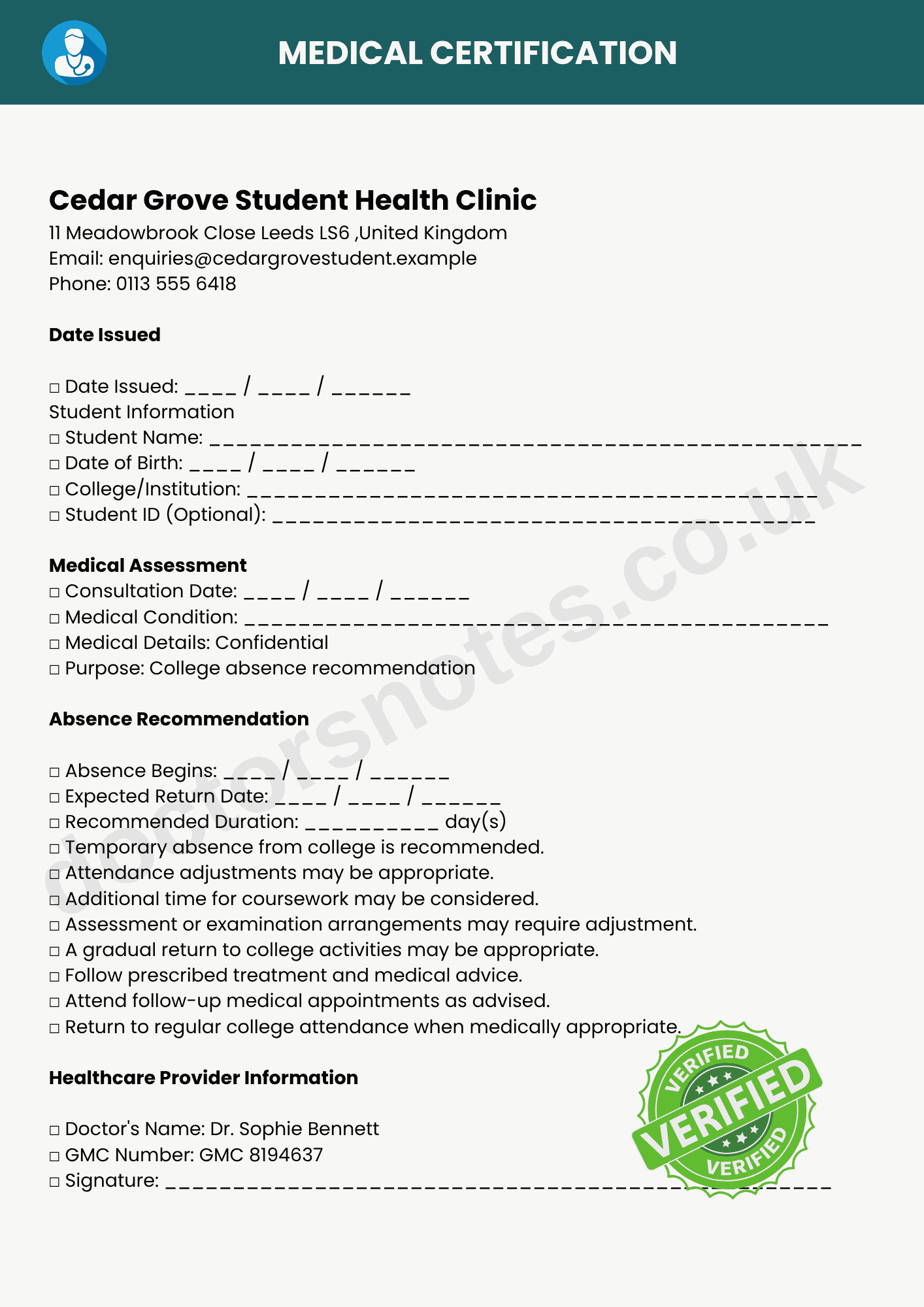
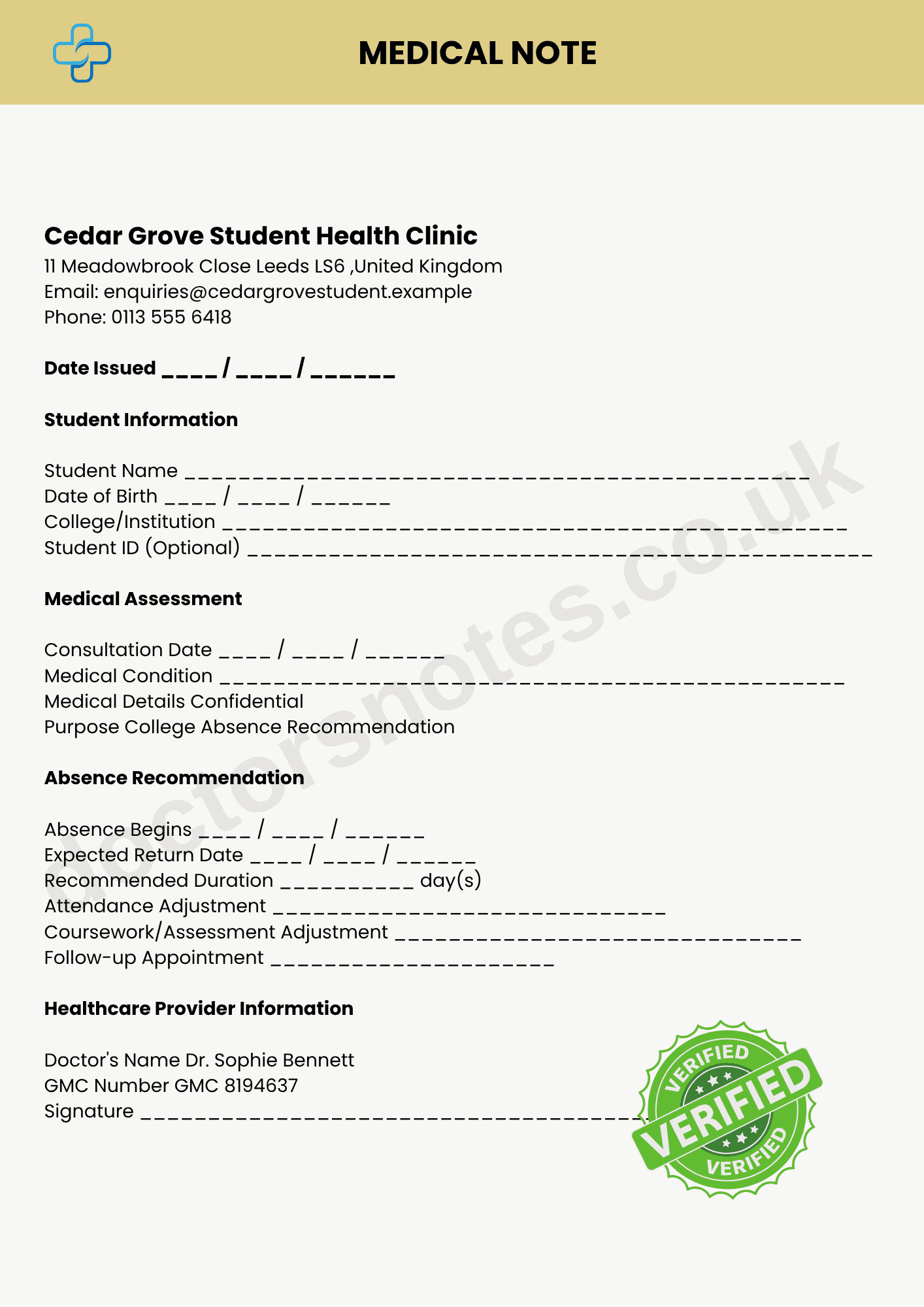
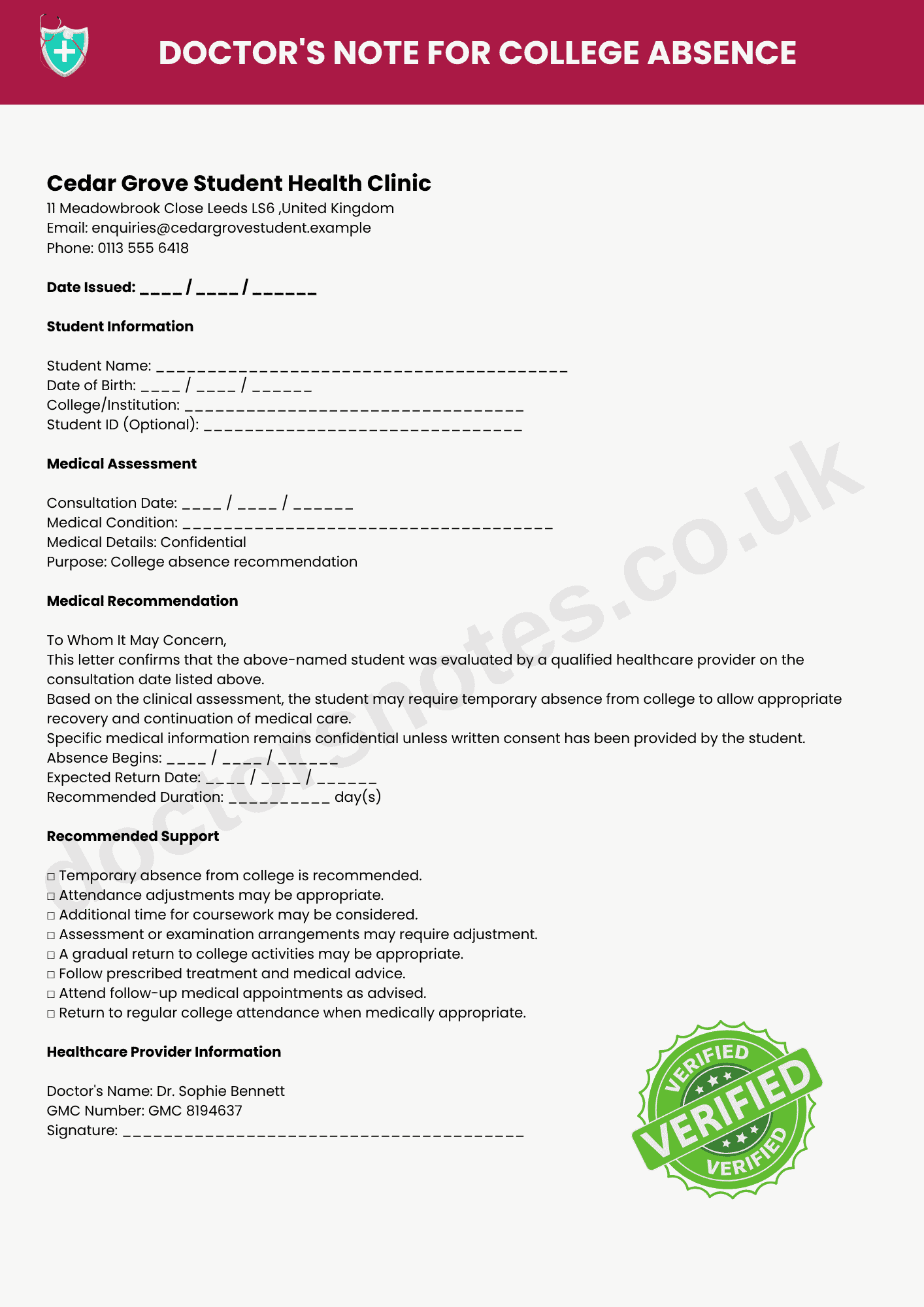
A college absence doctor’s note may include:
| Information Included | Purpose |
|---|---|
| Student identification | Confirms who received the medical assessment |
| Date of consultation | Records when the assessment took place |
| Confirmation of clinical evaluation | Verifies review by a qualified healthcare professional |
| Functional impact | Explains how the medical condition affected academic participation |
| Attendance recommendations | May advise temporary absence where clinically appropriate |
| Review or follow-up guidance | Indicates whether additional assessment is recommended |
| Healthcare provider details | Confirms the issuing clinician |
The exact wording depends on your individual consultation.
Attendance Policies Differ Between Colleges
Every college has its own procedures for handling medical absences.
Your institution may require:
- Submission within a specified deadline
- Official medical documentation
- Completion of an absence reporting form
- Supporting evidence for examination deferrals
- Communication with academic tutors or programme leaders
Students should always review their institution’s attendance and mitigating circumstances policies.
Balancing Recovery With Academic Success
Many students worry about falling behind while recovering from illness.
Depending on your condition, your healthcare professional may recommend:
- Prioritising adequate rest
- Returning gradually to study
- Avoiding excessive screen time if symptoms worsen
- Maintaining hydration and nutrition
- Following prescribed treatment
- Contacting tutors early regarding missed work
- Accessing student wellbeing services if needed
Early communication often makes academic planning easier.
Privacy and Confidentiality
Many students are concerned about sharing personal medical information.
A doctor’s note is generally designed to confirm that:
- A medical assessment took place.
- Your condition temporarily affected academic participation.
- Appropriate recommendations were made.
Detailed diagnoses or sensitive health information are typically only included when clinically necessary or when you specifically authorise additional disclosure.
Online Consultations for College Absence
Where clinically appropriate, an online medical consultation may provide a convenient option for students who are too unwell to travel.
During an online assessment, a qualified healthcare professional can:
- Discuss your symptoms
- Review your medical history
- Assess how your condition affects your studies
- Provide medical advice
- Determine whether documentation is appropriate
If your symptoms require physical examination or urgent care, an in-person assessment may be recommended.
Understanding Your Responsibilities as a Student
Medical documentation supports your request, but students should also:
- Notify the college as soon as possible
- Follow attendance reporting procedures
- Submit documentation before deadlines where required
- Stay in contact with tutors regarding missed work
- Attend follow-up appointments if advised
Being proactive helps minimise disruption to your studies.
Why Students Choose Professional Medical Documentation
Supports Academic Requests
Medical evidence strengthens applications for absence consideration, deadline extensions, or deferred assessments.
Protects Your Privacy
Documentation explains your functional limitations without revealing unnecessary medical details.
Provides Independent Clinical Evidence
A healthcare assessment offers objective medical confirmation rather than self-certification alone.
Helps You Focus on Recovery
Instead of worrying about attendance records, you can prioritise your health while keeping your college informed.
FAQ
Can I request a Doctor’s Note for College Absence online?
Yes. Following an appropriate clinical assessment, a qualified healthcare professional may provide documentation if it is medically appropriate.
Can I use this doctor’s note for missed lectures?
Many colleges accept medical documentation for health-related absences, although acceptance depends on institutional policies.
Will the note include my exact diagnosis?
Not necessarily. Medical documentation generally focuses on how your condition affected your ability to attend college while protecting your privacy.
Can I use the note for assignment extensions?
Many colleges consider medical evidence when reviewing extension requests, subject to their academic regulations.
Is a doctor’s note enough to defer an examination?
The note provides medical evidence, but the final decision is made by your college or examination board.
What if I have an ongoing medical condition?
Students with chronic health conditions may require documentation during symptom flare-ups or periods when their condition significantly affects academic participation.
Can international students use medical documentation?
Yes, although individual colleges may have specific procedures regarding the type of medical evidence they accept.
Is online medical documentation accepted by colleges?
Acceptance depends on your institution’s academic policies and documentation requirements.
Request Your Doctor’s Note for College Absence Today
Your education is important, but so is your health. When illness, injury, surgery, or another medically assessed condition prevents you from attending college, professional medical documentation can help explain your absence in a clear, credible, and confidential manner.
A Doctor’s Note for College Absence is prepared following an appropriate clinical assessment and may support attendance records, assignment extensions, examination deferrals, placement absences, or other academic requests where medically appropriate.
Our online consultation service allows you to speak with a qualified healthcare professional, receive personalised medical advice, and determine whether college absence documentation is appropriate—helping you protect your academic progress while giving yourself the time needed to recover properly.


Reviews
There are no reviews yet.