

Eczema is a common skin condition that causes inflammation, irritation, dryness, itching, and discomfort. Although eczema is not contagious, flare-ups can sometimes become severe enough to affect a person’s ability to work, attend school, sleep properly, or complete everyday activities comfortably.
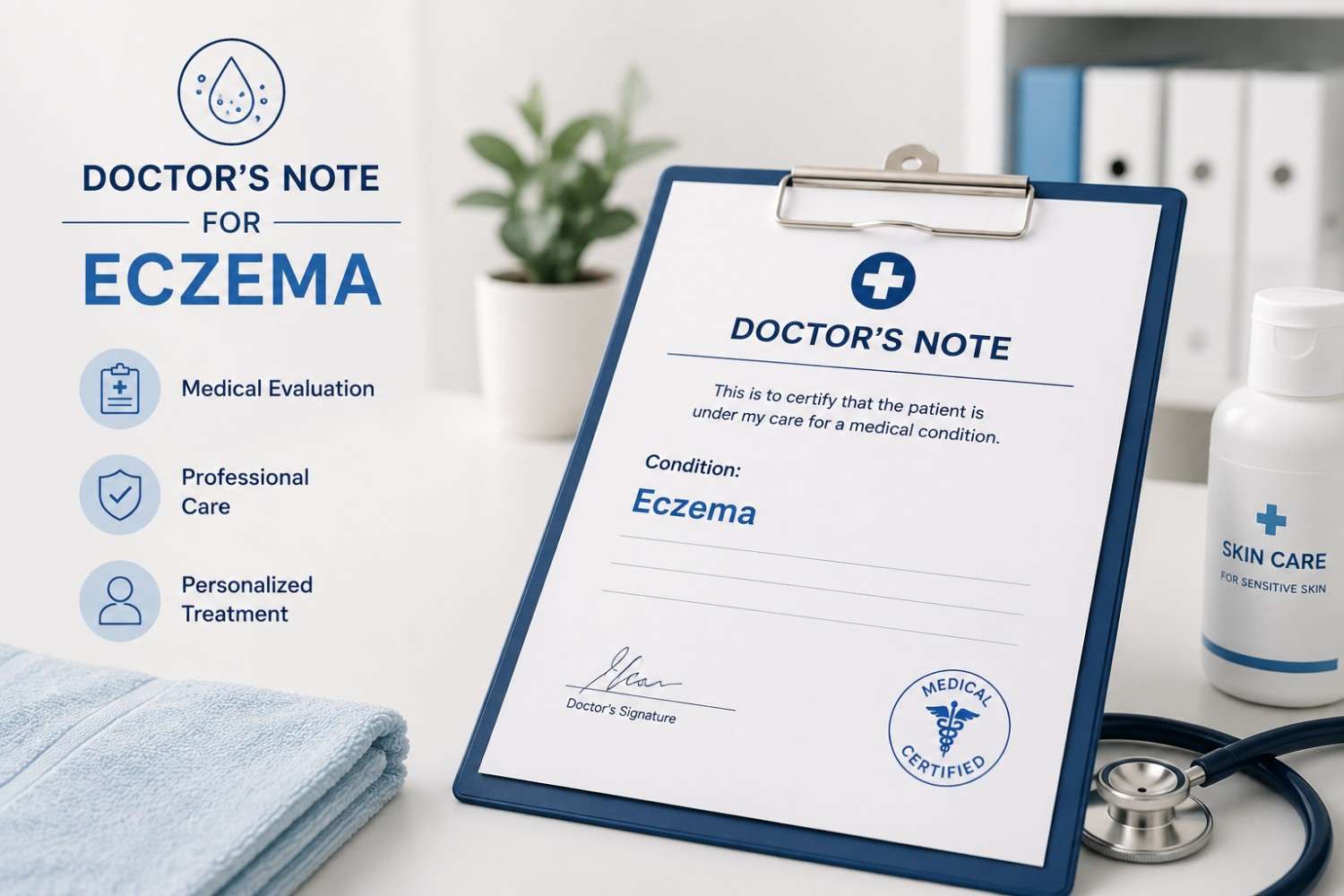
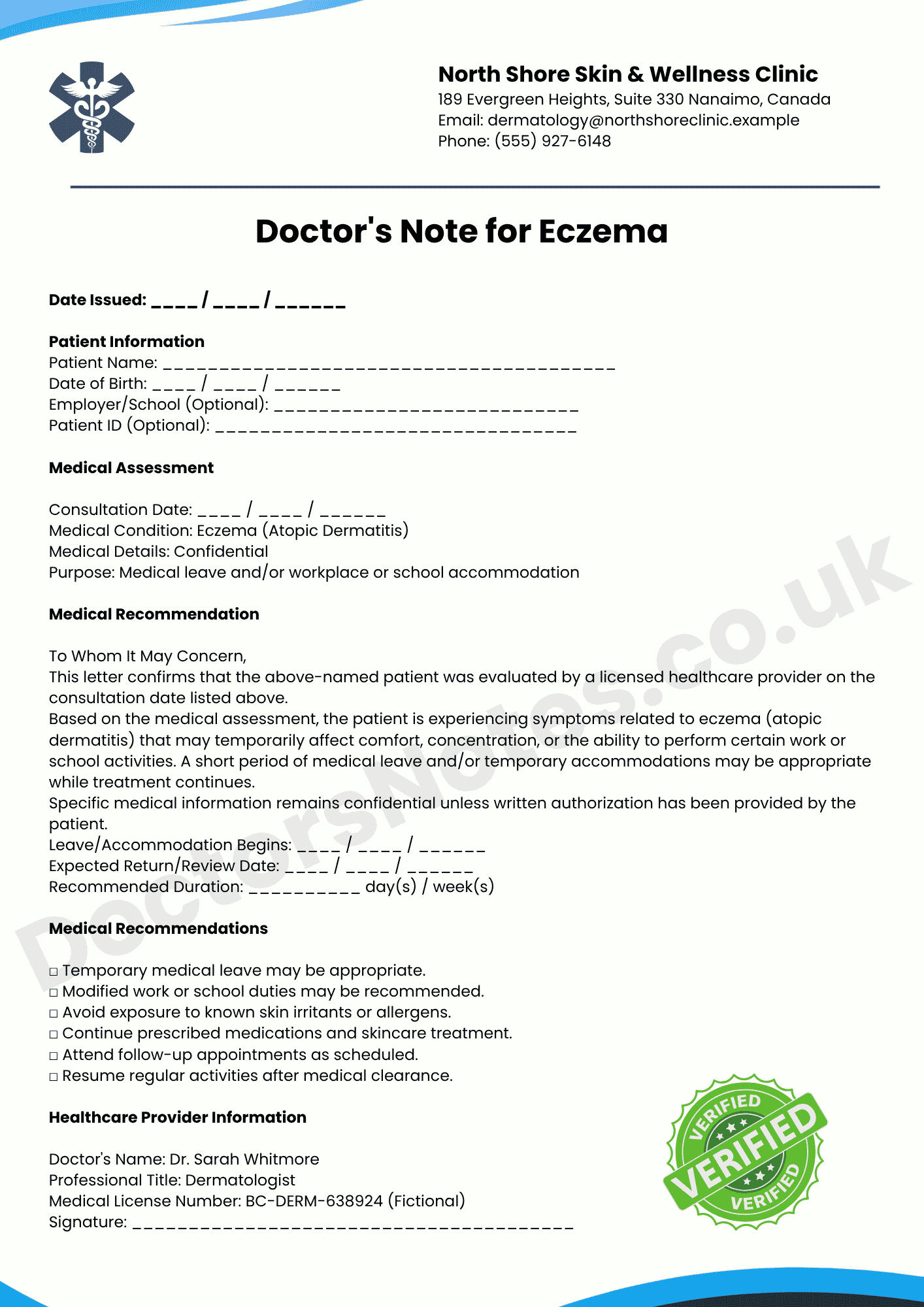
A Doctor’s Note for Eczema provides medical documentation confirming that your skin condition has been reviewed by a healthcare professional. It can help explain absence from work or school, support requests for workplace adjustments, and provide confirmation when eczema symptoms affect your daily routine.
For some individuals, eczema can interfere with professional responsibilities, especially when their job involves frequent hand washing, chemical exposure, physical contact, or environments that irritate the skin.
Whether your eczema flare-up is related to environmental triggers, occupational exposure, allergies, or an ongoing skin condition, appropriate medical documentation can help communicate your health needs clearly.
Related Post:
- Doctors Note for Skin Rash
- Doctors Note for Allergies
- Doctors Note for Hives
- Doctors Note for Eczema
Why Someone May Need a Doctor’s Note for Eczema
Eczema can affect more than just the appearance of the skin. During a flare-up, symptoms may become uncomfortable and interfere with concentration, sleep, movement, and daily responsibilities.
Someone experiencing an eczema flare may have difficulty with:
- Performing work duties comfortably
- Wearing certain protective clothing
- Handling chemicals or irritants
- Completing tasks requiring frequent hand use
- Sleeping due to itching
- Attending school or social activities
A Medical Note for Eczema can confirm that your symptoms have been assessed and that you may require treatment, recovery time, or temporary adjustments.
People may request eczema documentation for:
- Sick leave from work
- Workplace accommodation requests
- School or university absence
- Occupational health assessments
- Medical records
Understanding Eczema and Its Causes
Eczema refers to a group of inflammatory skin conditions that cause the skin barrier to become irritated and sensitive.
When the skin barrier does not function properly, it may allow moisture to escape more easily, leading to:
- Dryness
- Irritation
- Increased sensitivity
- Inflammation
Common factors that may contribute to eczema flare-ups include:
Environmental Triggers
Changes in weather, extreme temperatures, and dry air may worsen symptoms.
Allergens
Some individuals experience flare-ups after contact with certain substances.
Examples may include:
- Dust
- Certain fabrics
- Fragrances
- Specific skincare products
Workplace Exposure
Certain occupations may increase skin irritation due to regular contact with:
- Cleaning products
- Chemicals
- Gloves
- Water
- Industrial materials
Stress and Lifestyle Factors
Stress, lack of sleep, and other lifestyle factors may contribute to worsening symptoms for some people.
Common Eczema Symptoms That May Require Medical Documentation
Healthcare professionals consider the severity of symptoms and their effect on daily activities when preparing medical documentation.
Common eczema symptoms include:
Persistent Itching
Itching is one of the most common eczema symptoms and may become difficult to manage during flare-ups.
Dry and Sensitive Skin
Affected areas may become rough, cracked, or uncomfortable.
Redness and Inflammation
Skin affected by eczema may appear irritated or swollen.
Skin Cracking
Severe dryness may cause cracks that can become painful.
Burning or Tenderness
Some people experience discomfort when the skin becomes inflamed.
Other possible symptoms include:
- Skin peeling
- Small bumps
- Oozing areas during severe flare-ups
- Thickened skin from repeated scratching
- Sleep disruption caused by itching
Doctor’s Note for Eczema for Work
Eczema can create workplace challenges, especially when job duties involve exposure to substances that trigger irritation.
A Doctor’s Note for Eczema for Work may support employees who require:
- Confirmation of their skin condition
- Time away during severe flare-ups
- Temporary changes to duties
- Avoidance of specific irritants
- Workplace adjustments
This may be particularly important for people working in:
- Healthcare
- Hospitality
- Cleaning services
- Manufacturing
- Food handling
- Beauty and personal care industries
A medical note can help employers understand why certain tasks or environments may worsen symptoms.
How Eczema Can Affect Workplace Performance
Eczema symptoms may influence workplace ability in several ways.
Discomfort During Tasks
Pain, itching, or skin irritation may make certain activities difficult.
Reduced Concentration
Persistent itching can affect focus and productivity.
Difficulty Using Hands
Hand eczema may interfere with:
- Typing
- Handling equipment
- Writing
- Manual work
Need for Skin Protection
Some employees may require adjustments to reduce exposure to triggers.
Eczema Medical Note for School and University
Students with eczema may also experience challenges that affect attendance and academic participation.
Symptoms may interfere with:
- Concentrating in class
- Completing assignments
- Participating in practical activities
- Sleeping before important academic tasks
A Doctor’s Note for Eczema for School can help explain medically related absence or support requests for temporary adjustments.
Educational institutions may have different policies regarding medical documentation.
When Should You Consider Getting an Eczema Doctor’s Note?
A medical note may be useful when eczema symptoms begin affecting your normal responsibilities.
You may consider requesting documentation if:
- Your flare-up affects work performance
- Symptoms prevent normal attendance
- Your job exposes you to skin irritants
- You require temporary workplace changes
- Your employer or school requests medical confirmation
A healthcare professional can assess your symptoms and provide appropriate guidance.
Medical Assessment for Eczema Documentation
A doctor’s note should be prepared following an appropriate healthcare assessment.
During a consultation, you may discuss:
- When your symptoms started
- Areas of skin affected
- Possible triggers
- Severity of irritation
- Previous treatments used
- Impact on work, school, or daily life
A healthcare professional may assess:
- Skin appearance
- Level of inflammation
- Symptom severity
- Functional impact
This helps ensure that documentation accurately reflects your current condition.
What Information Can Be Included in a Doctor’s Note for Eczema?
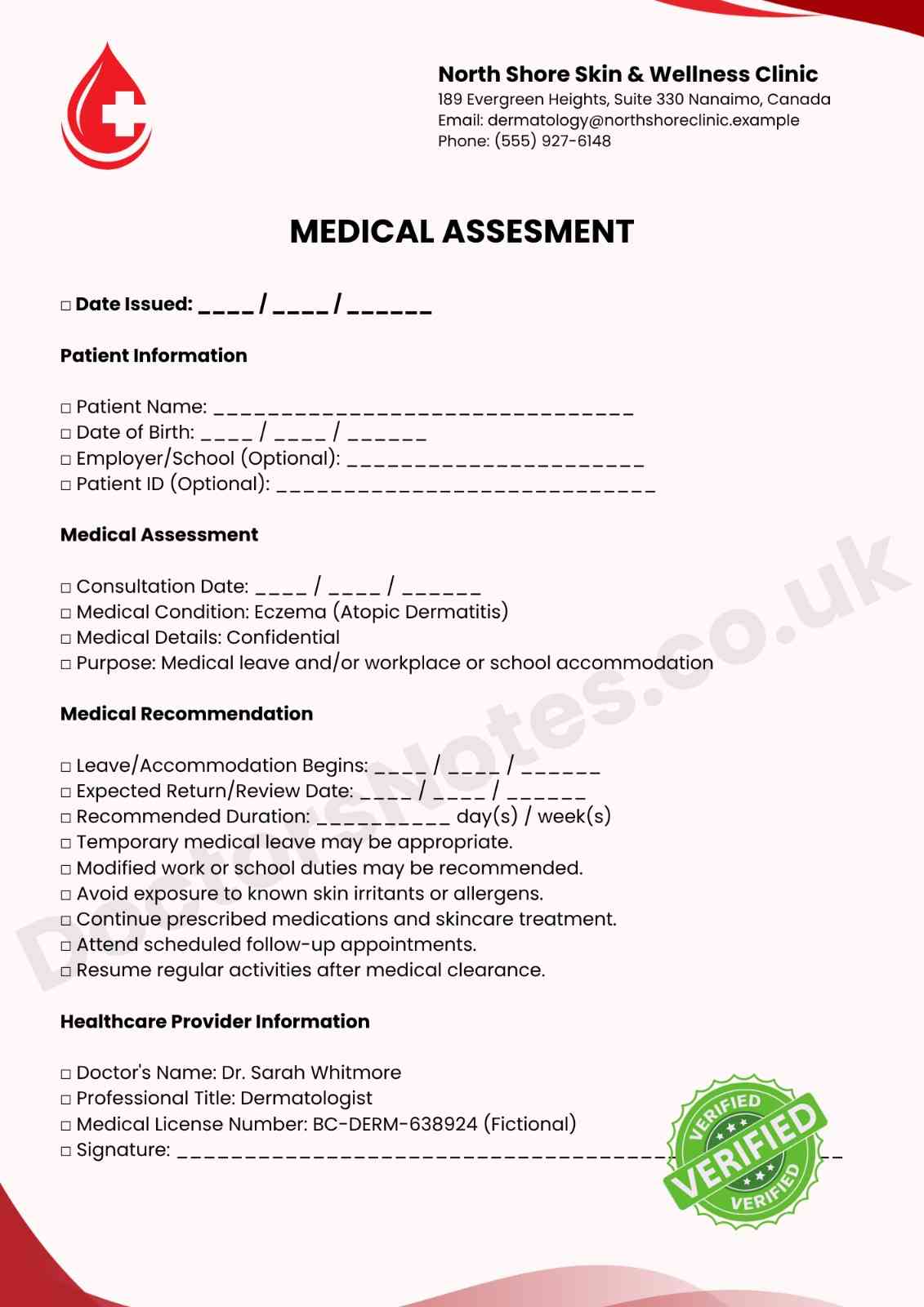
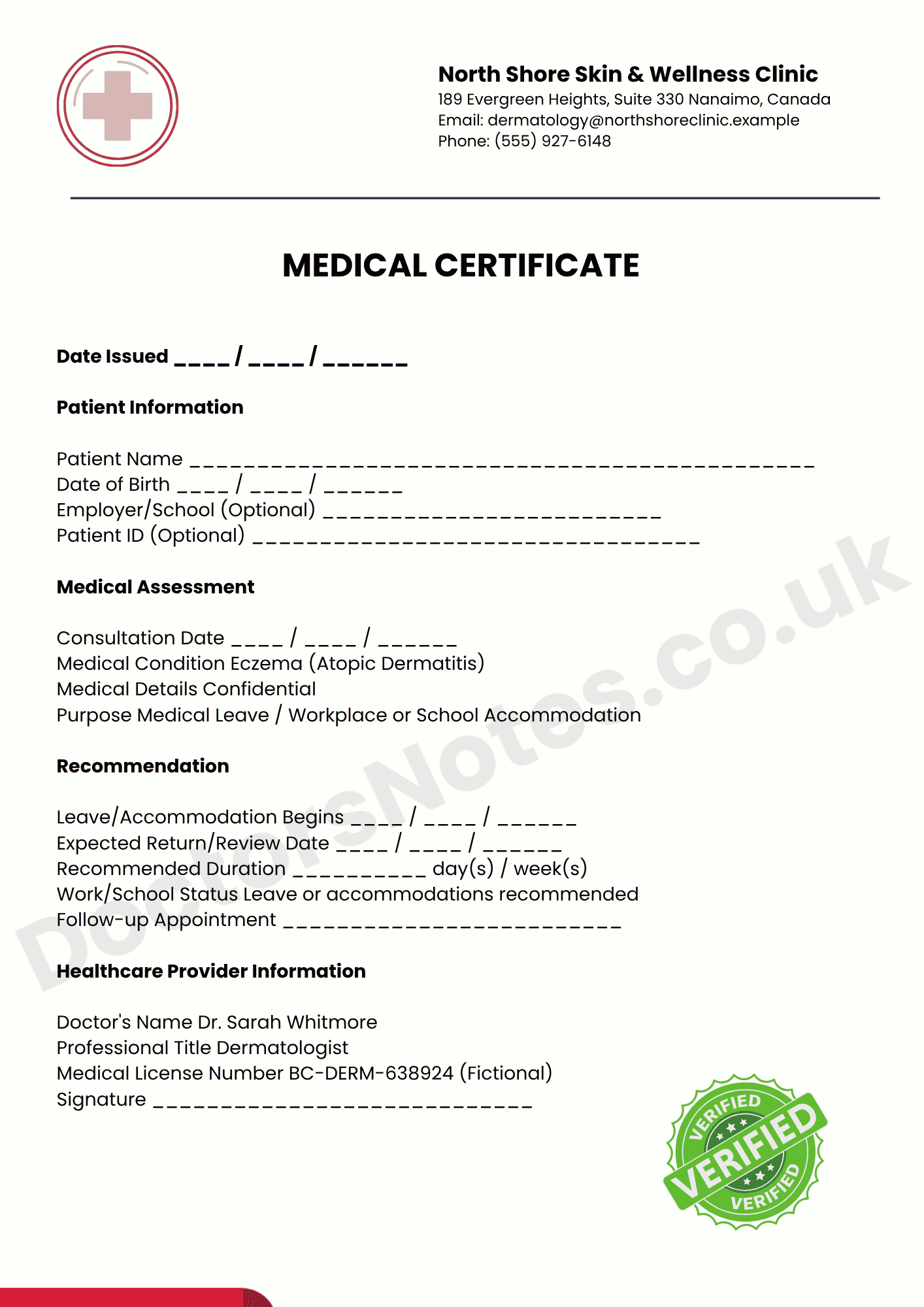
A professional eczema medical note usually contains relevant information needed to confirm your condition while maintaining appropriate privacy.
| Information Included | Purpose |
|---|---|
| Patient Information | Identifies the individual assessed |
| Consultation Date | Records medical review |
| Skin Condition Assessment | Documents eczema concerns |
| Symptom Impact | Explains how activities are affected |
| Medical Recommendations | Provides suitable guidance |
| Healthcare Provider Details | Confirms issuing professional |
| Date Issued | Shows when documentation was created |
The exact details included depend on the medical assessment and purpose of the note.
How Long Does an Eczema Flare-Up Last?
The duration of an eczema flare-up varies between individuals.
Recovery time may depend on:
- Severity of symptoms
- Trigger exposure
- Treatment approach
- Skin sensitivity
- Individual health factors
Some flare-ups improve within days, while others may continue for longer periods and require ongoing management.
A healthcare professional can provide advice based on your symptoms.
Can You Work With Eczema?
Many people continue working with eczema, but adjustments may sometimes be necessary.
Work may become challenging when it involves:
- Frequent hand washing
- Chemical exposure
- Protective equipment that irritates skin
- Contact with allergens
- Repetitive hand movements
Possible workplace adjustments may include:
- Reducing exposure to triggers
- Using suitable protective measures
- Adjusting duties temporarily
- Taking additional skin-care breaks
Treatment and Management of Eczema
Eczema management focuses on reducing irritation, protecting the skin barrier, and controlling symptoms.
Healthcare professionals may recommend:
- Regular moisturising
- Avoiding known triggers
- Gentle skin-care routines
- Prescription treatments when appropriate
- Managing environmental factors
Treatment plans vary depending on eczema type and severity.
Prescription Information for Eczema
A doctor’s note and prescription provide different types of information.
A prescription explains medication or treatment recommendations, while a medical note confirms that your eczema condition has been assessed.
Depending on symptoms, a healthcare professional may discuss:
- Skin treatments
- Symptom management options
- Preventive care strategies
- Further assessment if symptoms worsen
Treatment decisions should always be based on professional medical advice.
Is a Doctor’s Note for Eczema Legally Valid?
A medical note is considered valid when it is issued after an appropriate consultation and assessment by an authorised healthcare professional.
Employers, schools, and organisations may request medical evidence when eczema affects attendance, performance, or responsibilities.
Requirements can vary depending on:
- Country regulations
- Workplace policies
- Educational institution procedures
- Duration of absence
For UK guidance regarding sickness absence and medical evidence, individuals can refer to official government information through GOV.UK.
Medical documentation should always accurately represent the individual’s assessed health condition.
Benefits of Getting an Eczema Doctor’s Note Online
Easier Access During Skin Flare-Ups
When symptoms are uncomfortable, online consultations can provide convenient healthcare access.
Professional Confirmation of Your Condition
A medical note can explain why eczema affects your daily activities.
Supports Workplace Communication
Documentation may assist with absence discussions or adjustment requests.
Saves Time During Recovery
You can seek medical guidance while focusing on managing symptoms.
Frequently Asked Questions About Doctor’s Note for Eczema
Can I get a Doctor’s Note for Eczema online?
Yes, an online consultation allows a healthcare professional to review your eczema symptoms and determine whether medical documentation is appropriate.
Can eczema be a reason for sick leave?
Yes, if eczema symptoms affect your ability to work safely or complete normal duties, medical leave may be considered.
Is eczema contagious?
No, eczema is not contagious and cannot spread from person to person.
Can employers accept an eczema medical note?
Many employers accept medical documentation, although requirements vary between workplaces.
Can stress make eczema worse?
Stress may contribute to flare-ups for some individuals.
Can eczema affect work performance?
Yes, itching, pain, and irritation may affect concentration and physical tasks.
How long does eczema take to improve?
Recovery depends on symptom severity, triggers, and treatment approach.
Should I see a doctor for severe eczema?
Medical advice is recommended when symptoms are severe, persistent, painful, or affecting daily life.
Request Your Doctor’s Note for Eczema Today
Eczema flare-ups can affect your comfort, concentration, sleep, and ability to complete everyday responsibilities. When symptoms become difficult to manage, proper medical assessment and documentation can help support your recovery and communication with employers or educational institutions.
A Doctor’s Note for Eczema can provide professional confirmation of your skin condition and help explain why temporary adjustments or time away may be necessary.
Through our online healthcare consultation service, you can discuss your eczema symptoms with a qualified healthcare professional and request appropriate medical documentation while focusing on improving your skin health and returning comfortably to your normal routine.


Reviews
There are no reviews yet.