




A meal that others enjoy can quickly become a source of discomfort for someone living with lactose intolerance. After consuming milk, cheese, cream, ice cream, or other dairy products, symptoms such as stomach cramps, bloating, diarrhoea, nausea, or excessive gas may develop unexpectedly. These symptoms can range from mild to severe, and they may interfere with work, education, travel, or important daily commitments.
Imagine arriving at work after breakfast and then developing sudden abdominal pain and repeated trips to the toilet. Or perhaps you are attending university, travelling on public transport, or sitting in an important meeting when digestive symptoms become impossible to ignore. Situations like these can make it difficult to continue with normal responsibilities, and they may even require you to leave work or miss classes altogether.
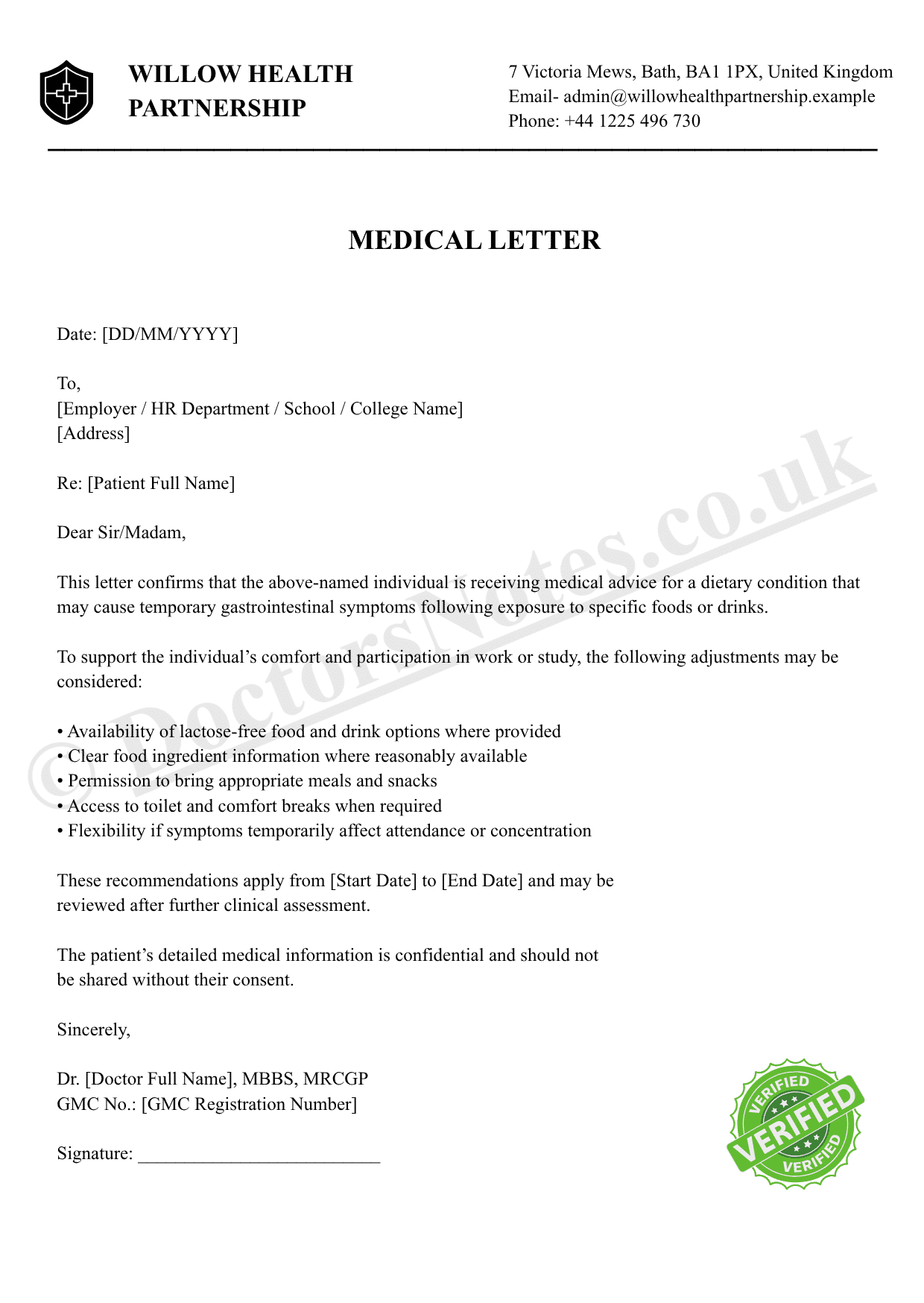
If you have experienced a significant lactose intolerance episode and need supporting medical documentation after an appropriate clinical assessment, our Doctor’s Note for Lactose Intolerance service gives you a convenient way to begin the process online.
A licensed healthcare professional reviews every consultation individually. The clinician issues medical documentation only when it is clinically appropriate, ensuring that every request receives a responsible assessment in line with professional clinical standards.
Whether your symptoms followed accidental dairy consumption, a diagnosed lactose intolerance, or an ongoing digestive condition that requires medical review, our secure online consultation offers a confidential and convenient way to seek appropriate medical support.
Need a Doctor’s Note for Lactose Intolerance?
Start your secure online medical assessment today and have your request reviewed by a licensed healthcare professional.
Doctor’s Note for Lactose Intolerance
Why it matters
Many people assume lactose intolerance simply causes an upset stomach. In reality, symptoms can develop quickly and may become severe enough to interrupt your working day, studies, travel plans, or social activities.
Unlike food preferences or dietary choices, lactose intolerance is a digestive condition in which the body struggles to digest lactose, the natural sugar found in milk and many dairy products. When lactose is not properly broken down, it passes into the large intestine, where it can trigger uncomfortable digestive symptoms.
For someone working in a busy office, driving long distances, serving customers, or attending lectures, repeated abdominal pain or urgent bowel movements can make staying at work or school extremely challenging.
While symptoms usually improve after the trigger food has passed through the digestive system, recovery time varies from person to person. In some cases, people may need temporary rest or medical advice before returning to their usual routine.
Understanding lactose intolerance
Lactose intolerance is a common digestive condition caused by reduced levels of lactase, the enzyme responsible for breaking down lactose in the small intestine.
When the body does not have enough lactase, lactose cannot be fully digested. Instead, it moves into the bowel, where natural bacteria ferment it, producing gas and drawing extra fluid into the intestine. This process causes many of the symptoms people experience after consuming dairy products.
It is important to understand that lactose intolerance is not the same as a milk allergy. A milk allergy involves the immune system and may cause potentially serious allergic reactions, while lactose intolerance mainly affects digestion.
Many people manage lactose intolerance successfully by identifying trigger foods, making dietary adjustments, and following advice from a healthcare professional.
Common symptoms
Symptoms often appear between 30 minutes and two hours after consuming foods or drinks containing lactose, although timing and severity vary from person to person.
Stomach cramps
Cramping or abdominal discomfort is one of the earliest signs of lactose intolerance. The pain may range from mild discomfort to more noticeable cramping that interferes with normal activities.
Bloating
Many people experience a swollen or tight feeling in the abdomen after consuming dairy products. This can become uncomfortable throughout the day and may make sitting for long periods difficult.
Diarrhoea
Loose bowel movements are common because undigested lactose draws additional fluid into the intestines. Frequent toilet visits may make it difficult to remain at work, attend school, or travel comfortably.
Excessive wind
Gas production increases during the fermentation of undigested lactose, often causing bloating and noticeable flatulence.
Nausea
Some individuals experience nausea after eating dairy-containing foods, particularly when they have consumed large amounts of lactose.
Stomach rumbling
Loud bowel sounds and increased digestive activity are frequently reported during lactose intolerance episodes.
Urgent need to use the toilet
For some people, symptoms develop rapidly, making immediate access to toilet facilities essential.
Because symptom severity varies, two people eating the same meal may have very different experiences.
Foods that trigger symptoms
Many dairy products naturally contain lactose, although the amount varies between foods.
Common triggers include:
-
Milk.
-
Cheese.
-
Ice cream.
-
Cream.
-
Butter for some individuals.
-
Milkshakes.
-
Custard.
-
Yoghurts containing lactose.
-
Cream-based sauces.
-
Some desserts.
Lactose may also appear in processed foods where people do not expect it, so it helps to check ingredient labels carefully if you have been diagnosed with lactose intolerance.
Work and education
Digestive symptoms rarely happen at a convenient time. Someone may feel completely well when leaving home, only for symptoms to begin shortly after eating breakfast, lunch, or a snack containing dairy.
This unpredictability can create real difficulties in workplaces and educational environments.
For example:
-
A delivery driver may struggle to complete long routes because of repeated toilet urgency.
-
A teacher may find it difficult to leave a classroom during severe abdominal cramps.
-
A healthcare professional working with patients may need immediate access to restroom facilities.
-
A university student may miss lectures or examinations because of ongoing digestive discomfort.
-
A retail employee may find prolonged customer interaction challenging while experiencing severe bloating or diarrhoea.
The impact depends not only on the diagnosis but also on symptom severity and the demands of the person’s role.
When documentation may help
Having lactose intolerance does not automatically mean medical documentation is required. However, a healthcare professional may decide that documentation is appropriate after an individual clinical assessment.
Examples include:
-
A significant episode causing temporary absence from work.
-
Symptoms severe enough to interrupt normal duties.
-
Attendance at a medical consultation during working hours.
-
Recovery following dehydration related to digestive symptoms.
-
Employer requests for supporting medical evidence.
-
Educational institutions requiring documentation for absence.
Every consultation is reviewed independently, and documentation is considered only where it is clinically appropriate.
Diagnosis and assessment
If you regularly experience digestive symptoms after consuming dairy products, a healthcare professional may recommend an assessment to determine whether lactose intolerance is the underlying cause or whether another digestive condition needs further investigation.
The diagnosis usually begins with a discussion about your symptoms, eating habits, medical history, and when your symptoms typically occur.
During your assessment, you may be asked:
-
When did your symptoms first begin?
-
Which dairy products trigger your symptoms?
-
How soon after eating do symptoms appear?
-
How long do the symptoms usually last?
-
Have you experienced recent weight loss?
-
Is there any blood in your stool?
-
Do you have a family history of digestive conditions?
-
Have you already been diagnosed with lactose intolerance or another gastrointestinal disorder?
Depending on your circumstances, your healthcare professional may recommend additional investigations to help confirm the diagnosis or rule out other medical conditions. These may include a hydrogen breath test, a lactose elimination diet, blood tests where clinically indicated, or further gastrointestinal assessment if symptoms are unusual, persistent, or suggest another condition.
Accurate diagnosis helps ensure you receive proper advice rather than simply treating symptoms without understanding the cause.
Lactose intolerance vs milk allergy
These two conditions are often confused, but they are not the same.
Understanding the difference matters because treatment, dietary advice, and medical management vary considerably.
Managing symptoms
Although lactose intolerance cannot always be reversed, many people successfully control symptoms by making informed dietary choices and following medical advice.
Management plans differ from person to person because everyone’s level of lactose tolerance is different.
Dietary adjustments
One of the most effective ways to reduce symptoms is identifying foods that trigger discomfort. Many people benefit from:
-
Choosing lactose-free milk and dairy alternatives.
-
Reading food labels carefully.
-
Reducing high-lactose foods where appropriate.
-
Planning meals before travelling or attending long events.
-
Speaking with a registered dietitian if dietary changes become difficult.
The goal is not always to remove every dairy product, but to understand your personal tolerance level under professional guidance.
Lactase supplements
Some individuals use lactase enzyme supplements before consuming dairy products. These supplements may help some people digest lactose more effectively, although they may not suit or help everyone.
Always follow product instructions and seek advice from your healthcare professional if you are unsure whether they are appropriate for you.
Staying hydrated
If diarrhoea occurs during a lactose intolerance episode, maintaining adequate hydration is particularly important. Replacing lost fluids may support recovery, especially after repeated bowel movements.
Monitoring symptoms
Keeping a food and symptom diary can help identify patterns that may not be immediately obvious. Recording what you ate, when symptoms started, how severe they became, and how long they lasted can provide useful information during future medical consultations.
Recovery and return to activity
Recovery usually begins once lactose has passed through the digestive system, although the exact duration varies between individuals. Some people feel better within several hours, while others may continue experiencing bloating or digestive discomfort until the following day.
Recovery depends on factors such as:
-
The amount of lactose consumed.
-
Individual lactase enzyme levels.
-
Overall digestive health.
-
Hydration status.
-
Symptom severity.
Most people can gradually return to normal activities once abdominal pain, diarrhoea, and bowel urgency have settled.
Work ability and notes
Lactose intolerance can affect your ability to work, especially during an active episode. Although it is not usually considered a serious medical condition, the symptoms can temporarily interfere with many occupations.
For example:
-
A bus or taxi driver experiencing sudden diarrhoea may be unable to continue working safely.
-
A teacher may find repeated toilet breaks disruptive during lessons.
-
A nurse working long clinical shifts may struggle with persistent abdominal pain.
-
A customer service representative may find severe bloating and discomfort difficult to manage during prolonged interactions.
-
Hospitality workers may find symptoms especially challenging during busy service periods.
Healthcare professionals consider how your symptoms affect your specific job, rather than making decisions based only on the diagnosis.
Medical documentation is never issued simply because someone has lactose intolerance. Instead, the healthcare professional considers whether your symptoms have temporarily affected your ability to carry out normal responsibilities.
Documentation may be appropriate where clinically justified if:
-
Severe digestive symptoms prevent you from attending work.
-
Repeated diarrhoea results in dehydration or significant discomfort.
-
You need time away for medical assessment.
-
Medication or treatment advice has been provided.
-
Your employer requests medical evidence.
-
Your school, college, or university requires documentation to explain your absence.
Every request is assessed individually, ensuring documentation reflects your clinical circumstances rather than using a standard template.
Online assessment process
Accessing healthcare has become more flexible, allowing patients to choose the consultation method that best suits their needs.
Both approaches provide valuable healthcare services. The best option depends on your medical needs and personal circumstances.
Why patients choose this service
When you are dealing with abdominal discomfort, diarrhoea, bloating, or other symptoms of lactose intolerance, the last thing you want is a complicated process to obtain medical support. Our service is designed to make requesting professional medical documentation straightforward, secure, and convenient.
Every consultation is handled responsibly, with patient wellbeing and clinical integrity at the centre of the process.
No two patients experience lactose intolerance in exactly the same way. Some have mild symptoms that settle quickly, while others experience episodes that temporarily affect their ability to work, study, or travel. Every request is reviewed individually by a licensed healthcare professional who considers your symptoms, medical history, and personal circumstances before deciding whether medical documentation is clinically appropriate.
Your health information deserves careful handling. From the moment you begin your online consultation, your personal details and medical information are managed through a secure and confidential process designed to protect your privacy.
There is no need to spend time travelling or sitting in waiting rooms if an online assessment suits your circumstances. Our streamlined consultation process allows you to complete your assessment from home, submit your medical information securely, avoid unnecessary travel, and access healthcare support at a convenient time.
Where clinically appropriate, documentation is prepared to professional standards and may help explain your absence to employers, schools, colleges, universities, training providers, or other organisations requesting medical evidence.
How to request it
Getting started is simple.
-
Choose your service.
-
Select the Doctor’s Note for Lactose Intolerance product and begin your secure booking.
-
Complete your medical questionnaire.
-
Provide accurate information about your symptoms, when they started, the foods that triggered the episode, previous diagnosis if applicable, medical history, and how the symptoms affected your work, studies, or other responsibilities.
-
Clinical review.
-
A licensed healthcare professional carefully reviews your consultation to determine whether medical documentation is clinically appropriate.
-
Receive your documentation.
-
Where appropriate after clinical assessment, your doctor’s note is prepared professionally and provided through the agreed delivery method.
Employer and education use
Although lactose intolerance is usually manageable, severe digestive symptoms may occasionally prevent someone from carrying out normal work duties. A professionally prepared doctor’s note may help support communication with your employer about short-term sickness absence, attendance records, return-to-work discussions, Human Resources documentation, medical appointments during working hours, or temporary workplace adjustments where appropriate.
Digestive symptoms do not always happen outside school or university hours. Unexpected abdominal pain, diarrhoea, nausea, or repeated toilet visits may affect attendance, examinations, coursework, or practical sessions. Medical documentation may help explain absences from school lessons, college classes, university lectures, laboratory sessions, clinical placements, coursework submissions, examinations, or academic assessments.
Acceptance of medical documentation depends on the individual employer or institution’s policies.
Related Doctor’s Note:
Doctor’s Note for Stomach Virus
Doctor’s Note for Norovirus
FAQ section
Can I request a Doctor’s Note for Lactose Intolerance online?
You can begin a secure online medical assessment. A licensed healthcare professional will review your symptoms and decide whether medical documentation is clinically appropriate.
Can lactose intolerance be a reason for taking sick leave?
Sick leave may be appropriate when symptoms significantly affect your ability to work safely or carry out your usual duties, subject to clinical assessment.
How long do lactose intolerance symptoms usually last?
Symptoms often improve within several hours after lactose has passed through the digestive system, although recovery varies between individuals.
Can lactose intolerance cause diarrhoea?
Diarrhoea is a common symptom after consuming foods or drinks that contain lactose.
Can lactose intolerance cause stomach cramps?
Abdominal pain or cramping can occur during a lactose intolerance episode.
Is lactose intolerance permanent?
Some forms are lifelong, while others may occur temporarily after certain illnesses or digestive conditions.
Can I still eat cheese if I’m lactose intolerant?
Some cheeses naturally contain lower amounts of lactose than others. Individual tolerance varies, so seek dietary advice if you are unsure.
Can lactose intolerance affect work performance?
Frequent toilet visits, abdominal pain, bloating, and nausea can temporarily make some roles harder to perform.
Will my employer accept a doctor’s note for lactose intolerance?
Acceptance depends on your employer’s sickness absence policy and documentation requirements.
Can schools or universities request medical evidence?
Schools, colleges, and universities may request supporting medical evidence under their own attendance policies.
When should I see a doctor about lactose intolerance?
You should seek medical advice if symptoms are severe, persistent, worsening, or accompanied by warning signs such as weight loss, blood in the stool, or ongoing dehydration.
Conclusion
Living with lactose intolerance can be challenging, especially when symptoms appear unexpectedly and interfere with work, education, or important commitments. While many episodes can be managed through dietary adjustments, there are times when professional medical advice and appropriate documentation become necessary.
Our Doctor’s Note for Lactose Intolerance service provides a secure, confidential, and convenient way to begin an online medical assessment. Every consultation is individually reviewed by a licensed healthcare professional, and documentation is issued only where clinically appropriate, ensuring a responsible and patient-focused approach.
If your lactose intolerance symptoms have affected your ability to attend work, school, or university, start your online medical assessment today and receive professional support tailored to your individual circumstances.


Reviews
There are no reviews yet.