


Motion sickness is a common condition that occurs when there is a mismatch between what your eyes see and what your inner ear senses about movement. It can happen during car journeys, flights, boat trips, train rides, or other forms of transportation. While it is often temporary, severe motion sickness can cause uncomfortable symptoms that interfere with travel plans, work commitments, education, and daily activities.
For some individuals, motion sickness is more than simple travel discomfort. Symptoms such as nausea, dizziness, vomiting, sweating, headaches, and weakness can make it difficult to continue normal activities or complete planned responsibilities.
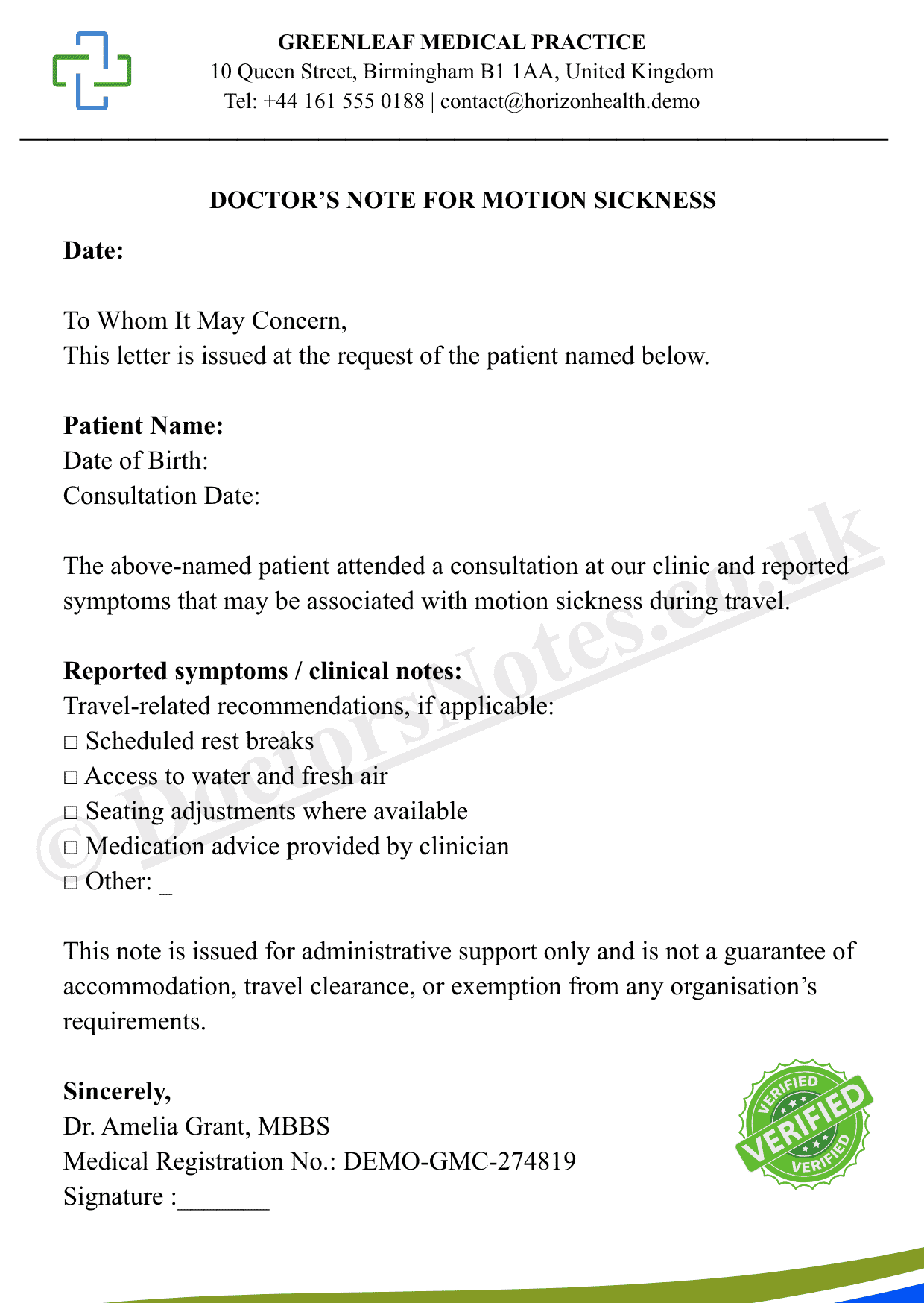
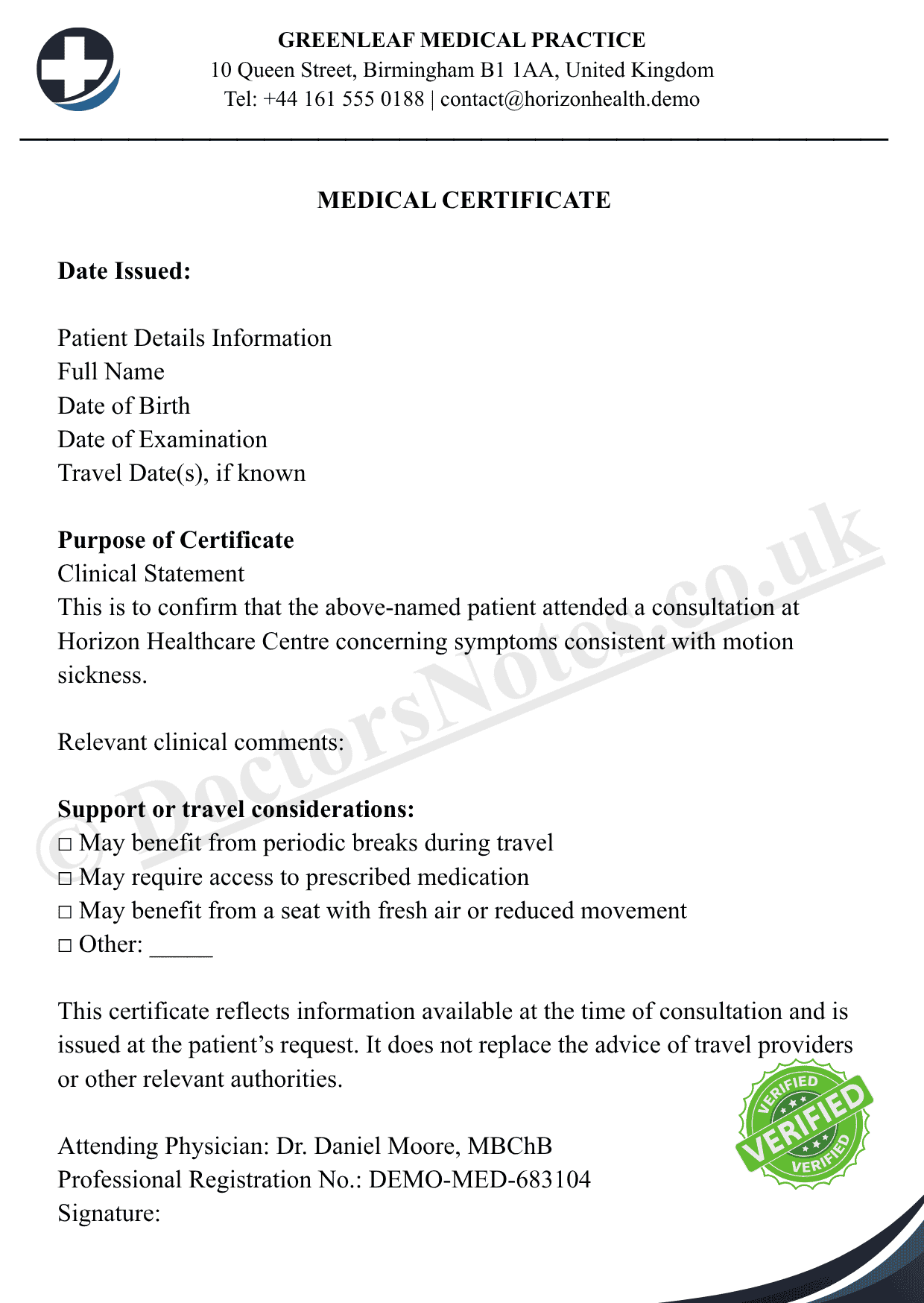
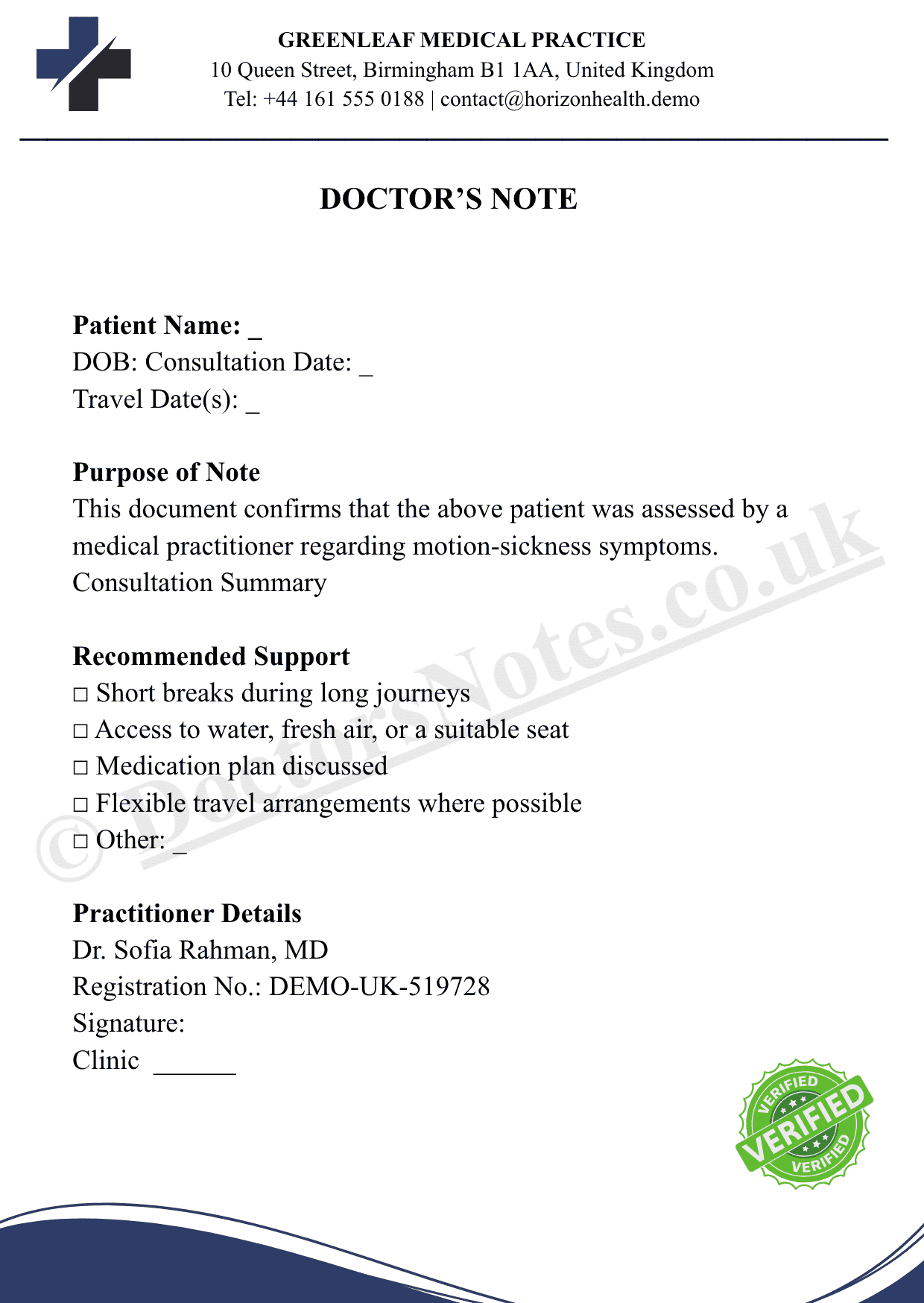
A Doctor’s Note for Motion Sickness provides medical documentation confirming that your symptoms have been reviewed by a healthcare professional. It may help explain travel-related difficulties, medically related absence, workplace issues, or situations where motion sickness prevents you from performing your usual activities.
Whether you experience occasional travel sickness, frequent episodes, or symptoms that require medical advice, appropriate documentation can help communicate your health situation clearly and professionally.
Why Someone May Need a Doctor’s Note for Motion Sickness
Motion sickness symptoms can appear suddenly and may significantly affect a person’s ability to function during or after travel.
Someone experiencing severe motion sickness may find it difficult to:
- Complete a journey comfortably
- Attend work after travelling
- Participate in educational activities
- Perform tasks requiring concentration
- Continue planned activities
- Recover quickly after an episode
A Motion Sickness Medical Note can provide confirmation that your symptoms have been assessed and may affect your ability to maintain normal responsibilities.
People may require medical documentation for:
- Workplace absence
- Travel-related situations
- School or university absence
- Medical assessment records
- Temporary activity limitations
Understanding Motion Sickness and Its Effects on the Body
Motion sickness occurs when the brain receives conflicting signals from the body’s balance systems.
The inner ear helps detect movement and balance, while the eyes provide information about surroundings. When these signals do not match, the brain may respond with symptoms associated with motion sickness.
Common situations that can trigger motion sickness include:
- Car travel
- Air travel
- Sea journeys
- Amusement rides
- Virtual reality experiences
- Long-distance transportation
Some people are more sensitive to motion changes than others.
Common Motion Sickness Symptoms That May Require Medical Documentation
When reviewing a request for medical documentation, healthcare professionals consider symptoms and their effect on daily activities.
Common symptoms of motion sickness include:
Nausea
A feeling of sickness or discomfort in the stomach is one of the most common symptoms.
Vomiting
Some individuals experience vomiting, particularly during longer journeys or stronger motion exposure.
Dizziness and Balance Problems
Motion sickness can cause:
- Light-headedness
- Feeling unsteady
- Difficulty maintaining balance
Sweating and Physical Discomfort
The body may respond to motion with:
- Cold sweating
- Increased saliva production
- General weakness
Headaches and Fatigue
Some people experience tiredness or headaches after an episode.
Other possible symptoms include:
- Loss of appetite
- Pale appearance
- General discomfort
- Difficulty concentrating
Doctor’s Note for Motion Sickness for Work
Motion sickness can create challenges for employees, particularly those who travel regularly for work or experience symptoms after commuting.
A Doctor’s Note for Motion Sickness for Work may support employees who need:
- Confirmation of travel-related symptoms
- Medical evidence for absence
- Time to recover after severe episodes
- Workplace adjustments where appropriate
This may be relevant for people working in roles involving:
- Frequent business travel
- Driving responsibilities
- Outdoor work
- Long-distance commuting
- Transportation-related duties
A medical note can help employers understand why motion sickness symptoms have affected attendance or performance.
How Motion Sickness Can Affect Workplace Performance
Although motion sickness is often temporary, severe symptoms can influence work ability.
Reduced Concentration
Nausea and dizziness may make it difficult to focus on tasks.
Delayed Recovery After Travel
Some people continue feeling unwell even after reaching their destination.
Physical Discomfort
Weakness, headaches, or stomach upset can affect productivity.
Travel Limitations
Employees who experience severe motion sickness may find work-related travel challenging.
Motion Sickness Medical Note for School and University
Students may also experience difficulties when motion sickness affects their ability to attend classes or educational activities.
Symptoms may interfere with:
- School transportation
- Educational trips
- University commuting
- Classroom concentration
- Examination attendance
A Doctor’s Note for Motion Sickness for School can help explain medically related absence or difficulties when supporting documentation is required.
Educational institutions may have their own policies regarding medical evidence.
When Should You Consider Getting a Motion Sickness Doctor’s Note?
A medical note may be useful when motion sickness symptoms become disruptive or affect important commitments.
You may consider requesting documentation if:
- Symptoms prevent attendance at work or school
- Travel-related illness requires recovery time
- You experience repeated severe episodes
- Medical advice is required
- Your employer or institution requests confirmation
A healthcare professional can review your symptoms and determine suitable documentation.
Medical Assessment for Motion Sickness Documentation
A doctor’s note should be based on an appropriate healthcare assessment.
During a consultation, you may discuss:
- Your motion sickness symptoms
- Situations that trigger episodes
- Frequency and severity of symptoms
- How symptoms affect daily activities
- Previous treatments or prevention methods
The healthcare professional reviews this information to understand your condition and provide suitable medical guidance.
This helps ensure documentation accurately reflects your health circumstances.
What Information Can Be Included in a Doctor’s Note for Motion Sickness?
A professional medical note usually contains relevant information required to confirm your health situation while protecting your privacy.
A typical motion sickness medical document may include:
| Information Included | Purpose |
|---|---|
| Patient Information | Identifies the individual assessed |
| Consultation Date | Records medical review details |
| Health Concern | Notes motion sickness-related symptoms |
| Medical Advice | Provides relevant recommendations |
| Activity Guidance | Explains limitations if required |
| Healthcare Provider Details | Confirms issuing professional |
| Date Issued | Shows when documentation was prepared |
The exact information depends on the medical assessment and purpose of the note.
How Long Can Motion Sickness Symptoms Last?
Motion sickness symptoms usually improve after the movement stops, but recovery time varies between individuals.
Factors that may influence recovery include:
- Duration of travel
- Severity of symptoms
- Individual sensitivity to motion
- Hydration levels
- Rest after travel
Some people recover quickly, while others may experience lingering tiredness or discomfort.
Can You Work With Motion Sickness?
Whether you can continue working depends on symptom severity and job requirements.
Work may become more difficult if you experience:
- Persistent nausea
- Dizziness
- Vomiting
- Reduced concentration
- Weakness after travel
People in safety-sensitive roles may require additional consideration if symptoms affect alertness or balance.
A healthcare professional can provide guidance based on your circumstances.
Managing and Preventing Motion Sickness
Motion sickness management depends on individual needs and symptom severity.
Healthcare professionals may suggest:
- Positioning strategies during travel
- Staying hydrated
- Avoiding heavy meals before travel
- Taking regular breaks during journeys
- Medication options where appropriate
- Lifestyle adjustments
Different approaches work for different individuals.
Prescription Information for Motion Sickness
A doctor’s note and prescription serve different purposes.
A prescription provides information about medication or treatment options, while a medical note confirms that your symptoms have been assessed.
Depending on your situation, a healthcare professional may discuss:
- Motion sickness prevention options
- Symptom relief treatments
- Travel-related recommendations
- Further assessment if symptoms are frequent
Treatment decisions should always be based on professional medical advice.
Is a Doctor’s Note for Motion Sickness Legally Valid?
A medical note is considered valid when it is issued after an appropriate consultation with an authorised healthcare professional.
Employers, schools, and organisations may request medical evidence when a health condition affects attendance or responsibilities.
Requirements may vary depending on:
- Country regulations
- Workplace policies
- Educational institution procedures
- Duration of absence
For UK guidance regarding sickness absence and medical evidence, individuals can refer to official government information through GOV.UK.
Medical documentation should always accurately represent the individual’s assessed health condition.
Benefits of Getting a Motion Sickness Doctor’s Note Online
Convenient During Travel-Related Symptoms
When nausea or dizziness makes travelling difficult, online consultation can provide easier access.
Helps Explain Unexpected Absences
Medical documentation can support communication with employers or educational institutions.
Saves Time During Recovery
You can discuss symptoms without unnecessary disruption.
Supports Different Situations
A medical note may assist with workplace, school, and personal documentation needs.
Frequently Asked Questions
Can I get a Doctor’s Note for Motion Sickness online?
Yes, an online consultation allows a healthcare professional to review your symptoms and determine whether medical documentation is appropriate.
Can motion sickness be a reason for sick leave?
Yes, if symptoms are severe enough to affect your ability to work or complete normal activities, medical leave may be considered.
Do employers accept motion sickness medical notes?
Many employers accept medical documentation, although requirements vary between organisations.
Can motion sickness happen during flights?
Yes, air travel can trigger motion sickness, especially during turbulence or long flights.
How long does motion sickness last?
Symptoms often improve after movement stops, but recovery time varies.
Can motion sickness affect concentration?
Yes, nausea, dizziness, and fatigue can make focusing difficult.
Is motion sickness considered a medical condition?
Yes, motion sickness is a recognised condition caused by sensory conflict affecting balance and movement perception.
Can children get a Doctor’s Note for Motion Sickness?
Yes, children may also experience motion sickness, and medical documentation may be considered when symptoms affect school or activities.
Request Your Doctor’s Note for Motion Sickness Today
Motion sickness can interrupt travel, work commitments, education, and everyday plans when symptoms become severe. While it may seem temporary, the impact on daily functioning can be significant.
A Doctor’s Note for Motion Sickness can provide professional medical documentation to explain your symptoms and support your situation when required.
Through our online healthcare consultation service, you can discuss your motion sickness concerns with a qualified healthcare professional and request appropriate documentation while focusing on managing your symptoms and returning to your normal routine.



Reviews
There are no reviews yet.