

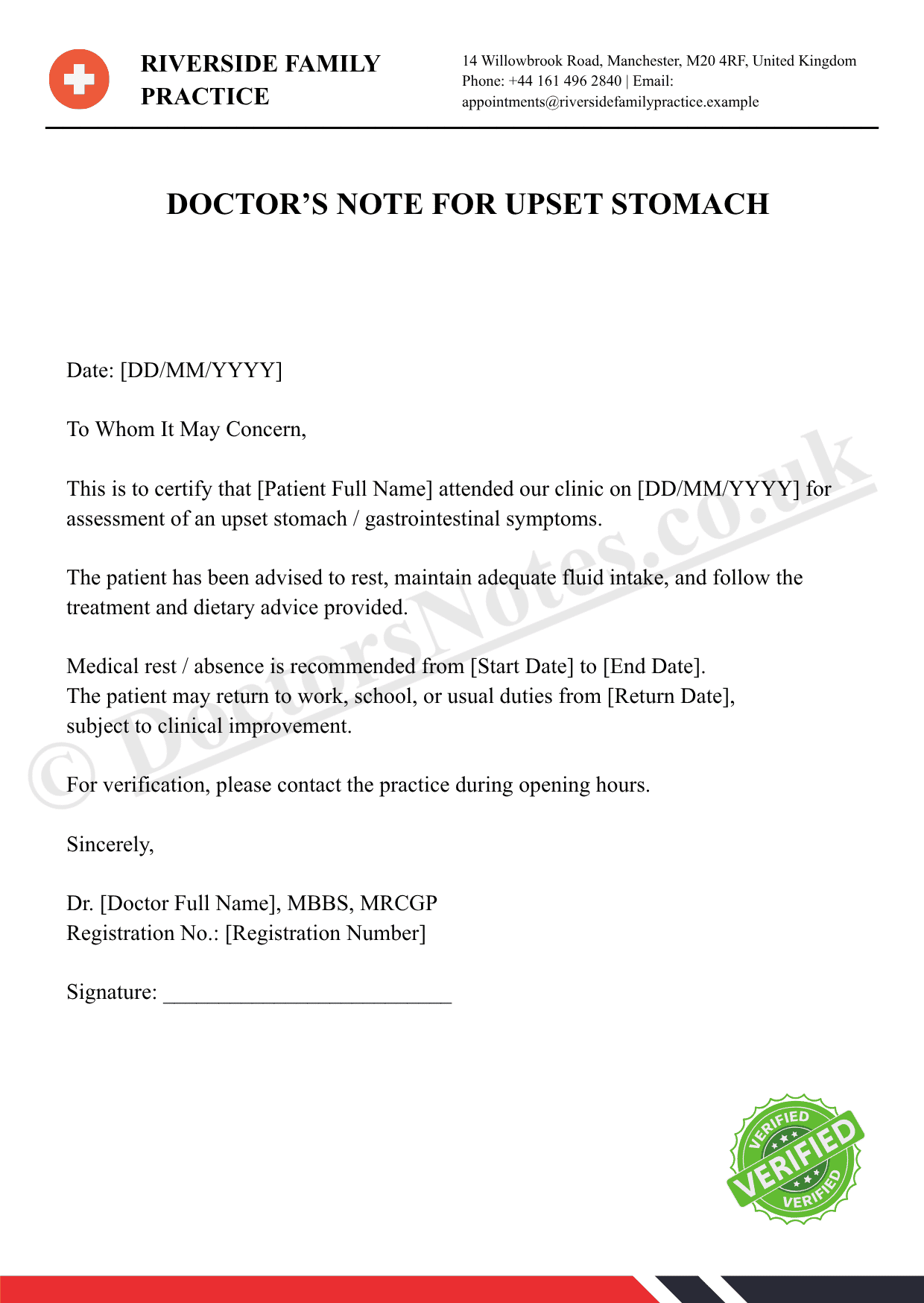
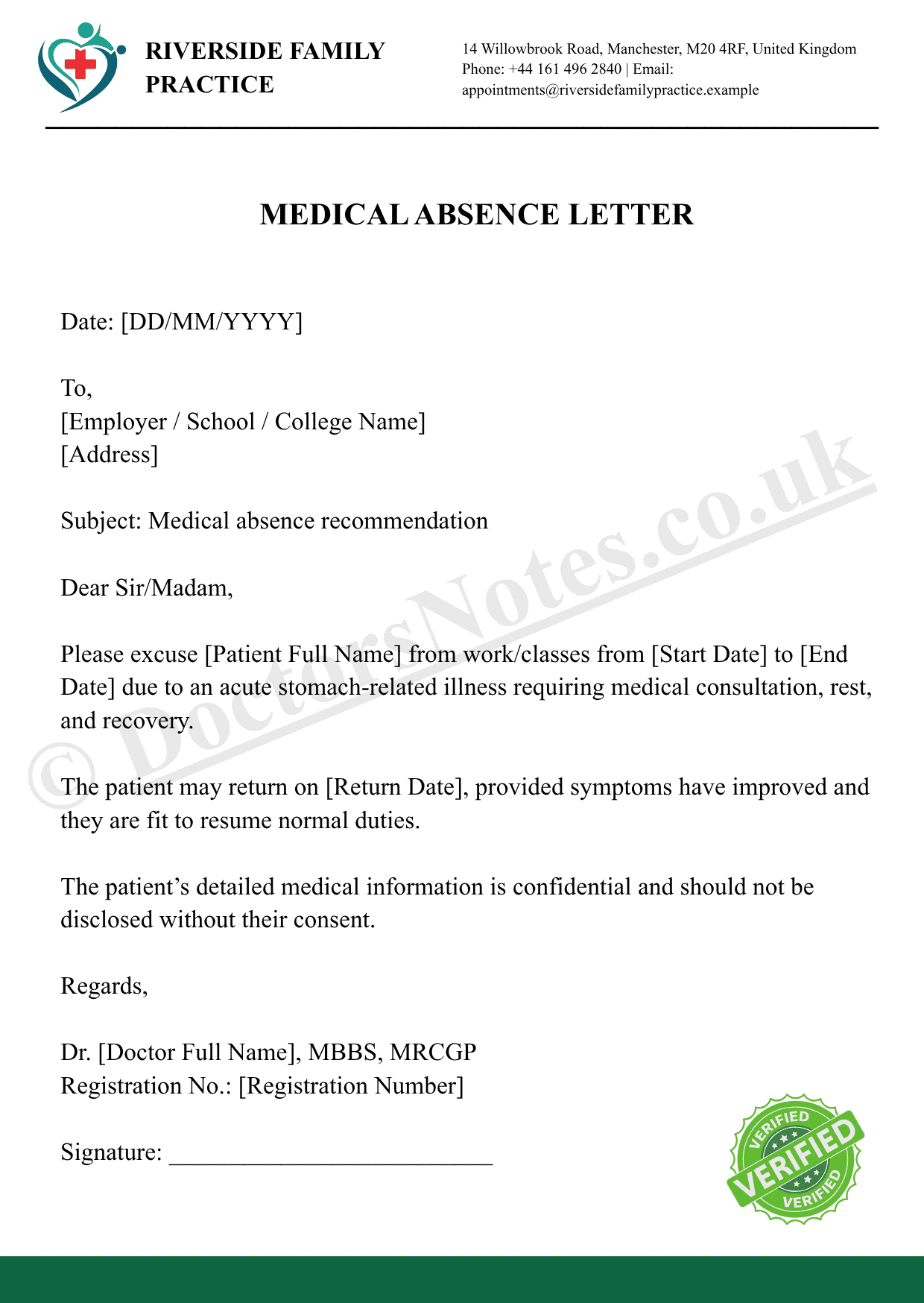
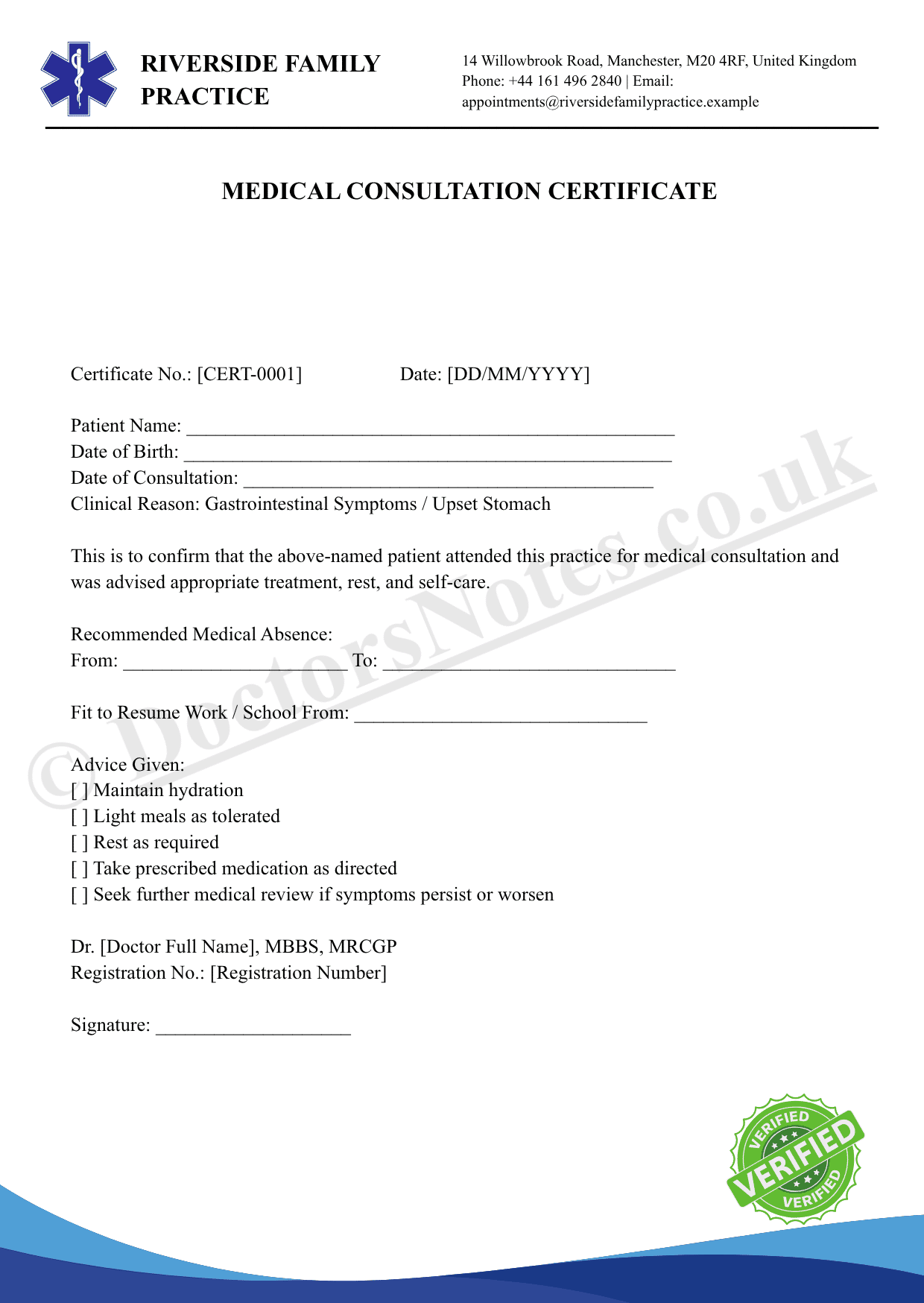


A Doctor’s Note for Upset Stomach may be needed when digestive symptoms affect your ability to work, attend school, travel, or manage normal daily activities. Following an online medical assessment, a healthcare professional can advise whether rest, temporary absence, workplace adjustments, or medical documentation are clinically appropriate.
Doctor’s Note for Upset Stomach is medical documentation provided after a healthcare professional evaluates digestive symptoms and determines whether temporary absence, rest, or activity adjustments are medically appropriate.
What Is a Doctor’s Note for Upset Stomach?
A Doctor’s Note for Upset Stomach is an official medical document confirming that a healthcare professional has assessed symptoms related to digestive discomfort.
The purpose of the note is to provide confirmation when stomach symptoms temporarily affect a person’s ability to complete normal responsibilities.
Depending on the assessment, the documentation may include:
- Confirmation of a medical consultation.
- Date of evaluation.
- Recommendation for rest or temporary absence where appropriate.
- Guidance regarding returning to normal activities.
- Follow-up advice if symptoms continue.
- General medical recommendations.
The note is based on the healthcare professional’s assessment and does not simply confirm an absence request.
What Does an Upset Stomach Include?
An upset stomach can describe a range of digestive symptoms that affect the stomach and gastrointestinal system.
Common symptoms may include:
- Stomach discomfort or cramps.
- Nausea.
- Bloating.
- Indigestion.
- Feeling unusually full.
- Loss of appetite.
- Acid discomfort.
- Mild digestive changes.
- Abdominal discomfort.
- Changes in bowel habits.
The severity and duration of symptoms can vary depending on the underlying cause.
When Might You Need a Doctor’s Note for Upset Stomach?
A healthcare professional may provide documentation when digestive symptoms interfere with normal activities.
Missing Work Due to Stomach Symptoms
An upset stomach may make it difficult to complete workplace responsibilities, especially when symptoms involve:
- Frequent bathroom visits.
- Nausea affecting concentration.
- Abdominal discomfort.
- Weakness or reduced energy.
- Difficulty eating or drinking normally.
A doctor may recommend temporary rest or workplace adjustments depending on the assessment.
School or University Absence
Students may require medical documentation when stomach symptoms prevent attendance or participation.
A doctor’s note may support:
- Short-term absence.
- Missed classes.
- Exam-related arrangements.
- Recovery time recommendations.
Educational institutions determine their own requirements for accepting medical documentation.
Travel or Scheduled Activities
Digestive symptoms may sometimes interfere with planned activities, including:
- Travel arrangements.
- Important appointments.
- Physical activities.
- Public events.
Medical documentation may help explain an inability to participate when symptoms require rest or treatment.
Common Causes of an Upset Stomach
Upset stomach symptoms can develop for many reasons.
Possible causes include:
- Eating unfamiliar foods.
- Food intolerance.
- Overeating.
- Dietary changes.
- Stress or emotional factors.
- Mild digestive infections.
- Medication effects.
- Acid-related digestive problems.
- Changes in normal eating patterns.
A healthcare professional can help determine whether further evaluation or treatment is needed.
How Does a Doctor Assess an Upset Stomach?
Before issuing a Doctor’s Note for Upset Stomach, the healthcare professional will review your symptoms and overall health.
The consultation may include:
- Discussion of symptoms and when they started.
- Review of food and drink intake.
- Questions about nausea, pain, or bowel changes.
- Review of existing medical conditions.
- Discussion of medications.
- Assessment of hydration and general wellbeing.
- Identification of symptoms that may require further investigation.
The healthcare professional uses this information to determine appropriate advice and whether medical documentation is suitable.
What Information May Be Included in a Doctor’s Note for Upset Stomach?
The details included depend on the purpose of the document and the healthcare professional’s assessment.
A doctor’s note may include:
- Confirmation that a medical consultation occurred.
- Date of assessment.
- Recommendations regarding rest or temporary absence.
- Guidance on returning to normal activities.
- Follow-up recommendations if symptoms continue.
Detailed information about the cause of digestive symptoms is usually only included when necessary or authorised.
Upset Stomach vs Stomach Virus: Understanding the Difference
| Upset Stomach | Stomach Virus |
|---|---|
| General digestive discomfort | Usually caused by viral infection |
| May result from food, stress, or digestion issues | Often involves contagious symptoms |
| Symptoms may be mild or short-term | May include vomiting and diarrhoea |
| Cause is not always infectious | Usually linked to infection |
| Treatment depends on the underlying cause | Requires infection management and recovery |
Not every upset stomach is caused by an infection, and a healthcare assessment can help determine the appropriate advice.
Important Information Before Requesting a Doctor’s Note for Upset Stomach
Before requesting medical documentation, remember:
- A doctor’s note is issued after a healthcare assessment.
- Mild digestive discomfort does not always require medical leave.
- The healthcare professional decides whether documentation is clinically appropriate.
- Employers, schools, and organisations have their own rules regarding medical notes.
- A doctor’s note does not automatically guarantee paid leave or approval of absence.
- Persistent or severe digestive symptoms should be medically evaluated.
Important: Seek medical advice if you experience severe abdominal pain, signs of dehydration, blood in stool or vomit, persistent vomiting, high fever, or symptoms that are getting worse.
How to Get a Doctor’s Note for Upset Stomach
If digestive discomfort is affecting your ability to work, attend school, or complete normal activities, you can arrange a consultation with a qualified healthcare professional. During the appointment, your symptoms will be reviewed, your condition will be assessed, and the healthcare professional will decide whether a Doctor’s Note for Upset Stomach is medically appropriate.
Step 1: Schedule a Medical Consultation
The first step is booking an appointment with a healthcare provider to discuss your stomach-related symptoms.
A consultation may be helpful if you are experiencing:
- Ongoing stomach discomfort.
- Nausea affecting daily activities.
- Abdominal cramps.
- Difficulty eating or drinking normally.
- Digestive symptoms preventing attendance at work or school.
- Symptoms that are not improving with basic self-care.
- Concerns about the cause of your stomach problems.
The healthcare professional will determine whether your symptoms require treatment, monitoring, or medical documentation.
Step 2: Describe Your Symptoms Clearly
During your appointment, explain your symptoms and how they are affecting your daily routine.
The healthcare professional may ask about:
- When the stomach discomfort started.
- Type and location of discomfort.
- Frequency of symptoms.
- Changes in appetite.
- Nausea or vomiting.
- Bowel movement changes.
- Foods recently consumed.
- Recent travel or lifestyle changes.
- Current medications.
- Existing digestive conditions.
Providing detailed information helps the healthcare provider understand the possible cause and severity of your symptoms.
Step 3: Explain Why You Need Medical Documentation
If you require a Doctor’s Note for Upset Stomach, explain the reason during your consultation.
Common reasons may include:
- Missing work due to digestive symptoms.
- Being unable to attend school or university.
- Requesting recovery time.
- Explaining absence from an important activity.
- Providing documentation required by an organisation.
The healthcare professional will decide what information should be included based on your medical assessment.
Step 4: Complete the Medical Evaluation
During the consultation, the healthcare professional will evaluate your symptoms and general health.
The assessment may include:
- Reviewing your digestive symptoms.
- Checking the duration and severity of discomfort.
- Discussing hydration and food intake.
- Reviewing possible triggers.
- Assessing whether symptoms affect normal functioning.
- Identifying signs that may require additional testing or treatment.
Depending on your condition, the healthcare professional may recommend dietary changes, medication, rest, monitoring, or further investigation.
Step 5: Follow the Recommended Recovery Plan
Treatment and recovery advice depend on the cause and severity of your upset stomach.
Recommendations may include:
- Drinking adequate fluids.
- Eating suitable foods during recovery.
- Resting when needed.
- Avoiding foods that worsen symptoms.
- Following prescribed treatments.
- Monitoring symptoms.
- Attending follow-up appointments if required.
Most mild digestive issues improve with appropriate care, but persistent symptoms may require further medical review.
Step 6: Receive Your Doctor’s Note for Upset Stomach
If the healthcare professional determines that documentation is appropriate, a Doctor’s Note for Upset Stomach may be provided.
The document may include:
- Confirmation of medical assessment.
- Date of consultation.
- Recommended period of rest or absence where appropriate.
- Guidance regarding returning to normal activities.
- Follow-up recommendations.
Important: A medical consultation does not automatically result in a doctor’s note. Documentation is issued only when the healthcare professional determines that it is supported by your symptoms and clinical assessment.
Recovery Tips for an Upset Stomach
While treatment depends on the underlying cause, some general measures may help support recovery.
Stay Hydrated
Digestive symptoms such as vomiting or diarrhoea can lead to fluid loss.
Helpful steps may include:
- Drinking fluids regularly.
- Taking small sips if nausea is present.
- Following healthcare advice regarding hydration.
Choose Gentle Foods
During recovery, some people find that lighter foods are easier to tolerate.
You may consider:
- Eating smaller meals.
- Avoiding foods that trigger discomfort.
- Gradually returning to a normal diet as symptoms improve.
Rest and Monitor Symptoms
Rest may support recovery, especially when digestive symptoms are accompanied by weakness or tiredness.
Monitor:
- Changes in pain levels.
- Ability to eat and drink.
- Duration of symptoms.
- Development of new symptoms.
How Long Is a Doctor’s Note for Upset Stomach Valid?
The duration covered by a Doctor’s Note for Upset Stomach depends on:
- Severity of symptoms.
- Underlying cause.
- Recovery progress.
- Impact on daily activities.
- Healthcare professional’s assessment.
Examples of Possible Recommendations
| Situation | Possible Recommendation* |
|---|---|
| Mild digestive discomfort | Short recovery period and self-care guidance |
| Symptoms affecting attendance | Temporary absence recommendation |
| Ongoing stomach problems | Follow-up assessment and additional advice |
| Symptoms improving | Return to normal activities when able |
| More serious concerns identified | Further medical evaluation |
*Recommendations vary depending on individual circumstances.
When Should You Arrange Another Medical Appointment?
A follow-up consultation may be recommended if:
- Symptoms continue for several days.
- Stomach discomfort becomes worse.
- You cannot keep fluids down.
- New symptoms appear.
- You require updated medical documentation.
- Treatment does not improve your condition.
Regular medical review helps ensure that ongoing digestive concerns receive appropriate care.
What Documents May Be Issued?
After evaluating your digestive symptoms and overall health condition, the healthcare professional will determine which type of medical documentation is appropriate based on your assessment and the reason you require confirmation.
Depending on your situation, you may receive:
- Doctor’s Note for Upset Stomach confirming that you were medically assessed and providing recommendations regarding rest or temporary absence where appropriate.
- Medical certificate supporting short-term absence from work, school, or other responsibilities.
- Documentation confirming attendance at a medical consultation.
- Follow-up medical recommendations if symptoms continue.
- Referral documentation if additional digestive evaluation or specialist care is required.
- Updated medical documentation if your condition changes or further assessment is needed.
The information included in any document depends on the healthcare professional’s evaluation and the requirements of the organisation requesting the documentation.
Important Legal Information About a Doctor’s Note for Upset Stomach
A Doctor’s Note for Upset Stomach is an official medical document prepared after a healthcare professional assesses digestive symptoms and determines whether medical recommendations are appropriate.
Before requesting or submitting stomach-related medical documentation, it is important to understand:
- A doctor’s note is issued only after a healthcare assessment.
- Experiencing mild stomach discomfort does not automatically require medical leave or official documentation.
- Healthcare professionals determine recommendations based on symptom severity, duration, and impact on daily functioning.
- Employers, schools, universities, and other organisations may have different rules regarding acceptable medical notes.
- A doctor’s note confirms medical assessment but does not guarantee approval of paid leave, refunds, absence requests, or other benefits.
- Some organisations may require additional forms or specific medical documentation.
- Medical information included in the note should be limited to what is necessary for the intended purpose.
- Personal health details and digestive history are confidential and protected under applicable privacy regulations.
- If symptoms worsen or new concerns develop, additional medical assessment may be required.
- Patients should follow recommended treatment advice and seek further care if symptoms do not improve.
Important: Severe stomach pain, ongoing vomiting, signs of dehydration, blood in vomit or stool, high fever, unexplained weight loss, or symptoms that continue for an extended period may require urgent medical evaluation.
Related Doctor’s Note :
Doctor’s Note for Norovirus
Doctor’s Note for Stomach Virus
Doctor’s Note for Work IBS
Doctor’s Note for Constipation
FAQ
Can I get a Doctor’s Note for Upset Stomach online?
In some situations, online medical consultations may be available if a healthcare professional can safely assess your symptoms remotely. The decision to provide documentation depends on the clinical evaluation.
Do I need a doctor’s note for a single day of stomach discomfort?
Requirements vary. Some employers or schools may request documentation even for short absences, while others may have different policies. Check the requirements of your organisation.
Can a doctor write a note for nausea and stomach discomfort?
Yes. If nausea or stomach discomfort affects your ability to function and the healthcare professional determines that documentation is appropriate, a medical note may be provided.
How long can a Doctor’s Note for Upset Stomach cover?
The timeframe depends on your symptoms, recovery progress, and the healthcare professional’s assessment. Some cases may require only brief rest, while others may need follow-up evaluation.
Will my employer know the exact cause of my upset stomach?
Usually, medical notes include only necessary information. Detailed digestive history or specific causes are generally not shared unless required or authorised.
Can I use an upset stomach doctor’s note for school?
Yes, if the educational institution accepts medical documentation. Students should check their school’s requirements for absence verification.
What if my stomach symptoms continue after receiving the note?
You should arrange another medical consultation. Continued symptoms may require additional evaluation, treatment changes, or updated documentation.
Can food poisoning be covered by an upset stomach doctor’s note?
Yes. If a healthcare professional assesses symptoms related to suspected food-related illness and determines that absence is appropriate, documentation may be provided.
Is an upset stomach contagious?
Not always. Some stomach problems are caused by infections and may spread, while others are related to diet, stress, or digestive conditions. A healthcare professional can help assess the likely cause.
Can stress cause an upset stomach?
Yes. Stress can affect digestion and may contribute to symptoms such as stomach discomfort, nausea, or changes in bowel habits. Persistent symptoms should still be assessed by a healthcare professional.
Why Choose Our Medical Documentation Service?
- Qualified healthcare professionals providing symptom-based medical assessments.
- Convenient consultation options for digestive health concerns.
- Documentation prepared only after appropriate clinical evaluation.
- Confidential handling of personal health information.
- Clear guidance regarding absence, recovery, and follow-up needs.
- Support for work, school, and administrative documentation requirements.
- Follow-up consultations available if symptoms change.
Conclusion
A Doctor’s Note for Upset Stomach provides medical confirmation when digestive symptoms affect a person’s ability to manage normal responsibilities. Whether the issue involves nausea, stomach discomfort, digestive changes, or short-term illness, professional assessment helps ensure that documentation accurately reflects your health situation.
Because stomach symptoms can have many different causes, medical documentation should always be based on an individual evaluation rather than a general request. Consulting a qualified healthcare professional can help identify appropriate care, support recovery, and provide accurate documentation when needed.



Reviews
There are no reviews yet.