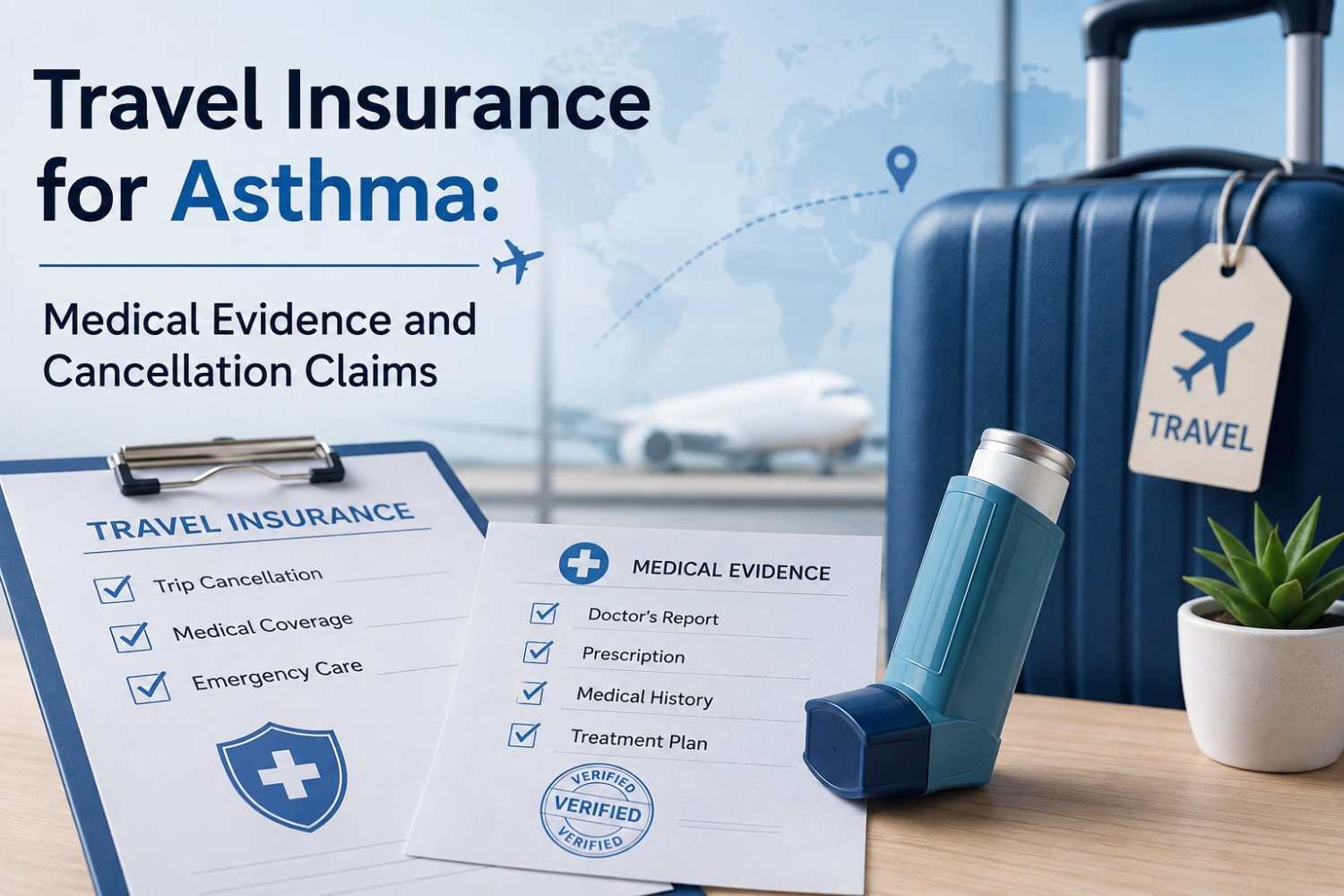
Travel insurance for asthma can give you important protection if your condition affects your holiday plans. Asthma does not usually mean you cannot travel, but an asthma attack, worsening symptoms or a change in your treatment could affect your ability to travel and may become relevant to a cancellation or medical claim.
If you have asthma, the most important thing is to understand how your condition fits within your travel insurance policy. You may need to declare asthma as a pre-existing medical condition, particularly if you have recently seen a doctor, received treatment, changed medication or experienced significant symptoms.
If you later have to cancel your holiday because your asthma becomes worse, your insurer may also ask for medical evidence showing why you could not travel.
Can you get travel insurance if you have asthma?
Yes. Having asthma does not automatically prevent you from getting travel insurance.
Many insurers provide cover for people with existing medical conditions, provided the condition is properly declared and accepted under the policy. MoneyHelper notes that insurers may consider a condition pre-existing if you have seen a doctor or received treatment for it, although the exact definition varies between insurers.
This means that even if your asthma is mild or well controlled, you should not automatically assume that it does not need to be mentioned.
Your insurer may ask about things such as:
- how often you experience asthma symptoms;
- whether you have needed emergency treatment;
- your prescribed medication;
- recent GP or hospital appointments;
- changes to your asthma treatment;
- whether you have been admitted to hospital; and
- whether your asthma affects your normal activities.
The answers can influence the cover available and, in some cases, the price of the policy.
The ABI also advises travellers to declare pre-existing medical conditions fully and honestly so the insurer can assess the risk correctly.
Does asthma count as a pre-existing medical condition?
It can.
There is no single definition used by every travel insurer. However, insurers commonly ask about medical conditions that you have recently received treatment for, consulted a doctor about or are still receiving care for.
For example, imagine you have asthma but have been stable for several years. You use your prescribed inhaler and have had no recent problems.
You may still need to declare your asthma during medical screening.
Now consider someone whose asthma has recently become difficult to control, who has needed a course of treatment or who has visited hospital because of breathing problems. The insurer may ask more detailed questions about that person’s condition.
This is why it is better to answer the insurer’s questions rather than deciding yourself whether your asthma is “serious enough” to disclose.
Can asthma prevent you from travelling?
Asthma does not usually prevent people from going on holiday. NHS travel guidance recommends planning ahead, carrying enough medication and considering potential asthma triggers when travelling.
However, an asthma flare-up can sometimes make travel unsuitable.
For example, you may develop worsening breathing difficulties shortly before departure. Your symptoms may no longer be well controlled, or your doctor may advise you not to fly until your condition has been assessed.
That situation is different from simply feeling nervous about travelling with asthma.
For an insurance claim, the question is generally whether there is a covered medical reason that prevented you from travelling.
If your symptoms are severe or you are experiencing an asthma attack, seek urgent medical help. The NHS advises calling 999 if an asthma attack is getting worse, does not improve after the maximum dose of your reliever inhaler, or you do not have an inhaler.
Can you cancel a holiday because of asthma?
Potentially, yes.
If your asthma becomes significantly worse before your holiday and you are medically advised not to travel, you may be able to claim under the cancellation cover included in your travel insurance.
But having asthma alone does not automatically create a valid cancellation claim.
The insurer may consider:
- whether asthma was declared;
- whether the condition was covered;
- when your symptoms became worse;
- whether you sought medical advice;
- whether you were medically unfit to travel; and
- whether the cancellation meets the policy’s terms.
Travel insurance policies differ considerably, so it is important to check the wording rather than assuming that every illness-related cancellation will be covered.
What medical evidence might you need?
Medical evidence can be one of the most important parts of an asthma-related travel insurance claim.
If you cancel because your asthma has worsened, the insurer may want evidence from your GP, consultant or another healthcare professional.
Depending on the circumstances, this could include information about:
- your asthma diagnosis;
- recent symptoms;
- changes in your condition;
- treatment or medication;
- a recent consultation;
- hospital treatment; or
- advice that you were not fit to travel.
The insurer may specifically request a medical certificate, doctor’s note or other medical documentation.
If your insurer has asked you to provide medical documentation for your cancellation claim, you can explore our doctor’s note for travel insurance service to see what documentation options may be relevant to your situation.
Any documentation should accurately reflect a genuine medical circumstance. It should not be used to create evidence for a claim that is not medically justified.
What if you have an asthma attack before your holiday?
An asthma attack shortly before departure can be particularly worrying if you have already paid for flights, accommodation and activities.
Your first priority should be your health.
If you experience an asthma attack, follow your personal asthma action plan and seek urgent medical care when necessary. The NHS provides specific emergency guidance for asthma attacks.
If your healthcare professional subsequently advises you not to travel, keep the relevant medical documentation.
Then contact your insurer promptly.
The insurer may want to know when your symptoms started, what treatment you received and why you were unable to travel.
Do not cancel simply because you think the insurer will pay. Check the policy and follow its claims procedure first where possible.
What if your asthma gets worse after buying travel insurance?
This is an important situation that many travellers overlook.
Suppose you buy your travel insurance while your asthma is stable. A few weeks later, your symptoms become worse and your medication is changed.
You should check your policy to see whether you need to tell the insurer about a change in your medical circumstances.
The ABI advises policyholders to speak to their insurer or broker if they are unsure about disclosure requirements or if their circumstances change during the policy.
Do not assume that information given when you originally bought the policy will automatically cover every future change in your health.
What if you are waiting for asthma tests or treatment?
Waiting for medical investigations or treatment can be relevant to travel insurance.
MoneyHelper states that insurers may consider a condition to be pre-existing where you are awaiting test results or an operation, although individual definitions vary.
For someone with asthma, this could become relevant if they are undergoing investigations because their symptoms have changed or if they are awaiting specialist assessment.
Tell the insurer what it asks for during medical screening.
If you are uncertain about whether something needs to be disclosed, contacting the insurer directly is safer than making an assumption.
Can you claim if asthma causes you to miss your flight?
Possibly, but the circumstances matter.
If your asthma suddenly becomes severe and you are unable to travel, your policy may provide some protection depending on the type of cover you purchased.
However, cancellation, missed-departure and travel-delay sections of a policy can work differently.
For example, simply arriving late at the airport because you were feeling short of breath may not automatically result in a successful claim.
If you are medically unable to travel, medical evidence can help establish what happened.
Your insurer will assess the situation against the relevant policy terms.
What happens if you need medical treatment for asthma abroad?
Travel insurance can be particularly valuable when a pre-existing respiratory condition becomes worse overseas.
An asthma attack abroad may require medical assessment, medication, an emergency department visit or hospital treatment.
Travel insurance can potentially cover eligible emergency medical expenses, depending on the policy and whether your asthma was declared and accepted for cover. The ABI describes overseas medical treatment and medical repatriation as key reasons for having travel insurance.
If you become seriously unwell:
- Seek appropriate medical treatment.
- Follow your insurer’s emergency assistance instructions where possible.
- Keep medical records and receipts.
- Contact the insurer as soon as it is safe to do so.
Do not delay emergency treatment because you are worried about whether your insurance will pay.
Will travel insurance cover your asthma medication?
Not necessarily.
Your usual asthma medication is different from unexpected emergency medical treatment.
Before travelling, make sure you have enough prescribed medication for the trip and follow the medical advice given to you.
NHS travel guidance recommends taking sufficient medication for the whole trip, plus extra where appropriate, and carrying spare inhalers.
Your travel insurance policy should be checked for its specific rules about medication, lost medication and emergency prescriptions.
It is also sensible to keep essential medication accessible rather than relying entirely on checked luggage.
Can weather or pollution affect your asthma while travelling?
Potential asthma triggers can vary between destinations.
Cold air, air pollution, allergens and strenuous activity may be relevant to some people with asthma.
This does not mean that you cannot visit destinations with these conditions. It simply makes preparation more important.
If you know that particular environments trigger your asthma, discuss your travel plans with your healthcare professional before departure.
NHS travel guidance recommends considering factors such as pollution, cold climates, high altitude, remote locations and areas with limited medical facilities when planning travel with asthma.
How much could you claim if asthma forces you to cancel?
There is no fixed amount.
If your policy covers cancellation because of illness, it may reimburse eligible prepaid and non-refundable costs up to the policy limit.
These could potentially include:
- flights
- accommodation
- package holidays
- pre-booked transport
- excursions and
- other eligible travel expenses.
However, exclusions, policy limits and the insurance excess can affect the final amount.
You may also need to recover any available refund from the airline, hotel, travel company or other provider before claiming the remaining eligible loss from your insurer.
MoneyHelper recommends checking cancellation limits, excesses and the specific terms of your policy before relying on the cover. What documents should you keep for an asthma insurance claim?
If you think you may need to make a claim, keep as much relevant documentation as possible.
Useful records can include:
- your travel insurance policy
- booking confirmations
- cancellation invoices
- GP or hospital letters
- medical certificates
- prescriptions
- medication records
- receipts and
- correspondence with your insurer.
If your insurer has specifically requested a doctor’s note confirming your inability to travel, you can view our travel insurance medical documentation options and choose the relevant service for your circumstances.
Related Doctor’s Note:
What can cause an asthma travel insurance claim to be rejected?
A claim can be rejected for different reasons, depending on the policy.
One common problem is failing to disclose a relevant pre-existing medical condition. MoneyHelper warns that not providing accurate medical information can result in a claim being rejected or insurance being invalidated.
Other possible problems include:
The policy excludes the circumstances
Not every medical situation is covered. The reason for cancellation must meet the policy’s requirements.
Your asthma was not disclosed
If the insurer asked about existing medical conditions and you did not provide the required information, this could affect your claim.
There is insufficient medical evidence
If the insurer needs confirmation that you were medically unable to travel, missing documentation can make the claim harder to assess.
You cancelled without following the required process
Some insurers require you to contact them promptly or obtain specific medical evidence.
The claim exceeds the policy limit
Even where a claim is valid, the insurer will generally only pay within the applicable policy limits and after any relevant excess.
How to make an asthma travel insurance claim
If you cannot travel because of asthma, contact your insurer as soon as possible.
Ask what you need to do and which documents they require.
You should generally be prepared to provide:
- details of your illness;
- evidence of medical advice;
- booking and cancellation documents;
- receipts;
- your policy details; and
- any requested medical certificate.
Citizens Advice recommends contacting the insurer promptly, completing the claim form carefully and retaining copies of supporting paperwork.
The insurer will then assess your claim against the policy.
How to prepare for a holiday if you have asthma
Good preparation can reduce the chance of an asthma problem disrupting your trip.
Before travelling, consider whether your asthma is well controlled and whether you have enough medication.
You may also want to:
- review your asthma action plan;
- carry spare medication;
- keep inhalers accessible during the journey;
- check potential asthma triggers at your destination;
- identify how to access medical care;
- check your travel insurance cover; and
- keep your insurer’s emergency contact details available.
NHS travel guidance recommends reviewing asthma management before travelling and carrying enough medication, including spare inhalers.
Buying travel insurance as soon as you book your holiday is also sensible because cancellation cover can potentially protect you against certain events occurring before departure.
What about a GHIC or EHIC?
If you are travelling in eligible European countries, a GHIC or EHIC can provide access to certain state healthcare arrangements.
However, it is not a replacement for travel insurance.
The ABI explains that GHIC and EHIC cards do not provide the same protection as travel insurance and do not cover things such as medical repatriation or cancellation.
If you have asthma, having appropriate travel insurance is therefore still important.
Frequently Asked Questions
Can I get travel insurance with asthma?
Yes. Many insurers provide travel insurance to people with asthma. You may need to declare your condition during medical screening.
Do I need to declare mild asthma?
If the insurer’s medical screening questions require you to disclose it, yes. Do not decide yourself that mild asthma is irrelevant. MoneyHelper specifically notes that even conditions considered minor may need to be declared depending on the circumstances.
Can I cancel my holiday because of an asthma attack?
Possibly. If an asthma attack or worsening condition makes you medically unable to travel and your policy covers that circumstance, you may be able to claim.
Do I need a doctor’s note for an asthma travel insurance claim?
Not always. Requirements differ between insurers. If your insurer requests medical evidence, it may ask for a doctor’s note, medical certificate or other documentation.
Does travel insurance cover asthma treatment abroad?
It can, provided the relevant medical condition has been disclosed and the treatment falls within the policy’s cover. Always check the policy’s exclusions and conditions.
Can I travel abroad with asthma?
Asthma does not normally prevent people from travelling. Planning ahead, carrying sufficient medication and understanding your triggers can help you manage your condition while away. nhs.uk
What if my asthma becomes worse after I buy travel insurance?
Check your policy and contact your insurer if your medical circumstances change. The insurer may need updated information before confirming that your existing cover remains appropriate.
Can I claim for a non-refundable holiday if my doctor says I cannot travel?
You may be able to, if your policy includes suitable cancellation cover and the medical circumstances meet its conditions. Supporting medical evidence may be required.
Conclusion
Travel insurance for asthma does not have to be complicated, but you need to be honest about your medical history and understand what your policy actually covers.
Asthma that is well controlled may have little impact on your travel plans. But a severe flare-up, recent treatment or change in your condition can become important when arranging insurance or making a cancellation claim.
If your asthma genuinely prevents you from travelling, obtain appropriate medical advice and keep the supporting documentation. Contact your insurer promptly and follow its claims process rather than assuming that a diagnosis alone guarantees reimbursement.
Most importantly, choose cover based on your actual circumstances rather than simply choosing the cheapest policy. Pre-existing medical conditions can affect what an insurer covers, so the right level of protection matters.
And if your insurer asks you for medical documentation to support a genuine asthma-related cancellation claim, explore our doctor’s note for travel insurance service to find out more about the documentation options available.

Dr. Anuj provides convenient online medical consultations for patients across the UK, making it easier to speak with a doctor without the need for an in-person visit.
Through secure online consultations, Dr. Anuj can assess your symptoms, discuss your concerns, and provide appropriate medical guidance. Where medically appropriate and legally permitted, a doctor’s note or medical documentation may also be provided following the consultation.