


Menopause is a natural stage of life that can bring a wide range of physical and emotional changes. While some people experience mild symptoms, others may find that menopause-related changes significantly affect their ability to work, study, manage daily tasks, or maintain their usual routine.
Symptoms such as hot flashes, night sweats, sleep disruption, fatigue, mood changes, difficulty concentrating, and physical discomfort can make everyday responsibilities more challenging. For some individuals, these symptoms may occur unexpectedly and interfere with workplace performance, attendance, or personal commitments.
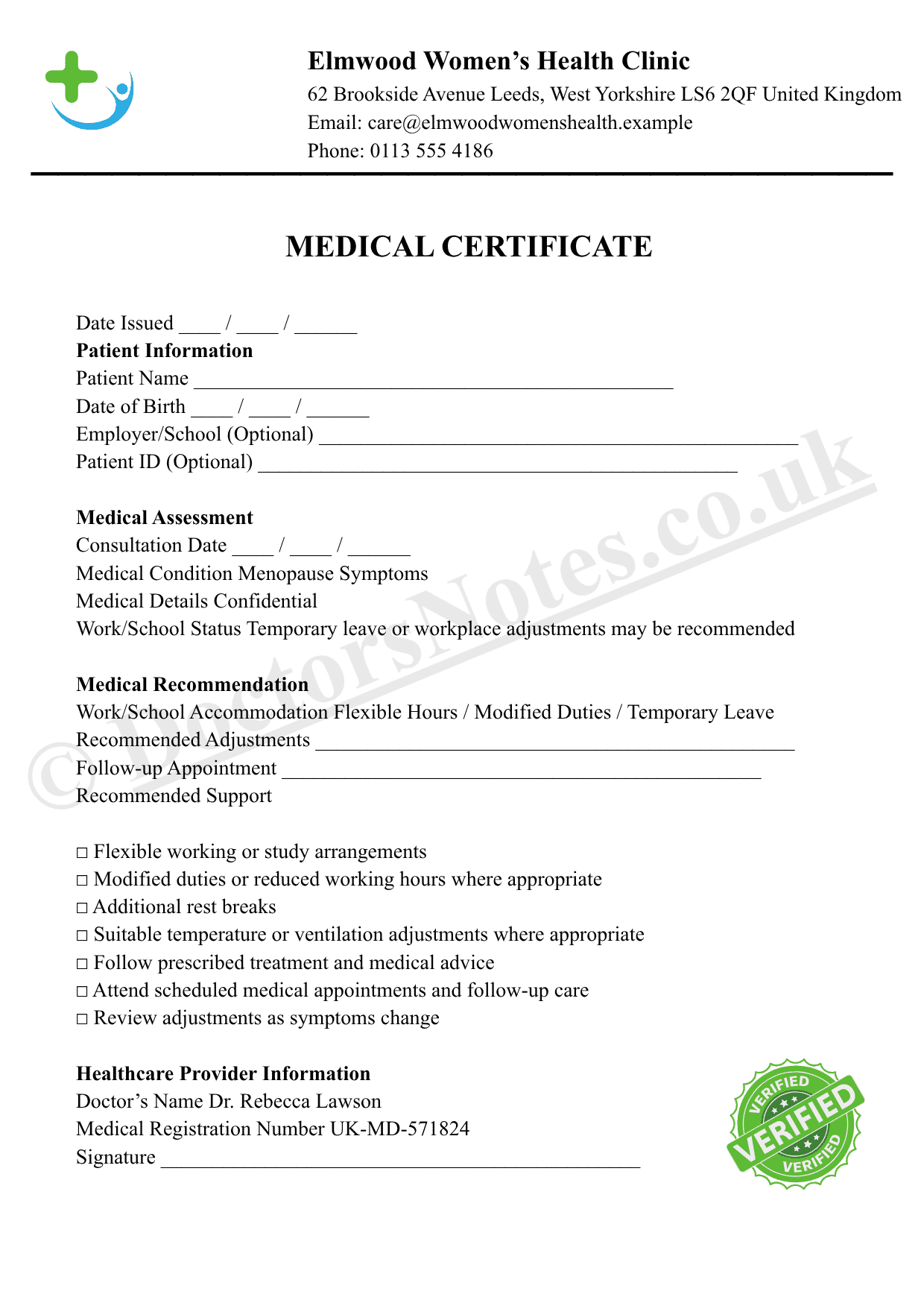
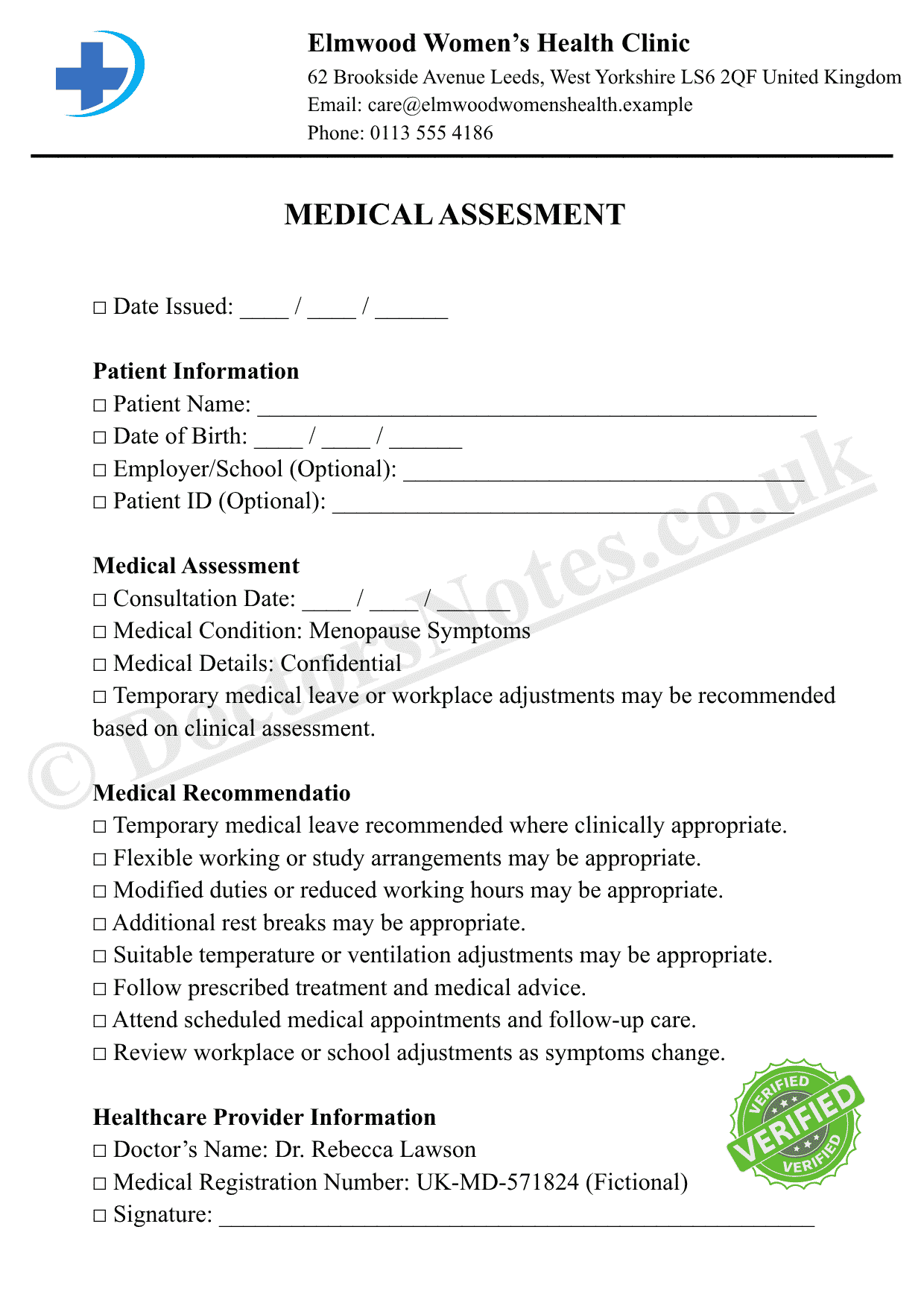
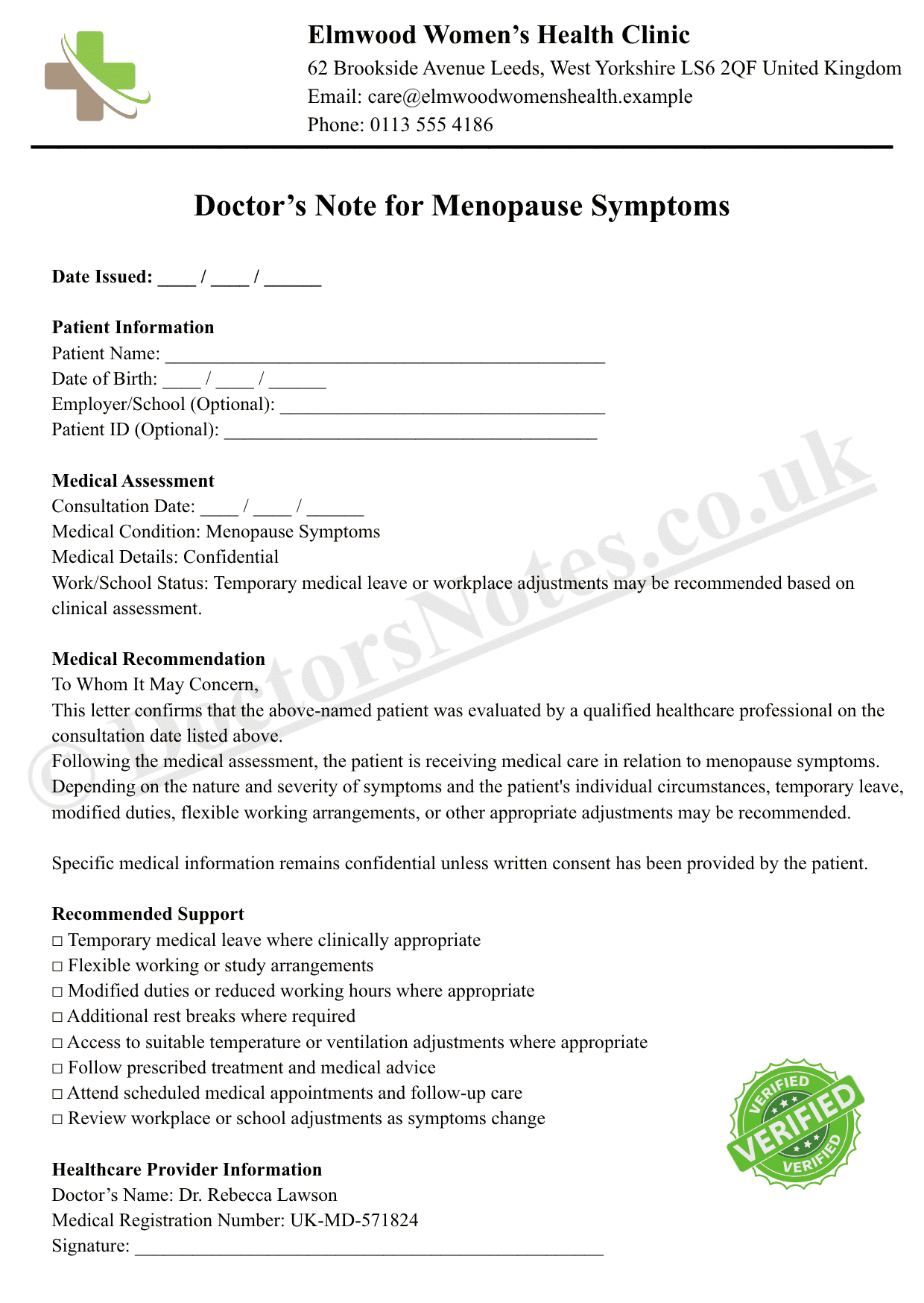
A Doctor’s Note for Menopause Symptoms provides medical documentation confirming that your symptoms have been reviewed by a healthcare professional. It can help explain health-related absences, support workplace discussions, and provide evidence when menopause symptoms affect your normal activities.
Whether you are experiencing early menopause, perimenopause symptoms, or ongoing menopausal changes, having appropriate medical documentation can help communicate your situation professionally while allowing you to focus on managing your health.
Why Someone May Need a Doctor’s Note for Menopause Symptoms
Menopause affects everyone differently. Some people continue daily activities with minimal disruption, while others experience symptoms that make regular responsibilities difficult.
Menopause symptoms may affect:
- Energy levels throughout the day
- Sleep quality and concentration
- Ability to complete work tasks
- Emotional wellbeing
- Physical comfort during activities
- Attendance at work or appointments
A Menopause Medical Note can help confirm that symptoms affecting your routine are linked to a recognised health condition.
People may require documentation for situations such as:
- Workplace sick leave
- Temporary adjustments at work
- Medical appointments
- Reduced duties during difficult periods
- Absence from educational activities
Understanding Menopause and Its Impact on Daily Life
Menopause occurs when hormonal changes cause menstrual periods to stop permanently. The transition period before menopause is known as perimenopause, during which symptoms may begin to appear.
Hormonal fluctuations during this stage can affect different parts of the body, including:
- Sleep patterns
- Temperature regulation
- Mood and emotions
- Energy levels
- Cognitive function
Although menopause is a normal biological process, the symptoms experienced during this transition can sometimes be severe enough to interfere with everyday responsibilities.
Common Menopause Symptoms That May Require Medical Documentation
The symptoms associated with menopause vary from person to person.
Common symptoms include:
Hot Flashes and Night Sweats
Sudden feelings of heat and sweating episodes can interrupt daily activities and sleep.
Sleep Problems
Difficulty sleeping can lead to:
- Daytime tiredness
- Reduced concentration
- Lower productivity
Fatigue and Low Energy
Ongoing tiredness may make it harder to maintain normal work or personal responsibilities.
Mood Changes
Hormonal changes may contribute to:
- Irritability
- Anxiety
- Emotional sensitivity
- Changes in mood
Difficulty Concentrating
Some people experience memory problems or difficulty focusing, sometimes referred to as “brain fog.”
Other possible symptoms may include:
- Headaches
- Joint discomfort
- Changes in menstrual patterns
- Reduced confidence
- Changes in overall wellbeing
Doctor’s Note for Menopause Symptoms for Work
Menopause symptoms can affect workplace performance, especially when they interfere with concentration, sleep, comfort, or energy levels.
A Doctor’s Note for Menopause Symptoms for Work may support employees who need:
- Confirmation of menopause-related health issues
- Sick leave documentation
- Workplace adjustments
- Additional recovery time
- Support during symptom flare-ups
Certain workplace environments may become more challenging when experiencing menopause symptoms, including:
- Jobs requiring long periods of concentration
- Physically demanding roles
- Workplaces with limited break opportunities
- Roles involving customer interaction
- Shift-based employment
Medical documentation can help employers better understand the reason behind absence or requests for adjustments.
Menopause Medical Note for Workplace Adjustments
Many individuals continue working during menopause but may require changes to make their working environment more manageable.
Depending on workplace policies, adjustments may include:
- Flexible working arrangements
- Temperature control options
- Additional rest breaks
- Changes to workload during severe symptoms
- Adjusted schedules
A healthcare professional can provide relevant medical guidance based on individual circumstances.
Doctor’s Note for Menopause Symptoms for School and Education
Although menopause commonly affects working-age adults, some individuals may experience symptoms while completing education, professional training, or other learning activities.
Symptoms such as fatigue, poor sleep, and difficulty concentrating may affect:
- Attendance
- Exam preparation
- Classroom participation
- Assignment completion
A medical note may help explain health-related difficulties when educational institutions require supporting documentation.
When Should You Consider Getting a Menopause Symptoms Doctor’s Note?
Medical documentation may be helpful when menopause symptoms begin interfering with important areas of life.
You may consider requesting a note if:
- Symptoms prevent you from attending work
- Sleep disruption affects daily functioning
- Fatigue limits normal activities
- You need support after medical appointments
- Your employer requests medical evidence
- Symptoms require temporary adjustments
A healthcare professional can review your situation and determine suitable documentation.
Medical Assessment for Menopause Documentation
A doctor’s note should be based on an appropriate health assessment.
During a consultation, you may discuss:
- Current menopause symptoms
- How symptoms affect your daily routine
- Duration and severity of symptoms
- Previous medical support received
- Workplace or education-related concerns
The healthcare professional considers this information when preparing appropriate medical documentation.
The purpose is to ensure the document accurately reflects your health circumstances.
What Information Can Be Included in a Doctor’s Note for Menopause Symptoms?
A medical note generally includes relevant information needed for confirmation while protecting personal privacy.
A typical menopause medical document may include:
| Information | Purpose |
|---|---|
| Patient Details | Confirms the person assessed |
| Medical Review Date | Records when consultation occurred |
| Health Condition | Notes menopause-related concerns |
| Functional Impact | Explains relevant limitations |
| Medical Recommendations | Provides suitable guidance |
| Healthcare Provider Details | Identifies the issuing professional |
| Date Issued | Confirms document preparation date |
The exact details depend on the healthcare assessment and documentation requirements.
How Long Can Menopause Symptoms Affect Daily Activities?
The duration and intensity of menopause symptoms vary significantly.
Factors that may influence symptoms include:
- Hormonal changes
- Individual health factors
- Lifestyle factors
- Treatment approach
- Personal recovery and adaptation
Some individuals experience symptoms for a shorter period, while others may manage symptoms over several years.
Can Menopause Symptoms Be a Reason for Sick Leave?
Yes, menopause symptoms may contribute to the need for sick leave when they significantly affect a person’s ability to perform normal responsibilities.
Examples include:
- Severe fatigue affecting productivity
- Sleep problems causing exhaustion
- Difficulty concentrating
- Intense physical symptoms
- Emotional symptoms affecting daily functioning
A healthcare professional can assess whether time away from work or adjustments may be appropriate.
Treatment and Management of Menopause Symptoms
Menopause management depends on individual symptoms and healthcare needs.
A healthcare professional may discuss options such as:
- Lifestyle changes
- Symptom management strategies
- Hormonal treatments where appropriate
- Non-hormonal approaches
- Further medical evaluation
Every person’s experience with menopause is different, so support is usually tailored to individual needs.
Prescription Information for Menopause Symptoms
A doctor’s note and prescription serve separate purposes.
A prescription provides information about medication or treatment, while a medical note confirms that your symptoms have been medically reviewed.
Depending on your situation, a healthcare professional may discuss:
- Hormone-related treatments
- Symptom relief options
- Further assessments
- Specialist support
Treatment decisions should always be based on professional medical advice.
Is a Doctor’s Note for Menopause Symptoms Legally Valid?
A medical note is considered valid when it is issued following an appropriate consultation with an authorised healthcare professional.
Employers, schools, and organisations may request medical evidence when symptoms affect attendance or responsibilities.
Requirements can vary depending on:
- Country regulations
- Workplace policies
- Employer procedures
- Duration of absence
For UK guidance regarding sickness absence and medical evidence, individuals can refer to official government information through GOV.UK.
Medical documentation should always accurately represent the person’s assessed health situation.
Benefits of Getting a Menopause Symptoms Doctor’s Note Online
Convenient Support During Difficult Symptoms
When experiencing fatigue, sleep issues, or discomfort, travelling for appointments may feel challenging.
Helps Explain Your Situation
Medical documentation can provide professional confirmation when symptoms affect your responsibilities.
Access Healthcare Guidance Easily
Online consultations allow you to discuss concerns from a comfortable location.
Supports Work and Personal Requirements
Documentation may assist with workplace communication and other official needs.
Frequently Asked Questions
Can I get a Doctor’s Note for Menopause Symptoms online?
Yes, an online consultation allows a healthcare professional to review your symptoms and determine whether medical documentation is appropriate.
Can menopause symptoms qualify for sick leave?
Yes, if symptoms significantly affect your ability to work or complete normal activities.
Do employers accept menopause medical notes?
Many employers accept medical documentation, although requirements vary depending on workplace policies.
Can menopause cause tiredness and poor concentration?
Yes, fatigue, sleep disruption, and concentration difficulties are commonly reported symptoms.
How long do menopause symptoms last?
The duration varies between individuals and depends on many personal health factors.
Can menopause affect work performance?
Yes, symptoms such as hot flashes, fatigue, and sleep problems can affect comfort, focus, and productivity.
Is menopause considered a medical condition?
Menopause is a natural life stage, but symptoms may require medical support when they significantly affect daily functioning.
Should I tell my employer about menopause symptoms?
This is a personal decision. Medical documentation can provide necessary confirmation without sharing unnecessary private information.
Request Your Doctor’s Note for Menopause Symptoms Today
Menopause symptoms can affect more than physical comfort—they can influence sleep, concentration, emotional wellbeing, and the ability to maintain everyday responsibilities.
If your symptoms are affecting your work, education, or daily routine, a Doctor’s Note for Menopause Symptoms can provide professional documentation to support your situation.
Through our online healthcare consultation service, you can discuss your symptoms with a qualified healthcare professional and request appropriate medical documentation while focusing on managing your health.



Reviews
There are no reviews yet.