



Neck pain can affect much more than comfort—it can interfere with concentration, sleep, driving, work performance, and even simple daily activities such as turning your head or using a computer. Whether the discomfort developed after a sudden injury, prolonged desk work, poor posture, muscle strain, or an underlying medical condition, seeking medical advice is an important step toward proper recovery.
A Doctor’s Note for Neck Pain is a professional medical document issued after a qualified healthcare provider has completed an appropriate clinical assessment. It confirms that your condition has been evaluated and, where medically justified, outlines how your symptoms may temporarily affect your ability to work, study, or carry out normal responsibilities.
Rather than simply confirming that you have neck pain, the document focuses on your functional limitations, allowing employers, educational institutions, insurers, or other organisations to better understand how your condition impacts your daily activities while maintaining your medical privacy.
Understanding Neck Pain
The neck, also known as the cervical spine, supports the weight of the head while allowing a wide range of movement. Because it is constantly in use, the neck is vulnerable to muscle strain, joint problems, nerve irritation, and injuries.
Neck pain may develop suddenly or gradually. Some people experience mild stiffness that improves within a few days, while others develop more significant symptoms requiring medical evaluation and temporary activity modification.
A healthcare assessment helps determine the nature of your symptoms and whether medical documentation is appropriate.
When Might You Need a Doctor’s Note for Neck Pain?
Many organisations request medical evidence when neck pain affects attendance or work performance.
A Medical Certificate for Neck Pain may be useful for:
- Sick leave from work
- Temporary work restrictions
- Return-to-work planning
- University or college absence
- School attendance records
- Occupational health assessments
- Insurance documentation
- Fitness-for-duty reviews
- Workplace accommodation requests
The exact purpose of the note depends on your individual circumstances.
Common Causes of Neck Pain
Neck pain has many possible causes, and not every case requires the same treatment.
Muscle Strain
One of the most common causes is overstretching or overuse of the neck muscles.
This may occur because of:
- Poor posture
- Sleeping in an awkward position
- Prolonged computer use
- Looking down at mobile devices
- Heavy lifting
Sudden Injury
Trauma may result from:
- Road traffic accidents
- Falls
- Sports injuries
- Workplace accidents
Repetitive Work Activities
Jobs involving repetitive movements or prolonged sitting can gradually place stress on the neck.
Examples include:
- Office work
- Driving
- Hairdressing
- Manufacturing
- Healthcare roles
Age-Related Changes
Natural wear and tear affecting the cervical spine may contribute to stiffness and discomfort over time.
A healthcare professional evaluates your symptoms to determine the most appropriate advice.
Symptoms That May Affect Daily Activities
Neck pain varies considerably from one person to another.
Common symptoms include:
Pain and Stiffness
Discomfort may increase when:
- Turning the head
- Looking up or down
- Driving
- Sitting for long periods
Reduced Mobility
Some individuals struggle to move their neck through its normal range of motion.
Muscle Tightness
Persistent muscle tension may make everyday tasks uncomfortable.
Headaches
Neck problems may occasionally contribute to headaches or upper shoulder discomfort.
Radiating Symptoms
Some conditions may cause pain, tingling, or numbness extending into the shoulder or arm.
Persistent neurological symptoms require prompt medical assessment.
How Neck Pain Can Affect Your Work
Even mild neck pain can reduce productivity depending on your occupation.
Office-Based Employment
Symptoms may interfere with:
- Computer work
- Video meetings
- Reading documents
- Telephone use
- Long periods of sitting
Physical Occupations
Jobs involving lifting, carrying, climbing, or repetitive movements may become difficult or unsafe.
Driving Responsibilities
Professional drivers may experience difficulty turning their head safely while operating vehicles.
A Doctor’s Note for Neck Pain for Work may support temporary adjustments while recovery is ongoing.
Temporary Workplace Adjustments
Recovery does not always require complete absence from work. In some situations, temporary modifications may help you continue working safely.
Examples include:
- Reduced lifting
- Ergonomic workstation adjustments
- Flexible working hours
- Regular movement breaks
- Temporary home working where suitable
- Modified manual handling tasks
- Alternative duties that reduce neck strain
Any workplace adjustment remains subject to employer approval and operational requirements.
Neck Pain and Education
Students may also find neck pain affects academic performance.
Possible difficulties include:
- Attending lectures
- Carrying heavy bags
- Writing for extended periods
- Completing examinations
- Using laboratory equipment
- Maintaining concentration during classes
Medical documentation may assist with requests for:
- Academic absence
- Assignment extensions
- Temporary examination arrangements
- Practical activity adjustments
Educational institutions apply their own academic regulations.
What Happens During the Medical Assessment?
A doctor’s note is only issued after an appropriate healthcare consultation.
Your clinician may discuss:
- When the pain started
- How the symptoms developed
- Previous neck problems
- Pain severity
- Daily activities affected
- Work or study responsibilities
- Current medications
- Previous treatment
A physical assessment may include evaluation of:
- Neck movement
- Muscle tenderness
- Posture
- Strength
- Reflexes where appropriate
- Functional ability
Further investigations may be recommended if clinically indicated.
What Information Can Be Included in a Doctor’s Note for Neck Pain?
Medical documentation provides relevant information without revealing unnecessary personal medical details.
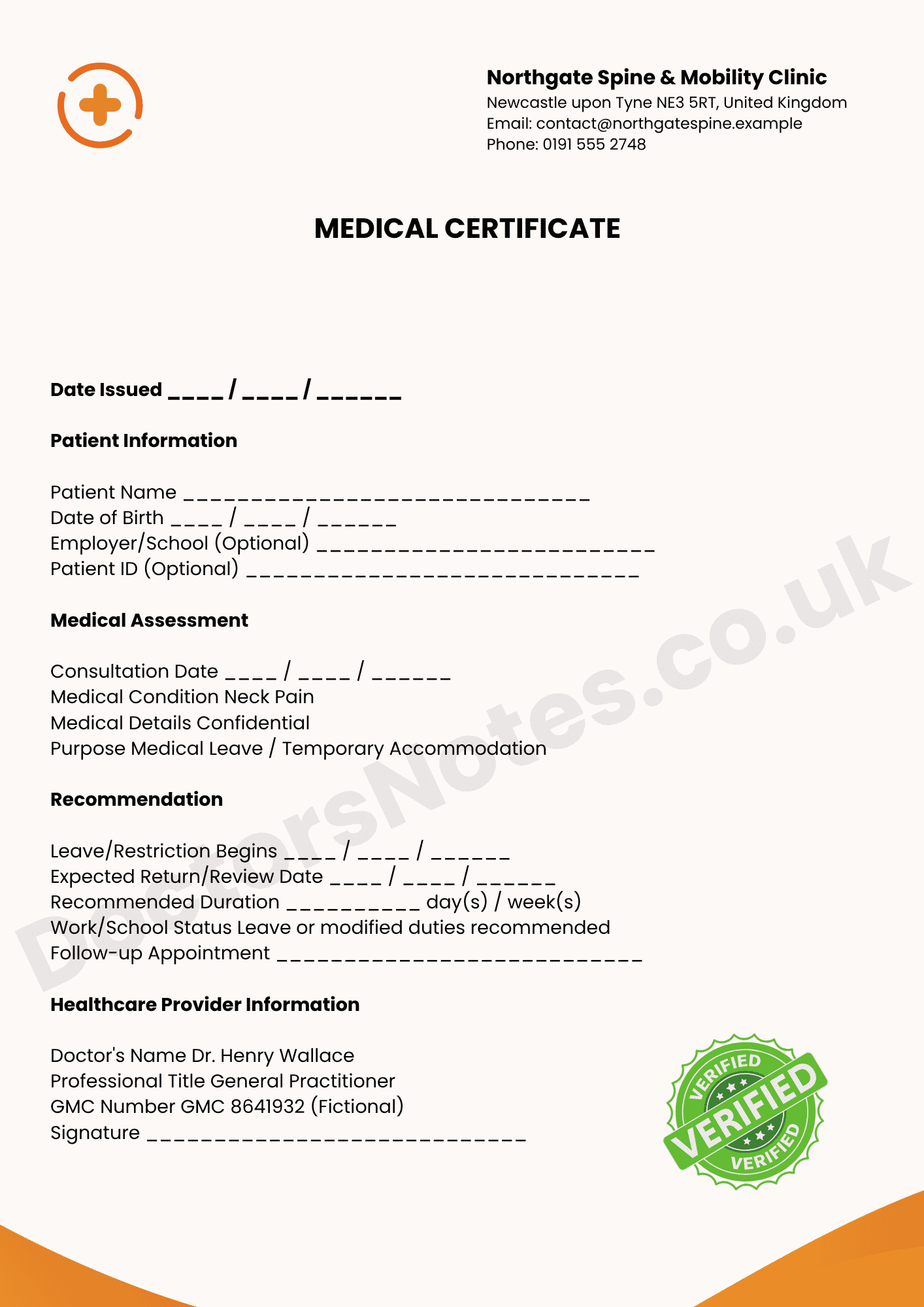
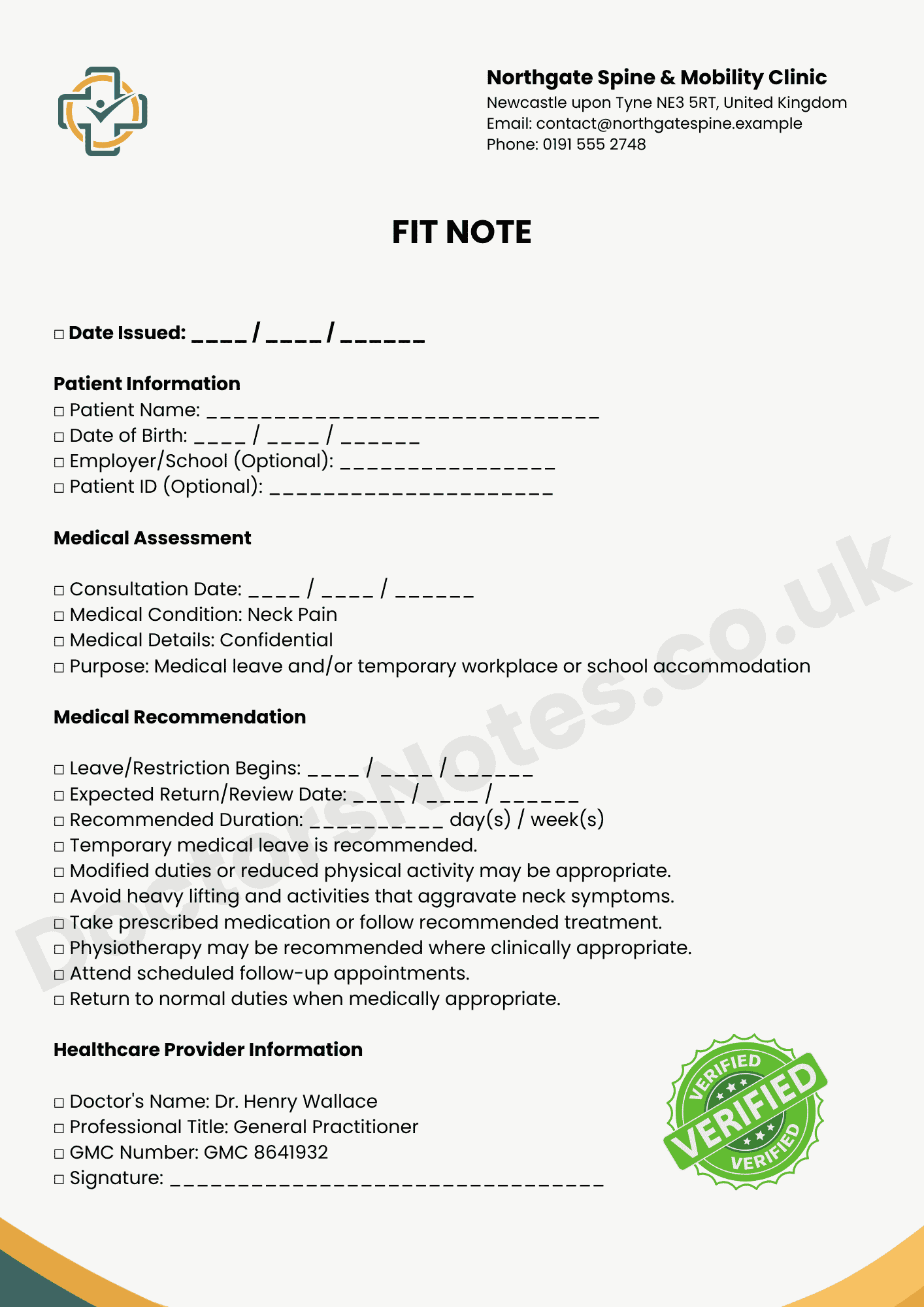
A neck pain doctor’s note may include:
| Information Included | Purpose |
|---|---|
| Patient identification | Confirms who received the assessment |
| Date of consultation | Records the clinical evaluation |
| Confirmation of medical assessment | Verifies review by a qualified healthcare professional |
| Functional limitations | Explains how symptoms affect normal activities |
| Temporary recommendations | May include work or study adjustments where appropriate |
| Follow-up recommendations | Indicates whether reassessment may be required |
| Healthcare provider information | Confirms the issuing clinician |
The exact wording reflects your individual clinical assessment.
Managing Neck Pain During Recovery
Recovery often depends on the underlying cause, symptom severity, and adherence to medical advice.
Your healthcare professional may recommend:
- Activity modification
- Gentle movement
- Physiotherapy
- Posture improvement
- Ergonomic adjustments
- Pain management strategies
- Stretching exercises when appropriate
- Follow-up assessment if symptoms persist
Treatment plans vary according to the individual’s condition.
Returning to Normal Activities
Returning to work, exercise, or driving should be guided by your recovery rather than by a fixed timeline.
Before resuming full activity, healthcare professionals may consider:
- Pain levels
- Neck mobility
- Functional ability
- Workplace demands
- Safety considerations
- Risk of symptom recurrence
Gradual return to normal activities is often more appropriate than resuming full duties immediately.
Legal and Employment Considerations
Employers frequently request medical evidence when an employee’s health affects their ability to perform normal duties.
Depending on workplace policies and employment law, organisations may review:
- Temporary work restrictions
- Occupational health recommendations
- Reasonable workplace adjustments
- Return-to-work plans
- Employee health and safety responsibilities
For UK workplace guidance relating to employee health and safety, individuals can consult Health and Safety Executive (HSE).
Medical documentation supports discussions but does not automatically determine employment decisions.
Can You Request a Doctor’s Note Online?
Yes. In many situations, an online consultation provides a convenient way to discuss your symptoms with a qualified healthcare professional.
Where clinically appropriate, the consultation may include:
- Assessment of neck pain
- Review of symptom history
- Evaluation of functional limitations
- Medical advice
- Consideration of documentation if appropriate
Certain symptoms—such as significant weakness, severe trauma, or suspected spinal injury—may require urgent in-person medical evaluation.
Why People Choose an Online Consultation
Convenient Access to Care
You can discuss your symptoms without travelling unnecessarily when movement is uncomfortable.
Supports Workplace Communication
Medical documentation helps explain temporary limitations in a professional manner.
Suitable for Academic Needs
Students can obtain medical evidence when neck pain affects attendance or assessments.
Independent Clinical Assessment
Recommendations are based on a healthcare professional’s evaluation rather than self-certification.
Frequently Asked Questions
Can I request a Doctor’s Note for Neck Pain online?
Yes. Following an appropriate consultation, a qualified healthcare professional may provide documentation if it is clinically appropriate.
Can neck pain justify time off work?
Depending on the severity of your symptoms and the physical demands of your job, temporary absence or modified duties may be recommended.
Will the note include my diagnosis?
Not necessarily. Many doctor’s notes focus on functional limitations and work recommendations while protecting patient confidentiality.
Can I use this note for university or school?
Many educational institutions accept medical documentation for illness or injury, although their requirements vary.
How long does neck pain usually last?
Recovery depends on the underlying cause. Mild muscle strains may improve within days or weeks, while more complex conditions may require longer treatment.
Should I stop exercising if I have neck pain?
Activity recommendations depend on your condition. Always follow the advice of your healthcare professional before returning to exercise.
What if my symptoms spread into my arm?
Pain, numbness, tingling, or weakness affecting the arm should be assessed promptly by a healthcare professional, as it may indicate nerve involvement.
Is online medical documentation widely accepted?
Acceptance depends on the policies of the employer, educational institution, insurer, or organisation requesting the documentation.
Request Your Doctor’s Note for Neck Pain Today
Neck pain can make even routine tasks challenging, affecting your ability to work, study, travel, and carry out everyday responsibilities. Professional medical documentation provides a clear explanation of your temporary limitations while supporting communication with employers, schools, universities, or other organisations.
A Doctor’s Note for Neck Pain is issued following an appropriate clinical assessment and may assist with workplace absence, modified duties, academic accommodation, occupational health reviews, or other legitimate administrative requirements.
Our online consultation service enables you to speak with a qualified healthcare professional, receive personalised medical advice, and determine whether documentation is appropriate—helping you prioritise your recovery while managing your professional, educational, or personal commitments with confidence.




Reviews
There are no reviews yet.