

Balancing your health with work responsibilities is not always easy. Some medical conditions do not completely prevent someone from working, but they may make long shifts, overnight schedules, physically demanding duties, or extended working hours difficult to manage safely. In these situations, a temporary reduction in working hours may be more appropriate than taking complete sick leave.
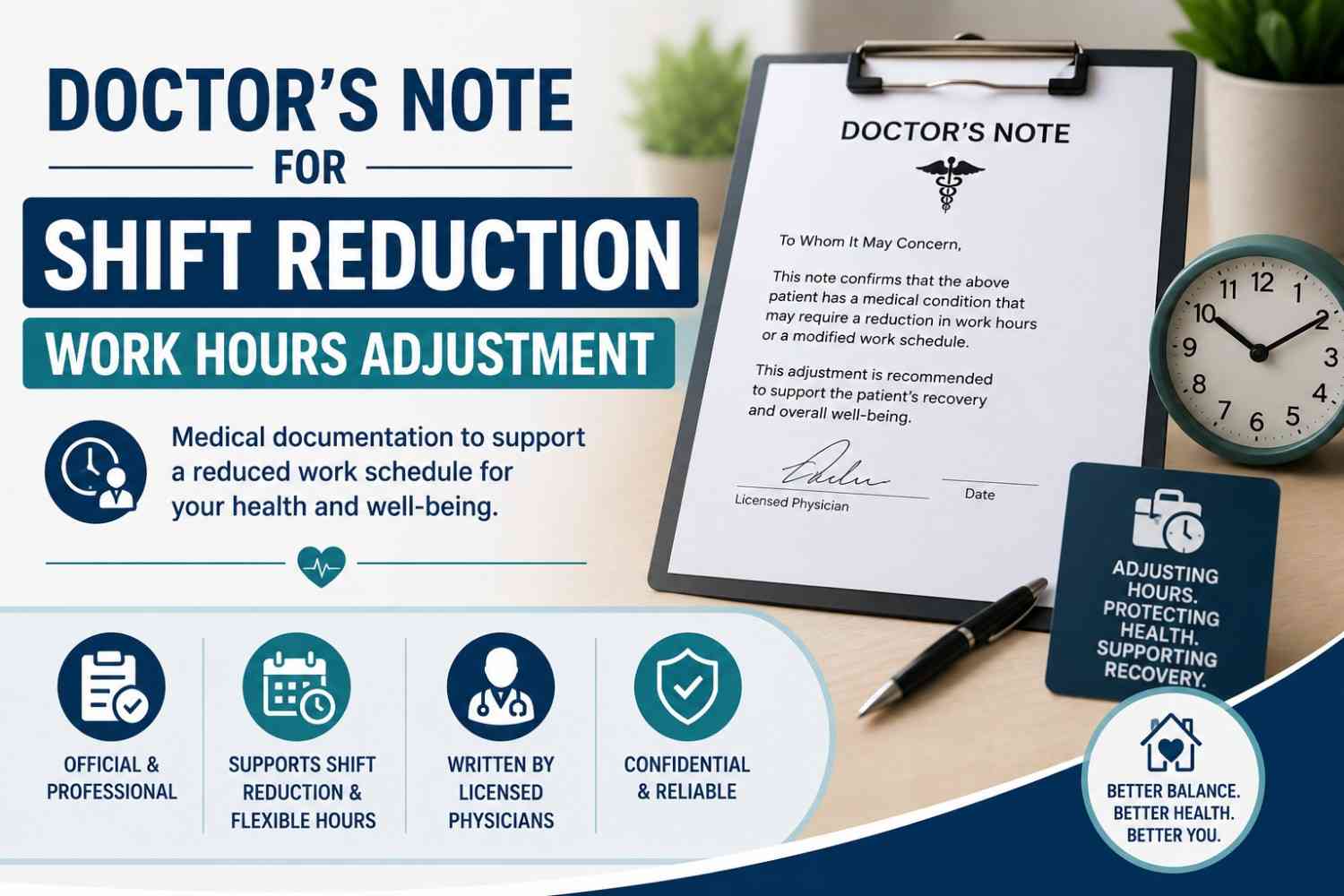
A Doctor’s Note for Shift Reduction is a professional medical document issued after an assessment by a qualified healthcare professional. It explains, where clinically appropriate, that your current health condition temporarily affects your ability to work your usual schedule and that reduced shifts or modified working hours may support your recovery.
Unlike a standard sick note that recommends complete absence, this type of documentation focuses on remaining at work with reasonable temporary adjustments, allowing you to continue contributing while protecting your health and workplace safety.
Related Post:
- Doctors Note for Reduced Hours
- Return to Work Doctors Note
- Doctors Note for Insomnia
- Doctors Note for Anxiety
What Is a Doctor’s Note for Shift Reduction?
A doctor’s note for shift reduction is medical evidence that supports a temporary decrease in working hours or adjustment to your normal shift pattern because of a health-related condition.
Depending on your circumstances, the note may support requests for:
- Shorter daily shifts
- Reduced weekly hours
- Temporary part-time work
- Fewer consecutive working days
- Removal from overnight shifts
- Reduced overtime
- Modified work schedules
- Flexible working arrangements
- Occupational health assessments
The recommendations are based entirely on an individual medical evaluation.
When Might a Shift Reduction Be Appropriate?
A reduced work schedule may be considered when working full shifts could delay recovery or worsen symptoms.
Examples include:
Recovery Following Surgery
Healing after an operation may temporarily reduce stamina and physical capacity.
Musculoskeletal Injuries
Back pain, joint injuries, fractures, or repetitive strain injuries may limit prolonged physical activity.
Chronic Medical Conditions
Long-term health conditions sometimes fluctuate, making full-time schedules temporarily difficult.
Pregnancy-Related Symptoms
Fatigue, discomfort, or other pregnancy-related symptoms may affect tolerance for long shifts.
Mental Health Recovery
Stress-related conditions, anxiety, or burnout may occasionally benefit from temporary workload adjustments alongside ongoing treatment.
Medical Treatment
Certain treatments or medications may cause fatigue or require regular healthcare appointments.
Every recommendation depends on the clinical assessment and the individual’s job responsibilities.
Signs That Full Shifts May Be Affecting Your Health
You may benefit from discussing a reduced schedule with a healthcare professional if you experience:
- Persistent fatigue during work
- Increasing pain throughout the shift
- Difficulty maintaining concentration
- Symptoms worsening after long working hours
- Reduced physical endurance
- Medication side effects affecting performance
- Difficulty recovering between shifts
Early medical advice may help prevent symptoms from becoming more severe.
How Reduced Shifts Can Support Recovery
Temporary schedule adjustments may allow you to remain productive while reducing physical or mental strain.
Potential benefits include:
Better Recovery Between Working Days
Additional rest may improve healing and reduce symptom flare-ups.
Lower Physical Demands
Shorter shifts reduce prolonged standing, lifting, walking, or repetitive movements.
Improved Concentration
Reduced fatigue may support safer decision-making and better work performance.
Continued Workplace Participation
Remaining active at work may be preferable to complete absence when medically appropriate.
Recommendations always depend on your healthcare provider’s assessment.
Occupations Where Shift Reduction May Be Helpful
A temporary reduction in working hours may be considered across many industries.
Examples include:
Healthcare
Doctors, nurses, carers, and allied health professionals often work demanding long shifts.
Manufacturing
Factory work frequently involves repetitive movement, standing, or manual handling.
Retail
Extended standing and customer-facing duties may become difficult during recovery.
Hospitality
Restaurants, hotels, and catering services often require physically demanding shifts.
Transport
Long driving hours or irregular schedules may not be appropriate during certain medical conditions.
Office-Based Employment
Even desk-based roles can become challenging when fatigue, pain, or medical treatment affects concentration.
What Happens During the Medical Assessment?
A doctor’s note is prepared only after an appropriate consultation.
During the assessment, your healthcare professional may discuss:
- Your current symptoms
- Medical diagnosis where relevant
- Job role and shift pattern
- Physical or mental work demands
- Current treatment
- Medication effects
- Recovery progress
- Expected duration of temporary limitations
The goal is to understand how your health affects your ability to complete your normal working schedule safely.
What Information Can Be Included in a Doctor’s Note for Shift Reduction?
Medical documentation is prepared to support workplace discussions while maintaining patient confidentiality.
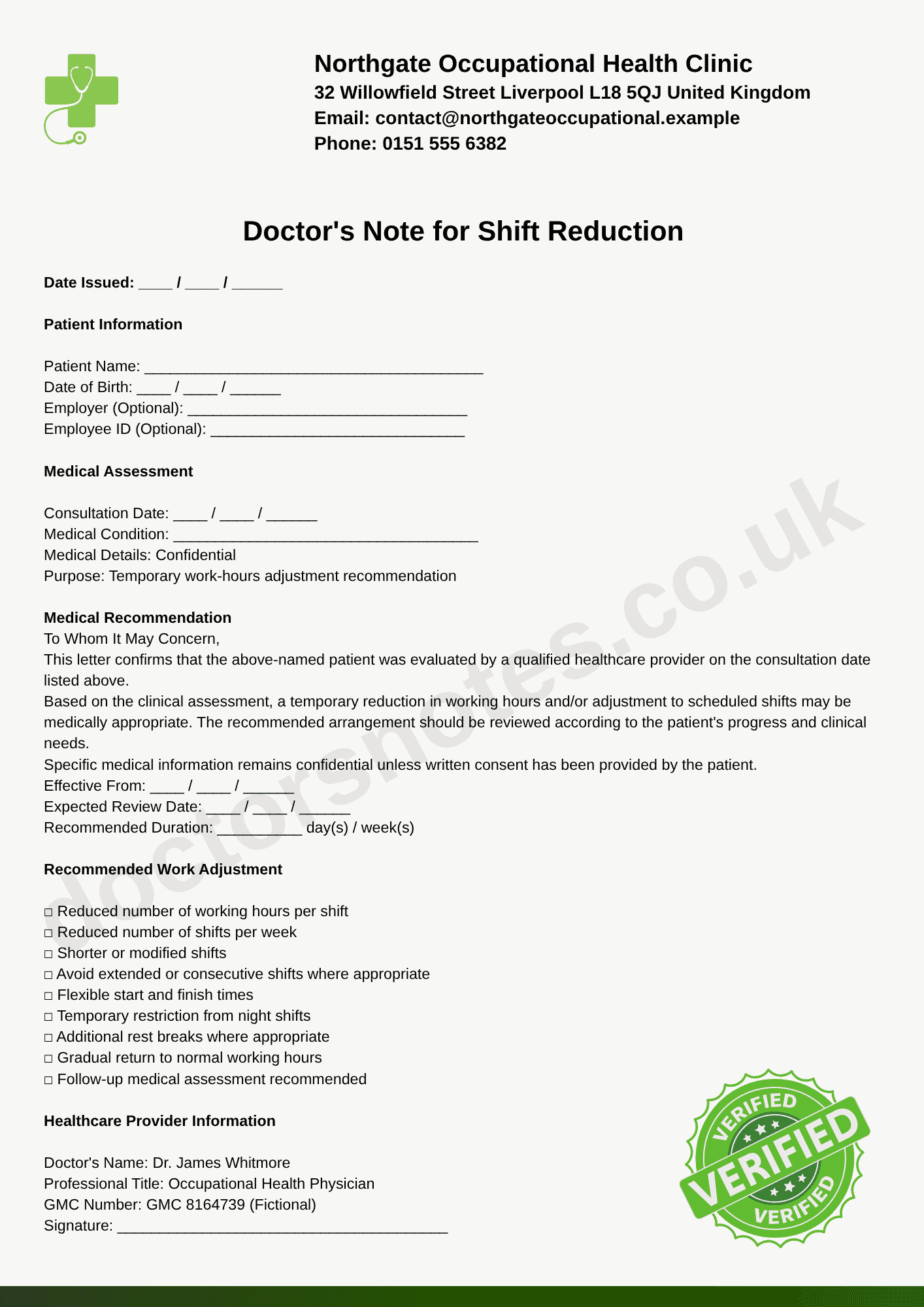
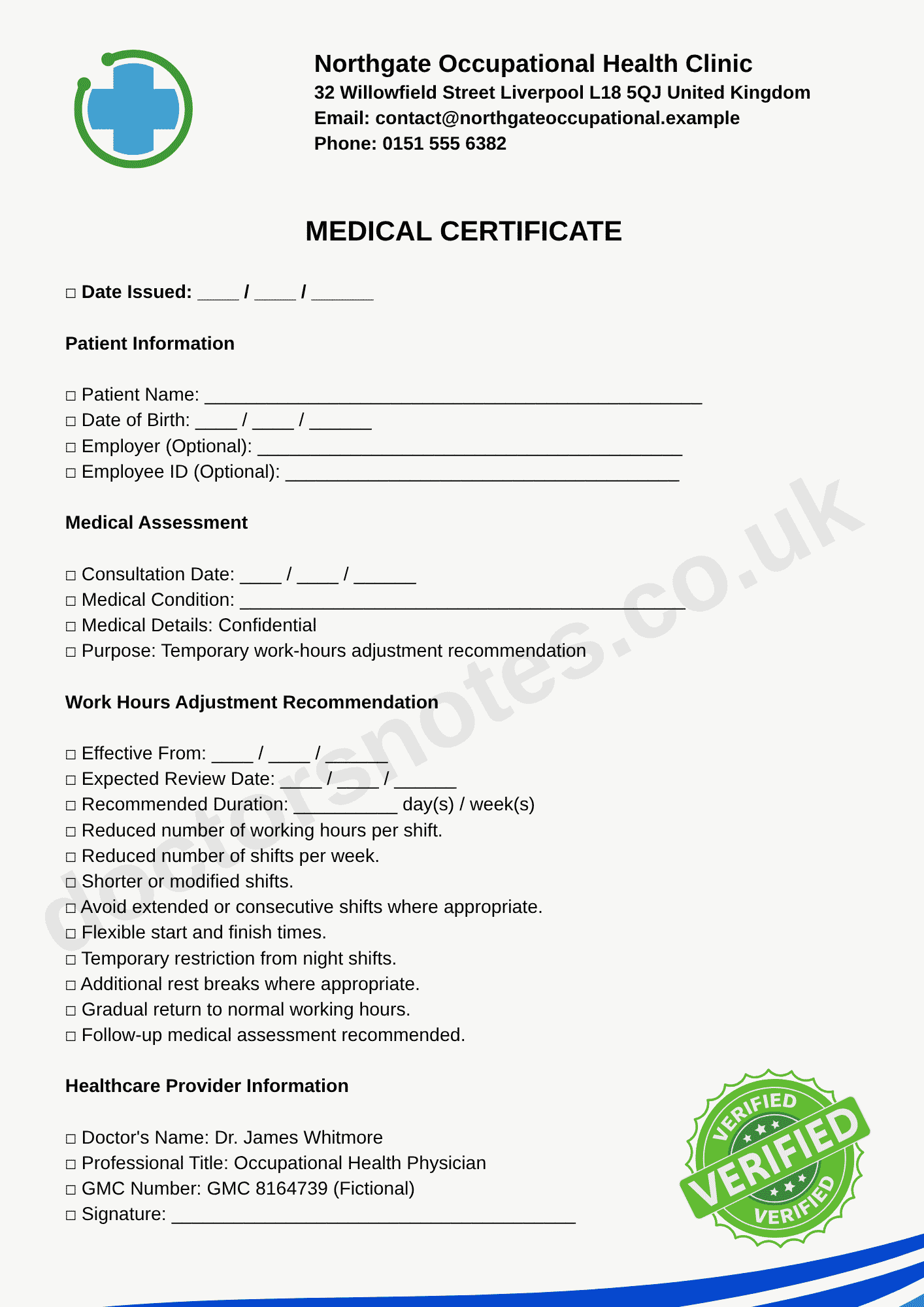
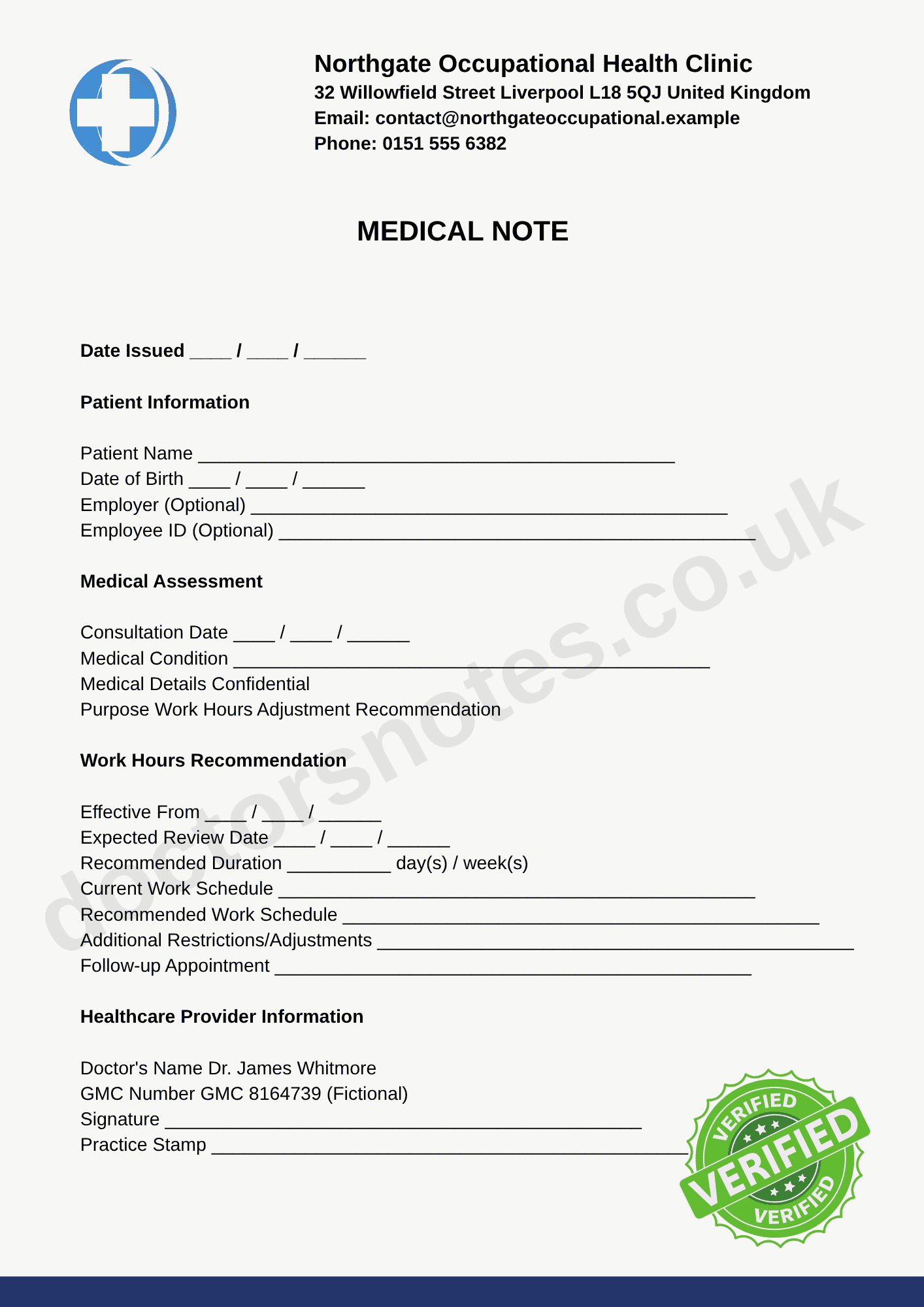
A shift reduction doctor’s note may include:
| Information Included | Purpose |
|---|---|
| Patient identification | Confirms who attended the consultation |
| Assessment date | Records when the medical review occurred |
| Confirmation of clinical assessment | Verifies evaluation by a qualified healthcare professional |
| Functional limitations | Explains why full shifts may not currently be appropriate |
| Temporary workplace recommendations | May suggest reduced hours or modified shifts where clinically appropriate |
| Review period | Indicates whether reassessment may be required |
| Healthcare provider details | Confirms the issuing clinician |
Recommendations are tailored to your individual circumstances.
Examples of Temporary Workplace Adjustments
Every workplace is different, but employers may consider a range of temporary solutions.
Examples include:
- Six-hour shifts instead of twelve-hour shifts
- Day shifts instead of overnight work
- Fewer consecutive working days
- Reduced overtime
- Additional recovery breaks
- Flexible start and finish times
- Hybrid or remote working where appropriate
- Temporary administrative duties
The employer decides whether requested adjustments can be accommodated while meeting operational needs.
Working Together With Occupational Health
Some organisations may involve occupational health professionals when reviewing requests for modified duties.
Occupational health may help by:
- Assessing workplace risks
- Reviewing job demands
- Advising employers on temporary adjustments
- Supporting phased recovery plans
- Recommending workplace modifications
A doctor’s note can contribute valuable clinical information during this process.
Looking After Your Health While Working Reduced Hours
Reducing your shifts should be combined with appropriate self-care and ongoing treatment.
Your healthcare provider may advise you to:
- Attend follow-up appointments
- Take medication as prescribed
- Prioritise adequate sleep
- Maintain balanced nutrition
- Stay physically active within recommended limits
- Avoid activities that worsen symptoms
- Report any deterioration in your condition
Recovery plans should always be personalised.
Employment Rights and Flexible Working
Depending on local employment laws and workplace policies, employees may be able to discuss temporary changes to working patterns for medical reasons.
Employers may consider:
- Flexible working arrangements
- Temporary reduced hours
- Reasonable workplace adjustments
- Occupational health referrals
- Phased return-to-work programmes
For official UK guidance on flexible working rights, employees can consult GOV.UK Flexible Working Guidance.
Medical documentation supports workplace discussions but does not automatically require employers to approve every request.
Can You Request a Doctor’s Note for Shift Reduction Online?
Yes, where clinically appropriate.
An online consultation enables a qualified healthcare professional to:
- Review your symptoms
- Assess your ability to complete normal work shifts
- Discuss how your condition affects your job
- Provide medical advice
- Determine whether documentation recommending temporary shift reduction is appropriate
Some conditions may require an in-person examination before recommendations are made.
Why Employees Choose Professional Medical Documentation
Supports Practical Workplace Solutions
Reduced shifts may allow employees to remain productive while recovering.
Encourages Earlier Recovery
Avoiding excessive physical or mental strain may help prevent prolonged illness.
Protects Medical Privacy
Documentation explains temporary work limitations without unnecessarily disclosing sensitive medical information.
Provides Independent Clinical Evidence
Employers receive professional medical guidance based on your current health rather than assumptions.
Frequently Asked Questions About Doctor’s Note for Shift Reduction
Can I request a Doctor’s Note for Shift Reduction online?
Yes. After an appropriate medical assessment, a qualified healthcare professional may issue documentation if it is clinically appropriate.
Does a shift reduction mean I am unfit for work?
Not necessarily. In many cases, the recommendation is intended to help you continue working safely with temporary modifications rather than taking complete sick leave.
Can my employer refuse reduced shifts?
Employers usually consider medical recommendations alongside operational requirements and company policies. Final decisions remain with the employer.
Can this doctor’s note recommend avoiding night shifts?
Where clinically appropriate, a healthcare professional may recommend temporary changes to your shift pattern, including avoiding overnight work.
Will the note explain my diagnosis?
Not usually. Medical documentation generally focuses on your functional ability and workplace recommendations while protecting confidential health information.
How long can a temporary shift reduction last?
The duration depends on your condition, recovery progress, and follow-up medical assessments.
What if my symptoms improve sooner than expected?
You can arrange another medical review to reassess your work capacity and determine whether normal shifts can safely resume.
Is online medical documentation accepted by employers?
Acceptance depends on your employer’s policies, occupational health requirements, and local workplace procedures.
Request Your Doctor’s Note for Shift Reduction Today
Many health conditions do not require complete absence from work—they simply require a temporary adjustment to working hours while recovery takes place. Professional medical documentation helps explain why reduced shifts may be medically appropriate and supports constructive discussions between employees and employers.
A Doctor’s Note for Shift Reduction is issued following an appropriate clinical assessment and may support temporary reductions in working hours, modified shift patterns, occupational health reviews, phased recovery plans, or other workplace accommodations where medically appropriate.
Our online consultation service allows you to consult with a qualified healthcare professional, receive personalised medical advice, and determine whether shift reduction documentation is appropriate—helping you continue working safely while giving your body the time it needs to recover.



Reviews
There are no reviews yet.